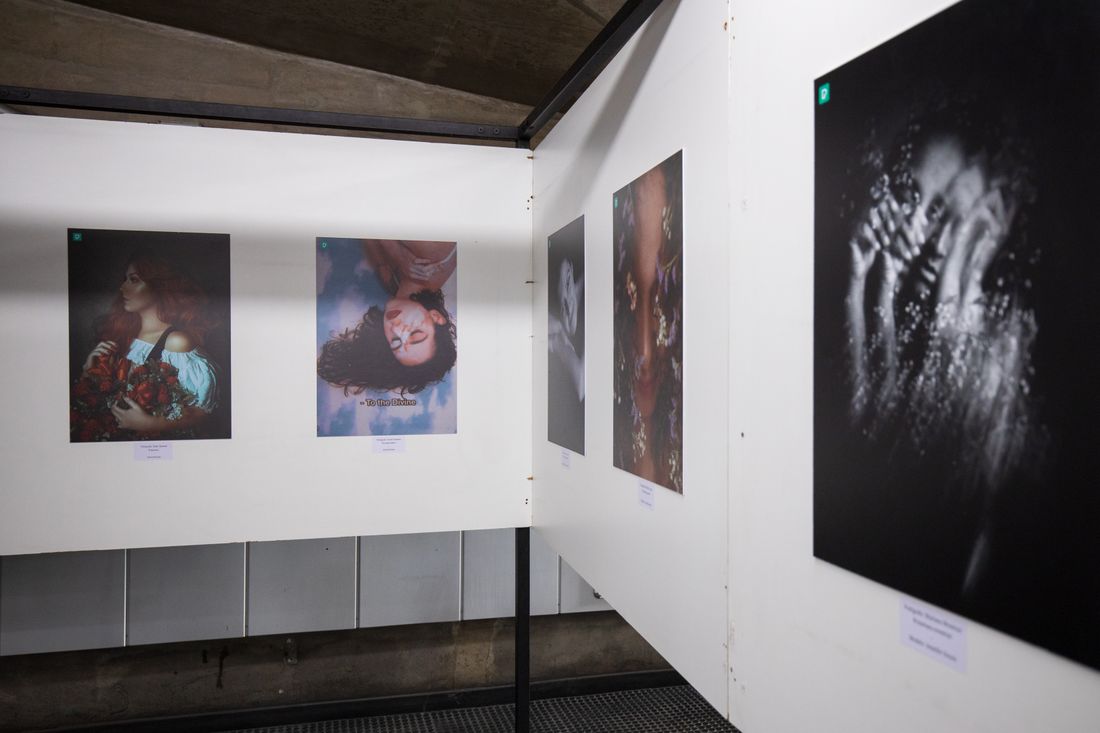
Small NYC galleries running an ambitious show almost always hit the same wall, literally: more work than the room comfortably holds, tight sightlines, and nowhere to step back for a genuinely wide shot. None of that is a mistake on the gallery's part. It's usually a sign the show is doing well, or that the space got booked for its energy rather than its square footage. It does change how documentation has to get planned, from the first walkthrough to the last frame of the install.
This guide walks through what actually shifts when the room is the limiting factor: when individual pieces need to get shot away from a crowded wall, how installation views hold up in a tight footprint, what mixed lighting does once the room fills up edge to edge, and how a compressed hang schedule changes the order everything gets shot in.
Why a small room changes the plan
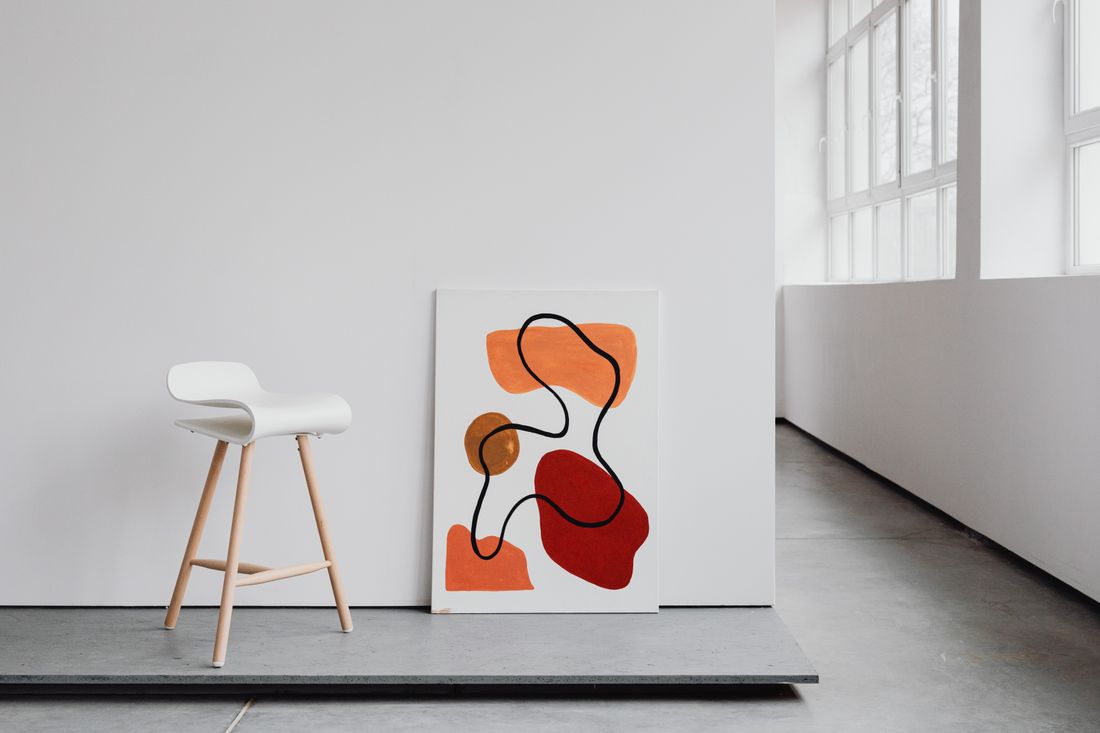
Two different jobs happen during any documentation session for a show. One is the flat, accurate record of each individual piece, square to the lens, evenly lit, no distortion, nothing else in the frame. The other is the installation view, the wider shot that shows how the work sits in the room, how pieces relate to each other, how the whole thing reads as a show rather than a stack of individual images.
A generously sized room lets both jobs happen more or less where the art already is. A small room running an ambitious hang usually can't. The walls fill up before there's a clean, uncrowded spot left to shoot a piece flat, and there's rarely enough floor between the art and the opposite wall to get a wide shot without stepping into the hallway or the room next door. Neither problem is really about the camera. Both are about where you can physically stand and what's around the piece when you get there.
That's the editorial tension underneath everything else in this guide: context and clarity often want different distances and different amounts of clutter in the frame, and a small room won't hand you both for free. Planning ahead of time for which shots need which conditions is what keeps that from turning into a scramble on install day.
Document pieces before the show hangs
When the walls are going to be crowded edge to edge, individual artwork documentation (the flat, accurate record of each piece) often works better before the show goes up, or piece by piece as each work arrives and gets moved to a clean shooting spot. Waiting until everything is hung usually means working around neighboring frames, uneven light spill, and a wall too full to get square to any one piece without something else creeping into the frame.
Shooting before the hang also decouples the individual documentation from the installation schedule. If a piece arrives two days before the opening and the gallery is still deciding where it goes, that's not a reason to delay its documentation. The flat record doesn't need a final wall position. It needs a clean surface, consistent light, and a few minutes before the piece gets swept into the rest of the install.
The trade-off is coordination. Someone has to know which pieces are arriving when, and the documentation session has to flex around that instead of being one fixed appointment. For a small gallery with a compressed timeline, that's usually less friction than trying to shoot forty crowded pieces cleanly in a single pass at the end.
When a piece needs to come off the wall
Sometimes a piece is already hanging by the time documentation happens, and the room genuinely can't accommodate a flat, square-on shot where it sits, neighboring work is too close, the light is uneven across the wall, or there's no way to stand far enough back without bumping into the opposite side of the room. In that case, the practical fix is to temporarily move the piece to a neutral wall or a portable backdrop, shoot it there, and put it back.
This isn't a downgrade from documenting it in place. A flat, accurate record was never really about the wall it happens to be hanging on. It's about even light, a square angle, and nothing competing in the frame. A hallway, a back office, or even a temporarily cleared section of the same room can do that job better than a crowded gallery wall, as long as the light there is controllable and consistent.
What matters is timing it so it doesn't collide with the install. Pulling a piece down mid-hang to shoot it against a portable backdrop works fine if it happens before the wall around it gets finished, or in a quiet window the gallery has already set aside. Doing it the hour before doors open, with three other things also needing attention, is how a five-minute task turns into the thing that makes everyone late.
Getting a clean installation view
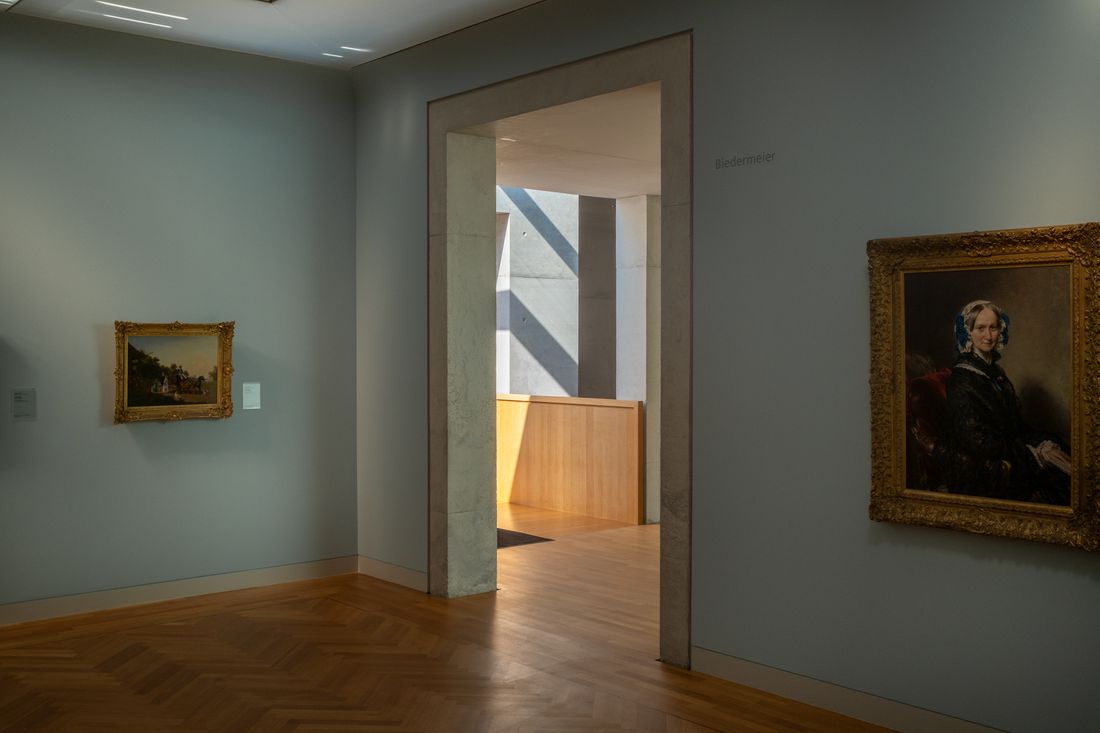
Installation views are the shots that suffer most obviously in a small room. A wide shot needs distance, and a small room by definition doesn't have much of it. Standing at the far wall and shooting across the room either shows too little of the hang, or requires a wider-angle lens to fit more of the room into the frame, and a wider lens at close range introduces its own distortion, bowing straight lines near the edges of the frame and stretching whatever's closest to the camera.
That distortion isn't a reason to avoid the wider lens. It's a reason to plan for correcting it afterward, in the same way flat artwork documentation gets corrected for keystoning when the camera can't be perfectly square to the work. A slightly wide installation shot with a quick correction pass usually reads better than a shot that's technically distortion-free but only shows a third of the room.
The honest version of this section is that a small room sometimes just can't produce the same installation view a larger space would. The goal isn't to fake more space than the room has. It's to get the clearest, most usable version of what the room actually offers, and to be upfront with the gallery about what a truly wide shot would require if that's genuinely what the show needs.
What mixed lighting does to a packed room
Lighting gets trickier the more art goes on the walls. Most small galleries run on track lighting, and many NYC storefront spaces also get daylight through the front window. Individually, either source is manageable. Together, in a room packed edge to edge with work, they can create a visible color shift across a single frame, one end of the room reading warmer under the tracks, the other end cooler near the window, with nothing in between to hide the transition.
This shows up more in installation views than in individual documentation, simply because a wide shot has to hold the whole room's lighting at once, while a single piece can usually be shot under one consistent source. It's also more noticeable in a small room, where the daylight-to-track distance is short enough that both sources land on the same wall.
There's no single fix that eliminates this outright. Shooting installation views when the storefront light is more even, closing blinds if the gallery has them, or planning a color correction pass that treats the frame in sections rather than as one flat adjustment are all reasonable approaches. The important part is knowing ahead of time that a packed, mixed-light room needs one of those, rather than discovering the shift after the shoot is done.
Planning around a compressed hang
A small ambitious show often runs on a tighter install schedule than a larger one, simply because there's less staff and less time budgeted for a room this size. That compresses the documentation window too, which is exactly why trying to do everything in a single pass at the end tends to fall apart. There isn't a single calm hour where the room is both fully hung and free of ladders, tape, and half-unpacked crates.
A shot list built around the hang schedule instead of around a single documentation day tends to hold up better. That usually means shooting the empty room wide before anything goes up, so there's a clean baseline of the space. Then shooting individual pieces as they arrive, whenever there's a clear spot to do it. Then shooting the full installation once the last piece is hung and the room has settled, ideally with a few minutes to clear the visible clutter of the install itself out of frame.
None of that requires more time overall. It just requires deciding, before install day starts, which shots happen at which stage, so the photographer isn't trying to negotiate access to a crowded room during the one hour everyone else also needs it.
If the room truly can't fit the shot
Sometimes there's no angle inside the room that gets far enough back for a usable wide installation shot, wide-angle correction or not. In that case, the workable fix is finding a step-back point just outside the room (the doorway, the threshold into an adjacent space, or a spot in the next room over if the gallery has one) and shooting from there instead.
This isn't a compromise so much as a different kind of installation shot. A view through a doorway into the show can read as intentional rather than apologetic, giving the frame a sense of arrival that a straight-on wide shot from inside a cramped room usually can't match. It also sidesteps the distortion problem entirely, since the extra distance means a normal lens can do the job a wide one would otherwise have to force.
The practical part is confirming ahead of time that the adjacent space is available and quiet enough to shoot from. A busy front desk or a hallway full of coat racks during an opening isn't going to give a clean line of sight. Scouting that step-back point during the same walkthrough where the empty-room shots happen means it's not a last-minute discovery on the day everything else is also happening at once.
What a tight install day actually looks like
In practice, a small gallery's install day for an ambitious show tends to run in stages, whether or not anyone planned it that way on paper. Crates arrive in waves, not all at once. Someone is patching and painting a wall while someone else is unwrapping the next piece. The room that will eventually hold the full show spends most of the day looking more like a loading dock than a gallery.
Working with that instead of against it usually means grabbing individual documentation in short windows between arrivals, sometimes in a back office or a stairwell landing if that's the only flat surface not already covered in packing material. It also means shooting the empty-room wide shot first thing, before the first crate opens, because that clean baseline disappears the moment install actually starts.
By the time the last piece goes up, there's usually a narrow window (after the ladders come down, before the champagne arrives) where the room is fully hung and still quiet. That's the window for the final installation views, including any step-back shots from the doorway. It's short, but it's predictable if the rest of the day was planned around getting there.
Frequently asked questions
Can artwork be documented before a show is hung?
Yes, and in a small room it's often the more reliable order. Photographing each piece before it goes on a crowded wall gives you a flat, square-on record without other art, uneven track lighting, or crowd flow in the frame. The individual documentation becomes its own pass, separate from the installation views that get shot once the show is up.
What can you do if the gallery room is too small for a wide installation shot?
Step back into the doorway or an adjacent room if the space allows it, or shoot with a slightly wider-angle lens and correct the resulting distortion afterward. Both are workable. Neither replaces a genuinely wide room, so it's worth deciding ahead of time which approach the space calls for rather than discovering it mid-shoot.
Does mixed lighting in a small gallery actually cause visible problems?
It can, especially once the room fills up edge to edge. Track lighting and daylight from a storefront window carry different color temperatures, and a single wide frame can end up with a visible shift from one side of the room to the other. Shooting individual pieces under one consistent light source, separate from the mixed-light installation views, keeps that problem contained.
Should individual pieces be photographed on the wall or moved to a clean spot?
It depends on how much the room can fit. If the walls are crowded edge to edge, moving each piece to a neutral wall or portable backdrop, before or after it goes up, usually produces a cleaner, more accurate record than trying to shoot it flat and square-on between neighboring work.
How far in advance should a gallery plan documentation for an ambitious show?
Before the hang schedule gets set, if possible. A small, ambitious show often has a compressed install, so the useful plan covers what gets shot when (the empty room, each piece as it arrives, and the full install once everything is up) rather than trying to do everything in one pass on hang day.
Let us plan around your room, not the other way around.
We build the shot list around the space and the hang schedule you actually have, so a small room with a big show still gets a clean, complete documentation record.
Explore artwork documentation →