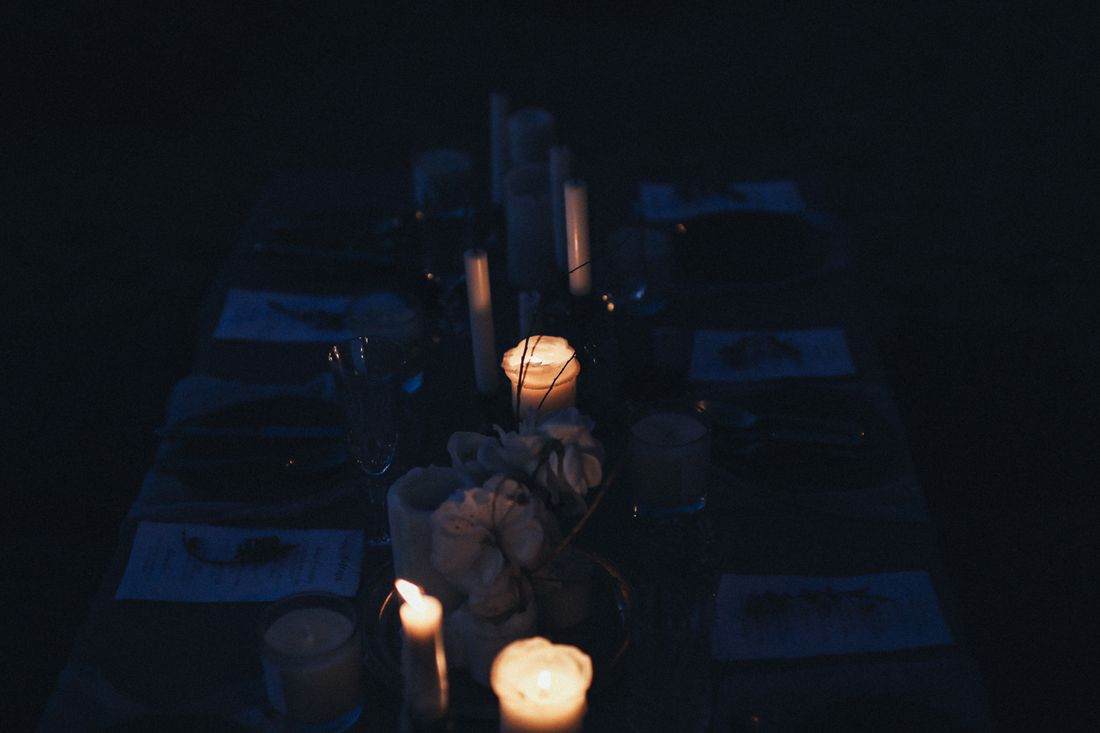
The opening reception is a moving target. Guests drift, groups reform, and a photographer who wanders finds new material everywhere. The dinner that follows works differently. Once the room sits down, the guest list locks into a floor plan, the lighting drops to candlelight and tungsten, and the only unrepeatable moment of the whole night, the toast, happens once, on its own schedule. Covering it well starts before anyone sits: a short briefing on who's at which table, who the gallery actually needs photographed, and who would rather not be in frame at all.
Covering the dinner after a gallery opening means working a seated, dimly lit room instead of a moving crowd: a pre-dinner seating-chart briefing, a planned approach to the one unrepeatable toast, low tungsten and candlelight handled instead of fought, and quiet, sustained coverage of whichever guest, often the least conspicuous person at the table, the gallery actually needs documented.
How Is the Dinner Different From the Reception That Came Before It?
The reception rewards wandering: a moving crowd forgives a photographer who drifts from group to group and circles back later if a shot doesn't land. The dinner reverses that. Guests are seated, the room goes dim, and every usable frame depends on knowing who sits where before the first course arrives.
At a reception, a missed exchange is rarely fatal. The same laugh, the same cluster near the bar, the same conversation in some different form tends to happen again a few minutes later, because everyone keeps moving and regrouping. A seated dinner removes that safety net. Once the room sits down, the guest list locks into a floor plan, the lighting drops to whatever the room runs on, and the moments worth documenting narrow to a short list: the toast, a handful of genuine exchanges at each table, and the room settling into its own rhythm.
That narrowing is the whole editorial problem. A reception photographer who wanders into the wrong corner for ten minutes still comes home with plenty of usable frames from everywhere else in the room. A dinner photographer who spends ten minutes at the wrong table has missed the only version of that table that will ever exist, since nobody re-poses a private conversation between courses. The stakes rise as the room slows, the opposite of what most people expect walking in.
That's why the dinner has to be planned differently from the reception, starting before the first guest sits down. The sections below walk through that planning: the briefing, the toast, the light, and the table.
What Does the Pre-Dinner Seating-Chart Briefing Actually Cover?
The pre-dinner briefing is a short walk-through of the seating chart with whoever is running the room, covering who sits where, who the gallery specifically wants photographed, and who has asked not to be. It happens before guests sit down, because once the room is dark and full, there's rarely a good moment to ask.
Most of what a photographer needs for the dinner isn't visible from the room itself. It's information the gallery already has and the photographer doesn't. A seating chart shows table numbers, not who matters at each one. Walking it with an event lead or gallery staffer, even for five minutes, turns an anonymous grid of place cards into a working map: which table has the collector the gallery has been courting, which chair belongs to the artist, where the press contact sits.
Privacy comes up in the same conversation and deserves to be treated seriously rather than skimmed. Some dinner guests don't want to be photographed at all: a private collector who avoids public documentation, someone attending as a plus-one who isn't part of the gallery's public story. The gallery usually knows who these people are before the night starts, and passing that along during the briefing is documented practice for how we plan the room, not a legal opinion.
None of this replaces reading the room once dinner is underway. But arriving with a working sense of who's who means the first pass through the tables is spent shooting instead of guessing, which matters more here than almost anywhere else in the night.
Why Does the Toast Matter More Than Any Other Moment in the Room?
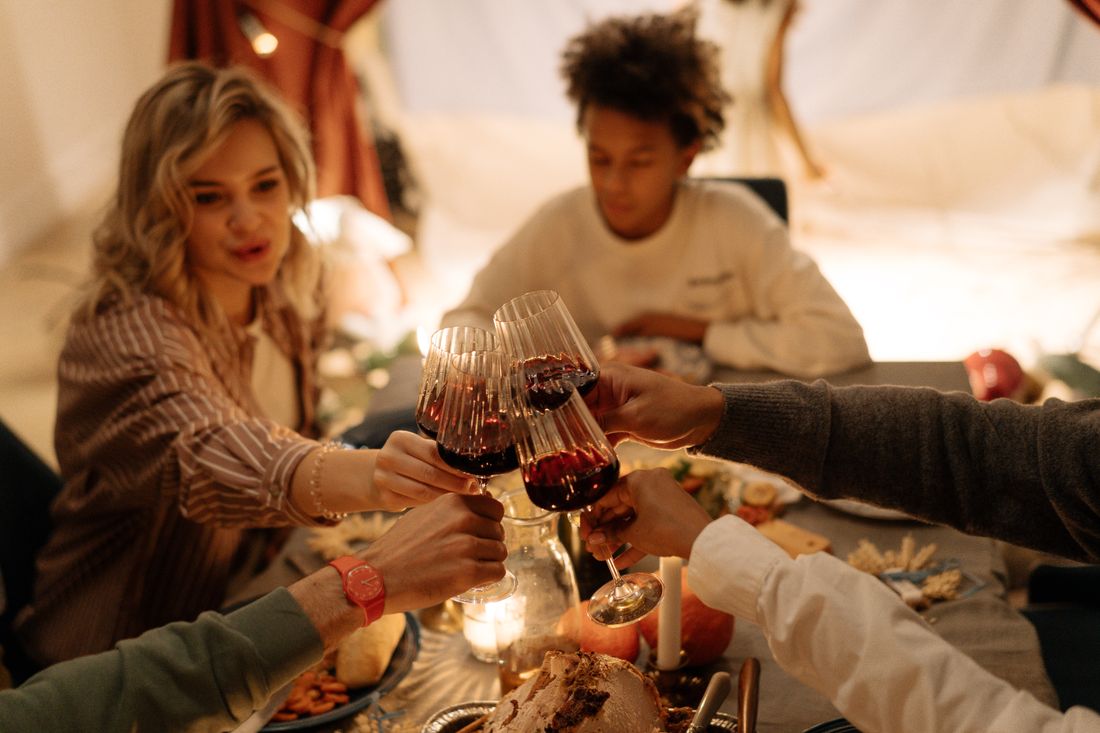
The toast is the one moment at a seated dinner that cannot be recreated. Unlike a conversation that might resume in a similar form later, a toast happens once, on its own schedule, and everyone in the room reacts to it at the same instant, which makes it the single highest-stakes few seconds of the entire evening.
Everything else at a seated dinner has some flexibility built in. A missed exchange between two guests might happen again, in a different form, twenty minutes later. The toast doesn't work that way. Someone stands, taps a glass, speaks for a minute or two, and sits back down, and that sequence exists exactly once. There's no equivalent to circling back for a second try, the way a reception photographer might drift toward a group that regrouped.
Positioning matters more here than technique. Knowing roughly when the toast will happen and where the speaker will stand means having a clear sightline to both the speaker and a few nearby reaction shots, rather than discovering mid-toast that a centerpiece or a server is blocking the frame. In a dim room, that positioning also has to account for where the least light is falling, since there usually isn't time to adjust once the toast starts.
The toast is also the moment guests are most reliably looking at one thing together, which makes reaction shots, not just the speaker, some of the most useful frames from the whole dinner. It's worth treating as its own small assignment inside the larger one: planned rather than caught.
How Do Low Tungsten Light and Candlelight Change the Approach?
A seated dinner is almost always shot under warm, low, mixed light: table candles, tungsten sconces, sometimes a single chandelier, instead of the brighter, more even light most receptions use. That combination limits shutter speed and pushes ISO higher, which changes how close a photographer needs to work and how much movement the frame can tolerate.
A reception can often be lit brightly enough that a photographer has real freedom in shutter speed and distance. A dinner rarely offers that. Candlelight is a small, warm, moving point source; tungsten sconces or house lighting add a dim, orange base layer underneath it. Together they produce a scene with far less usable light than it looks like to the eye, and a look worth preserving rather than fighting, since flattening it with a flash changes the mood of the room.
Working with that light instead of against it usually means shooting closer, choosing a wider aperture, and accepting a slower shutter than a reception would allow, which asks more of both the equipment and the photographer's stillness. Guests moving mid-conversation, a hand reaching for a glass, a head turning toward the toast: all of it needs a steadier hand than a well-lit room requires.
White balance is part of the same decision. Correcting candlelight and tungsten back to a neutral, daylight-balanced look usually drains the warmth that made the room worth photographing in the first place. In practice, holding some of that warm cast in the edit reads as truer to what the room felt like than a technically cleaner but flatter version would.
How Do You Cover a Long Table Without Standing on Chairs?
A long table gets covered by working its length from the ends and the aisle side, at seated or crouched eye level, rather than from above. Standing on furniture to get a wide shot disrupts a seated room in a way a reception never has to worry about, and it rarely produces a better photograph than working the table's actual sightlines.
A reception has open floor to move through, so height is rarely a problem: a photographer can back up, angle around a group, or wait for space to open. A long table removes most of that room to maneuver. Chairs sit close together, guests are seated on both sides, and the space behind each place setting is narrow. The instinct to solve that by shooting from above, standing on a chair for a wider view, causes exactly the disruption a seated room can't absorb.
Working from the ends of the table, down its length, gives a natural wide shot without needing height: guests on both sides fall into the frame as the whole table, not one segment of it. Moving along the aisle side, at seated eye level, gets the closer frames: two guests mid-conversation, a hand gesture, someone catching the toast a few seats away. Both keep the photographer at the same physical level as the room instead of above it.
The practical upside is real too: staying at table height means less disruption, fewer heads turning to check what's happening, and a room that keeps its own rhythm instead of noticing the photographer at all.
Why Is the Person the Gallery Needs Photographed Often the Quietest One at the Table?
The collector or curator a gallery most needs documented at a dinner is rarely the loudest presence in the room. They're often seated quietly, mid-conversation, dressed unremarkably, easy to miss if a photographer is scanning for obvious energy, which is exactly why the pre-dinner briefing matters more here than almost anywhere else in the night.
A reception rewards visible energy: a laugh, a toast at the bar, a cluster forming around someone charismatic. A gallery dinner often runs on the opposite logic. The person whose presence actually matters to the gallery, a collector deciding whether to acquire, a curator scouting the program, a board member the gallery is courting for support, usually isn't performing for the room. They're having a normal conversation at a normal volume, which makes them close to invisible to a photographer working purely on instinct.
This is where the earlier briefing pays off directly. Knowing which table and roughly which seat that person occupies means they can be worked into the coverage the same way any other guest is: a few genuine frames over the course of the meal, not a single posed moment that makes clear they've been singled out. Overworking that person's table risks making them, and everyone near them, visibly uncomfortable.
The goal is coverage that reads as natural on delivery. This person appears in the same kind of candid frame as everyone else at their table, just often enough that the gallery has something usable, without the shoot itself ever calling attention to who mattered most in the room.
How Should Movement and Pacing Change Once the Room Is Seated?
Once guests sit down, movement through the room has to slow and quiet considerably compared to the reception before it. Fewer trips between tables, longer pauses at each one, and more deliberate timing around courses and conversation keep the coverage from becoming its own visible disruption in a room that isn't moving anymore.
A reception absorbs a photographer's motion easily, since the whole room is already in motion: people crossing to the bar, drifting between groups, arriving and leaving. A seated dinner doesn't have that cover. Anyone walking between tables while the room sits still is, for a moment, the only thing in the room that's moving, which makes timing matter far more than it did an hour earlier.
In practice, that means choosing quieter windows to move: between courses rather than during them, during a lull in conversation rather than mid-sentence, from the edges of the room rather than cutting directly across sightlines. It also means covering fewer tables more thoroughly rather than treating every table equally in the time available, since a dinner rarely allows for the kind of exhaustive coverage a reception's open floor makes possible.
Course service is worth planning around too, mainly by staying out of its way. This isn't guidance on photographing the food itself, just an acknowledgment that servers moving through the same narrow aisles are the other moving element in the room, and colliding with that rhythm is its own kind of disruption. Slower, quieter, more selective: that's the whole shift from reception pacing to dinner pacing.
What Should a Gallery Expect to Receive From Dinner Coverage?
Dinner coverage should hand a gallery a smaller, more deliberate set than reception coverage does: the toast sequence, genuine table-by-table moments, and quiet documentation of whichever guests actually mattered to the evening, not a high-volume stream of crowd shots, since a seated room simply doesn't generate that kind of coverage.
A reception often produces a large volume of usable frames just from the sheer amount of movement and interaction happening at once. A dinner produces fewer frames, but each one tends to carry more weight, because it came from a room with far less to work with. A gallery reviewing dinner coverage should expect a tighter, more curated set rather than judging it against reception-style volume.
The toast sequence deserves its own attention in the edit: the speaker, the reaction shots, maybe a wide frame that places the moment in the room. Table coverage should read as a genuine sample of who was there and how the evening felt, not a mechanical lap of every seat. And whichever guests the gallery flagged during the pre-dinner briefing as needing quiet, natural coverage should be represented without the frames themselves giving that priority away.
Many galleries use this material differently than reception photos, too: less for public posting, more for internal records, donor follow-up, or a quiet thank-you note to someone who attended. Knowing that in advance shapes the edit, since a handful of genuinely strong, usable images serves that purpose better than a large unsorted batch ever will.
Frequently asked questions
Do we need a different photographer for the dinner than the one who covered the reception?
Not necessarily. The same photographer can cover both, as long as the shift in approach is planned for. The dinner asks for a different pace, a closer working distance, and prior knowledge of the seating chart, none of which requires a second person. What it does require is treating the two parts of the evening as separate assignments with separate plans, instead of assuming reception habits will carry over once the room sits down.
How much advance notice does the seating-chart briefing actually need?
A short walk-through shortly before guests sit down is usually enough. Fifteen minutes is often plenty if the person running the room has the chart ready. What matters is timing rather than length: it has to happen before the room fills and goes dark, since there's rarely a natural moment to ask these questions again once dinner is underway and guests are already seated at their tables.
Is it rude to photograph a seated dinner at all, given how private it can feel?
It can feel that way if the coverage isn't planned around the room's pace. Working quietly, moving between courses rather than during them, and respecting any guest the gallery has flagged as not wanting to be photographed keeps the coverage from feeling intrusive. Most discomfort at a seated dinner comes from a photographer working like it's still the reception, not from the presence of a camera itself.
Should we ask guests for permission before photographing them at the table?
Individual permission for every frame isn't practical in a room full of seated guests, which is why the pre-dinner briefing matters: the gallery flags anyone who has already asked not to be photographed, and that guidance is treated as final. Beyond that, working candidly and respectfully, without singling anyone out for a posed shot, is the documented practice we follow for this kind of coverage.
What happens if the toast starts before the photographer is in position?
It's treated as the single moment worth protecting most carefully during setup. Confirming rough timing and the speaker's likely position with whoever is running the room, before dinner starts, is how that risk gets reduced. If the timing still shifts, the priority becomes reaction shots around the room rather than a scramble for the speaker, since a genuine reaction is still a usable frame even if the ideal angle gets missed.
Two openings on the same night doesn't have to mean a scramble.
We plan around clustered opening nights ahead of time, a split schedule, a second shooter, or booking early enough that the calendar stops being the risk.
Explore event coverage →