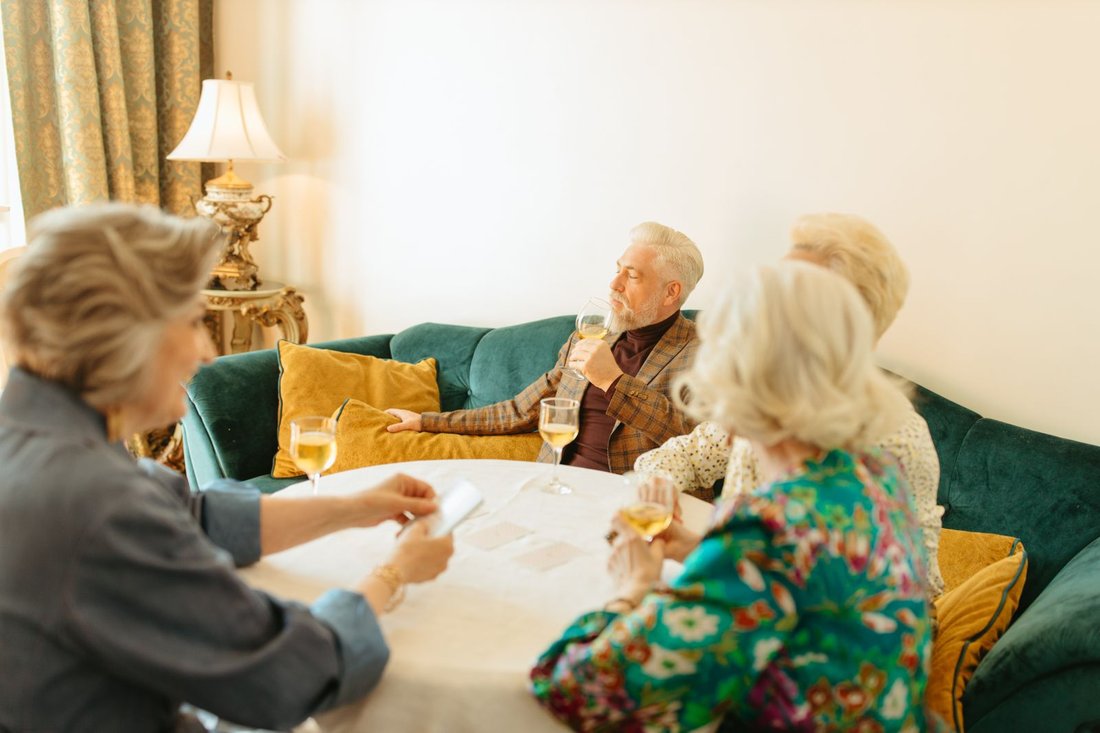
At ten people, there is no crowd to read, no RSVP list to plan around, and no arrival rush to shoot through. What there is instead is a room small enough that the photographer becomes a visible eleventh guest, and that visibility, not the shot list, is the actual risk to the evening. A public opening asks a photographer to prove the room was full. A salon asks a photographer to be forgettable and still come back with something worth keeping.
A collector salon is coverage of an evening, not proof of a crowd. With around ten guests, a photographer is a visible presence the whole room can track, so the plan should favor one body, no flash, a short agreed working window, and boundaries settled with the host in advance. The goal is a small, considered set that holds a few real moments, not a large gallery built for a room that was never meant to be documented like an opening.
What Is a Collector Salon, and What Does Coverage Actually Need to Do?
A collector salon is a small private gathering, usually around ten guests, organized around close conversation, one or two specific works, and sometimes a quiet ask the host wants raised without pressure. Coverage exists to record that texture: who leaned in, what got pointed at, how the room actually moved. It is not attendance proof.
A public opening has a program: a door, a welcome, a walk past the work, a bar. A salon has none of that. The host might gather three guests around a recent acquisition for ten minutes, then let the room split into smaller conversations that never regroup. Nobody is waiting to be greeted at a check-in table, because there is no check-in table.
That difference changes what the photographer is actually hired to bring back. A gallery director covering an opening wants proof the evening drew a crowd. A host running a salon already knows exactly who came, because they invited each person individually. What they want instead is a handful of frames that hold the feeling of the room: a specific conversation, a specific work, a guest genuinely absorbed rather than posed.
Coming into the evening with an opening mindset, wide frames, a running count of who showed up, misreads the assignment before the first frame is taken. The room is not the story. The ten people inside it, quietly attending to something, are.
Why Doesn't the Standard Opening-Night Shot List Work at a Salon?
The standard opening-night list, wide room shots, a step-and-repeat instinct at the door, steady volume shooting to guarantee options, assumes a crowd to read and an audience to prove attended. A salon has neither. Applied to ten people, that same list reads as intrusive, repetitive, and strangely impersonal in a room built for the opposite.
Wide crowd frames need a crowd. Aimed at ten people spread through a living room or a gallery back office, a wide shot mostly shows furniture and open floor, with guests reduced to small figures who look posed for a group photo nobody asked for. The frame that reads as natural at fifty people becomes the frame that makes ten people look watched.
The step-and-repeat instinct, planting near the entrance and working every arrival, breaks a salon in a different way. There is no arrival to work. Guests trickle in over a few minutes and go straight into conversation, and a photographer stationed at the door either misses that or turns a private greeting into a photo op nobody asked for.
Volume shooting, firing off many frames to guarantee a usable one, also backfires. In a room this small and this quiet, the sound and motion of a camera working continuously is the loudest thing happening. Fewer, better-timed frames protect the room; a high shutter count just advertises the photographer's presence to everyone in it.
What Does It Mean to Be the Eleventh Person in the Room?
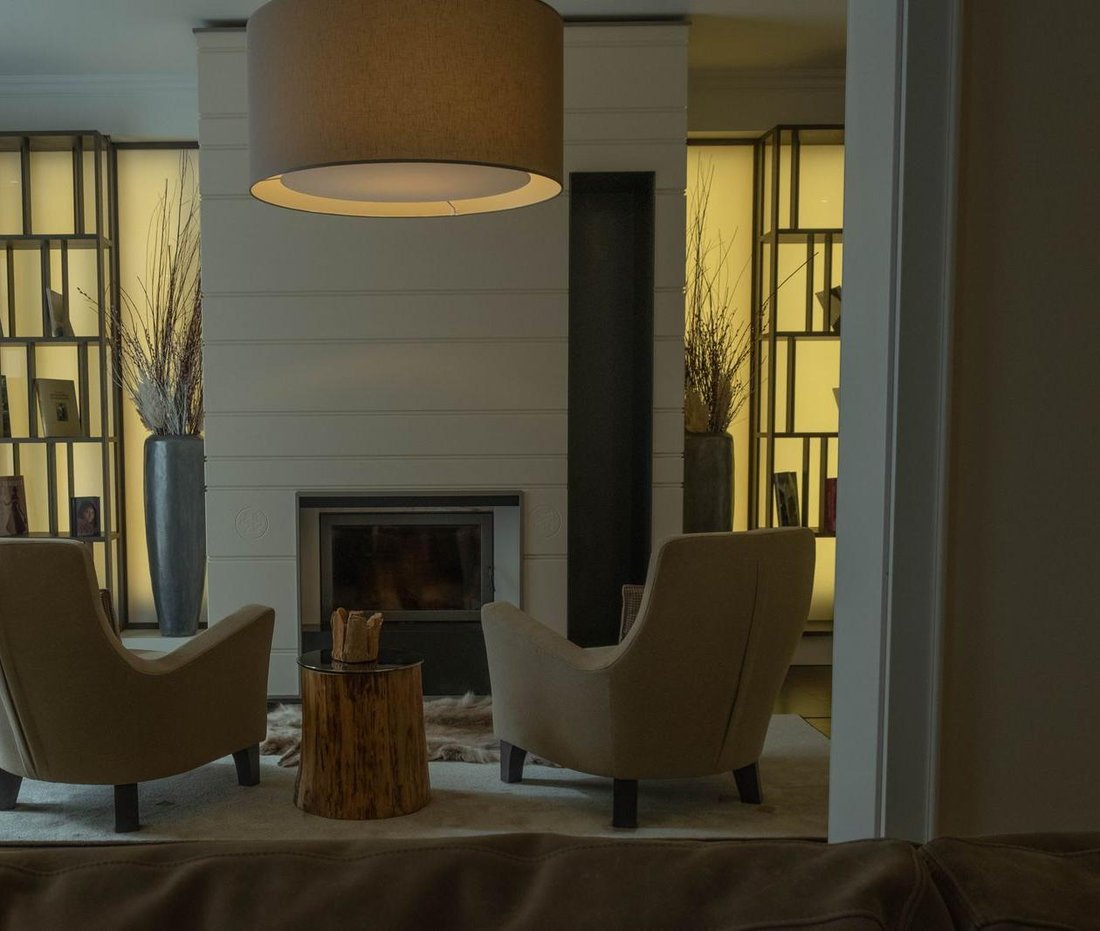
At ten guests, a photographer is not a background presence, they are a visible eleventh person the whole room can see and half-track for the entire evening. There is no crowd to blend into and no far corner to disappear to. Proximity itself, not any single shot, becomes the actual risk to the evening's comfort.
At a hundred-person opening, a photographer moving through the room is one more body among many, easy to register once and then forget. At ten people, every position taken is noticeable, and every position holds for longer than it would in a crowd, because there is nowhere else in a small room to move to without visibly repositioning in front of everyone present.
Sightlines matter more than usual for the same reason. A shooter standing near the conversation being photographed sits inside the guests' peripheral vision the entire time, not passing through it. Working from slightly outside the main circle, at an angle rather than head on, keeps the photographer present without becoming the person everyone is quietly aware of mid-sentence.
The practical adjustment is pacing, not equipment. Move less often than instinct suggests, hold a position long enough for the room to stop registering it, and accept that some genuinely good angles are not worth the visible repositioning required to reach them in a room this size. A photographer who plans two or three fixed points before the evening starts, rather than improvising position by position, ends up moving less and being noticed even less.
How Should Consent and Discretion Work When Guests Didn't Sign Up to Be Photographed?
Salon guests came to look at work and talk privately, not to attend a photographed event, so consent and discretion need to be settled with the host before anyone arrives, not improvised in the room. In practice, that means agreeing in advance what will be shot, who tells the guests, and what stays out of frame entirely.
The host is the right person to raise it with guests, briefly and in their own words, when the group first gathers, rather than the photographer explaining their own presence to strangers mid-conversation. A quick, host-led mention normalizes the camera once; a photographer introducing themselves to each guest individually turns a private evening into something that feels administered.
Some hosts prefer guests are not identifiable in any delivered image; others are comfortable with recognizable faces as long as nothing sensitive in the room, a specific conversation, a work not yet public, ends up in frame. Both are reasonable positions, and both need to be settled before the first frame, not discovered afterward in the edit.
When in doubt, the safer default is documented practice, not a legal one: shoot fewer identifiable close-ups of guests who have not been introduced, and confirm with the host which specific works, if any, are not meant to be photographed at all. This is not a legal position, it is simply how experienced hosts and photographers tend to handle a private room together, and stating it plainly before the evening starts tends to put everyone at ease faster than leaving it unspoken.
Why Work With One Body and No Flash in a Room Built for Looking?
A salon is usually lit for looking at the work, low, warm, deliberately uneven, not for photographing people, so a flash or a second body changes the room's actual character the moment it appears. One body, natural light, and a fast lens let the photographer work inside the room's real lighting instead of overriding it.
A flash does more than add light. It announces itself audibly and visually, draws every eye in a small room, and briefly turns a private conversation into an obvious photo event. In a room of ten, that reaction is impossible to miss and hard to shoot past, because the moment right after a flash fires is rarely the moment worth keeping.
Switching bodies or lenses mid-evening carries the same cost as repositioning: it is a visible action in a room too small to hide it. Arriving with one body, a lens fast enough for the room's actual light, and settings decided before the first guest arrives means the gear itself stays quiet for the whole evening.
The tradeoff is real: available light limits reach and depth of field, and some frames simply will not be possible without artificial light. That tradeoff is the right one here. A slightly softer frame that preserves the room's real atmosphere serves a salon better than a technically cleaner one that visibly changed how the room felt to be in.
Why Does a Short, Agreed Working Window Produce More Than Staying All Evening?
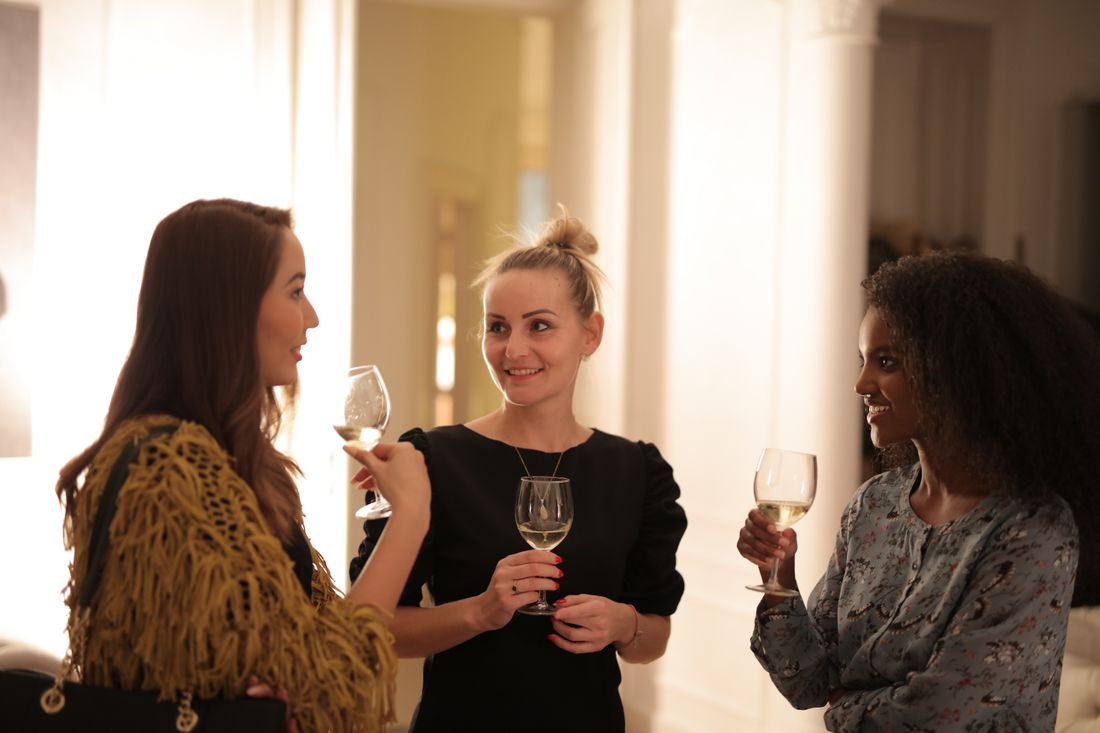
A deliberately short working window, often just the first thirty to forty five minutes agreed with the host in advance, usually produces a stronger set than staying for the whole evening, because a salon's most photographable stretch is early, before the room settles into private conversation the photographer should no longer be part of.
Early in a salon, the group is still loosely gathered around whatever the evening is centered on: the work, the host's welcome, the specific ask. That stretch has the natural focal points a photograph needs. Once the room splits into smaller, quieter conversations, there is less to shoot and more reason not to be shooting it.
Staying the full evening does not add coverage, it adds exposure. Every extra hour in the room is another hour of being the visible eleventh guest, and the marginal frames gained rarely justify the marginal discomfort added to a room that was supposed to feel private. The photographer's presence has a cost that accrues the longer they stay.
Agreeing the window with the host beforehand, not deciding it on the fly once inside, protects both sides: the host knows exactly when the camera leaves the room, and the photographer has a clear, defensible stopping point instead of guessing at what feels like overstaying their welcome. It also gives the host an easy, unawkward way to signal the evening is moving into a more private stretch, without needing to say so directly to a guest holding a camera.
What Does the Host Actually Want From the Delivered Set?
Most hosts want a small, considered set after a salon, usually a dozen or so images rather than a full gallery of near-duplicates, chosen for how well each one holds a specific moment: a work, a conversation, the room's actual mood. Volume is not the point; a set that could be shared without a second thought is.
A salon delivery gets used differently than an opening gallery does. It might go to a handful of guests who were there, sit in a private folder the host references later, or accompany a quiet follow-up to the person the evening's ask was aimed at. None of those uses call for hundreds of frames to sort through.
That changes what editing should optimize for. Instead of delivering every technically sound frame and letting the host cull, a tighter, pre-edited set respects that the host is unlikely to have time to sort a large gallery, and that a smaller set signals the same judgment and restraint the evening itself was built around.
Ask the host directly how they intend to use the images before editing begins. A set meant for a private thank-you note looks different from one meant to document a specific work for a later conversation, and knowing which one it is changes which frames make the final cut. That one question, asked before the shoot rather than after, does more to shape a useful delivery than any amount of careful editing applied afterward without it.
How Should a Host Brief the Photographer Before a Salon?
A useful salon brief tells the photographer the headcount, the working window, who the host will introduce the camera to and when, and, as plainly as anything else, what will not exist in the delivery: specific guests, specific works, or specific conversations the host wants kept entirely out of frame.
Start with the basics: roughly how many guests, where in the room the focal moment will happen, and whether there is a specific ask or work the evening is actually built around. That context lets the photographer plan positioning and pacing before walking in, rather than reading the room cold in front of guests.
Then cover the boundaries explicitly. Say which guests, if any, prefer not to be photographed at all, whether any conversation or work in the room is off limits, and confirm the agreed working window so the photographer knows exactly when to step back and stop shooting without needing a signal mid-evening.
The detail hosts forget most often is naming what will not exist afterward. A short, explicit line, no close-ups of unintroduced guests, nothing showing the piece in the back room, removes the guesswork and means nobody reviews the delivered set wondering whether something private slipped through. A brief this specific takes only a few minutes to put together, and it tends to matter more to how the evening actually feels than anything decided about lenses, framing, or where the photographer chooses to stand.
Frequently asked questions
How many photos should we expect from a ten-person salon?
Expect a small, edited set rather than a large gallery, often a dozen or so final images chosen for how well each one holds a specific moment: a work, a conversation, the room's mood. A salon's value is discretion and restraint, not volume, and a host reviewing the delivery usually wants a set they can share or reference quickly, not hundreds of near-duplicate frames to sort through themselves.
Should the photographer be introduced to guests at a salon?
Yes, briefly and by the host, when the group first gathers, rather than the photographer explaining their own presence to each guest individually. A short, host-led mention normalizes the camera once for the whole room. Skipping the introduction usually means guests notice the camera anyway, just without context, which tends to feel more intrusive than a quick acknowledgment at the start of the evening. That small step matters more than it seems.
Is flash ever appropriate at a collector salon?
Generally no. Most salons are lit low and warm for looking at the work, not for photographing people, and a flash changes that atmosphere the instant it fires, drawing attention in a room too small to absorb it quietly. Working with available light and a fast lens costs some technical reach, but it keeps the room's real character intact, which matters more than a cleaner exposure here.
How long should a photographer stay at a salon?
Often far less than the full evening, commonly just the first thirty to forty five minutes, agreed with the host beforehand. That stretch usually holds the salon's clearest focal points: the host's welcome, the specific work or ask, the group still loosely gathered. Once conversation splits into smaller, quieter groups, staying longer adds little coverage and more of the discomfort of a visible extra guest.
What should never appear in the delivered images from a salon?
Whatever the host specifically rules out in advance, which typically includes unintroduced guests shown in identifiable close-up, any work the host wants kept private, and any conversation that was clearly not meant to be documented. Settling this list before the evening starts, rather than during editing, means the delivered set matches what the host actually expected, with nothing needing to be pulled after the fact.
Two openings on the same night doesn't have to mean a scramble.
We plan around clustered opening nights ahead of time, a split schedule, a second shooter, or booking early enough that the calendar stops being the risk.
Explore event coverage →