Every gallery photographs its opening. Almost nobody books anyone for the closing, even though the closing is when a show has finally finished becoming itself: the crowd has thinned to the people who came on purpose, the walls are visible without a shoulder blocking every piece, red dots have accumulated next to the work that sold, and a last-night artist talk carries none of an opening's small talk. A closing reception is a different photography brief than an opening, not a smaller version of the same one, and skipping it isn't automatically the wrong call.
Closing receptions deserve coverage because the show is different by then: a thinner crowd, unobstructed access to the walls, visible red dots, and a quieter artist talk. Closing images often serve applications and archives better than opening photos. Skipping closing coverage can still be the right call for a small show on a tight budget.
Why does a closing reception deserve photography coverage?
A closing reception deserves coverage because it's the only point in a show's run where the exhibition is seen in its finished state: attendance has settled, sales are recorded, and feedback has had weeks to arrive. Opening night documents anticipation. A closing documents outcome, which is a different and often more useful thing to have on file.
Most galleries photograph the opening out of habit rather than decision. It's the calendar event everyone already expects to be documented, so a photographer gets booked without much discussion. The closing rarely gets the same automatic treatment. It reads as a wind-down, a housekeeping event, something to handle quietly rather than cover.
That habit leaves a gap. A show that ran for six or eight weeks ends up with one visual record, taken on its first night, before most of the audience had even seen it. There's no image of the room the way it actually looked once people had time to respond to it, no record of which pieces drew a crowd back for a second look, no documentation of the show as it existed for the bulk of its run.
None of this means an opening isn't worth photographing. It means treating the closing as optional by default, rather than as a genuine choice, quietly costs a gallery a set of images that the opening was never going to produce on its own.
What's actually different to shoot at a closing versus an opening?
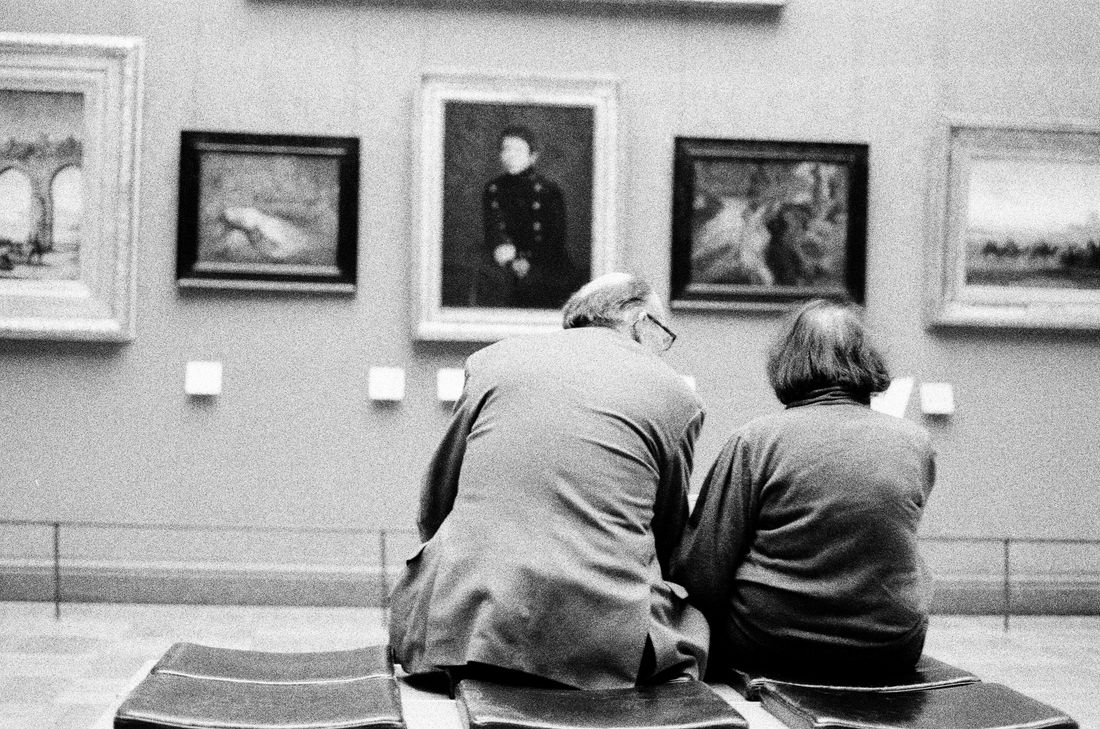
What's different at a closing is mostly a function of fewer bodies in the room: wider unobstructed shots of the walls become possible, portraits catch people actually looking at the work instead of mid-conversation, and the ambient noise that competes with a video mic on opening night has usually thinned out considerably.
An opening's job is energy. The crowd, the noise, the density of people clustered near the bar or the door, all of that is the point of an opening photo. A closing has a different center of gravity. The people still there this late in a run are usually there because they wanted to see the show specifically, not because it was the social event of the week, and that shows up in how they move through the room.
Practically, this means a photographer can get the kind of clean, wide installation shot that an opening almost never allows, because there's simply nobody standing in front of the third painting from the left. It also means portraits taken at a closing tend to catch people in a more settled, attentive expression, since nobody's mid-toast or scanning the room for who else showed up.
The tradeoff is attendance itself. A closing reception, even a well-attended one, is very rarely as full as an opening. The shot list has to account for a smaller, quieter room from the start.
Why do closing images often serve the next application better than opening images?
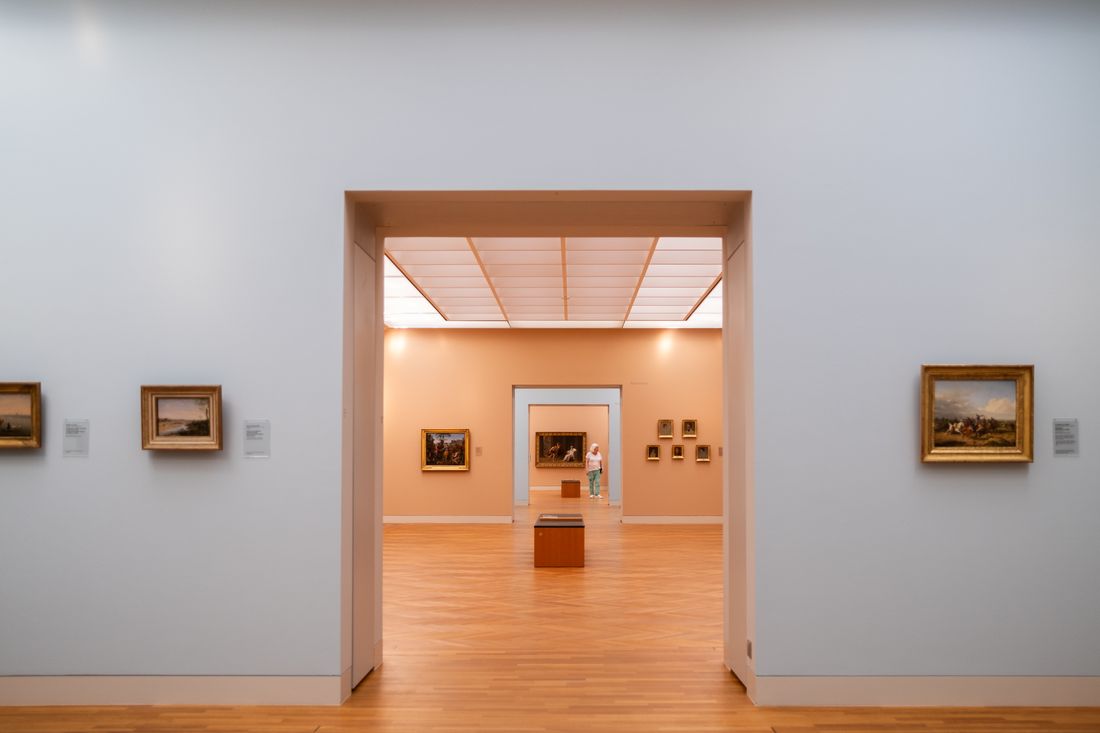
Closing images often work better for grant applications, portfolio updates, and the next gallery submission because they show the finished installation cleanly, without a crowd obscuring half the wall. An application reviewer needs to see the work and how it was hung, not the opening-night audience standing in front of it.
Most galleries default to using their opening photos everywhere, on the website, in a recap post, in the next application, mostly because those are the only professional images that exist. The problem is that an opening photo is usually the worst version of an installation shot available from the whole run: dense with people, timed for arrival energy rather than clarity, and shot before the room had settled into how it actually reads once people stop moving through it in a rush.
A closing reception, precisely because it's quieter, is a much better moment to get the clean documentation an application actually needs. Fewer people in the frame means the photographer can wait for a genuinely empty wall instead of working around a constant stream of bodies.
This isn't a case against opening photography. It's a case for treating the closing as its own opportunity to get the specific, useful images an opening structurally can't produce, the kind that go into a residency application, a follow-up pitch to another gallery, or a simple website refresh once the show has closed.
What can a photographer capture at a closing that isn't available at an opening?
A closing makes a few things visible that simply don't exist yet on opening night: red dots or sold notices next to the work that moved, the condition of pieces after weeks of gallery lighting and foot traffic, and a final audience that had the whole run to decide whether the show was worth a second visit.
Sales information is the clearest example. A red dot next to a painting is real information about how a show performed, and it only exists once collectors have actually committed. An opening-night photo can capture excitement about the work. Only a closing can capture what people actually decided to buy.
Condition is a quieter but genuine consideration too. Six or eight weeks under gallery lighting, with visitors close enough to breathe on the glass, can leave a work looking slightly different than it did on day one. A closing-reception photo set is a natural moment to note how a piece has held up, useful information alongside the kind of before-and-after condition record some galleries already keep for insurance or loan purposes.
And the audience itself is different information. The people in the room on closing night chose to be there near the end of a run they'd had weeks to learn about, which is a different kind of engagement than an opening crowd pulled in by the calendar date and the wine.
How should red dots and sale notices be documented without turning them into a sales pitch?
Red dots and sale notices are documented best as part of a wider installation shot, where the label is visible but not the entire point of the frame, rather than as an isolated close-up that reads like a marketing graphic. The goal is an honest record of the show, not a promotional highlight reel of what sold.
A tight close-up on a single red dot, cropped so nothing else is in frame, tends to read exactly like what it is: a sales pitch dressed up as documentation. It's a reasonable instinct to want that image for social proof, but it usually looks more like an ad than a photo of an exhibition.
A wider shot that happens to include a labeled, sold piece as part of the room does the same informational job without the pitch-y feel. The viewer can see the dot if they're looking for it, but the frame is still doing the honest work of showing the gallery, the hang, and the piece itself, not just the fact of a sale.
This distinction matters most for how the image gets used later. A wide, honest shot works equally well in an archive, a recap post, or an application. A tight sales-graphic shot really only works as a sales graphic, which limits where it's useful once the show closes and the gallery moves on to the next one.
What does a closing-night artist talk need from a photographer that an opening doesn't?
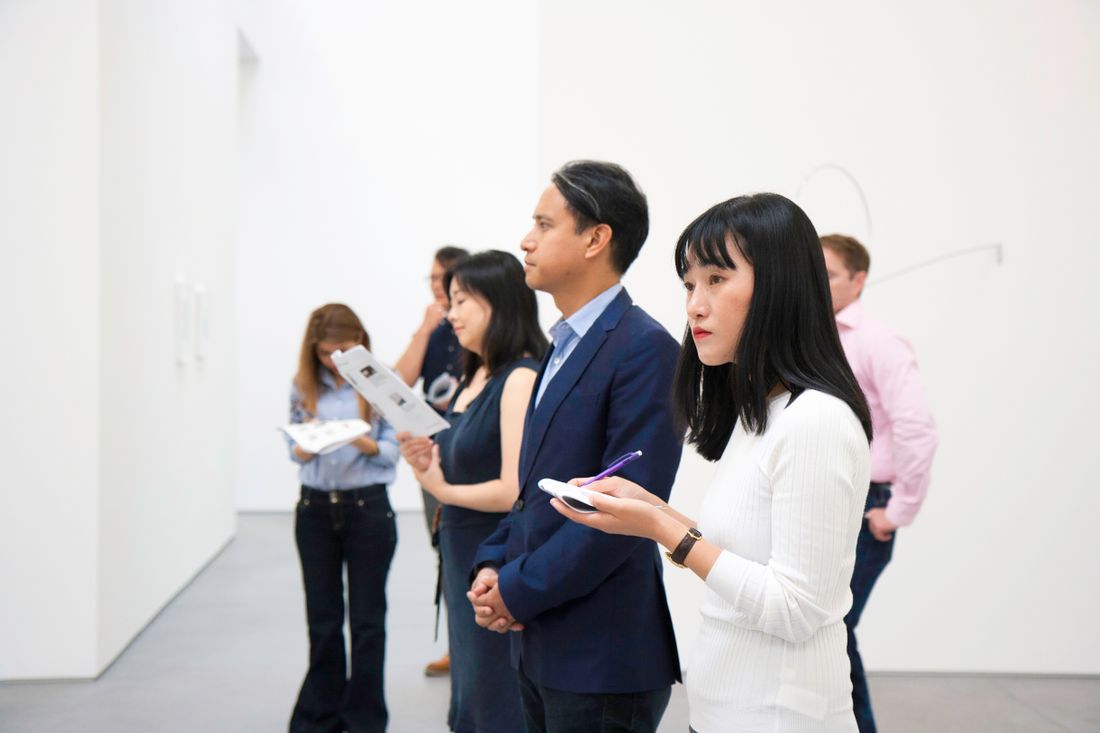
A closing-night artist talk usually draws a small, genuinely attentive audience rather than a room still arriving and finding drinks, which means the photographer's job shifts from working around motion and noise to working quietly around stillness and close listening.
Opening remarks compete with a room that's still settling in. People are arriving, finding a glass of wine, greeting each other, and the artist talk is happening alongside all of that rather than as the main event. A closing talk is often the opposite. By the last week of a run, whoever shows up specifically for a talk is usually there because they want to hear it, and the room tends to actually go quiet.
That quiet changes the coverage. Camera movement and shutter noise become more noticeable in a still room, so the photographer works from a fixed position more than an opening would call for. The reward is a genuinely attentive audience to photograph, people leaning in, taking notes, asking real questions instead of hovering near the exit with their coats already on.
The result is usually a more intimate set of images: fewer wide crowd shots, more close, engaged faces, and audio that doesn't need to fight through the ambient noise of an opening-night room to capture what the artist actually said. That cleaner audio track alone is often worth planning the closing talk around, separate from any photo or video use.
Is there an honest case for skipping closing reception coverage?
Yes. Skipping closing coverage is a reasonable call for a small show on a modest budget, especially when there's no formal closing program planned and the opening already produced the installation shots and audience photos the gallery actually needs for its website, its archive, and its next round of applications.
Not every show has a closing event worth documenting in the first place. Plenty of exhibitions simply end: the work comes down on a scheduled date, with no reception, no artist talk, and no gathering to photograph. There's nothing to skip in that case, since there was never a second event to begin with.
Even where a small closing gathering does happen, a gallery working with a tight budget can reasonably decide the opening already covered what matters most: an audience photo for social proof, a few installation shots, a portrait of the artist near the work. If the closing is genuinely a quiet, low-key gathering rather than a second real event, spending the budget elsewhere, an artist portrait session, better artwork documentation, a brand film, can be the more useful choice.
The honest version of this decision is treating it as a real tradeoff rather than a default. Skipping the closing because there's a better use for the budget is a choice. Skipping it because nobody thought to ask is just a gap in the archive that shows up later, usually right when a piece of documentation is needed and doesn't exist.
How should a gallery plan a closing reception shoot differently from an opening night shoot?
A closing reception shoot is usually planned around a smaller, less predictable crowd and a shorter, more flexible schedule, which means less coordination overhead than an opening but a real need to confirm attendance expectations up front so the shot list matches the actual room.
An opening gets planned around a known quantity: an invite list, a set start time, an expected crush near the door for the first half hour. A closing is harder to predict. Attendance can range from a genuinely full room, especially if there's a scheduled artist talk, to a handful of regulars stopping by on their way somewhere else. Confirming which version to expect before booking changes what the photographer plans to shoot.
One photographer is usually enough for a closing, where an opening with heavy foot traffic might call for a second person covering photo and video separately. There's less crowd to manage, less competing noise, and less need to divide coverage across simultaneous activity happening in different corners of the room.
Timing near the end of a show's run also means the shoot can double as a planning session for what comes next: which pieces are still available, what the wall will look like once the show comes down, and what images the gallery will actually want on hand once this particular show is history and the next one is already being hung.
Frequently asked questions
Does a closing reception need the same crew as an opening?
Usually not. A closing reception typically draws a smaller, more predictable crowd than an opening, so one photographer is often enough where a busy opening might call for a second person splitting photo and video coverage. The exception is a closing built around a well-promoted artist talk, which can draw a fuller, more engaged room and may benefit from the same crew size and split coverage as a busy opening night.
How far in advance should a gallery book a closing photographer?
Booking a closing photographer a few weeks ahead, similar to an opening, gives enough lead time to confirm whether the closing includes a formal program like an artist talk, which affects the shot list and schedule. Since closings sometimes get planned later than openings and can shift as a show's final week approaches, checking the calendar early avoids scrambling to book coverage at the last minute.
Should closing photos replace opening photos in a portfolio?
Not replace, but often supplement. Opening photos still show audience energy and the excitement of a launch, which closing photos don't really replicate. Closing photos tend to work better for clean installation shots, applications, and long-term archives, since the room is usually less crowded and the walls are easier to photograph. Most galleries get more use out of keeping both sets than choosing one over the other.
What if the closing reception has no formal program?
A closing with no artist talk or scheduled program is still worth a shorter, simpler shoot if the budget allows: a handful of clean installation shots, a few final audience moments, and any visible red dots worth documenting for the archive. If there's genuinely no gathering at all, just a scheduled de-install, there's nothing to cover, and the opening's existing documentation is likely sufficient on its own.
Can closing images be used for grant or residency applications?
Yes, often more effectively than opening images. Grant and residency reviewers usually want a clear, unobstructed view of the finished installation, which a closing reception's thinner crowd makes easier to capture than an opening's denser room. A closing shoot timed near the end of a run can double as the documentation session an upcoming application actually needs, without needing to book a separate session later on.
Got overlapping openings already on the calendar?
We work out the coverage plan well before the night gets close, whether that's two shooters, a tight schedule, or simply booking early enough to avoid the conflict entirely.
Explore event coverage →