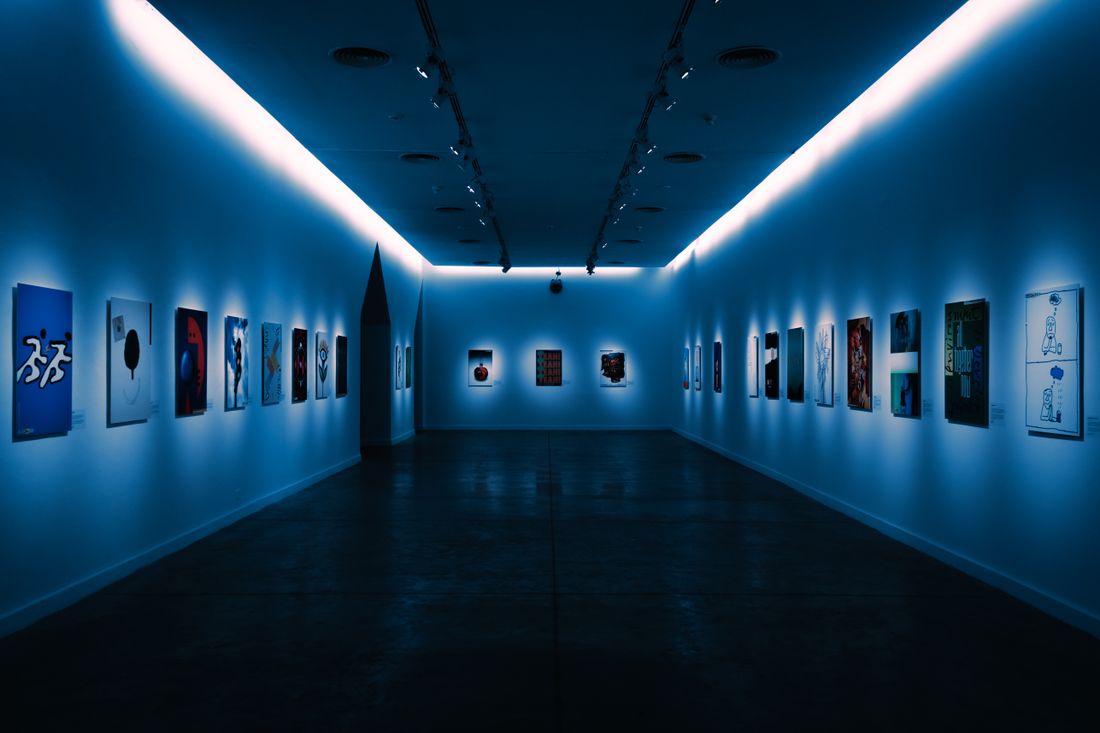
Same gallery, same room, completely different job. A September season opener and a July group show can happen in the identical space and still ask for two different coverage plans, because what changes between them is not the walls but the stakes: how many people show up, whether press and collectors are in the room, how crowded it gets before the doors have been open an hour, and how long the resulting images have to keep working after the night ends. Plan for the wrong one and the gap shows up on the night, not before it.
A September season opener needs more coverage than a July group show because it draws a bigger, denser crowd, brings press and priority guests into the room, starts after daylight is gone, and produces images that a gallery reuses for a full season rather than a single recap post.
What actually changes between a September opener and a July group show?
The room stays identical, but the job changes underneath it: a September opener pulls a bigger, denser crowd, adds press and collectors into that same square footage, and produces images that get reused for a full season, while a July group show draws a lighter crowd, skips press, and mostly just needs an accurate record.
Galleries plan their calendar around this difference even when they never say it out loud. A season opener is usually the show a gallery has been building toward for months: new artists, a full program announcement, a room built to make a first impression on people who decide what gets written about or invited back next season. A July group show is often lighter by design, a summer lineup, a bridge between bigger moments.
That difference shows up as attendance, but attendance is the least useful way to think about it. What actually changes is who is in the room and what they need from the photographs afterward. A gallerist at a July show wants a record that the show happened and looked good. A gallerist at a September opener needs images for a press packet or next season's marketing, because that opener does more institutional work than one evening.
None of this means a July show gets skipped or shortchanged. It means the plan starts from a different question. A July show asks: did we document the work and the room. A September opener asks: did we capture what the gallery needs for the next twelve months, before the room got too full to shoot properly.
Why does a summer show tolerate lighter coverage when a season opener doesn't?
A July group show tolerates lighter coverage because its job ends quickly: a clean set of installation shots and a few candid frames cover what the gallery needs for that month. A September opener can't tolerate the same coverage because its images carry programming, press, and collector-facing work for a full season afterward.
"Lighter coverage" is a specific, practical thing, not a euphemism for careless work. For a July show it usually means one photographer, a shorter shot list, and a plan built around the installation and the general mood of the room. There is no press list to work from, no obligation to catch every artist individually, and no expectation that any single frame needs to carry the gallery's identity for months to come. The photographer documents the show accurately and moves on.
A season opener changes what "accurate" has to include. The gallery is not just documenting an evening, it is building the visual record that outlets, collectors, and its own marketing will draw from until the next opener. That means the shot list has to be longer, the priority order has to be firmer, and there is far less room for a shot to simply not happen because the room got busy.
The mistake is treating both nights as the same job at different volumes. They are not. A July show is a documentation job with a light footprint. A September opener is a documentation job that also has to double as press material, archive material, and next season's marketing asset, shot in a single, crowded evening with no do-overs.
What happens to the shot list once the room actually fills up?
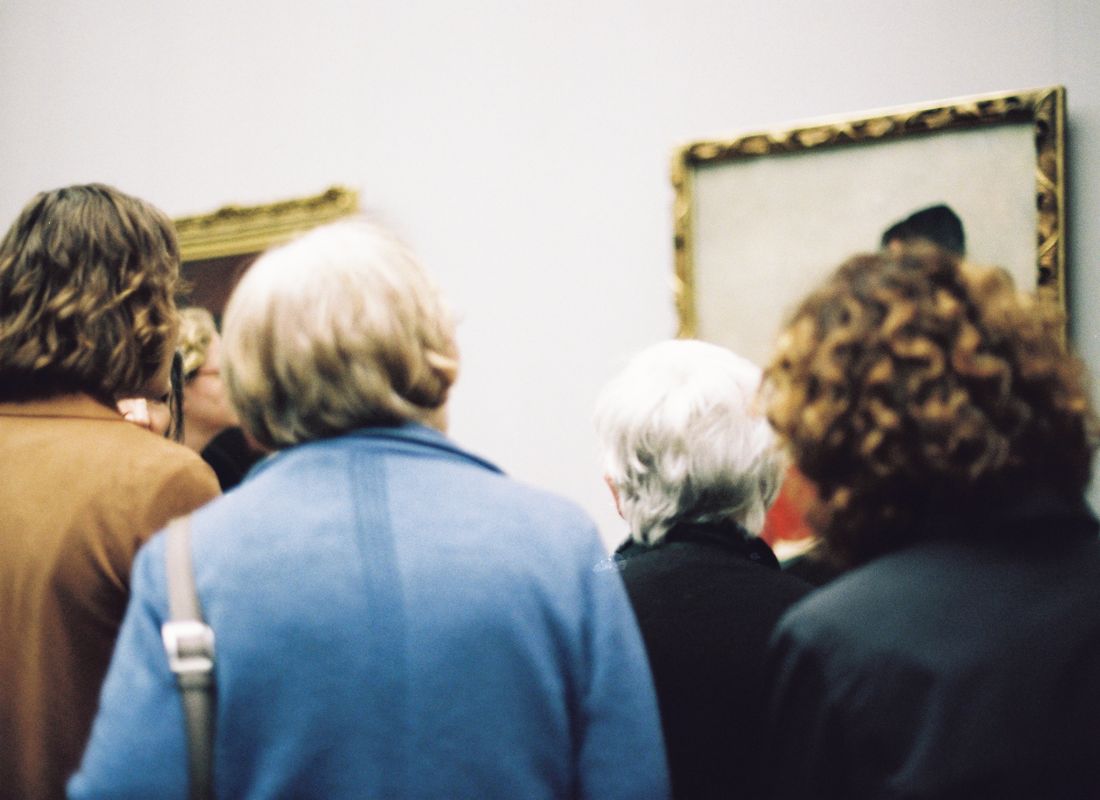
Once a gallery fills, installation views become nearly impossible to get clean. Bodies block walls, sightlines disappear, and empty-room shots that were easy an hour earlier are gone until the crowd thins. That single fact inverts the shot order: install and wide room shots have to happen first, before doors open, not last.
A quiet July show may never fill enough to make this a problem. A modest crowd moves through a room without blocking every wall at once, so a photographer can often get installation views and candid coverage in almost any order and still catch clean versions of both. A September opener does not offer that flexibility. The room fills fast, stays full for most of the evening, and rarely thins out again until near the end.
That changes the plan on paper, not just on the night. The installation views, the wide room shots, and anything that needs a clear wall or an unobstructed sightline get scheduled for the window before guests arrive or in the first few minutes after doors open. Portraits, candid crowd coverage, and anything that benefits from a full room get scheduled for after that window closes, once the room has done what a season opener's room is supposed to do.
Skipping this order does not just cost a few shots. It usually means the gallery never gets a clean installation view of its own opening at all, because the only time that shot was possible passed while the photographer was still covering something else. Planning the order in advance is what prevents that specific, avoidable loss.
What does daylight in July versus a dark 6pm in September change about the plan?
July daylight lingers into the evening and fills a gallery with soft, even light for most of a show; a September opener starting around 6pm loses that daylight fast, leaving the room dependent on whatever fixtures and track lighting the gallery actually has. That shift changes equipment, timing, and how much light has to be built rather than borrowed.
A summer opening often runs on daylight still doing real work through the first hour or two, especially in a room with west-facing windows or a skylight. That daylight is generous: it evens out contrast, softens shadows, and gives a photographer more room to move without worrying about where the light is coming from. A September opener starting at the same clock time is shooting into an entirely different situation, because the sun is already down or dropping fast.
Once daylight is gone, the room is lit by whatever the gallery has running: track lighting aimed at the art, a handful of sconces, maybe a dimmer scheme that shifts partway through the evening. None of that is designed with a camera in mind, which usually means planning for supplemental light, knowing which fixtures sit on dimmers, and deciding in advance where flash will help more than it fights the existing scheme.
This is a planning conversation, not a last-minute adjustment. A July shoot can get away with minimal gear and a wait-and-see approach to light. A September opener needs that settled before the date, because there will not be time to solve a dark room while covering a press list and a packed crowd at once.
What is the press-and-priority list that only exists for a season opener?
A season opener usually comes with a list of people and moments a gallery cannot afford to miss (specific arrivals, a handful of conversations, particular vantage points a press outlet might request), and that list simply does not exist for a July group show, which runs without any fixed must-get moments at all.
This list is not something a photographer invents on the spot. It comes from the gallery, usually from whoever is running the evening, and it needs to be handed over before the night starts, not worked out in a hallway conversation minutes before doors open. It might include a director who needs to be photographed near a specific work, a moment the gallery wants documented for an announcement, or confirmation of who from press or the collector base is expected so the photographer knows which faces matter if they appear.
A July show generally has none of this. There is no press expected, no fixed list of priority guests, and no single conversation the gallery is depending on being caught. The photographer works more loosely, covering the room and the work without a checklist of specific people to track down.
The risk with a season opener is treating it like the looser summer version by default. Without a priority list agreed in advance, a photographer is guessing at what matters most in a room too crowded to shoot everything, and the guesses tend to miss exactly the handful of moments the gallery actually needed. Confirming the list ahead of time is what keeps that from happening.
How does the number of artists in the room change who has to be photographed?
A July group show can include a longer list of artists, but expectations are usually looser about catching every one individually; a September opener, even with fewer artists, tends to carry a firmer expectation that each one gets an actual portrait or moment, because the opener is the artist's formal introduction for the season.
Group shows can run large: a dozen or more artists is not unusual for a summer lineup built around a loose theme. Photographing every one of them individually, in a crowded room, usually is not the plan. Coverage leans toward the room and the work as a whole, with individual artist moments caught when they happen naturally rather than tracked down one by one.
A season opener flips that expectation even with fewer artists. If a gallery is opening its year with one or two artists, or a small curated group, coverage usually needs to include each of them specifically (a portrait near their own work, a moment with a guest, something the artist and the gallery can use afterward). Missing one of those people is a bigger problem at an opener than missing one name out of twelve at a July show.
This is worth naming out loud when a shoot gets booked, not assumed. A gallery that expects individual coverage of every artist at its opener needs to say so, and needs to give the photographer a way to identify who is who in a room full of strangers. Otherwise coverage defaults to the room, and a person who mattered gets missed entirely.
How long do the images from each show actually need to keep working?
A July group show's images typically do their job within a month (a recap post, maybe a mention in a summer roundup) and then stop being used. A September opener's images get pulled back out for a press packet, a year-end summary, and next season's marketing, so they need to hold up for a full year, not four weeks.
Shelf life changes what "good enough" means. A July show's photographs need to be accurate and presentable for their brief window of use, and once that window passes, nobody looks at them again with much scrutiny. A gallery reusing a September opener's images for a press packet or a year-end recap is asking those images to represent the gallery in contexts nobody planned for on the night itself.
That difference argues for more variety, not just more volume. An opener benefits from a wider range of crops, orientations, and moments, because nobody can predict which image ends up in which future use. A single-purpose set that worked fine for a one-time recap post becomes a limitation the moment the gallery needs a vertical crop, a horizontal for a release, and a clean portrait for a bio page, all from the same evening.
This is also why an opener's images are worth organizing more carefully afterward than a July show's usually are. A folder serving one recap post can stay loosely sorted. A folder expected to serve a full season of reuse is worth the extra time to caption, tag, and hand off so someone can find what they need eight months later.
How should a gallery brief the studio differently for each kind of night?
Tell the studio up front whether the night is a July-style show or a September opener: expected attendance, whether press or priority guests are coming, how many artists need individual coverage, and how long the images need to keep working. That single conversation is what lets the difference get priced and planned instead of discovered mid-event.
In practice, this means answering a short set of questions before the date is booked, not on the night. How full is the room expected to get. Is anyone from press or a priority guest list attending, and who needs to be flagged. How many artists are in the show, and does each need individual coverage or just a strong sense of the room. What will these images be used for once the evening ends, a single recap, or a season's worth of marketing material.
A studio that knows the answers in advance can plan around them: arriving early for the empty-room shot before a crowd builds, bringing supplemental light for a dark 6pm start, confirming a priority list with gallery staff ahead of time, and building in extra variety for images that keep working for months. None of that is possible to improvise once the room is full and the clock is running.
The gallery that treats this as a short conversation before booking, rather than assuming "photograph the opening" means the same thing every time, ends up with coverage matching what the night needed. The one that skips it finds out what was missing the next morning, looking through a folder without the shot it needed.
Frequently asked questions
Does a September season opener always need more coverage than a July group show?
Usually, yes, though it depends on the gallery's specific plans. A season opener tends to carry more attendance, a press-and-priority list, and images that need to work for a full season, all of which point toward fuller coverage. A quiet, low-key September opener could need less than a large, ambitious July show. The safest approach is briefing each night on its own terms rather than assuming the calendar month decides the coverage level automatically.
Can one photographer cover a season opener the same way they'd cover a July group show?
Sometimes, but it depends on expected attendance and whether a priority list exists. A quieter opener with a short guest list can often run on one photographer working a tightened order: installation and empty-room shots first, then candid and portrait coverage once the room fills. A larger opener with press attending, several artists needing individual coverage, and a packed room usually benefits from a second shooter so nothing on the priority list gets missed.
What is the biggest planning mistake galleries make with a September opener?
Treating it like a bigger version of a summer show instead of a different job. The mistakes that follow are predictable: no priority list handed to the photographer, no plan for the room filling before installation shots are caught, and no conversation about supplemental lighting for an evening start. Each of these is simple to solve in advance and hard to fix once guests are already filling the room.
Should a gallery request installation views before or after guests arrive at an opener?
Before, whenever possible. Once a September opener's room fills, getting a clean installation view without people in the frame becomes difficult and sometimes impossible for the rest of the evening. Scheduling twenty or thirty minutes before doors open, or working with the first arrivals before the room is at capacity, is the most reliable way to guarantee that shot. A July show's lighter attendance usually leaves more flexibility on timing.
How far in advance should a gallery brief the studio on an opener's priority list?
As early as the booking allows, and no later than a few days before the event. A priority list built the morning of the opener leaves little room to plan pacing, confirm names with gallery staff, or build the shot order around it. Handing it over earlier lets the studio plan the evening properly, including where the photographer needs to be positioned when a specific guest or moment actually happens.
Two openings on the same night doesn't have to mean a scramble.
We plan around clustered opening nights ahead of time, a split schedule, a second shooter, or booking early enough that the calendar stops being the risk.
Explore event coverage →