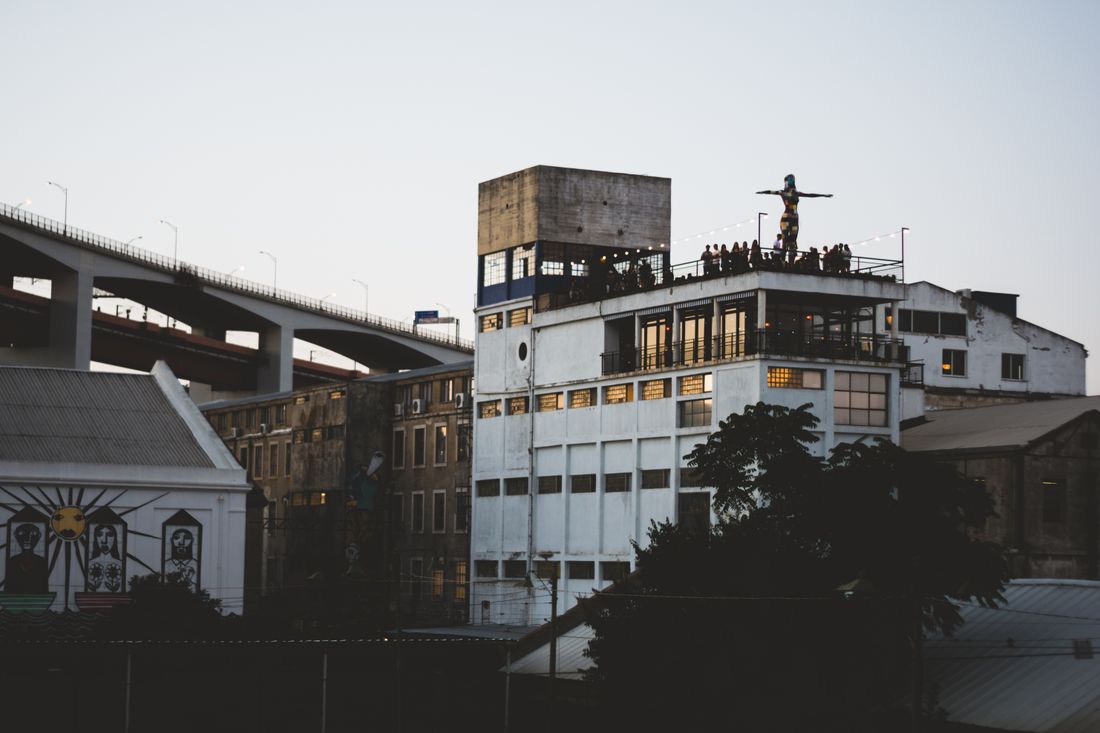
A rooftop or courtyard booking rarely stays in one kind of light. It moves through daylight, a fast sunset transition, and full artificial light after dark, often inside the same three-hour window, and each phase asks for a different kind of coverage.
An outdoor evening event moves through three lighting situations in about ninety minutes: full daylight, a brief sunset transition, and full artificial light after dark. Planning coverage around that sequence, instead of treating the light as constant, is what keeps a rooftop or courtyard gallery consistent from the first shot to the last.
What Actually Changes During a Rooftop or Courtyard Evening Event
An outdoor evening event moves through three distinct lighting situations in roughly ninety minutes: full daylight, a fast sunset transition, and full artificial light after dark. Each phase changes exposure, color, and what the camera can actually see, and the shot list has to plan around the switch, not just around the venue.
Most planning conversations about a rooftop or courtyard event focus on the venue itself: the view, the layout, the flow between the outdoor space and whatever room sits behind it. Fewer conversations focus on the clock. A rooftop booked for a six to nine o'clock window covers daylight, twilight, and full dark inside three hours, and the visual character of the space changes more in that window than almost anywhere else on a typical shot list.
Daylight coverage is the easy part. The space reads clearly, faces are lit evenly, and a skyline or garden background holds its detail without extra work. The transition that follows is short and unforgiving: the sky still carries color, but the ambient light drops fast enough that an exposure set at quarter to seven can already read underexposed by five past. Once the sky goes fully dark, coverage depends entirely on whatever light source the venue actually has, string lights, lanterns, or spill from an interior room, and that light is usually warmer, dimmer, and less even than daylight was.
None of this becomes a problem when it is planned for. It becomes one when a shot list assumes the light will hold steady for three hours and then does not.
The Three Lighting Situations Packed Into One Evening
A rooftop or courtyard event usually delivers three separate lighting jobs in a single booking: bright, even daylight; a brief and rapidly shifting golden-to-blue transition; and low, artificial light once the sun is gone. Treating them as one continuous condition is the most common planning mistake, because the settings, the pace, and even the priorities change with each one.
Daylight is the most forgiving window. There is enough ambient light to move quickly, faces hold detail without extra help, and a wide shot of the space still looks like the space. This is the phase to bank the widest, cleanest coverage: full views of the room or roof, the layout before it fills in, and any signage-free branding or décor detail that benefits from even light.
The transition window is the shortest and the most demanding. The sky is doing something worth capturing, but the usable light is dropping by the minute, which means settings correct ten minutes earlier are already wrong. This phase rewards decisiveness over perfection: fewer setups, faster moves, and prioritizing shots that will not exist again once the color is gone.
Full dark is its own discipline. Once ambient light is gone, the event runs entirely on whatever fixed light sources the venue provides. Coverage slows down, framing gets tighter around the light that exists, and the mood shifts from bright and open to warm and close. None of the three phases is harder than the others in isolation. The difficulty is that they arrive back to back, with no pause between them to reset.
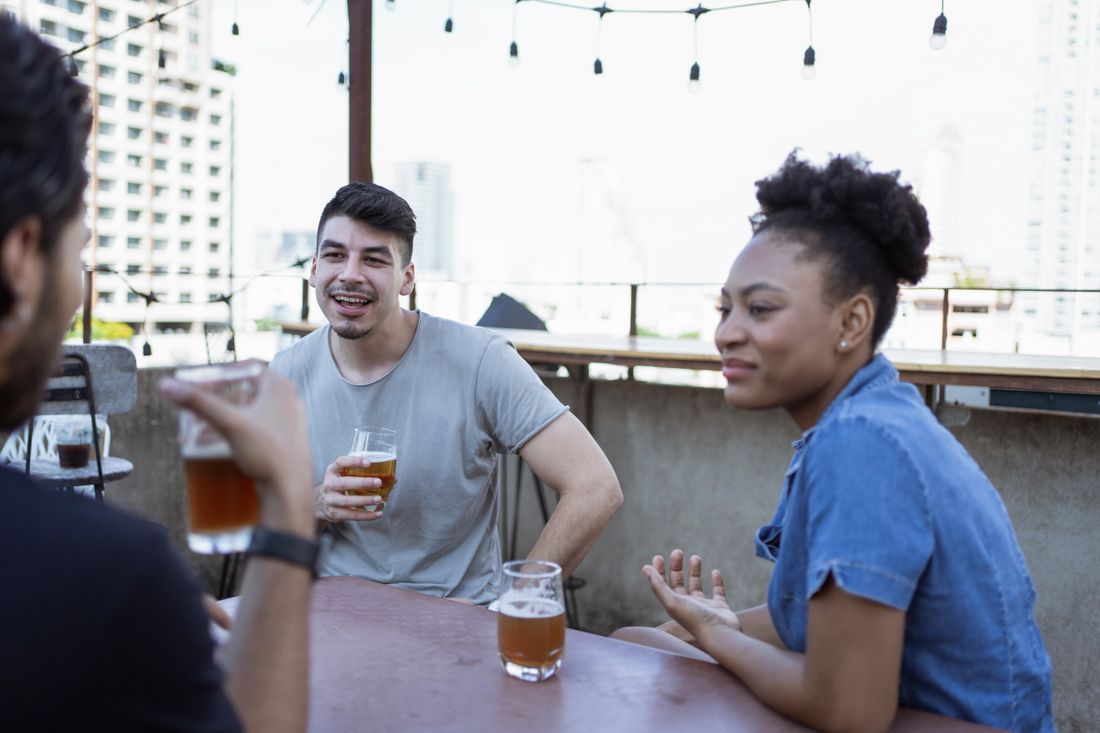
How a Fading-Light Event Differs From a Rained-Out One
A fading-light event and a bad-weather event are both outdoor problems, but they are not the same problem. Bad weather forces the shot list to bend around unpredictable conditions that might not change at all during the booking. A light transition is scheduled, predictable, and guaranteed to happen at roughly the same pace every time the sun sets.
That predictability is an advantage, not a downside, but only if it gets used. A rained-out event usually means adjusting in real time: moving indoors, waiting out a break in the weather, or reworking a shot list around a condition that might improve or might not. A fading-light event does not offer that kind of uncertainty. The sun sets on a known schedule, twilight lasts a known length of time, and the exact minute the venue's own lighting becomes the only light source is knowable in advance.
The practical difference shows up in preparation. Weather-contingency planning is about flexibility: backup locations, a plan B for the group photo, a shot list that survives being reordered. Light-transition planning is about sequencing: knowing which shots need daylight, which ones only work during the color of the transition, and which ones are meant for after dark, and then building the evening's coverage in that order rather than hoping to catch everything as it happens to come up.
Both problems reward preparation. They just reward different kinds of it, which is why a shot list built for one does not automatically work for the other.
What a Walkthrough Should Settle Before the First Daylight Shot
A pre-event walkthrough for a rooftop or courtyard should settle where the sun will be at each stage of the event, where the venue's own lighting sits once it takes over, and which spots will look strong in daylight but disappear once the ambient light drops. Skipping this step usually means discovering the answers live, during the hardest part of the evening to improvise.
Sun position matters more outdoors than almost anywhere else on a shot list. A courtyard corner that looks perfect at four in the afternoon can sit in flat shadow by the time guests arrive, and a rooftop edge that seems like the obvious backdrop can put the sun directly behind every face during the one window when portraits are easiest to get. A walkthrough at, or close to, the actual event time is worth more than one at a convenient hour earlier in the week.
The second thing worth confirming is what the venue's own lighting looks like once it becomes the only light source. String lights, sconces, and interior spill all read differently through a camera than to the eye standing in the space, and the only reliable way to know is to see them lit, not assume from a daytime visit that they will be enough.
The third is simply a timeline: when doors open, when the schedule expects toasts or a formal moment, and when the sky is expected to go fully dark. That timeline, matched against the shot list, is what turns three lighting phases into a plan instead of a scramble.
What Needs to Be Captured While the Sun Is Still Up
Certain shots only work in daylight and cannot be recreated later: wide establishing views of the full space, any shot where the background needs to hold real detail, and anything that depends on even, flattering light across a group. These should be scheduled early and protected on the timeline, because there is no later opportunity to go back and get them.
A wide establishing shot is the clearest example. Once the space fills with guests and the light drops, it becomes difficult to show the room or roof as a whole in a way that reads clearly. Getting that shot in daylight, before or just as guests arrive, banks a piece of coverage that the rest of the evening cannot replace.
Group shots are the second priority. Even light is genuinely easier on a group than any other condition the evening will offer: everyone is lit similarly, nobody is fighting a shadow from the person beside them, and the background stays legible instead of falling into silhouette. If a formal group moment is part of the plan, daylight or the very start of the transition is the strongest window for it, not the point later in the evening when it is easiest to schedule.
The same logic applies to any detail work tied to the setting rather than the people: table settings, décor, or the general atmosphere of the space before it fills. These are quick to capture and easy to deprioritize in the moment, which is exactly why they belong early on a written list rather than left to memory.
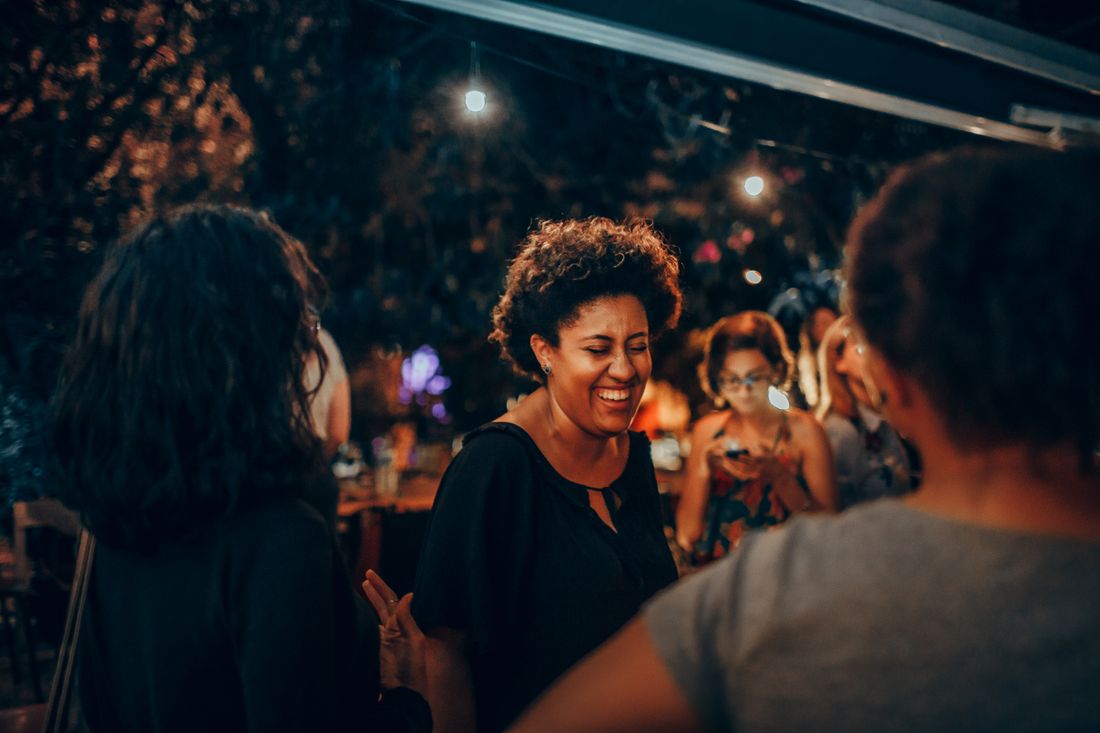
Why the Twenty Minutes After Sunset Are the Hardest to Plan Around
The period right after sunset is short, visually the most rewarding part of the evening, and the easiest to lose entirely if the rest of the shot list runs long. The sky holds color for a limited stretch, and once it fades to full dark, that particular look does not come back for the rest of the night.
This window rewards a different pace than daylight coverage does. There is less time to reset between setups, less room to second-guess a composition, and a real cost to spending too long on any single shot. The most useful approach is to know, ahead of time, which two or three shots matter most during this specific window, so the choice under time pressure is which order to get them in, not what to shoot at all.
It also helps to accept that the transition is genuinely a moving target. The color in the sky, the balance between it and the venue's own lights, and the amount of usable ambient light on people's faces are all changing minute to minute, which means a setting that worked a few minutes ago may already need adjusting. This is less about any single correct approach and more about staying responsive rather than locked into one plan.
Because this window is unrepeatable, it is worth treating as its own small event inside the larger one: a defined stretch with its own priorities, rather than an extension of the daylight coverage that happened to run a little later.
What Still Needs Coverage Once the Sky Goes Black
Full dark is not a wind-down phase. It usually covers the largest share of an evening event's actual runtime, including dinner, dancing, toasts, or whatever the event's main activity is, and it needs its own deliberate coverage rather than being treated as an afterthought once the interesting light is gone.
The mood changes here more than the difficulty does. String lights, candles, and interior spill create a warmer, more intimate feel than daylight ever offers, and a lot of an evening event's most genuine, unposed moments happen during this stretch, once people have settled in and stopped noticing the coverage. Tighter framing around the venue's actual light sources tends to work better than trying to light the whole space evenly, because the unevenness is often what makes the space feel like itself after dark.
Coverage also needs to account for movement. Dancing, toasts, and general mingling all happen at a pace that daylight coverage does not have to plan for, and low light makes that motion harder to hold onto cleanly. This is where a deliberate approach to where people are likely to gather, and what light will actually be on them there, does more work than reacting shot to shot.
By the time an event reaches full dark, the shot list has already been through two other lighting conditions. The point of planning for all three from the start is that the darkest part of the night does not end up being the least covered one, simply because it arrived last.
Why the Edit Has to Fix Continuity, Not Just Each Individual Photo
A gallery from a rooftop or courtyard event has to read as one evening even though it was shot under three different lighting conditions, which means the edit has to manage continuity across the whole set, not just correct each image on its own. Handled individually, daylight, transition, and night photos can end up looking like they belong to three different events.
The most common issue is color temperature drifting sharply between phases. Daylight tends to read clean and neutral, the transition carries genuine warmth and saturation in the sky, and artificial light after dark often skews warmer or cooler depending on the venue's actual fixtures. Left uncorrected, a gallery can swing from cool to intensely warm to inconsistent within the first twenty images, which reads as a mistake even when every individual photo is well exposed.
The fix is to edit with the whole sequence in view rather than image by image. Grouping by lighting phase first, establishing a consistent look within each group, and then checking how the groups sit next to each other in order tends to produce a gallery that feels like a single evening rather than three separate ones stitched together. Some of the most striking single images, especially from the transition window, are worth letting stand a little apart from the rest, because that phase is meant to look and feel different.
The goal is not to flatten every photo into the same look. It is to make the shift between conditions feel like the evening actually did: gradual, then sudden, then settled, instead of jarring.
Frequently asked questions
How long does the light transition actually last at an outdoor evening event?
The transition from daylight to full dark generally lasts somewhere around twenty to forty minutes, depending on the season and how open the sky is above the venue. It moves faster than most people expect, which is why treating it as a single quick window to plan for, rather than a slow fade, tends to produce noticeably better coverage of that specific stretch of the evening.
Should a rooftop or courtyard event be scheduled earlier to get more daylight?
It depends on what the event actually needs. Starting earlier gives more time for daylight coverage like wide venue shots and group photos, but it also pushes the transition and full-dark phases earlier in the schedule, which can shift toasts or a formal moment into a different lighting condition than planned. The better question is usually not what time to start, but which lighting phase the event's key moments are supposed to land in.
Does a courtyard need different handling than a rooftop as the light fades?
Both go through the same three lighting phases, but a courtyard is usually more enclosed, with buildings or trees blocking part of the sky, while a rooftop tends to hold onto ambient light a little longer with fewer obstructions around it. A courtyard walkthrough should pay closer attention to where shadows fall once the surrounding structures start blocking the remaining daylight, since that can happen well before actual sunset.
What happens if the event runs behind schedule and the light changes faster than planned?
This is exactly why a walkthrough and a phase-based shot list matter more than a minute-by-minute timeline. If the schedule slips, a plan built around three lighting phases and their priorities adjusts naturally, since the priority shots for each phase are already known ahead of time, rather than needing to be figured out on the spot while the light is actively changing underneath the event.
Can photos from daylight, transition, and full dark be edited to feel consistent?
Yes, with a deliberate approach. The three phases are edited as distinct groups first, each with its own consistent look, and then checked together so the finished sequence reads as one evening rather than three mismatched sets stitched together. Some difference between phases is still expected and even desirable, since the transition is meant to look and feel different from full daylight or full dark.
Two openings on the same night doesn't have to mean a scramble.
We plan around clustered opening nights ahead of time, a split schedule, a second shooter, or booking early enough that the calendar stops being the risk.
Explore event coverage →