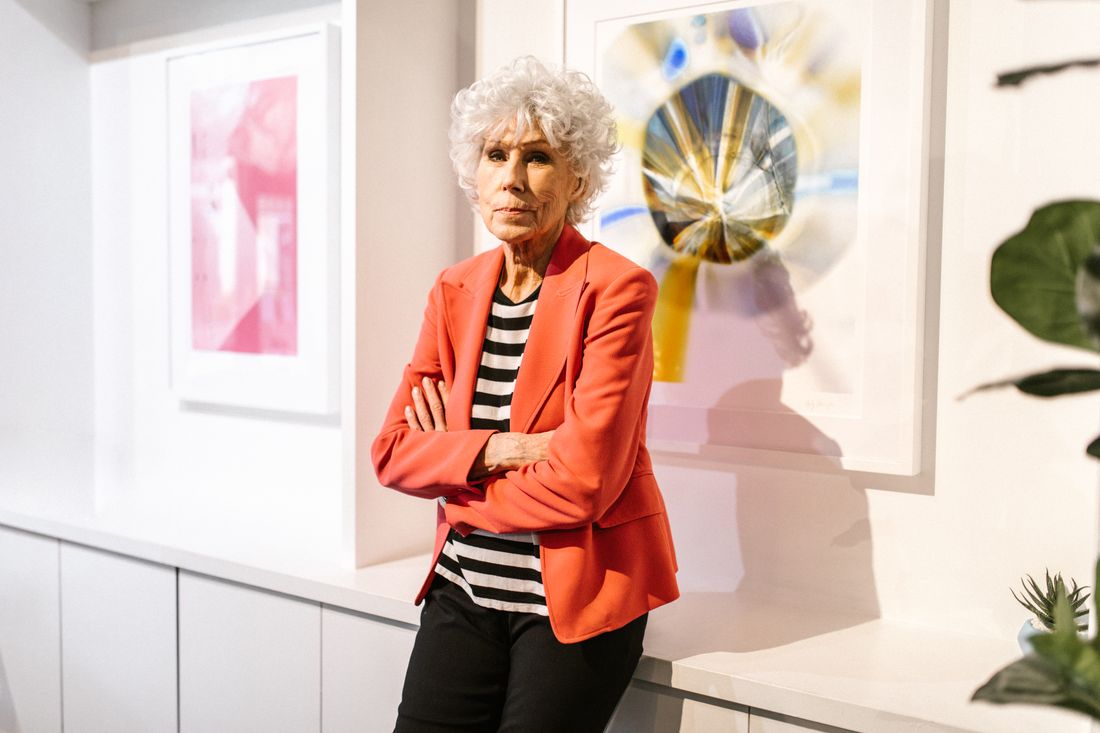
The tension is worth naming up front. An artist gets photographed to be understood, the mess, the materials, the process are the point. A gallerist or curator gets photographed to be believed. The portrait needs to say this person has excellent taste and knows how to run a room, not this person made something with their hands. Shoot it like an artist portrait and they read as decorative. Shoot it like a corporate headshot and you lose everything specific to the art world they actually work in.
This guide walks through what actually changes the brief: the setting, the wardrobe, the expression, and whether it's worth shooting a second, more candid photo in the same session. None of it is complicated, but it's different enough from an artist portrait that it's worth thinking through before the shoot, not during it.
What job does this portrait actually have to do?
An artist portrait is usually solving for authenticity. Does this look like someone who actually makes the work, in their own space, with their own materials, doing something recognizably real? A gallerist or curator's portrait is solving for a different question entirely: can this person be trusted to run a program, price the work fairly, advocate for an artist in a room the artist isn't in, or make a curatorial call that holds up?
Think about who is actually looking at the photo. A collector deciding whether to build a relationship with a gallery. An artist trying to figure out who they'd be handing their next show to. A journalist or editor deciding whether this person is worth quoting as an authority. None of those audiences care about process. They're reading the photo for judgment, taste, and whether this is someone who has done this before and knows what they're doing.
That's a subtle shift, but it changes almost every decision in the brief. It's less about revealing a practice and more about establishing standing. The portrait has to hold up next to a bio that says director, founder, or chief curator, and it has to do that without tipping into something stiff or generic.
Why the setting matters more than it does for an artist
For an artist, the studio does a lot of the talking. Materials, works in progress, tools on the wall, all of it reads as evidence. A gallerist or curator doesn't usually have that kind of workspace to lean on, which is exactly why the setting matters more here, not less.
The gallery itself, an install in progress, or a considered office or desk setting reads as far more relevant than a plain studio backdrop, because the space is part of this person's professional identity. A gallerist photographed in their own space, with real work on the walls behind them, is showing you something true about who they are and what they've built. The same person photographed against a plain gray backdrop could be anyone with a good jacket.
This doesn't mean the space has to be pristine or fully hung. A gallery mid-install, with work leaning against a wall or a ladder still out, can actually read as more credible than a perfectly finished room, because it shows the work of running the place rather than just the finished result. The frame should still feel intentional. Choose a wall, a corner, or a desk that says something specific about this person's taste, rather than defaulting to whatever's closest to the front door.
What "put together" means here, without going corporate
Wardrobe is where this brief gets misread most often. An artist's working clothes, whatever they'd actually wear in the studio, are usually exactly right for an artist portrait. That same instinct doesn't serve a gallerist or curator well, because their working clothes are already more considered than an artist's, and the portrait should reflect that without overcorrecting into a suit.
The goal is someone who has excellent taste and knows how to run a room, not someone in a suit. That usually means something more deliberate than day-to-day studio clothes, well-fitted pieces, a considered color choice, maybe one strong accessory, but nothing that reads as rented for the occasion. A gallerist who shows up in a blazer they clearly never wear looks less credible than one photographed in the clothes they'd actually wear to an opening.
We'll usually ask what they'd wear to a studio visit or an art fair booth, since that's the register this portrait should live in. It's dressier than artist clothes and less rigid than corporate ones, and most people already own exactly what that looks like.
The expression and posture you're aiming for
The phrase we come back to most often on these shoots is approachable authority. That's a posture, not a smile setting. It means someone who is comfortable making eye contact, not performing warmth or holding a rehearsed expression, and not retreating into overly formal stillness either.
In practice, that usually comes from letting the person do something with their hands or their attention rather than asking them to just stand and face the camera. Arms crossed, a hand resting on a desk or a frame, a slight turn of the shoulders toward the work on the wall, all of it reads as more natural than a flat frontal pose, and it tends to relax the face at the same time. Most people don't naturally hold a confident, easy expression on command. They hold it while they're doing something that feels like their actual job.
Avoid the two failure modes on either end of this spectrum. Too stiff and formal, and the photo reads as corporate, distant, unapproachable to the artists this person needs to build relationships with. Too soft or performed, and it undercuts the authority the portrait is supposed to establish. The sweet spot is closer to how this person actually looks mid-conversation with someone they respect.
Why a second, candid photo often earns its place
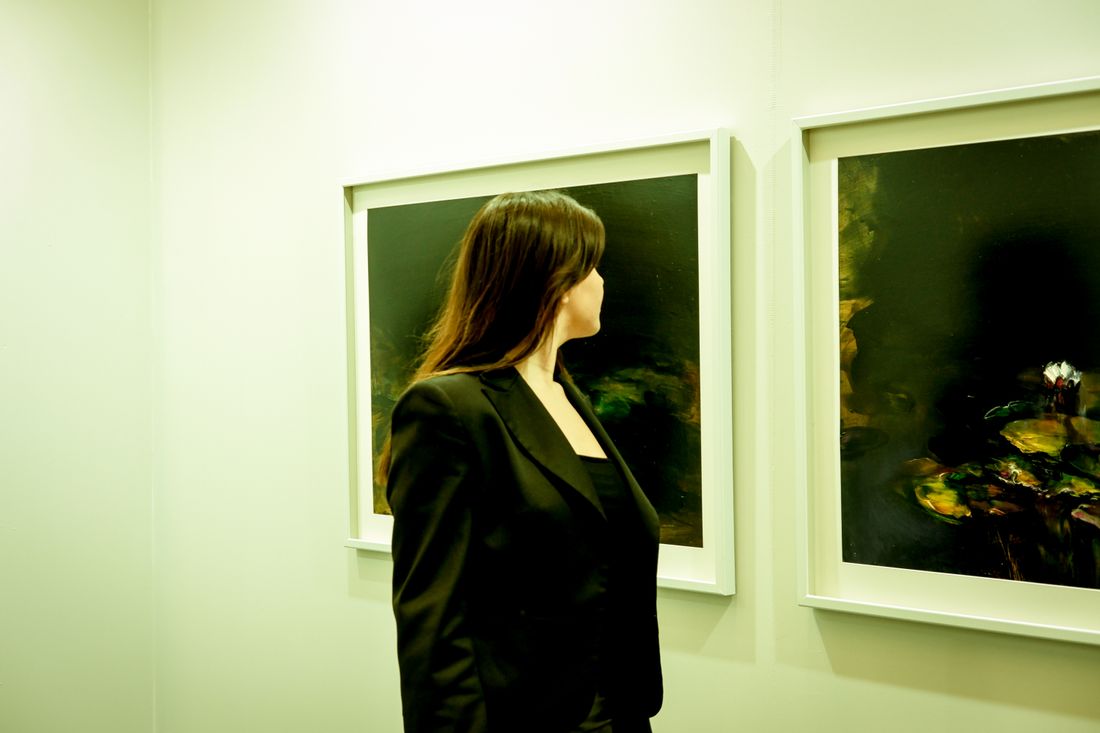
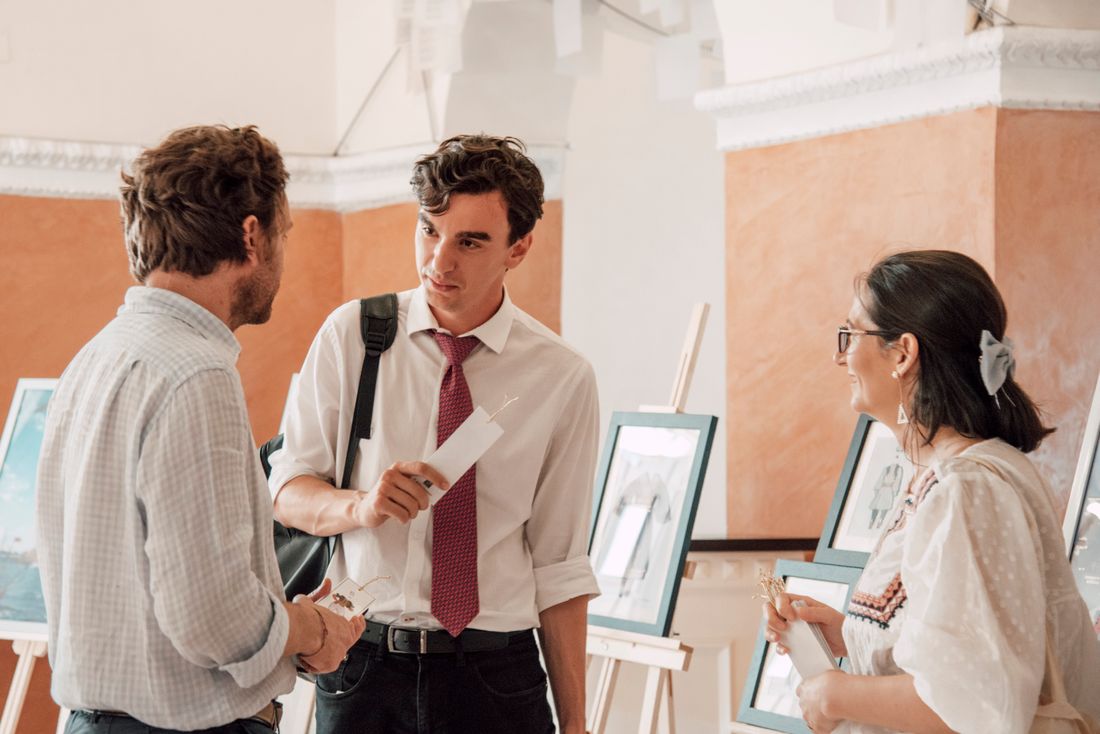
A curator's portrait sometimes needs a second, more candid version alongside the formal shot, something closer to mid-conversation with an artist or walking through an install. It's worth planning for this before the session rather than trying to improvise it at the end, because curators in particular get photographed in context far more often than gallerists do: studio visits, panel appearances, press coverage of an opening.
The formal portrait covers the bio page and the press kit. The candid frame covers everything that asks for a person in motion rather than a person posing, a panel announcement, a studio visit recap, a quote pulled for an article that wants a photo showing the work being done rather than a static headshot. Having both from the same session means the wardrobe and the setting stay consistent, which matters more than people expect once these photos start appearing side by side online.
This doesn't need to be a second shoot or a second setup. Ten minutes of a genuine conversation, with someone else in the room, an assistant, a colleague, sometimes even us asking a real question and photographing the answer, produces something far more useful than an instruction to look candid while standing alone.
The two mistakes this brief tends to invite
The first is treating this like a corporate headshot and losing everything specific to the art world context. A gallerist photographed against a plain background in a boardroom-adjacent pose could be a lawyer, a consultant, anyone. It's technically a fine photo. It just doesn't do the job, because it strips out every visual cue that says this person operates in this particular world with this particular kind of judgment.
The second mistake runs the other direction: treating it like an artist portrait and making the gallerist or curator look decorative rather than in charge. That usually happens when the photo leans too hard into mood, atmosphere, or artistic styling, and the subject ends up looking like they're posing near the art rather than presiding over it. It can look beautiful and still fail the brief if a collector looks at it and can't tell whether this person runs the gallery or just happened to be standing in it.
Both mistakes come from applying the wrong template rather than thinking through what this specific portrait needs to communicate. The fix isn't complicated, it's asking what this photo has to prove before deciding how to shoot it.
Let where the portrait will live decide the crop
The brief should always ask what the portrait needs to do, because that changes the crop, the formality, and whether a second candid option is worth shooting in the same session. A bio page usually wants a tighter, warmer crop that reads well small next to a paragraph of text. A press kit wants something that can be cropped several different ways by editors who aren't going to ask permission first, which usually means leaving more room around the subject than feels natural in the moment.
A gallery about page has more room to be specific. It can afford a wider frame that shows the space, a less formal pose, even the candid option as the lead image if the gallery's voice supports it. A director's LinkedIn profile or a fair application, by contrast, usually wants the most straightforward, highest-trust version of the formal portrait, cropped tighter, less context, more face.
It's worth having this conversation before the shoot rather than after, because it changes where we stand the subject, how wide we frame, and how much of the gallery makes it into the shot. A portrait built for one specific use can usually be recropped for others. A portrait built for no particular use tends to serve all of them a little poorly.
What an actual session for this looks like
In practice, these sessions run faster than people expect once the brief is clear. We usually walk the space first, five or ten minutes, looking for a wall or a corner with real work on it, decent existing light, and enough depth behind the subject that they don't feel pinned against the wall. Galleries almost always have better light than people assume, especially near the entrance or wherever the track lighting is angled for a current show.
We'll shoot the formal portrait first, a handful of positions in the same spot rather than moving the subject around the whole gallery, since consistency reads better than variety here. Then, if a candid option is part of the plan, we'll ask for a real conversation, sometimes with a colleague, sometimes with us, and shoot through it rather than directing it. The best candid frames from these sessions are almost never the ones where someone was told to look natural. They're the ones caught a beat after a real laugh or a real point being made.
Most of these sessions wrap in well under an hour. The limiting factor usually isn't time, it's finding the two or three spots in the room that actually earn their place in the frame.
Frequently asked questions
How is a gallerist's portrait different from a corporate headshot?
A corporate headshot is built for a directory or a badge, and it deliberately strips out context. A gallerist's portrait needs the opposite: the gallery, the taste, the world they operate in should be visible. Treating this like a corporate headshot usually produces a technically fine photo that tells a collector or artist nothing about why this person is worth trusting.
Should a curator's portrait be shot in the gallery or in a studio?
The gallery, an install in progress, or a considered office setting usually reads as more relevant than a plain studio backdrop, because the space is part of this person's professional identity. A studio can still work if the lighting needs more control than a gallery allows, but the frame should still gesture toward where they actually work.
Do we need a second, more candid photo in the same session?
It is often worth it. Curators in particular get photographed in context, during studio visits, panel appearances, and press coverage, so a candid frame, mid-conversation or walking through an install, gives them something to use alongside the formal portrait. It rarely adds much time if we plan for it before the session starts.
What should a gallerist or curator wear for this kind of portrait?
Something more considered than an artist's working clothes, without going stiff corporate. The goal is to read as someone with excellent taste who knows how to run a room, not someone in a suit. Simple, well-fitted pieces in a color that holds up against gallery walls tend to work better than anything overly trend-driven.
How long does a session like this take?
A formal portrait plus a candid option usually fits in under an hour once the brief is clear, particularly if we shoot in a space the gallerist or curator already uses. Most of the time goes to finding two or three positions in the room that read well, not to changes of location or wardrobe.
Give the person representing the work a portrait that earns trust.
We shoot portraits for gallerists, curators, and directors that hold up next to their title, built around the space and the standing they've actually earned.
Explore portrait sessions →