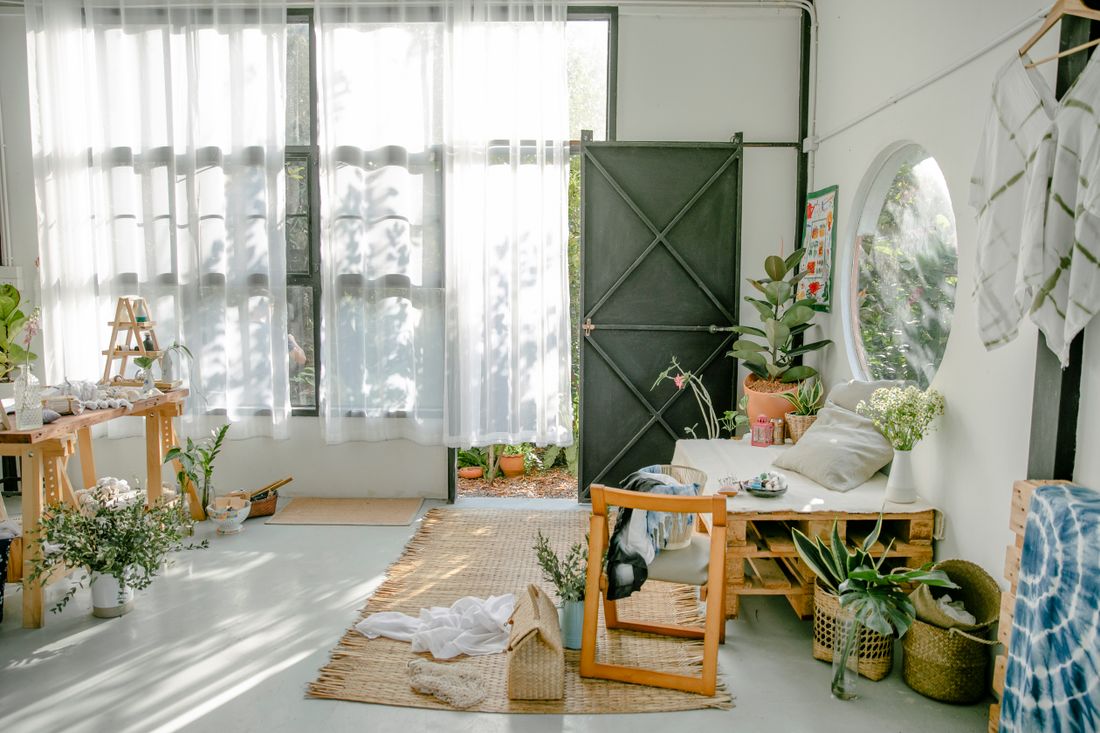
The photograph still looks like you. It just does not look like you here. An artist who has moved cities or taken a new studio usually notices this before anyone says it. The old portrait is accurate about a face and quietly wrong about everything around it.
A relocation portrait's job is to reintroduce an artist in a place where nobody has context for them. That favors an environmental frame in the new studio or city over a neutral studio shot, and it is usually best made a few weeks in (after the space is genuinely occupied, before it stops feeling new).
Why a Move Changes What the Portrait Has to Do
An artist who has been somewhere a long time has context they do not have to supply. People know where the studio is, which scene they belong to, roughly what the work is. A portrait in that situation can be quite spare, because everything around it is already understood.
A move removes that. In a new city the portrait is often the first thing a curator, a gallery, or another artist encounters, and it is being asked to carry information it previously did not have to. Not literally (nobody expects a photograph to explain a practice), but tonally: what kind of artist is this, working at what scale, in what kind of space.
That is the practical argument for an environmental portrait rather than a plain one. A neutral background is a fine image and a poor introduction. It says nothing about the new context, which is precisely the thing that has changed.
There is a practical dimension as well. A relocation usually means a period of introducing yourself repeatedly (to galleries, to open calls, to studio neighbours, to a local press that has never covered you). Each of those interactions asks for an image, and the version being sent is either current or it is quietly doing the work of suggesting that not much has changed.
The New Studio Is the Obvious Setting, With One Caveat
Photographing an artist in a new studio does two things at once: it introduces the person and it announces the space, which is usually part of what the move is about. It also gives the image genuine specificity, since a real working room is unrepeatable in a way a rented backdrop is not.
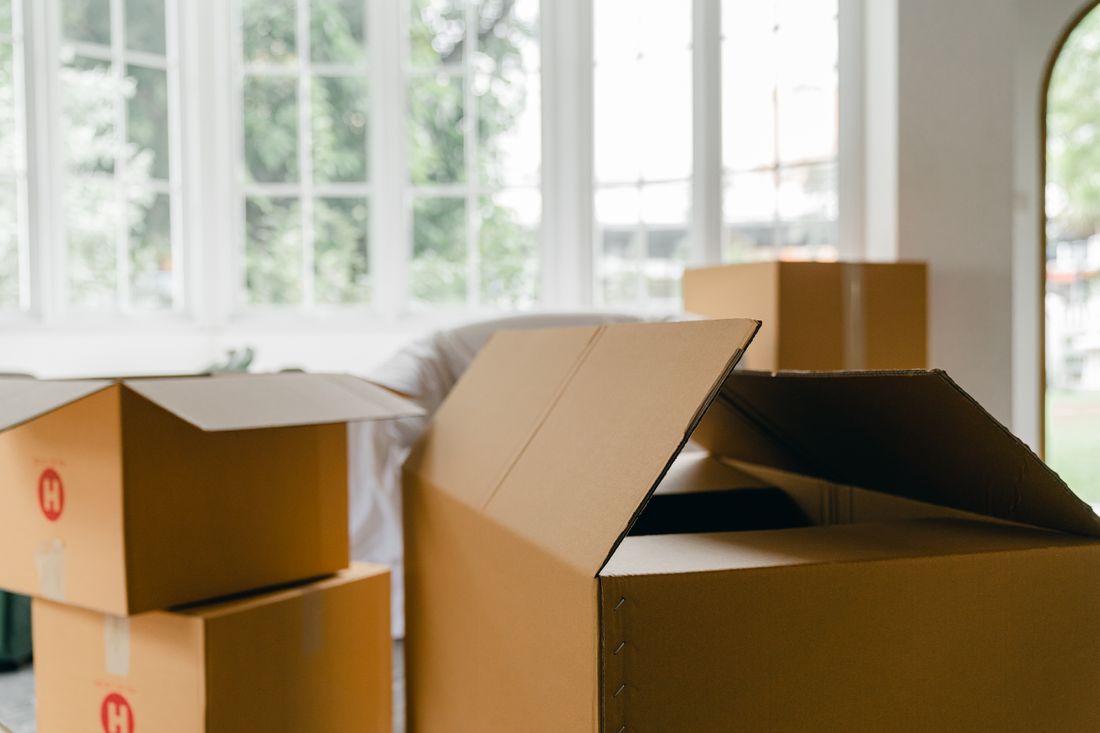
The caveat is timing, and it is the main thing worth getting right. A studio photographed on week one is an empty room with boxes in it, accurate but not yet true. A studio photographed after a year has usually settled into something more ordinary. The window where the space reads as both occupied and new tends to be somewhere in the first couple of months.
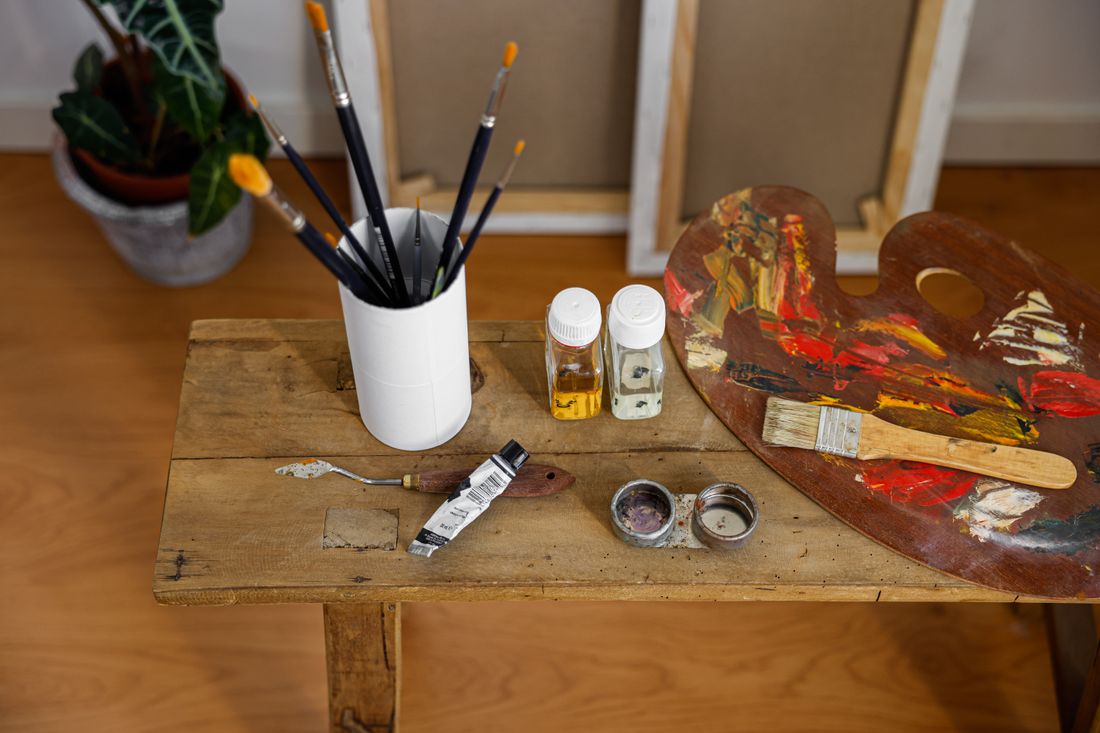
Within that window, the room does not need to be tidy. It needs to be in use. Materials out, something in progress, evidence of work having started. An immaculate new studio reads as a showroom, and viewers are surprisingly quick to notice when a space looks like nobody has made anything in it.
The other reason to move quickly is that new studios do not stay new in the useful sense. Within a few months a space accumulates the specific mess of an ongoing practice, which is excellent for a studio-visit story and less useful for an image that is announcing an arrival. Both versions are worth having; only one of them has a window.
When the City Belongs in the Frame
Sometimes the move rather than the studio is the story (a change of country, a return home, a shift to a place with a particular character). In those cases an exterior or neighborhood frame can carry more than the studio does, and it makes an explicit claim about where the practice now sits.
The risk is that a recognizable location dates a portrait and can flatten into a postcard. A famous view behind an artist tends to say tourist rather than resident. Blocks with texture but no landmark do better: a street, a doorway, a wall, a building type that belongs to the place without announcing it.
The honest test is whether someone who lives there would recognize the register rather than the exact spot. That is usually the difference between a portrait that says I live here and one that says I visited.
What Is Worth Keeping From the Previous Portrait
A relocation is not a reason to change everything. If a previous portrait worked (if it got used, if people responded to it, if it looked like the person), the useful move is usually to keep its register and change its context rather than reinvent the whole approach.
That continuity matters for anyone whose work is already known. An artist whose image changes completely at the same moment their address changes can appear to have restarted, which is rarely the intention. The practice continued; only the room changed.
Where a genuine change is wanted (new work, a shift in scale, a different public register), a move is a legitimate moment to make it. It is just worth deciding that deliberately rather than arriving at it by default because the shoot happened to be in a different place.
A useful exercise is to look at where the old portrait is currently published before deciding anything. If it sits on six sites you do not control, a new image with a completely different register will coexist with it for years, and the two together will read as inconsistency rather than as an update. Continuity in the register is what makes a replacement look like a replacement.
What Else Is Worth Shooting on the Same Day
The most valuable addition is the space itself, without the artist in it. A new studio photographed properly (wide, a couple of corners, the light at the hour it is usually used) is material an artist will draw on for years, for open studios, applications, features, and their own site.
Second is work in progress. A move usually coincides with a shift in what is being made, and having documentation of that early state is unusually useful later, when the work has resolved and the origin is no longer visible.
Third, if the practical situation allows, a short clip or two. Nothing produced. A slow pan of the room, hands working, a few seconds of the space in its normal light. Those are the assets that make an announcement post feel like an event rather than a caption under a portrait.
A wide frame of the street or building exterior is worth adding when the move is between cities. It is a small, unglamorous image that ends up doing a lot of work (in an announcement, on a contact page, in an open-studios listing), and it is the sort of thing nobody thinks to take until they need it.
If the artist has any intention of running open studios or hosting visits in the new space, that is worth mentioning before the shoot. The images that serve a visit listing are different from the ones that serve a portrait: they need to show how the room works, where a visitor would stand, and what the space feels like at the hour visitors would arrive.
The Portrait Is Usually Part of an Announcement
Most relocation portraits exist because something is being announced (a move, a new studio, availability for local projects, a first show in a new city). That means the image will be used alongside text, at small sizes, on platforms that crop.
That has straightforward implications. Shoot at least one frame with usable space around the subject for a header or an overlay, deliver a square and a vertical alongside the horizontal, and make sure at least one image reads clearly at thumbnail size. None of that changes the shoot; it changes the delivery list.
It is also worth having one frame that works without any caption at all. Announcements get reshared, quoted, and stripped of their context, and an image that still communicates something on its own travels considerably further than one that depends on the paragraph it was published with.
It is also worth writing the announcement before the shoot rather than after it. Knowing the first sentence tends to clarify what the image needs to carry, and it frequently changes a decision about setting. An announcement about a new studio wants the room in frame, while one about being available for local commissions may want the person much closer.
Who Actually Needs This, and Who Can Skip It
An artist who is moving into a genuinely new professional context (different city, different scene, new representation, a studio that changes the scale of what they can make) has a real reason for a new portrait. The image is doing introduction work.
An artist moving across town into a similar space, with the same galleries and the same audience, mostly does not. The old portrait is still true, and the money is usually better spent documenting the work than re-photographing the person.
The middle case is someone whose appearance or practice has changed alongside the move. There, the move is less the reason than the occasion, which is a perfectly good reason to book a session. It just means the brief should be built around what has actually changed rather than around the address.
There is also a case that has nothing to do with geography, which is an artist whose studio situation has changed in scale. Moving from a corner of an apartment into a shared building, or from a shared building into a private space, changes what can be made and how a practice is understood. That is a genuine professional shift and a reasonable occasion for new images even when the address barely moved.
Getting the Timing Right Is Most of the Job
If there is one thing to take from this, it is that the calendar matters more than the styling. Too early and the space is not yet a studio; too late and the announcement has already happened without an image, which is when artists end up using a phone photo indefinitely.
A workable pattern is to book the session for a few weeks after the move, once the room is functional, and to plan the announcement around the delivery rather than the other way around. That sounds obvious and is routinely reversed, usually because the announcement felt urgent and the portrait felt optional.
The portrait is the part that keeps working after the announcement is over. It ends up on the website, in applications, in a gallery's press email two years later. Giving it a few weeks of the move rather than a leftover afternoon is one of the better returns available in a period where most decisions are expensive.
Frequently asked questions
Does an artist need a new portrait after moving cities?
If the move puts them in a genuinely new professional context (different scene, new representation, a studio that changes what they can make), then yes, because the portrait is doing introduction work for people with no prior context. An artist moving across town into a similar space with the same galleries and audience usually does not; that budget is better spent documenting work.
When is the best time to photograph a new studio?
A few weeks in, generally within the first couple of months. Week one is an empty room with boxes, accurate but not yet true. After a year the space has usually settled into something ordinary. The window where a studio reads as both occupied and new is short, and it is the moment that makes the strongest environmental portrait.
Should a new studio be tidy for a portrait session?
It should be in use rather than tidy. Materials out, something in progress, visible evidence that work has started. An immaculate new studio reads as a showroom, and viewers notice quickly when a space looks like nobody has made anything in it. A working room is the specific thing that a rented backdrop cannot reproduce.
Should the city appear in a relocation portrait?
Sometimes, when the move itself is the story rather than the studio. The risk is that a recognizable landmark dates the image and reads as tourist rather than resident. Streets, doorways, walls, and building types that belong to a place without announcing it work better. The test is whether a local would recognize the register, not the exact spot.
What else is worth shooting alongside a relocation portrait?
The empty space itself (wide frames and a couple of corners at the hour the light is usually used), which an artist will draw on for years. Work in progress, since a move often coincides with a shift in what is being made. And a short clip or two of the room, which makes an announcement post feel like an event rather than a caption.
A portrait for the version of the practice that exists now.
We photograph artists in the rooms they actually work in: new studios included, at the point where the space has started behaving like one.
Explore portraits →