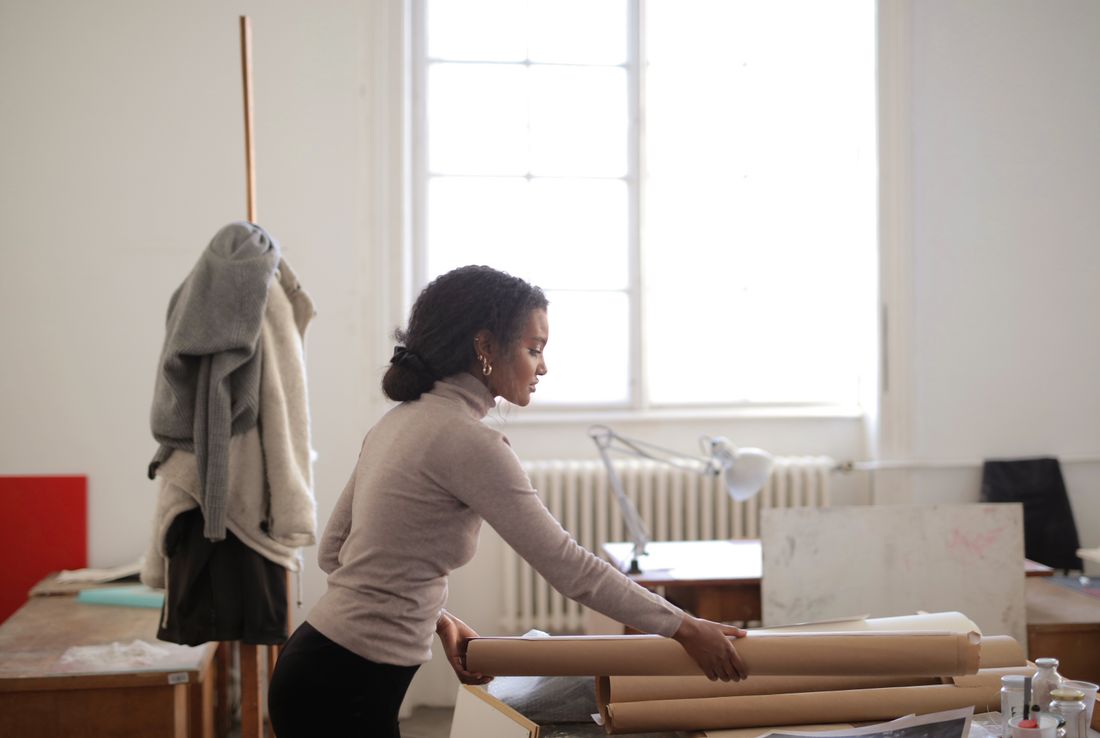
The name on the show isn't always the only person in the room worth photographing. Studio assistants, fabricators, managers, and long-term collaborators are frequently the people who actually make the work happen day to day, and most of them have never had a usable photograph of themselves doing it.
A portrait of a studio assistant or collaborator works best when it treats them as a real subject with real expertise, not scenery in someone else's story: a genuine task, honest work clothes, a permissions conversation settled in advance, and a frame that neither erases their role nor overstates it.
Who is a portrait like this actually for?
A portrait of a studio assistant or collaborator usually serves three separate purposes at once: the assistant's own website or grant application, the studio's account of how the work actually gets made, and a press or funding request that needs to show the operation behind one name. Knowing which purpose leads changes the shot.
If the picture is mainly for the assistant, it needs to stand on its own outside the studio's context: a working portrait strong enough to open a personal site, a fellowship application, or a future search, not a photo that only makes sense with a caption explaining whose studio it was taken in. That usually means a slightly wider frame, room to breathe around the person, and less dependence on any one piece of visible work in the background.
If the picture is mainly for the studio, the emphasis shifts toward context: the assistant at a task that shows what the operation actually requires to run, useful for a website team page, a grant narrative describing staffing, or a press feature about how a body of work gets produced. The person is still the subject, but the surrounding detail is allowed to carry more of the story.
In practice, most shoots end up serving both audiences at once, and the honest move is asking the assistant directly which use matters more to them before the session starts, then weighting the shot list toward that answer instead of guessing on their behalf.
How do you photograph someone in a space that has someone else's name on it?
Photographing a collaborator inside a studio that carries someone else's name works best when the frame acknowledges the space without pretending the assistant owns it or erasing their actual role in it. The goal is accuracy in both directions: neither a portrait that makes them look interchangeable with the furniture, nor one staged to suggest a title they do not hold.
The easiest way to get this wrong is defaulting to either extreme. Shooting the assistant the way a documentation photo treats a chair or a worktable, present but incidental, erases the fact that a person with real skill and judgment is standing in the frame. Overcorrecting the other way, framing them like the lead artist in the artist's own studio, misrepresents the relationship just as badly and can create real friction if the image gets used publicly.
What tends to work is letting the actual work signal the role honestly. A frame that shows the assistant doing something specific, mixing a compound, adjusting a rig, handling a finished piece, communicates expertise without needing a title card underneath it. The space stays visibly the space it is; the person in it stays visibly a person doing real, specific work inside it.
None of this needs to be solved with wording in a caption after the fact. A photographer who lets the task carry the authority in the frame usually avoids the hierarchy question before anyone has to ask it out loud.
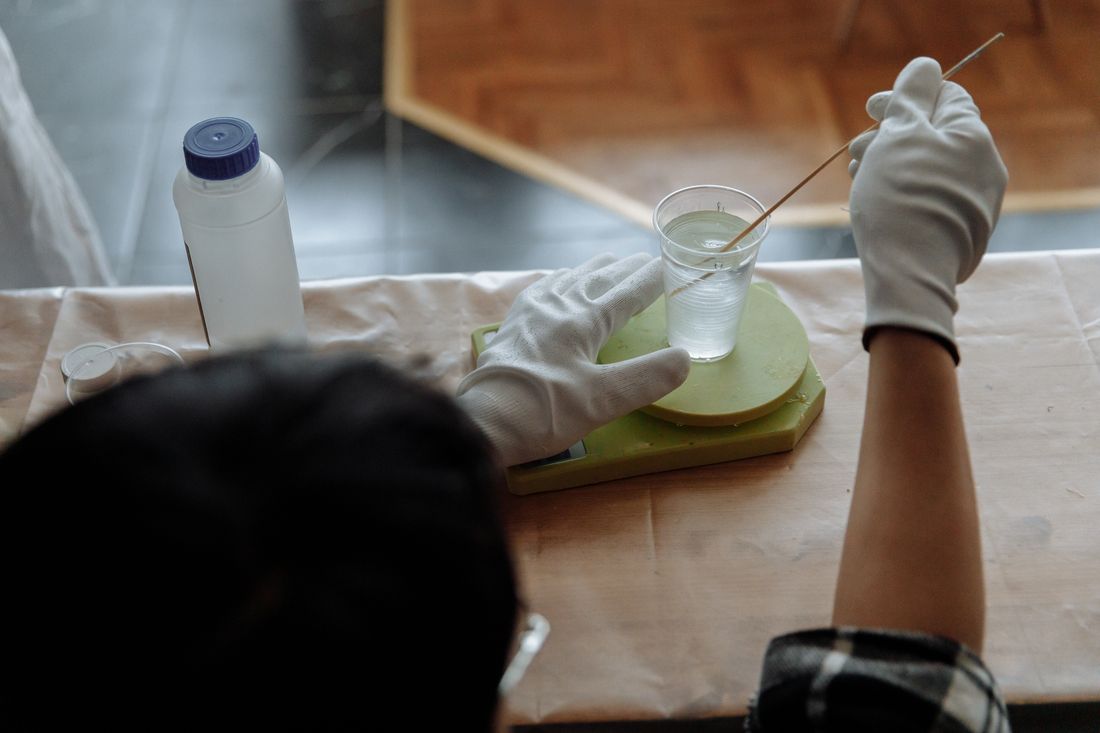
Should the lead artist appear anywhere in the portrait?
Whether the lead artist appears in a collaborator's portrait comes down to what the image is actually for: leave the artist out when the picture needs to represent the assistant as their own professional subject, and consider including them only when the photo is explicitly meant to document a working relationship rather than one individual.
A portrait built for the assistant's own use, a resume, a grant application, a personal site, loses its point if the artist shares the frame, because the image stops reading as theirs and starts reading as a supporting-cast photo from someone else's story. Even a well-composed two-person shot answers the wrong question for that kind of use.
A joint frame makes more sense when the actual subject is the collaboration itself: a caption or feature specifically about how two people work together, a process piece for the studio's own account, or a moment that is genuinely about interaction rather than either person alone. Even then, the composition should avoid the classic boss-and-assistant staging, one seated or centered, the other standing slightly behind, which reintroduces the hierarchy problem visually even when nobody intended it.
When in doubt, shoot both versions in the same session. A few solo frames and a few shared ones cost very little extra time and leave the decision for later, once it is clear which image actually needs to exist.
Is it better to shoot during real production or set up a separate portrait?
A portrait taken during real production usually looks more honest and requires less direction, while a deliberately set-up portrait gives more control over light, background, and framing. Neither approach is wrong; the choice depends on whether the day already has genuine work happening or the assistant would otherwise be asked to fake a task for the camera.
Shooting during actual production has a real advantage: nobody has to perform being busy, because they already are. The photographer's job becomes watching for the moment rather than constructing one, and the resulting expression, posture, and hand position tend to look like they belong to the task instead of a pose borrowed from it. The tradeoff is less control, since the light and background are whatever the moment happens to offer.
A set-up portrait solves the control problem but reintroduces the performance problem: someone has to act out a task convincingly enough that it does not read as staged. This works fine with a subject who is comfortable in front of a camera and can repeat a natural-looking motion on request. It works less well with someone who has never done this before, where the strain of performing usually shows on camera.
A practical middle path is lighting a real work area properly in advance, then shooting while the person does the actual task rather than a reenactment of it. It gets most of the control of a set-up shot with most of the honesty of a candid one.
Should the wardrobe be work clothes or something more polished?
For a studio assistant or collaborator, real work clothes almost always read better than a polished outfit brought in for the occasion, because the honesty of an apron, marked hands, or a worn pair of boots is doing real work in the photograph: it tells the viewer this person actually does this, rather than dressed up to look like they do.
A portrait that swaps in a clean, styled outfit for someone who spends their day mixing materials or handling tools tends to create a small credibility gap the moment a viewer looks closely. Pristine clothes on someone photographed mid-task read as staged even when the task itself is real, because the two signals quietly contradict each other.
This does not mean skipping wardrobe thought entirely. A few minutes checking for anything distracting, a mark that should not be visible, a shirt torn in an unflattering place, a stain that reads as dirty rather than working, is worth doing before the camera comes out. The goal is not perfection; it is removing the handful of things that would pull attention away from the person and the task for the wrong reasons.
When someone genuinely prefers to change before being photographed, that preference should be honored rather than argued with. The point of leaning on real work clothes is respecting what is actually true about the day, and that includes respecting how the subject wants to be seen in it.
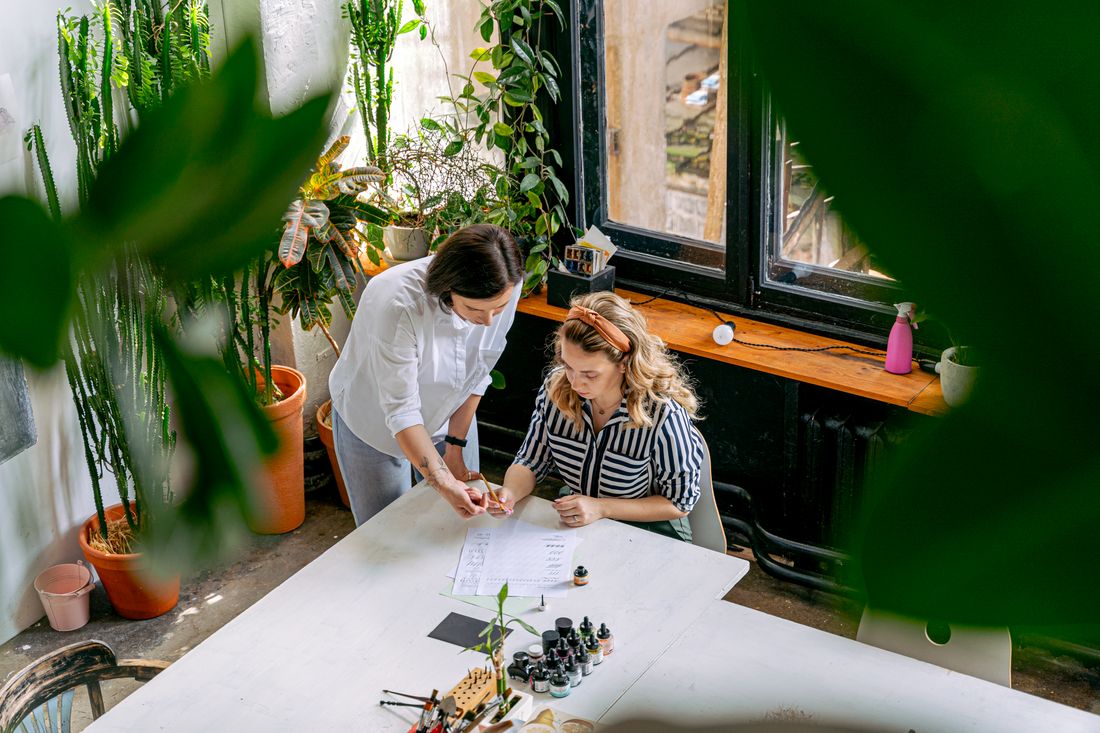
What has to be settled before the shoot happens?
Before photographing an assistant or collaborator, a few things need explicit agreement, not assumption: whose work is visible in the background and whether it can be shown, whose studio it is and what that person is comfortable having published, and where the resulting images are allowed to appear. Skipping this step creates problems well after the shoot ends.
The background question matters most in a working studio, where finished or in-progress pieces are usually visible whether anyone planned for it or not. Unfinished work, in particular, is often not meant to be seen publicly yet. A quick check before shooting, and again before selecting final frames, prevents an image from accidentally previewing something that was not ready to be shown.
The publication question is just as important and just as easy to skip past. An assistant's portrait might be intended for their personal use only, for the studio's own website, for a specific grant application, or for general promotional use with no restriction attached. Each of those is a different agreement, and assuming the broadest one without asking tends to be where things go wrong later on.
None of this requires a formal contract in most cases. A short, direct conversation before the camera comes out, covering what is visible and where the images can live afterward, is usually enough, and it is far easier to have before a shoot than to walk back after one.
Should this be its own session or added to a day already on the calendar?
In most cases, a collaborator's portrait works better folded into a documentation day, press visit, or event already on the calendar than booked as its own separate session, because the studio is already active, the lighting is already being managed, and the assistant is already present doing the work that makes the portrait honest in the first place.
A dedicated session for one person's portrait asks for a level of scheduling and setup that rarely matches the actual priority of the image. It also puts more pressure on the moment, since everyone involved knows the entire visit exists for this one photo, which can make a naturally camera-shy subject more self-conscious rather than less.
Folding it into an existing day removes most of that pressure. Fifteen or twenty minutes at the end of a documentation shoot, once the equipment is already set up and warmed up, is usually enough to get a strong working portrait without asking anyone to rearrange their schedule around it. The assistant can simply be photographed doing the same task they would already be doing.
The one thing worth planning in advance, even for a folded-in shoot, is telling the assistant ahead of time that it is happening. A portrait sprung on someone with no warning tends to produce a more guarded result than one they had a few days to expect and get used to.
What changes when the collaborator is a peer instead of an employee?
When the collaborator is a peer rather than an employee, a fabricator, printer, or another artist working alongside the lead rather than for them, the portrait needs to avoid any visual language that implies a reporting relationship, since the actual relationship is closer to two independent practices sharing a space or a project.
Employee-style portraits tend to lean on cues that read as institutional: a slightly more formal pose, a frame that centers the workspace over the person, a role explained through task rather than presence. Those cues fit an assistant or studio manager well enough. They fit a peer collaborator badly, because the underlying relationship is not one of supervision, and a portrait that borrows that language ends up misrepresenting it.
A peer's portrait works better shot closer to how the lead artist's own portrait would be shot: attention on them as an individual practitioner, with the shared space treated as context rather than as the entire premise of the image. If both people appear in a frame together, the composition should read as two peers rather than one photographing the other's territory.
The simplest gut check is asking how the collaborator would describe their own role if asked directly. A portrait that matches their own description of the relationship is almost always closer to correct than one built on an assumption about where they sit in the studio's hierarchy.
Frequently asked questions
Do we need permission from the lead artist to photograph their assistant?
Yes, even when the assistant is enthusiastic about it. The studio space, the visible work, and how the images can be used all involve the lead artist's interests, not just the assistant's. A short conversation covering what can be shown in the background and where the finished images are allowed to appear settles this before it becomes a problem, and it takes only a few minutes when raised early rather than after the shoot is over.
Can a portrait like this be used on the studio's own website?
Yes, once everyone involved has agreed on it. A collaborator's portrait can support a team or about page, a grant narrative describing staffing, or a press feature about how the work gets made. What matters is confirming the assistant knows the image may appear there and is comfortable with that use, rather than assuming a photo taken for one purpose can automatically be reused for another.
Does the assistant get final say over which photos get used?
In most cases, yes, at least over anything showing their own likeness. Giving the person in the photo a look at the final selects before anything gets published is good practice regardless of their role, since a portrait meant for someone's professional use should reflect how they actually want to be represented. It also tends to produce a better working relationship with the studio going forward.
What if there isn't an obvious task to photograph the assistant doing?
Look for a real, ordinary task rather than inventing a dramatic one. Setting up equipment, reviewing a print, adjusting a piece, or organizing materials all work fine and do not need to look impressive to look honest. A portrait built around a small, real task usually beats one built around an invented, more photogenic-looking action, because the small task is something the person already knows how to do naturally.
How is this different from a standard staff headshot?
A standard headshot isolates the face against a neutral background and mostly ignores context. A working portrait for a studio assistant or collaborator keeps the workspace and task visible on purpose, because that context is part of what the image is meant to communicate: what this person actually does, and how their work fits into the studio around them. The result usually looks less generic and more specific to the person.
Not sure if you need a refresh or a whole new concept?
We shoot both, and we'll say plainly which one fits your portrait before anything gets booked, not after the invoice.
Explore portrait sessions →