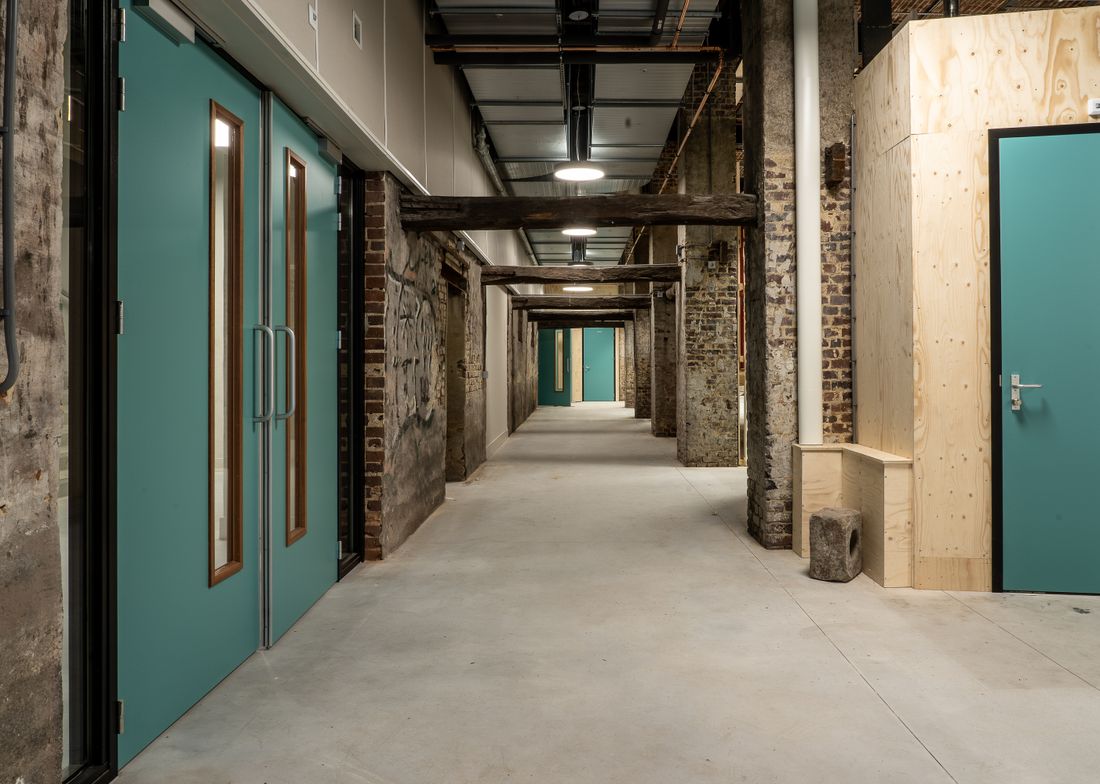
An open studios weekend turns a building or a neighborhood of independent artists into a single shared event, and the photography has to work the same way: not as separate shoots strung together, but as one route with a fixed number of hours and a fixed number of doors. Get the schedule right and every artist gets a usable set. Get it wrong and the last three studios on the list get rushed, thin coverage while the first one gets forty minutes it never needed.
Covering an open studios weekend well means treating it as a routing problem first and a shooting problem second. Set a realistic per-studio time block, define one minimum deliverable set every artist gets, standardize framing and file naming so nothing gets mixed up, and plan around when each room is crowded versus empty.
Why does an open studios weekend become a routing problem?
An open studios weekend puts a whole building or block of independent artists on one shared clock, so the real constraint isn't technique, it's time. Once the number of studios and the number of hours are both fixed, the schedule has already decided which pictures are possible before the photographer opens a single door.
A normal portrait or documentation shoot has one subject and a pace that can flex. An open studios day has many subjects sharing one photographer, one window of daylight, and one list of stops that has to close on time. That changes the planning question from "how do I shoot this artist well" to "how much time does this artist actually get, and what happens to everyone after them if this stop runs long."
Missing a studio, or shortchanging one near the end of the list, usually isn't a technical failure. It's a scheduling one, decided hours earlier when the route was built. The fix isn't a faster camera or a sharper eye, it's a route that accounts for setup, walking time between doors, and the fact that some studios will run over no matter how tight the plan looks on paper.
This is why the useful planning document for an open studios weekend looks more like a delivery route than a shot list. It names each studio, gives it a time block, and treats the walk between them as real time, not a rounding error. Everything downstream, including what gets photographed in each room, follows from that route.
How do you plan a route across many studios in one day?
Planning the route starts with dividing the total working hours by the number of studios, then subtracting real walking and setup time between stops, not just time behind the camera. A studio at the far end of a floor needs more buffer than one two doors down, and that buffer has to be built in before the day starts.
A reasonable per-studio block for the minimum deliverable set runs short, often well under half an hour once setup and a quick conversation with the artist are included. That number changes with the space: a cramped shared studio with awkward light takes longer to work around than an open room with a window. Building the schedule around an honest average, then adding a few unassigned minutes every few stops, absorbs the studios that inevitably run long without pushing every later artist into a rushed slot.
Order matters too. Grouping studios by floor or building section cuts dead walking time, and starting with the artists who have the least flexible schedules protects them from getting bumped if the day slips. Confirm the route with the organizer before the day, including which studios are adjacent and which require an elevator or a walk outside, so the plan reflects the actual building instead of a floor plan on paper.
A route that looks generous on a spreadsheet and tight in person is common. Walk it, or at least map it, before committing the day's order to every artist.
What's the minimum deliverable set for each artist?
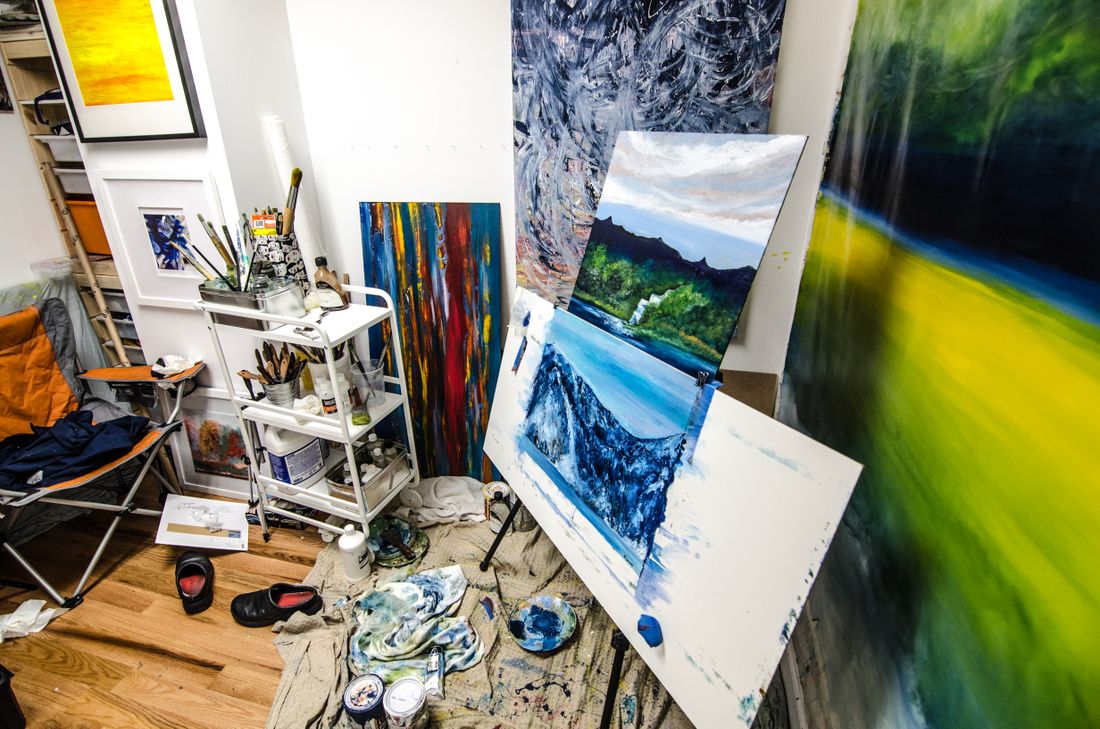
Every artist on an open studios route should get the same baseline: one portrait, one photo of the room in use, and one or two photos of individual works. That baseline is what makes a tight per-studio time block realistic, because it's a fixed, achievable list rather than an open-ended session that expands to fill whatever time is available.
The portrait doesn't need to be elaborate. A few frames of the artist in their space, in natural light where possible, gives them something usable for a bio, a social post, or a press request without turning into its own shoot. The room-in-use photo does the work of context: it shows the studio as a working space, tools out, materials visible, rather than a tidied show room, which is usually closer to what artists and organizers actually want from an open studios record.
The one or two work photos are the hardest part to standardize, because "the work" means something different in every studio. A painter might have one piece worth featuring; a sculptor's room might need a wider shot to read at all. The minimum set stays the same in structure, portrait, room, work, even when the specific choice of what to photograph in that third slot has to be made on the spot.
Anything beyond that baseline, extra angles, detail shots, a longer portrait sitting, is a bonus that depends on whether the schedule has room. Naming the baseline up front, before the day starts, keeps that bonus from quietly becoming the expectation at every stop.
What should stay standardized across every studio?
Three things should stay consistent across every studio on the route: the framing approach for the minimum deliverable set, the color and light treatment in editing, and the file naming convention. Standardizing these is what keeps a single day's output from many artists organized and usable, instead of forty artists' worth of files with no consistent structure to sort by.
Framing means having a default approach for the portrait, the room shot, and the work shots, so each studio's set feels like part of the same coverage rather than a different photographer's style each time. It doesn't mean identical compositions in every room, since rooms vary too much for that, but it means starting from the same instinct for distance, angle, and what gets included in frame.
Treatment in editing should follow one consistent approach for color and contrast across the whole day's set, so the artists' work reads accurately and consistently when the images sit next to each other in a recap post or a shared gallery. A file that's warmer or cooler than the rest stands out for the wrong reason.
File naming is the detail that prevents real problems later. Every file needs the artist's name or studio number built into the filename itself, not just sorted into a folder, because folders get reorganized, renamed, or split apart when files move between the organizer, the building, and each artist. A filename that survives that handling is what keeps twelve artists' worth of photos from getting mixed up down the line.
What should change from studio to studio?
What should change between studios is anything that reflects the actual room and artist: the light source, the composition of the work shots, and how much space the room-in-use photo includes. Standardizing the plan doesn't mean flattening every studio into the same picture, it means applying one consistent method to rooms that are genuinely different.
Light is the clearest example. A studio with a north-facing window behaves nothing like a windowless room lit by overheads, and forcing the same lighting approach onto both produces one good result and one flat one. The standardized part is the intent, natural light where it exists, a simple supplement where it doesn't, not a fixed setup carried unchanged from door to door.
The work shots should follow what the artist actually has out that day. A studio full of small works needs a different approach than one built around a single large piece, and the room-in-use photo should reflect how that artist actually works, not a generic version of "artist in studio" repeated with a different face in it each time.
This is also where a short conversation at the start of each stop earns its minute or two. Asking an artist which piece they'd want featured, or whether there's a work in progress worth including, takes very little time and usually produces a better third photo than guessing. The framing method stays the same; what fills it changes with the room.
Should a studio be shot during the crowd or before it?
Both, when the route allows it, but they serve different purposes. An empty or quiet studio, usually early in the visiting hours or right before the crowd arrives, is when the portrait and the clean room-in-use shot get made. Once visitors are in the room, that same photo gets harder to make without people, bags, and wine cups in frame.
A studio with visitors in it is useful for a different reason: it documents the event itself, people looking at work, a conversation between an artist and a visitor, the room actually being used the way an open studios day is meant to be used. That's a different photo than the clean documentation shot, and it usually isn't part of the minimum deliverable set unless the organizer specifically wants event coverage alongside the per-artist set.
The practical answer is to route the day so each studio gets hit once during a quieter window for the baseline set, and to treat any crowd photography as a bonus captured in passing rather than a second scheduled visit. Revisiting a studio a second time to catch it full of people almost never fits the math of a tight route.
If an organizer wants both a clean per-artist set and genuine crowd documentation of the event, that's worth naming as two separate goals before the day starts, since they pull the schedule in different directions and usually can't both be fully served by one photographer moving through once.
Who actually needs the files after an open studios shoot?
An open studios shoot usually has more than one end user for the same files: the organizer wants the full day's coverage for a recap, and each artist wants only their own images. That split makes delivery for this kind of shoot different from a single-client shoot, where one person gets one gallery.
The organizer's deliverable is the whole set, useful for a social recap, a press follow-up, or an archive of the event. Each artist's deliverable is a small subset, just their portrait, room, and work shots, and they usually don't want or need to sort through everyone else's photos to find their own.
This is exactly what the file naming standard from earlier is for. If every filename already carries the artist's name or studio number, splitting the full set into individual per-artist folders is a matter of sorting, not manual identification photo by photo. Skipping that standard during the shoot turns delivery into hours of relabeling afterward, done from memory about which studio was which.
Delivery timing matters too. An organizer often wants the full set fast for a same-week recap, while individual artists are usually fine waiting slightly longer for their own subset. Agreeing on both timelines, and on who is responsible for distributing individual sets to each artist, before the shoot avoids the awkward situation where twelve artists are all emailing the organizer asking where their photos are.
What does an organizer need to give the photographer before the day?
An organizer needs to hand over three things before an open studios day: a confirmed studio list with locations, a sense of which artists have hard scheduling limits, and a decision on the deliverable set and handoff plan. Without those three, the photographer builds the route on the day itself, where time gets lost.
The studio list matters more than it sounds. Artists drop out or get added late, and a route built on an outdated list either wastes a time block on an empty room or misses someone who was never on the original plan. Confirming the final list a day or two ahead, not weeks ahead, keeps it accurate.
Scheduling limits are worth asking about directly. An artist who has to leave partway through the day, or one who won't be set up until later, needs to be placed deliberately in the route rather than discovered as a problem mid-walk. A short check-in message to participating artists a few days out usually surfaces this without much effort.
Finally, the minimum deliverable set and the delivery plan should be agreed on before the day, not negotiated on the fly at the first studio. An organizer who knows what to expect, one portrait, one room shot, one or two work shots per artist, delivered as a full set plus individual subsets, can set the same expectation with every artist in advance, which is what actually keeps the day moving.
Frequently asked questions
How much time should each studio get during an open studios weekend?
There's no fixed number, but a realistic block for the minimum deliverable set, one portrait, one room shot, one or two work shots, is often well under half an hour once setup and a short conversation with the artist are included. Cramped or awkwardly lit studios need more; open rooms with good window light need less. Build the schedule from an honest average and leave a few unassigned minutes every few stops.
What's the minimum set of photos every artist should get?
One portrait, one photo of the room in use, and one or two photos of individual works. That baseline stays the same across every studio, which is what makes a tight per-studio schedule realistic. Anything beyond it, extra angles, a longer portrait sitting, detail shots, is a bonus that depends on whether the day's schedule has room, and shouldn't be treated as a guaranteed part of the visit.
How do you keep files from getting mixed up between artists?
Build the artist's name or studio number into every filename during the shoot itself, not after. Folders get renamed, split, or reorganized as files move between the organizer, the building, and individual artists, but a filename travels with the image no matter how it gets sorted or shared. Skipping this during the day turns delivery into hours of relabeling from memory afterward, guessing which studio a file belonged to.
Should photos be taken while the studio is crowded or empty?
The clean portrait and room shot usually work best in a quieter window, early in the day or before visitors arrive, since the baseline set gets harder to make once people, bags, and drinks are in frame. Crowd photography documenting the event itself is a different, secondary goal, best captured in passing during the route rather than as a reason to schedule a second visit to the same studio.
Who gets the final photos after an open studios shoot?
Usually two different audiences: the organizer wants the full day's set for a recap or archive, and each artist wants only their own portrait, room, and work shots. Agreeing on both delivery timelines and who distributes individual sets to each artist, before the shoot happens, avoids the situation where every artist ends up separately asking the organizer where their own photos went after the event.
One night, two openings, no dropped coverage.
We plan clustered opening nights before they turn into a scramble, whether that means a split schedule, a second shooter, or an early enough booking that the calendar never becomes the problem.
Explore event coverage →