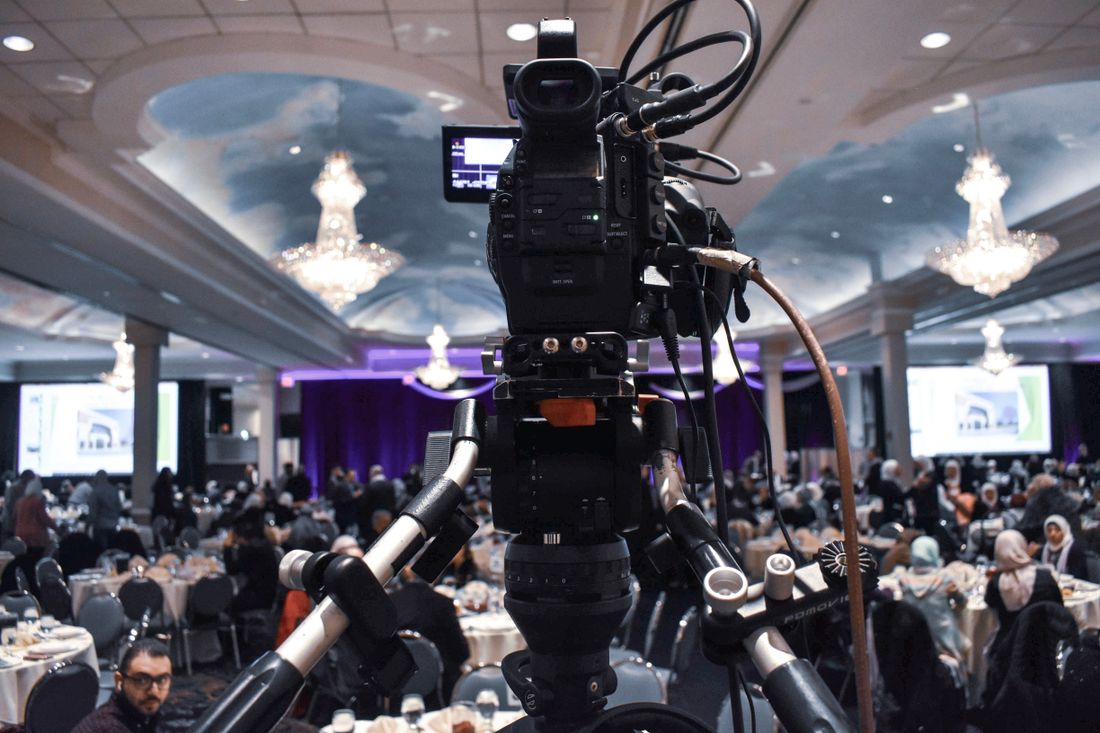
This question comes up almost every time an event has any kind of program: an artist talk, a toast, a performance, a moment that's worth more than a still frame. Photos alone are often enough. Sometimes they're not, and the gap between "enough" and "not enough" usually isn't about budget first. It's about what one person can physically pay attention to at once.
This guide covers what one photographer realistically handles well, where that coverage runs out, what a combined photo and video team actually changes, and how to size the decision to your specific event instead of defaulting to whichever option feels safer.
None of this is about which format is inherently better. Photos and video do different jobs, and a strong photo set has value a highlight video doesn't replace, and the other way around. The real question is narrower: does this specific event have a moment that only really works as motion and sound, and does someone actually plan to use that footage afterward.
The short answer
One photographer is usually enough when the event is mostly about the room, the work, and the people in it, and there's no program moment that needs to be captured as motion and sound. Add a video operator when the event includes remarks, a performance, or anything else that only really works as a clip, not a still, or when a highlight video is a planned deliverable afterward, not an afterthought.
One person can document a room. A full record may need stillness and motion at the same time, and asking one person to deliver both usually means one of the two comes back thinner than it should.
What one photographer covers well
A single photographer handles most creative events well: gallery openings, small launches, studio gatherings, anything where the goal is a documented record of the room, the work, and the people who came. One person moving through a space with a camera can cover a lot of ground, catching the crowd, the art, and the quiet in-between moments that a rigid shot list would miss.
This is also the more affordable, lower-footprint option, and for a lot of events it's the right one. A small room doesn't need two people working it, and an event without a real program moment, no speech, no performance, no toast, doesn't produce much that video would capture better than a strong set of stills already does.
A single photographer also has an advantage most hosts don't think about: they're easier for guests to forget is there. One person moving quietly through a room reads as background presence a lot faster than a two-person team, especially in an intimate space where every addition to the room is noticeable. For events built around a relaxed, unstructured feeling, that lighter footprint is worth something on its own.
Where one person runs out of hands
The limit shows up the moment an event includes something that unfolds over time: an artist talking about the work, a short performance, a toast, an announcement. A photographer can capture a few strong stills of that moment, but a still frame of someone mid-sentence isn't the same record as the actual sentence, delivered with tone, timing, and the room's reaction.
One person also can't be two places doing two different jobs at once. Switching between a stills camera and a video rig mid-event means missing part of whichever medium isn't currently in hand, and it usually shows: photos with gaps around the video moments, or video that's limited to a couple of static clips because the photographer had to keep circulating for stills.
Audio is where a single-camera approach struggles the most. Getting clean sound for a toast or an artist talk usually means a dedicated microphone setup, monitored by someone paying attention to levels throughout, not a camera's built-in mic picking up whatever's loudest in the room. A photographer focused on framing a shot correctly isn't also the right person to be watching an audio meter, and trying to do both usually means neither gets the attention it needs.
What photo and video together actually changes
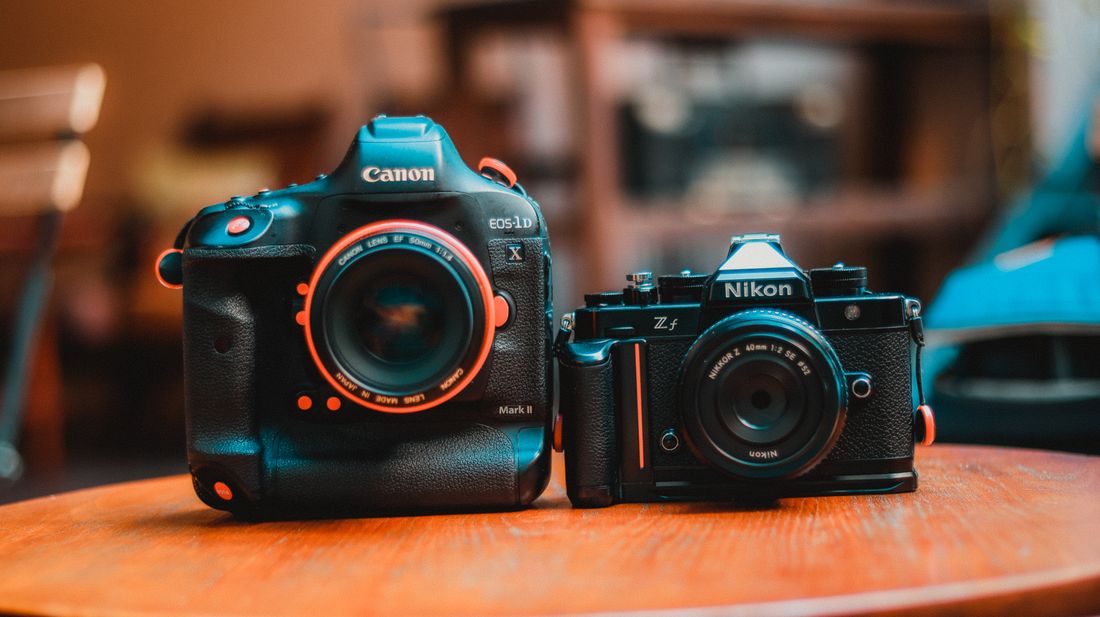
With two people covering two mediums, each one can actually do their job instead of splitting attention. The photographer keeps working the room continuously: candids, details, the crowd, the work on the walls. The video operator can hold a shot through an entire toast or talk without worrying about missing a photo opportunity somewhere else in the room.
The result isn't just more material, it's more complete material. A highlight video that's actually built from full coverage of a program moment reads differently than one stitched together from a couple of photographer-grabbed clips. And the photo set comes back more consistent, because the photographer wasn't pulled away from stills to also manage a camera on a tripod.
There's also a coverage benefit that doesn't show up until later: two people naturally produce two different vantage points on the same night. A photographer working the crowd and a video operator holding a wider, steadier position end up with material that complements rather than duplicates, which matters when the footage and photos are eventually used together, a recap video with real stills mixed in, or a press kit that pulls from both.
Crew size versus room size
A small, single-room event can usually absorb a two-person team without it feeling like a production. The bigger consideration isn't room size on its own, it's how much is happening and whether any of it is time-sensitive. A quiet opening with a slow trickle of guests is easy for two people to cover unobtrusively. A packed opening with a scheduled program and a tight window before people start leaving benefits even more from having two sets of hands, because there's genuinely more to cover in less time.
Larger or more layered events, multiple rooms, a formal program plus open browsing time, sometimes benefit from a third person: a second stills shooter or a dedicated audio operator for video. That's the exception rather than the rule for most creative events, but it's worth naming so a two-person default doesn't feel locked in when an event genuinely outgrows it.
Budget, and what actually drives it
Video does cost more, mainly because it's a second person's time, not because video itself is inherently expensive to produce well. The honest budget conversation isn't "can we afford video," it's "what does the footage need to do afterward, and is that worth a second person's day rate."
If the plan is a short recap for social media, an archive of the artist speaking, or footage to use in a future grant or press kit, the video usually earns its cost. If nothing planned actually needs motion and sound, that budget is often better spent elsewhere, more shooting time for the photographer, or a stronger post-event photo edit, rather than video captured because it felt like the more complete-sounding option.
It's also worth separating "we should probably have video" from an actual plan for what the video is for. Footage without a defined next step tends to sit unused the same way an unlabeled photo archive does. Deciding, before the event, roughly what the video needs to become, a thirty-second recap, a longer artist feature, raw footage for a future project, changes how it should be shot and makes the extra cost easier to justify honestly.
Briefing a two-person team
The brief for a two-person team starts the same way a single-photographer brief does: priority people, planned remarks or program moments, and what the files need to support afterward. The one addition worth making explicit is which moments matter most for video specifically, since that's the medium with the least flexibility to "catch it later" if the moment's already passed.
It also helps to say where each person should generally stay, especially in a small room. A quick note like "the video operator holds position near the podium during remarks, the photographer keeps circulating" prevents both people from converging on the same spot at the same moment and getting in each other's shots.
A short pre-event check-in between the two shooters, even five minutes, makes a bigger difference than most hosts expect. It's a chance to confirm who's covering what, agree on where each person will be for the program moments, and make sure neither one assumes the other has a shot covered that actually got missed.
How to decide for your event
Start with one question: is there anything happening that only really works as motion and sound, a talk, a toast, a performance? If yes, a video operator is worth having, even for a small event. If the answer is genuinely no, one photographer covering the room well is usually the complete, correct answer, not a compromise.
The second question is what happens to the material afterward. An event with no program moment but a real plan for a highlight reel or ongoing social content might still justify video. An event with a program moment but no real use for the footage beyond "nice to have" might be fine with just strong photos of that moment instead. Match the crew to what the files actually need to do, not to which option sounds more thorough on paper.
When the answer genuinely isn't clear, it's worth asking directly rather than guessing. A short conversation about the program, the room, and what the files need to support afterward usually settles it faster than trying to work it out alone from a venue photo and a guest count.
Frequently asked questions
Can one photographer cover both photo and video at a creative event?
Technically yes, but not at the same time. One person alternating between a stills camera and a video rig will miss whichever moment happens while they're set up for the other, and the video will likely be limited to a few static clips rather than a real sequence. It works for very small, low-key events where neither medium needs to be comprehensive.
How many people do you need for photo and video coverage of an event?
Usually two: one dedicated to stills and one dedicated to video. For larger or more layered events, a second stills shooter or an audio-focused second video operator can add coverage, but two people covering two mediums is the baseline for a real photo and video record.
Does a two-person team disrupt a small event more than one photographer?
Slightly, but less than most hosts expect. Two people working quietly and independently are usually less noticeable than one person visibly switching between two setups mid-moment. A short briefing on where each person should stay out of the way solves most of the concern.
Is video worth the extra cost for a small gallery opening?
It depends on what the footage needs to do afterward. If the goal is a short recap for social media or an archive of the artist speaking, even a simple single-camera video setup adds real value. If photos alone will meet every planned use, the video budget is better spent elsewhere.
What should I tell a two-person team before the event starts?
The same core brief either way: priority people, any planned remarks or program moments, and what the files need to support afterward. With two people, it also helps to say which moments matter most for video versus for photos, so both shooters know where to be during the moments that matter most.
Size your event crew correctly, the first time.
We cover creative events with the right mix of photo and video, sized to your room and your program, not a default package.
Explore event coverage →