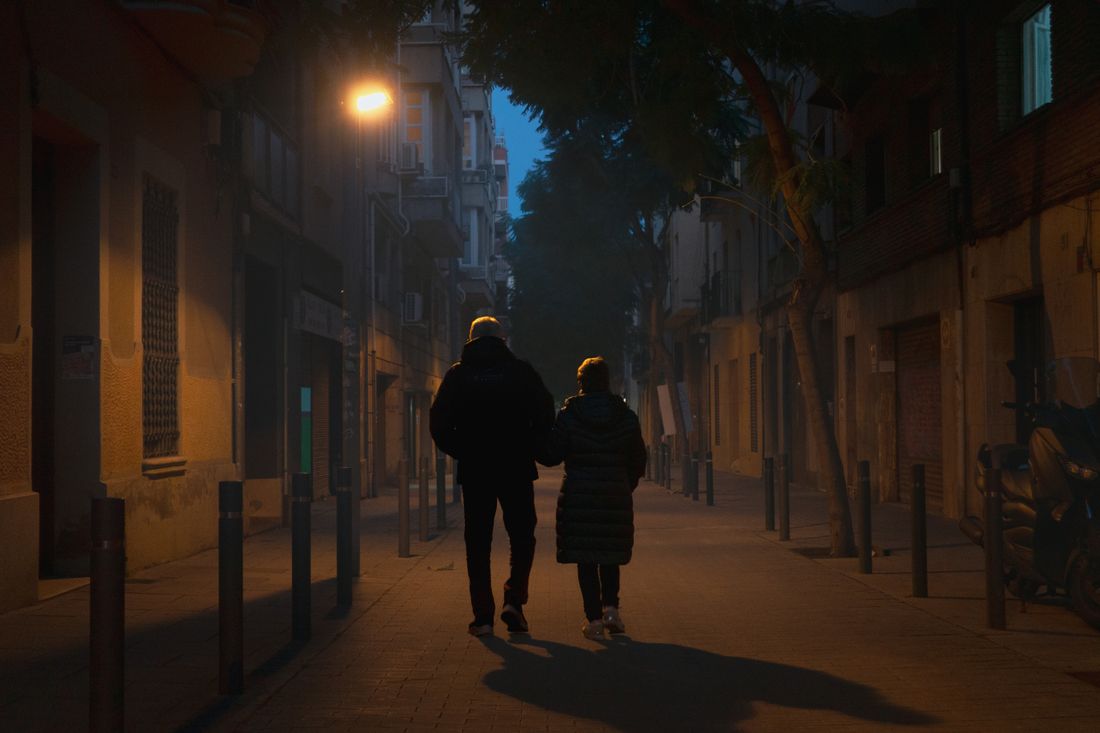
One assignment, five doors, and a route that has to be decided before the first opening even starts. A gallery night across several venues is not one event with five stops, it's five separate events happening in sequence, each with its own crowd, its own light, and its own clock, and once the walk begins there's no going back to fix a stop that got rushed. Plan the wrong route and the gap doesn't show up until a gallery is asking where its coverage went.
A gallery night across several neighborhood venues isn't one event, it's five, run back to back with no way to return to an earlier stop. Coverage has to be planned as a single route decided in advance: order, dwell time per venue, and what counts as enough at each door before the first opening starts.
Why is the route actually the shot list for a gallery night?
The route is the shot list because a gallery night is really five separate events happening in sequence, and the order decided before the first door opens determines what gets covered well and what gets rushed. Fix the order, the dwell time per stop, and what "enough" looks like at each venue before the night starts, not during it.
A single opening lets a photographer read the room and adjust in real time. A multi-venue night removes that flexibility, because time spent lingering at stop two is time that stop four never gets back. The route has to be planned like a shot list with venue names standing in for shots: which gallery goes first, which goes last, and how much of the fixed window belongs to each one.
Order usually follows the client's priorities, not geography. A venue that matters most to the person paying for coverage should sit early, while the room is still calm enough to get clean frames, rather than late, when energy and light are both running out. A quieter secondary stop can absorb whatever time is left over.
"Enough" has to be defined per venue in advance, too: a handful of install shots, a few candid frames, maybe one portrait if the gallery asked for it. Without that number, a photographer either over-shoots the first stop and shortchanges the rest, or under-shoots everywhere out of caution. The route decides both order and portion size before a single door opens.
What does the walk between venues actually cost in usable time?
Walking and transit between venues eats real coverage time, not travel time that happens for free. A five- or ten-minute walk between two doors, multiplied across four transitions in one evening, can quietly remove thirty or forty minutes from the night, time that has to come out of the shot list, not out of a break.
Neighborhood gallery nights look compact on a map. In practice, the distance between venues is rarely a straight line: crosswalks, elevators, buzzer entries, and crowds spilling onto sidewalks all add minutes a map doesn't show. Two doors that look adjacent on paper can still cost real minutes once foot traffic and street conditions get factored in.
That travel time is also physically demanding in a way a single-venue shoot isn't. Gear has to move with the photographer between every stop, which means packing down, walking, and setting back up, sometimes several times in one evening. Every transition is a small tax on both time and energy that a one-location shoot never charges, and that tax compounds as the night goes on.
The fix is treating transit as its own line item in the plan, not a gap between the real work. Building a few minutes of padding into each transition, choosing a route that minimizes backtracking, and knowing which stop can absorb a shorter transit window if the night runs behind all keep the walk from quietly draining the evening's usable time.
What happens when every venue hits peak crowd at the same time?
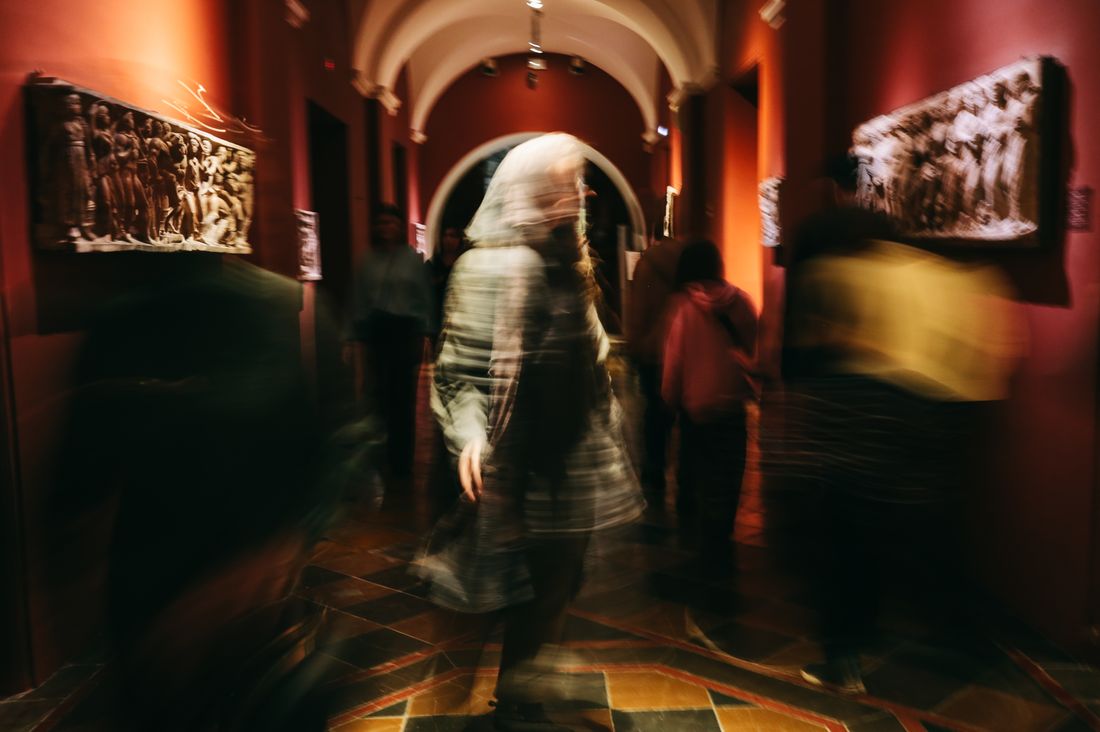
Every venue on a gallery night tends to hit its busiest stretch in roughly the same ninety minutes, usually starting an hour or so after doors open, which means a photographer can't simply wait out the crowd at one stop before moving to the next. The peak hits everywhere at once, not on a rotating schedule.
This collision happens because guests move through a neighborhood art walk in roughly the same rhythm: arrive after work, hit two or three galleries in a cluster, then head to dinner or the next event. That shared rhythm means the room a photographer just left and the room they're walking into are both filling up at the same time, not offset from each other.
The practical result is that there's no "wait for it to calm down" option anywhere in the route. A photographer can't bank on a quiet ten minutes appearing at the next stop, because the same crowd surge that filled the last venue is filling this one too. Planning has to assume every stop will be near capacity during that window.
That's part of why the route decision from earlier matters so much: whatever needs a clear, uncrowded room (install shots, wide views of the space) has to happen either before the peak window starts or squeezed into the brief gaps at the very edges of it, because the middle of the night offers no relief at any single door.
Why does a lighting setup that works at the first stop fail by the third?
A lighting setup that reads well at the first gallery routinely fails by the third, because each room runs its own mix of track lighting, color temperature, and ambient light, none of it built with a photographer in mind. One evenly lit white room can be followed by a dim, warm-toned one two doors down.
Each door on a gallery night is effectively its own lighting environment, unlike a single-venue shoot where conditions stay consistent for hours at a stretch.
Neighborhood galleries vary more in lighting than a single venue ever does. One space might run cool, even track lighting built for viewing art. The next might lean warm and moody, or mix daylight-balanced bulbs with older incandescent fixtures in the same room. A camera setting dialed in for the first room can produce noticeably off color and exposure in the second.
Because there's no time to rebuild a lighting approach from scratch at every door, the practical answer is a flexible baseline rather than one fixed setup: equipment and settings that can adapt quickly, plus a quick read of each room's light on arrival before shooting begins in earnest.
This is also where planning ahead pays off, even without inside knowledge of each specific venue. Knowing in general terms that gallery lighting is inconsistent across a neighborhood cluster, and packing for that inconsistency rather than assuming the first room's conditions will hold, is what keeps stop three from looking like an afterthought next to stop one.
Who is actually the client on a multi-venue gallery night?
The client on a multi-venue gallery night is usually one of three kinds: a single gallery covering its own opening, an organizer or association covering the whole event, or a mix of both, and each version changes what counts as required coverage versus a bonus. Knowing which one is paying decides the shot list.
A single gallery client mainly needs its own room covered well: the install, the crowd in front of its own walls, maybe a portrait of its artist. Whatever happens at the other four doors matters only if it's easy to catch in passing, not because anyone is depending on it. That coverage plan can stay narrow and deep at one stop.
An organizer or business association covering the whole night wants the opposite: breadth across every venue, plus the connective material that shows the neighborhood functioning as one event. Individual gallery interiors matter less here than crowd flow, street scenes, and a sense that five stops belonged to the same evening rather than five separate errands.
A mixed client relationship, common when several galleries split a shared invoice, needs both instincts at once: enough depth per venue to satisfy each individual party, plus enough connective coverage to serve whoever wants the whole-night story. Settling which category applies before the walk starts is what keeps the required list from getting confused with the nice-to-have list once the night is underway.
What shots make a multi-venue night read as one event instead of five?
The shots that turn five separate stops into one coherent night are rarely the ones taken inside any single gallery. The street between doors, the crowd moving from one venue to the next, and wide views of the neighborhood itself are what tell the viewer this was one event, not five unrelated ones stitched together after the fact.
Interior shots alone, no matter how strong, tend to look interchangeable once they're edited together. A crowd in a white room looks similar whether it's stop one or stop four. What breaks that sameness is context: a sidewalk full of people walking with drinks in hand, a cluster checking a map or a printed guide, storefronts and streetlights that place the evening somewhere specific without naming it.
These connective shots also do practical work beyond mood. They give an editor material to sequence a recap post or reel in an order that actually matches how the night happened, rather than five disconnected galleries with no sense of the evening's shape or momentum between them, and no way to tell a viewer where one stop ended and the next began.
Catching them takes almost no extra time if they're planned for, because they happen naturally during the transit minutes already spent walking between venues. The dead time on paper turns out to be exactly when this material gets caught, provided the photographer knows to keep shooting during the walk instead of treating it as downtime between the real work.
How does delivery change when several venues each want their own set?
When several galleries or organizers each want their own set from one shared night, delivery has to split by venue from the start, with images sorted, captioned, and handed off separately to each party rather than dumped into one combined folder. That sorting is easiest when it's planned before the shoot, not reconstructed from a single mixed batch afterward.
The cleanest way to make this possible is tagging or naming files by venue and rough time window as the shoot happens, not weeks later trying to remember which door a given frame came from. A consistent naming pattern during editing means each gallery's folder can be assembled quickly instead of re-sorted from scratch.
Split delivery also affects what gets promised upfront. A gallery expecting its own curated set needs to hear, before booking, roughly how many usable frames its stop will produce given its place in the route and its share of the evening's time. A stop scheduled early in a calm window will usually yield a fuller set than one squeezed into the last twenty minutes.
None of this replaces the connective, whole-night material from the previous section. That content can still go to an organizer or get used across all participating venues. The point is that per-gallery sets and whole-night sets are two different deliverables, and planning for both from the start avoids a scramble to reverse-engineer one from the other after the fact.
What gets cut first when the night runs late?
When a gallery night runs late, and it will, the first things to cut are the lowest-priority venues on the route, not the highest-priority shots within any single stop. Protecting full coverage at the two or three venues that matter most is worth more than thin, rushed coverage spread evenly across all five.
Lateness is close to a certainty on these nights: one venue runs long because the crowd is thicker than expected, a conversation the client cares about runs past its window, or transit between two doors takes longer than planned. Once one stop slips, every stop after it inherits that delay, and the original plan for the rest of the evening stops being realistic.
The instinct to protect is spreading the remaining time evenly across whatever's left, giving every remaining venue a shortened version of its original slot. That usually produces several sets of thin, incomplete coverage instead of a smaller number of complete ones, which serves nobody well when the client goes looking for a usable set afterward.
The better move is deciding in advance, as part of the route planning, which venues are essential and which are secondary if time runs short. When the night does slip, that decision is already made, and the photographer can drop or shorten a lower-priority stop cleanly instead of improvising a compromise on every remaining door at once, under a client's eyes, with the clock already against them.
Frequently asked questions
Can one photographer cover a five-venue gallery night, or does it need a team?
One photographer can usually cover four or five venues on a single route, provided the client accepts the tradeoffs: tighter dwell times, coverage that leans on the priority list rather than everything, and less flexibility if one stop runs long. A larger cluster, a longer route, or a client wanting deep, complete coverage at every single door usually calls for a second photographer to split the route in half.
How is a multi-venue gallery night priced differently from a single opening?
A multi-venue night is usually priced by the venue count, the total hours on the route, and how much depth each stop actually needs, rather than as one flat opening rate. A five-door route with tight dwell times prices differently than a two-door route with room to linger at each stop. The studio can walk through exactly how the count and hours shape the estimate before booking, without needing to get into specific figures here.
What information does the studio need before a gallery night to plan the route?
The studio needs the list of venues and their order, roughly how much time is available at each stop, who the client actually is and what they specifically need covered, and whether anyone is expecting a separate delivered set of their own. A rough schedule from the organizer, even an informal one written the week before, is usually enough to build the route and dwell times ahead of the night.
Can the route be adjusted mid-walk if a venue is unexpectedly slow or packed?
Yes, within limits. If one venue is unexpectedly packed or a conversation runs long, later stops on the route can absorb a shortened window rather than getting skipped entirely, provided the priority order was already set in advance. What can't be recovered mid-walk is a venue placed early specifically for a clean, uncrowded shot, since that particular window closes once the crowd arrives and simply doesn't reopen later in the evening.
Does delivery take longer for a multi-venue night than for a single opening?
Delivery timing works the same way it would for a single opening, though a multi-venue night with several parties expecting their own curated set can take a bit longer to sort and caption by venue before anything actually goes out. Whole-night material meant for an organizer or business association is usually delivered on a similar overall timeline, kept separate from any individual gallery's own set of images.
Got overlapping openings already on the calendar?
We work out the coverage plan well before the night gets close, whether that's two shooters, a tight schedule, or simply booking early enough to avoid the conflict entirely.
Explore event coverage →