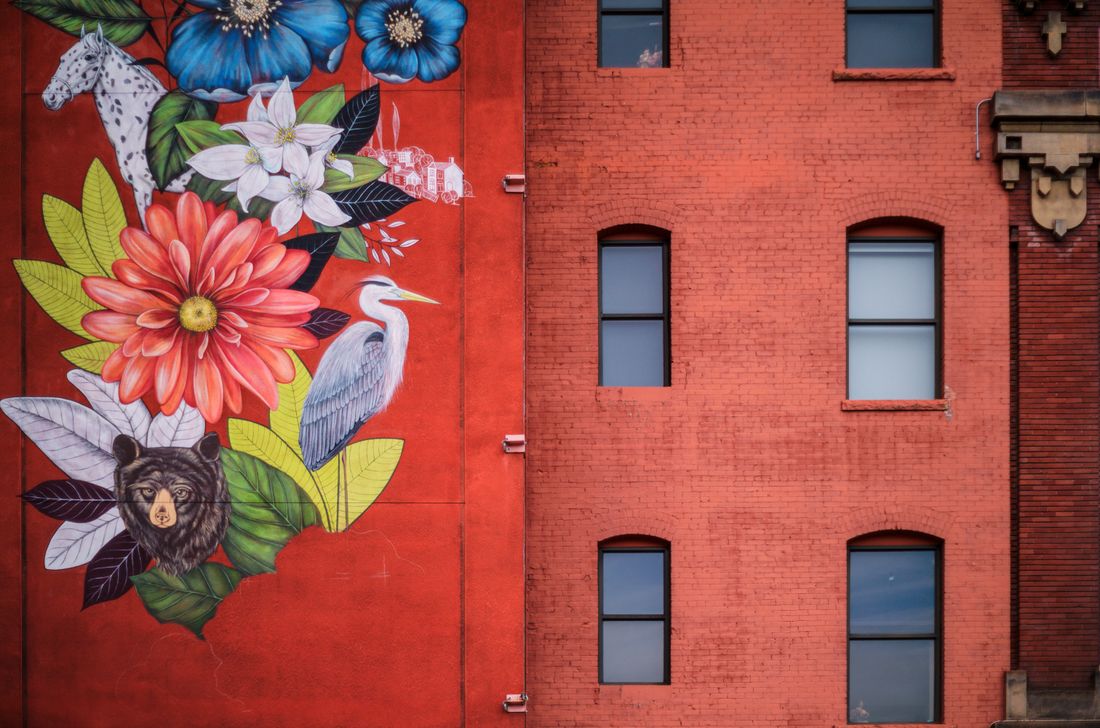
The mural will be there next week, and the week after that, in better light. The forty people standing in front of it, the person who fought for the funding, and the artist looking at it in public for the first time will not be. That is the part with a deadline.
A dedication ceremony needs coverage of the moment, not the artwork: the unveiling or reveal, speakers, the artist with the work, funders and community members present, and the crowd at scale. The artwork itself should be documented separately, in controlled light, on a different day.
The Ceremony and the Artwork Are Two Different Shoots
This is the single most useful thing to settle before the day. A dedication happens at a fixed hour, usually in whatever light that hour provides, with people in front of the work. Documentation of the mural itself wants even light, no crowd, and often a time of day chosen specifically for the wall's orientation.
Trying to get both from one visit produces a compromise on both sides. Either the ceremony coverage suffers because the photographer is fighting for clean artwork frames through a crowd, or the artwork documentation is made at noon in hard shadow because that is when the mayor was available.
The good news is that only one of them has a deadline. The wall will still be there, so the artwork pass can happen on a chosen morning with the light the piece actually needs. Booking the two separately is usually cheaper than one long day, and it produces materially better files.
There is a scheduling advantage to this split that organisers do not always notice. Because the artwork pass has no fixed time, it can be booked at short notice around weather, which means the whole project stops depending on a single day being clear. A rained-out dedication is a problem; a rained-out artwork shoot is a rescheduled morning.
The Reveal Is the One Unrepeatable Frame
If there is a physical unveiling (a drop cloth, a ribbon, a covering coming down), that moment is the single frame the whole event exists to produce, and it happens once, quickly, usually without warning about exactly when.
Covering it reliably means being in position early and staying there, which conflicts with covering everything else. It also means knowing in advance which direction the covering falls and where the artist and officials will be standing, because a reveal photographed from behind a row of shoulders is a photograph of shoulders.
Where there is no literal unveiling (which is common, since many murals are simply finished), the equivalent moment is usually the artist speaking or the group turning to look at the wall together. That moment is less obvious and needs to be anticipated rather than caught, which is a reason to ask the organizers what the actual shape of the ceremony is.
It is worth asking whether the reveal will be staged twice. Many organisers will happily repeat a ribbon cut or a symbolic gesture for photographs immediately afterward, particularly if the first attempt was obstructed. That is a normal and honest practice for a ceremonial image, and knowing in advance whether it is on the table changes how much risk sits on the single live moment.
Speakers, Officials, and the People Who Made It Happen
Dedications almost always involve people who need to be photographed for reasons that have nothing to do with art: a council member, a funder, a business improvement district, a school principal, a family the work commemorates. Those photographs are part of the deliverable and they are what the report and the press release will use.
Getting the list in advance matters more here than at most events, because titles are not visible and a photographer cannot identify who is essential from the podium order alone. A two-line note naming who must appear in usable frames prevents the standard outcome, which is excellent coverage of the wrong four people.
The grip-and-grin group photo belongs in this category too. Nobody loves it, everybody uses it, and it is far better taken deliberately at a known moment than assembled at the end when half the officials have left for another engagement.
The Artist Is Not a Speaker, They Are a Subject
The artist at a dedication is in an unusual position: they are the reason for the event and often the least practiced person on the podium. The coverage they need is different from the coverage the officials need.
The frames that matter are the artist with the work (close enough to show the surface, far enough to show scale) and the artist looking at it rather than at the camera. Those are the images they will use for years, in applications, on their site, in a portfolio, long after the ceremony is forgotten.
It is worth stealing ten minutes for that either just before the crowd arrives or immediately after it disperses. Both windows exist, both are usually available, and neither survives if the plan is to catch it during the event. The artist standing alone with a finished public work is a photograph that does not repeat.
Community and collaborating artists deserve the same consideration where a work was made collectively. Murals in particular are often produced with assistants, apprentices, or local participants whose contribution is invisible in the finished wall, and a group frame at the dedication is frequently the only record that they were part of it.
Crowd, Scale, and the Wall in Its Actual Setting
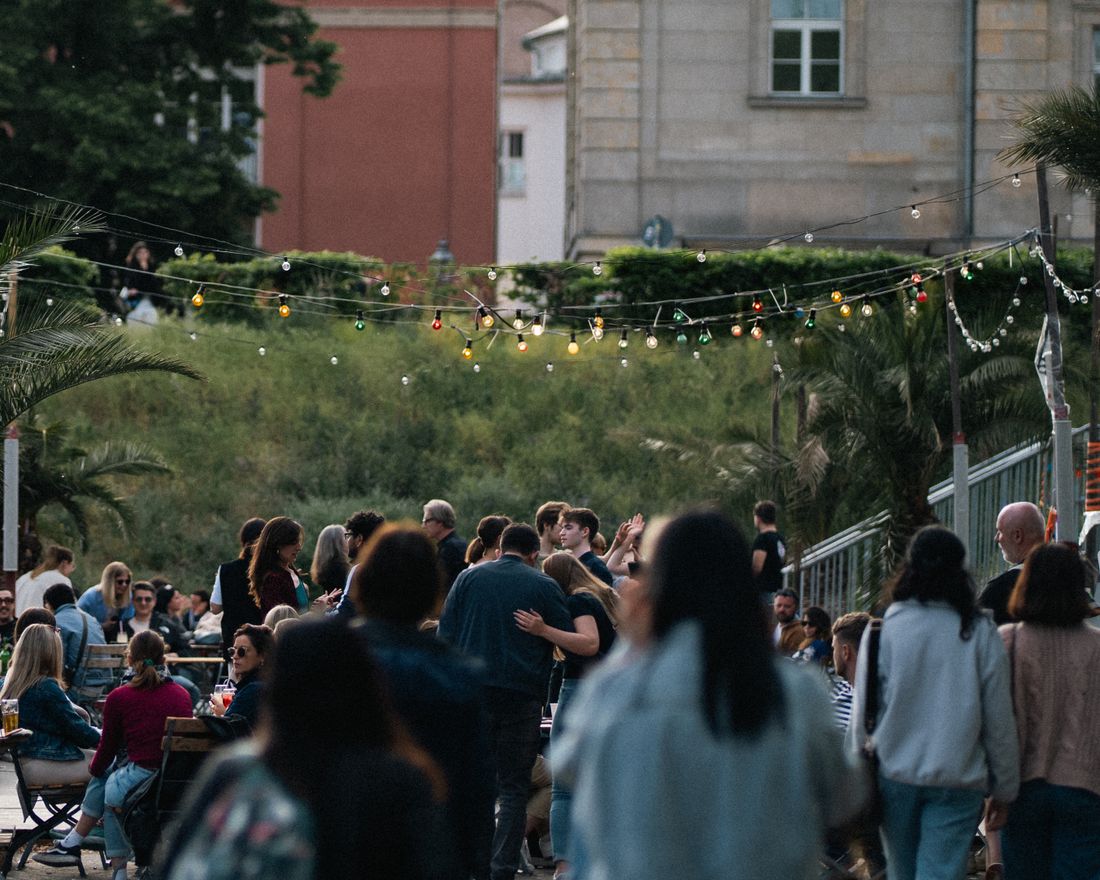
Two contextual frames do most of the reporting work later. One is a wide shot showing the crowd at scale, taken at the fullest moment, which is what any funder report or press summary will use to demonstrate turnout. The other is the wall in its street context (with the sidewalk, the traffic, the building next door), which shows what the piece actually is in the neighborhood.
That second frame is the one most likely to be missing from an event-only shoot, because during a ceremony the camera is pointed at people. It is also the frame that best answers the question a stranger has, which is what this work does to the place it is in.
Both benefit from a little height or distance, which usually means scouting a position before the crowd forms. A doorway across the street, a set of steps, the far corner. Ten minutes of walking around before the event decides whether those frames exist.
A frame taken from the position an ordinary passer-by would occupy is worth adding to the list. Public art is encountered from the pavement, at an angle, partially obstructed by a parked car or a tree, and an image made from that position tells the truth about how the work lives in the neighbourhood in a way a clean elevation cannot.
Weather and time of day are worth a short conversation with the organisers too, because a dedication scheduled at noon on a south-facing wall is a difficult photograph before anyone arrives. It rarely changes the schedule, but knowing it in advance lets a photographer plan positions rather than discover the problem while a councillor is speaking.
Permissions, Community, and What Not to Assume
Public art dedications frequently involve community members, children, and residents who did not come to be photographed. That is a different situation from a gallery opening, and it deserves a conversation with the organizers before the day rather than a judgment call in the moment.
Practically: ask who is hosting, whether there is any consent process for participants, whether a school or youth group is attending under its own rules, and who on the organizing side can answer a question during the event. Their policies govern, and a photographer working for a commissioner does not override them.
Wider frames are the reliable default when the answer is unclear. Images that show turnout, the work, and the occasion without identifiable close portraits remain fully usable for every report and press need, and they avoid the situation where a good photograph turns out to be unpublishable.
The Separate Artwork Pass, and When to Book It
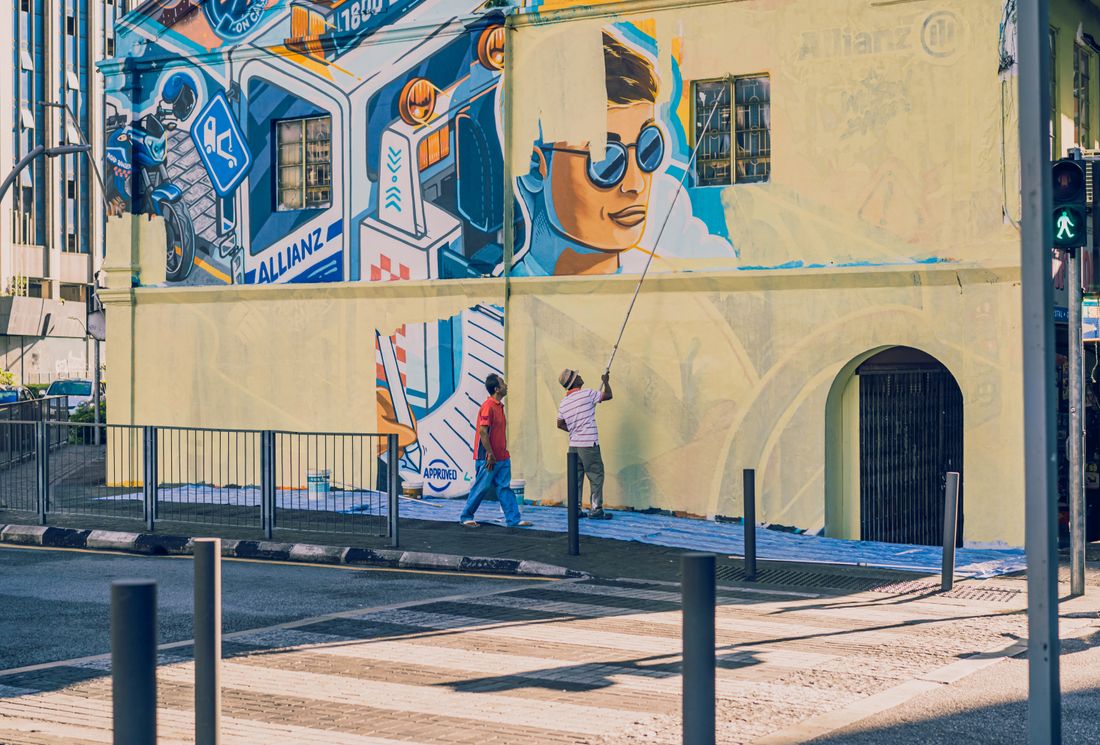
Documenting a mural properly is its own problem: an exterior surface, usually large, usually unable to be lit, with light that changes by the hour and weather that does not negotiate. The right time is normally overcast or early, when the wall is in even light and no hard shadow crosses it.
That pass wants elevation or distance for a square-on full view, plus detail sections that show the surface and the hand, plus at least one frame with a person or a familiar object for scale. Those are the files the artist will use for their portfolio and the commissioner will use for a catalogue or a grant report.
Booking it within a few weeks of the dedication is worth doing while the work is at its cleanest. Exterior work weathers, gets tagged, gets partially blocked by a parked truck or a new scaffold, and the version photographed a year later is rarely the version anyone intended to record.
Elevation is the practical constraint on most mural documentation. A large wall photographed from ground level leans backward, and correcting that in post costs resolution and crops the edges. A position across the street, an upper floor window, or in some cases a lift is what produces a genuinely square full view, and it is worth identifying before the day rather than improvising.
Who Needs What Afterward
Dedications generate more downstream users than most events: the artist, the commissioning body, a funder, sometimes a city agency, sometimes a local paper on the same evening. Each wants a different slice, and sorting that out in advance saves a week of forwarding files.
A workable split is a small same-day selects batch for press and social (the reveal, a speaker, the crowd wide, the wall in context) followed by the full set organized into ceremony, artist, artwork, and context folders.
Credit deserves a mention here as well. Public art photographs circulate widely and get republished by people who were not at the event, so agreeing how the artist and photographer are credited before the images go out is what keeps that credit attached as the images travel.
Turnaround expectations should be set with the organisers rather than assumed, because dedications frequently involve a local paper or a council communications team working to same-day deadlines. Agreeing which four or five frames get prioritised, and by when, is a five-minute conversation that decides whether the coverage appears anywhere on the day it happened.
Frequently asked questions
Should the mural itself be photographed at the dedication ceremony?
Generally no. A ceremony happens at a fixed hour in whatever light that hour provides, with a crowd in front of the work, while proper mural documentation wants even light and an empty sidewalk. Only the ceremony has a deadline (the wall will still be there), so a separate artwork pass on a chosen overcast or early morning produces far better files.
What is the most important shot at a public art dedication?
The reveal, if there is a physical one (a covering coming down or a ribbon cut), because it happens once and quickly. Covering it reliably means being in position early, knowing which way the covering falls, and staying put. Where there is no literal unveiling, the equivalent is usually the artist speaking or the group turning to look at the work together.
How do you handle photographing community members at a dedication?
Settle it with the organizers before the day rather than in the moment. Ask who is hosting, whether there is a consent process, whether a school or youth group is attending under its own rules, and who can answer questions during the event. Where the answer is unclear, wider frames showing turnout and the work without identifiable close portraits stay fully usable.
What does the artist need from dedication coverage?
Frames of themselves with the work (close enough to show surface, far enough to show scale) and images of them looking at the piece rather than at the camera. Those get used for years in applications and portfolios. It is worth taking ten minutes just before the crowd arrives or right after it disperses, since that moment does not survive being caught mid-event.
When should a mural be documented after it is finished?
Within a few weeks, while it is at its cleanest, and on an overcast or early morning when the wall sits in even light without hard shadow crossing it. Exterior work weathers, gets tagged, and gets blocked by parked vehicles or new scaffolding. The version photographed a year later is rarely the version anyone intended to record.
Coverage for the hour that does not repeat.
We cover dedications, openings, and public art moments, and come back for the artwork itself when the light is right.
Explore event coverage →