A gallery wants your best image of the finished piece. A funder wants proof the grant did what the proposal said it would, which means process, people, scale, and paperwork all belong in the same folder as the finished work.
A grant or nonprofit report needs documentation that proves activity happened, not just images of finished work: process and people shots, scale and public context, correct captions and credit lines, the right file specs for the destination, and consent handled properly for anyone photographed.
What does a grant report actually need to prove?
A grant report has to prove the money did what the proposal said it would. It is evidence, not a pitch, and a funder reads the images with that job in mind. A jury asks whether the work is good; a funder asks whether the described activity actually happened, at the scale described, for the people described.
That difference changes what "good" documentation means for this audience. A gallery submission can lean on one striking image of a finished piece. A grant report usually needs a set: the work itself, the space it lived in, the people it reached, and enough surrounding context that a program officer who never visited the site can reconstruct what the grant actually paid for. A single beautiful frame with no context reads as marketing material. A modest, plainly labeled frame that clearly shows the described activity reads as accountability, which is the currency that matters here.
This is not about making the images less considered. It's about pointing the same care at a different question. Instead of "does this photograph make the work look its best," the working question becomes "does this photograph make the reported activity legible to someone reading quickly, without prior context, looking for reasons to believe the narrative." Funders read a lot of reports every cycle. The image sets that hold up under that pace are the ones that answer the actual question on sight, not the ones that ask the reader to take the organization's word for it and move on.
Should a report show process and people, not just finished work?
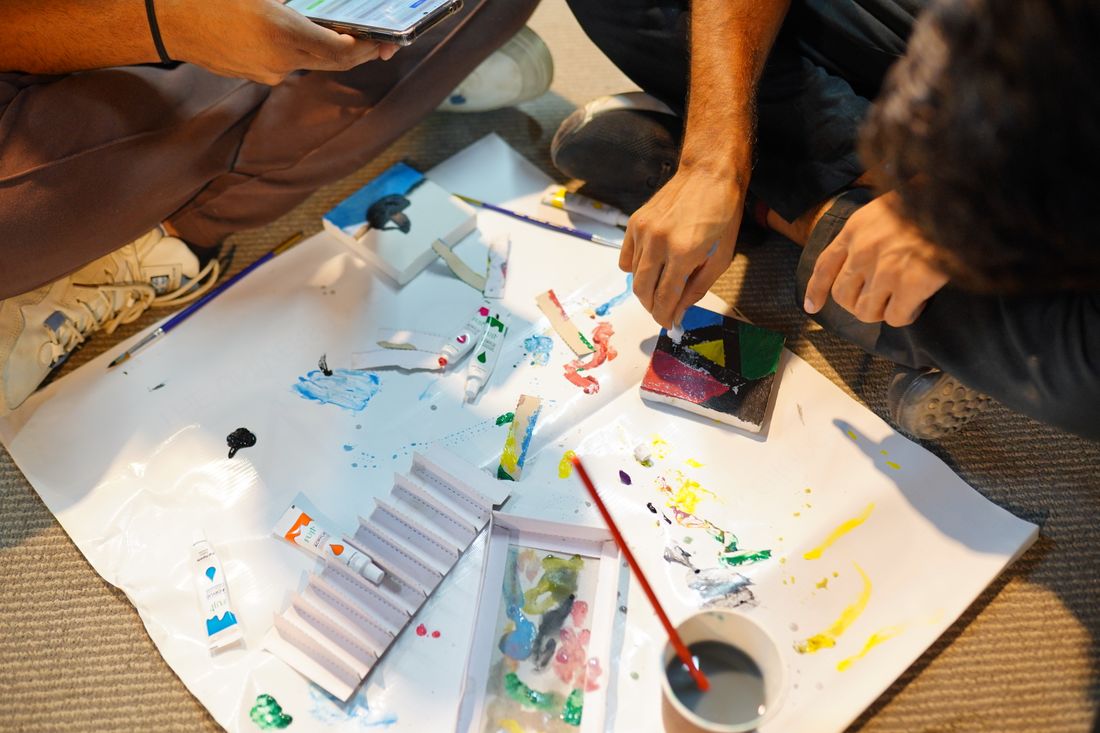
A grant report reads stronger when it documents process and people alongside finished work, because most funding pays for activity, not just objects. A photo of a completed mural proves a mural exists; a photo of the community paint day that produced it proves the funded activity actually took place.
In practice, this means budgeting shoot time for moments that never make it into an artist's own portfolio: setup, installation, a working session mid-progress, a crowd at an opening, a teaching artist mid-demonstration. None of these need to be polished the way a final artwork photograph does. They need to be legible and honestly labeled, showing real people doing the real, funded thing. A slightly loose, in-the-moment photo of participants actually engaged in the activity often does more reporting work than a perfectly lit studio shot of the finished piece alone, because it answers the funder's actual question rather than a jury's.
Organizations sometimes treat this as an afterthought, sending someone to grab a few phone photos on the day and hoping they're usable later. The stronger approach treats process documentation as its own planned shot list, sitting next to the finished-work list rather than after it, decided before the day starts. What did the grant actually fund, a residency, a series of workshops, a commission, a restoration? Build the shot list around what a stranger reading the original proposal would expect to see evidence of, then make sure someone is there, camera in hand, when those specific moments happen and not after.
How do you photograph artwork to show scale and public context?
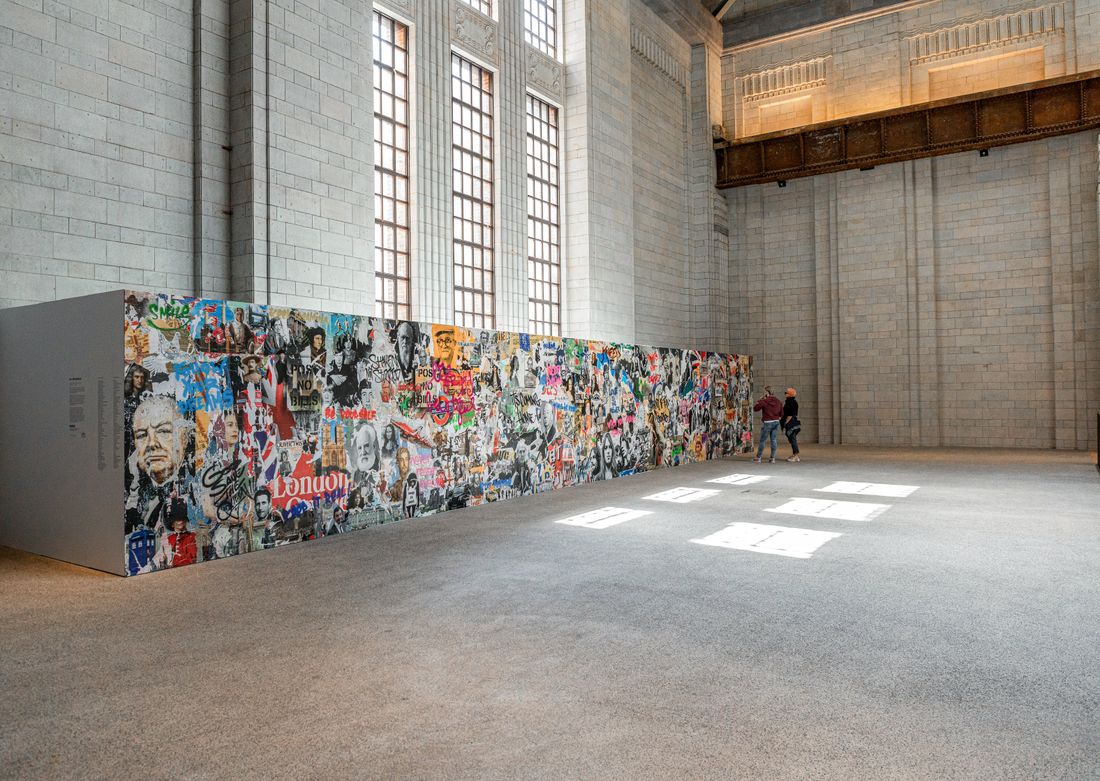
Showing scale and public context means images that make size, placement, and audience obvious, a wide shot with a person or doorway in frame, a full installation view, or the piece shown where the public actually encountered it. A tightly cropped detail shot, however striking, cannot show how big the work was or where it lived.
This matters most for anything site-specific, oversized, temporary, or installed somewhere public: a mural, a pop-up exhibition, a sculpture in a park, a window installation. A funder reading the report wants to picture the actual experience, the wall it covered, the sidewalk it faced, the room it filled during opening hours, the foot traffic that actually passed it. A single isolated, product-style photo of the artwork can't answer any of that on its own, no matter how well it's lit, because it deliberately removes the surroundings a jury photo is built to remove.
The practical fix is simple and cheap: alongside the clean documentation shots, take a few wider "establishing" frames that include a visible human scale reference or recognizable architectural context, a doorway, a set of stairs, people walking past. These don't need separate scheduling; they take minutes at the same shoot and usually happen naturally once someone remembers to step back and widen the frame before packing up. Public art and installation views specifically benefit from at least one frame taken during actual public hours, with real foot traffic visible, rather than an empty-room shot taken before or after the show opened to visitors.
What captions and credit lines do funders commonly require?
Funders commonly expect captions identifying the artist, title, date, and medium, plus a credit line naming the photographer and confirming the organization's right to use the image in a public report. Exact wording and format vary by funder. Treat this as common documented practice, not a fixed template, and follow that funder's own current guidelines.
What stays constant across most funders is the underlying need: a reviewer should be able to look at an image and immediately know what they're looking at, who made it, and under what program it happened, without flipping back and forth to a separate key or emailing the organization to ask. Loose files with generic names and no caption information create real friction for whoever eventually assembles the report, especially if that person wasn't at the original shoot and has no memory of what any given file shows.
The fix is a habit, not a piece of software: capture caption information at the time of the shoot, not weeks later from memory. A simple running log (file name, artist, title, date, program, photographer) takes a minute per image on-site and saves hours of guessing later. Some funders also require a photo release or consent record on file for identifiable people in a photograph; that specific compliance question belongs to the organization's own process and current legal guidance, not to a general post like this one.
What file specs does a report layout need versus an online portal?
A printed or PDF report usually needs high-resolution files (commonly 300 dpi at the final print size, saved as TIFF or high-quality JPEG) while an online funder portal usually asks for a smaller web-resolution file under a stated size cap, saved as JPEG or PNG. Sending the wrong version to the wrong destination is a common last-minute problem.
A designer laying out a printed or PDF annual report needs enough resolution to enlarge an image without it turning soft or pixelated on the page, so an oversized master file genuinely matters there. A funder's online reporting portal, by contrast, is usually built around strict file-size limits and simple web display, so that same oversized master may fail to upload outright, or upload slowly and frustrate a reviewer trying to open dozens of reports in one sitting during a busy review window.
Because these two needs pull in opposite directions, the safest habit is keeping one archived high-resolution master per image and generating the smaller derivative only when a specific portal or layout calls for it, instead of trying to standardize on one file size for every destination. Label both versions clearly so nobody has to guess which is which under deadline pressure. And because every funder's exact specification differs (pixel dimensions, file type, size cap, naming convention), always confirm the current requirement directly in that funder's own reporting instructions rather than assuming last year's spec still applies this cycle.

How should you photograph programming and participants with consent handled properly?
Photographing programming and participants means treating consent as part of the shoot itself, confirming ahead of time who has agreed to be photographed, having an on-site process for anyone who hasn't, and framing group shots so the record still works if a specific face needs excluding later. This matters most with minors and vulnerable populations.
In practice this changes how a shoot gets planned. Someone on-site (staff, not just the photographer) needs to know who has an active consent form and who doesn't, and needs a quick, non-disruptive way to flag that during the session rather than sorting it out from memory afterward, once everyone has gone home and the moment can't be reconstructed. Wider, crowd-style frames of a workshop or event are often more usable than tight individual portraits precisely because they document the activity itself without depending on any one person's specific consent status, which matters when that status is still unconfirmed on the day.
None of this is legal advice, and consent requirements differ by funder, program type, jurisdiction, and the population being served. An organization's own board, legal counsel, or funder guidelines are the actual source of truth here, not a general blog post. What documentation planning can control is the on-set workflow: knowing before the shutter clicks whether a given frame is reportable, rather than discovering after the fact that an otherwise usable photo simply can't go in the report.
Why does the shooting schedule matter more than the report deadline?
Building the documentation set as the year happens means shooting key moments when they occur (the install, the opening, a mid-program session, the finished piece) instead of waiting until the week before the report is due, so the report gets assembled from real coverage rather than reconstructed from whatever happens to exist.
The gap usually isn't lack of access; it's lack of a standing plan made early enough to matter. Nobody assigned a shoot to the workshop in March because nobody was thinking about the September report back in March, when the workshop was actually happening in front of everyone who could have photographed it. By the time the deadline gets close, the moments that would have proven the described activity are already over, and no amount of scrambling in the final week recreates a workshop, install, or opening that already happened months earlier and cannot be staged again convincingly.
A workable fix is mapping the grant or program calendar at the start of the cycle and marking documentation touchpoints against it the same way a funder deadline gets marked on the calendar, the kickoff, a mid-point session, the public-facing moment, the close. This doesn't require a large production; it requires someone deciding in advance that these specific dates get a camera pointed at them. Organizations that document this way tend to describe reporting season as an editing task, not a scramble to reconstruct evidence for activity nobody photographed at the time.
What does a documentation folder look like when the report is actually due?
A documentation folder that's actually ready for a report groups images by program or grant period, keeps a caption log next to the files, and separates archived high-resolution masters from the smaller derivatives a specific portal needs. Whoever assembles the report can then find and use what's needed without re-contacting the photographer.
This is where the earlier habits pay off, and it's worth naming why: process and people shots sit alongside finished-work shots because they were planned together from the start; scale and context images exist because someone remembered to widen the frame at the shoot; captions are already attached because they were logged on-site rather than guessed at later; consent status is already known because it was tracked during the shoot itself, not reconstructed afterward from memory or old emails between staff who have since moved on to other programs.
None of this requires an elaborate system. A shared folder with a simple naming convention and a spreadsheet log covers most organizations' actual needs without any special software. What it requires is deciding, before the next program cycle even starts, that documentation is a standing part of the year rather than a task that only appears once a report deadline is close. The organizations that find reporting season genuinely calm are usually the ones that quietly did this work all year and are simply pulling together what already exists, file by file, folder by folder.
Frequently asked questions
Does a grant report need different photos than a gallery submission?
Yes. A gallery submission or open-call jury mainly wants strong images of finished work. A grant report needs to show that the funded activity actually happened, so it usually needs process shots, people, installation and scale views, and finished work together, not just the strongest single image. The audience is checking accountability, not only quality, so the image set has to answer whether the described activity happened as reported before it answers anything about craft.
Who typically owns the copyright to grant-report photos?
It depends on who took the photos and what was agreed in advance, and this varies by contract and by funder, so it isn't something a general guide can settle for every organization. What matters practically is confirming rights and usage terms with the photographer before the shoot, in writing, and keeping that agreement filed with the images themselves so nobody has to guess later whether a specific photo can appear in a public report or website.
Can an organization use phone photos for a grant report?
Often yes, especially for process and participant documentation, where the point is proving activity happened rather than showcasing production value. Phone photos become more of a problem around resolution for print layouts, and around consistent lighting or framing for finished-work shots that need to represent the piece accurately. Many organizations mix quick phone-captured process shots with more careful, planned documentation for the finished pieces themselves, and that mix usually reads fine to a funder.
How many photos should a typical grant report include?
There's no fixed number. It depends entirely on what the specific funder's template or reporting guidelines ask for, and organizations should follow that funder's own current instructions rather than a general rule of thumb from outside the process. What matters more than a target count is coverage: making sure the images actually represent process, people, scale, and finished work, instead of repeating the same angle of the same piece several times over.
What's the biggest mistake organizations make documenting for reports?
Waiting until the deadline to assemble documentation instead of shooting key moments as they happen throughout the grant cycle. By report time, the workshop, install, or opening that would prove the described activity is already over, and no amount of last-minute effort recreates it convincingly. The stronger pattern is mapping documentation touchpoints against the program calendar at the start of the cycle, the same way a funder deadline gets marked.
Make sure your archive means something when someone asks for proof.
We photograph the work the way an insurer or gallery registrar wants it documented, straight views, correct color, and condition callouts you can actually point to later.
Explore artwork documentation →