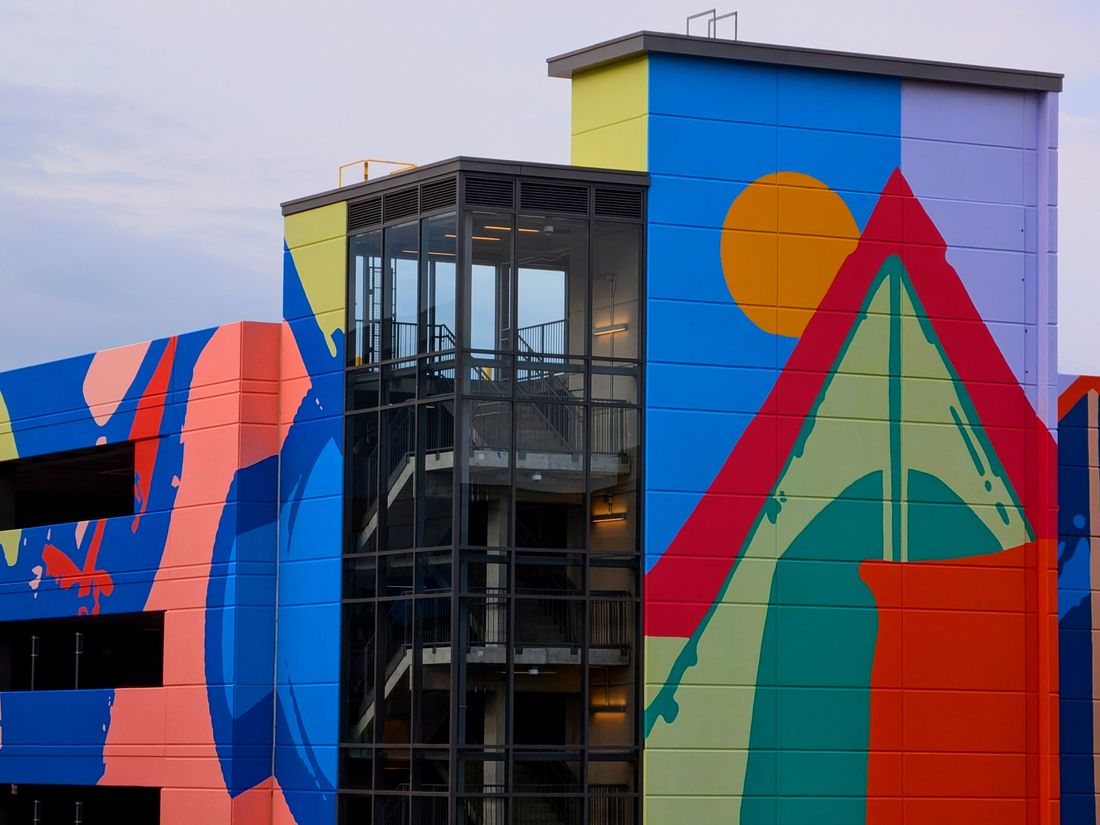
A mural on a wall or a sculpture in a plaza doesn't move, so the documentation shoot has to move around it, working with whatever light, weather, and foot traffic the site offers that day instead of building a controlled setup around the piece.
Documenting outdoor public art means planning around conditions instead of controlling them: overcast or early/late light usually beats midday sun, a wide establishing shot plus a straight-on full view plus detail shots covers the piece completely, and large or heavily trafficked sites often benefit from a second person on hand.
What actually changes when artwork moves outdoors?
Outdoor public art removes the controls a studio or gallery documentation shoot depends on: even light, a clean background, and a piece that can be repositioned. A mural or outdoor sculpture stays where it is, in whatever weather and daylight shows up, so the shoot has to adapt to the wall instead of the other way around.
Indoors, most of the planning goes into building the right conditions around the piece. Outdoors, the piece already has its conditions, and the planning goes into working with them. That means treating the site itself as part of the brief: which direction the wall faces, what's across the street throwing shade or glare, and whether the piece sits in a park, a fence line, or a full building facade.
The kind of outdoor public art matters too. A painted mural behaves differently than a freestanding sculpture in a plaza. A mural is flat and fixed to one surface, so the shoot is a relationship with one plane of light. A sculpture has depth and can be walked around, which opens angles a mural never offers but adds its own scale and background problems.
None of this is a reason to under-document the work. It's a reason to scout before the shoot instead of during it. A short site visit, even a quick walk-by at a different time of day, tells a photographer more about a mural's real capture window than any amount of desk planning. The goal stays the same as any documentation shoot: an honest, complete record of the finished piece.
How does weather change an outdoor documentation shoot?
Weather is the single biggest variable on an outdoor public art shoot, because there's no controlled environment to fall back on. Overcast skies usually work in the piece's favor by softening shadows and evening out color across a large surface, while direct sun and rain both call for a different plan, sometimes a different day.
Bright, cloudless sun sounds like good weather until it hits a mural. Hard sun creates deep shadow lines from gutters, signage, and anything else mounted near the wall, and it can blow out lighter colors while crushing darker ones into flat black. A soft overcast sky, or the brief window right after sunrise or before sunset, tends to produce more accurate color and texture across a large painted surface than midday brightness does.
Rain and wind bring their own limits. Wet surfaces reflect light unpredictably and can distort how a mural's colors read, and heavy wind makes it harder to hold a steady frame from a distance. Neither one is worth fighting through for a final record shoot. A quick check of the forecast a few days out, with a backup date already picked, saves a wasted trip more often than it seems like it should.
Because outdoor conditions shift fast, it helps to treat the shoot as a window rather than a fixed hour. Arriving early enough to watch how light moves across the piece, and building in time to wait out a passing cloud or a gust of wind, usually produces a stronger set than rushing a single pass.
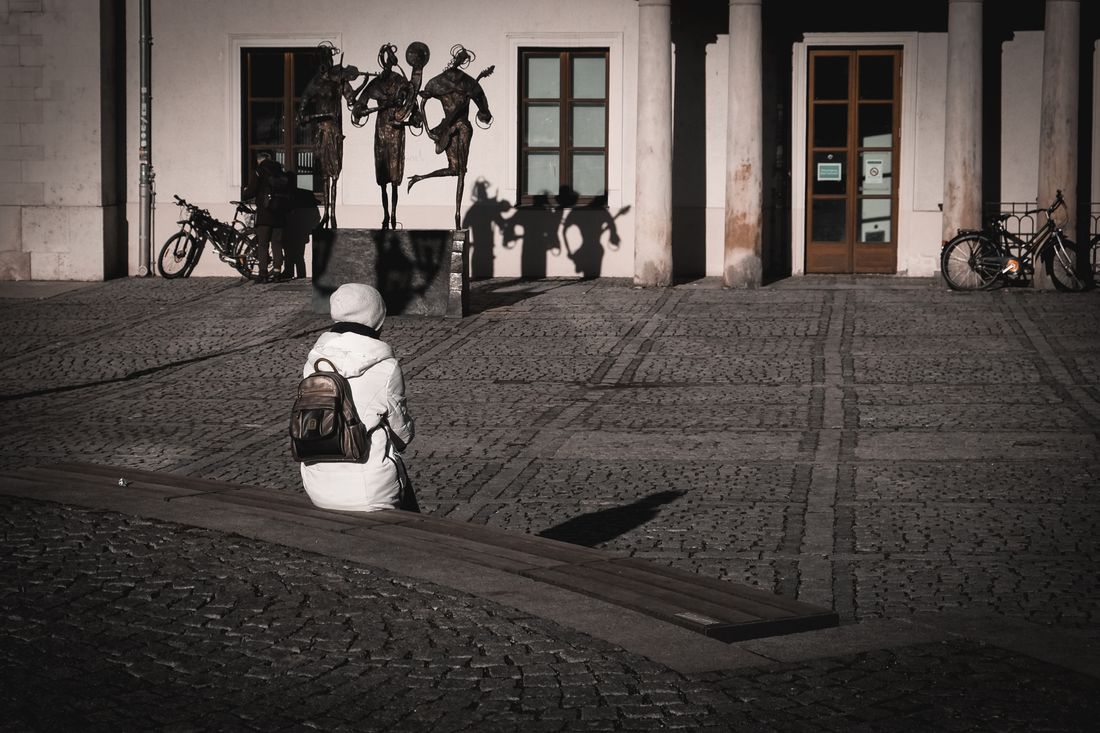
How does the size of a mural or public sculpture change the capture plan?
Scale is the second big difference from indoor documentation, because a piece that spans a full building wall can't be captured the way a canvas on an easel can. The plan has to include both a full, honest view of the entire piece from a distance and close, detail-level views of the parts that don't read at that distance.
A wide establishing view is usually the anchor image: the whole mural or sculpture in its actual setting, showing scale against the building, sidewalk, or plaza around it. Getting that shot often means crossing the street, finding an angle without a parked truck or a tree branch in the way, and sometimes returning at a different time when the space in front of the piece is clearer.
Detail shots matter just as much on large-scale work, because texture, brushwork, and fine elements simply don't register in a wide shot of a wall that size. Working closer, section by section, captures the parts a viewer standing on the sidewalk would actually notice up close: a hand, a shadow line, a transition between colors, a section where the surface itself changes.
Straight-on framing matters more on large flat surfaces than it does on smaller work, since even a small angle can visibly distort a wall this size and make the top or bottom edges look like they're leaning. For very large or very tall pieces, working from across a wide street, a parking lot, or an open plaza is often the only way to fit the full piece into a straight, undistorted frame.
How does the time of day change what a mural shoot can capture?
The time of day changes an outdoor documentation shoot as much as the weather does, because the sun moves across a fixed wall the same way it moves across any other surface. A mural that faces east reads completely differently at nine in the morning than it does at four in the afternoon, and that difference shows up directly in the final files.
Early morning and late afternoon generally give the most even, workable light for a wall-facing piece, since the sun sits low enough to avoid the harsh, flat glare of midday without disappearing behind the building it's painted on. Midday sun, especially in summer, tends to wash out color and flatten texture on a surface that's already fighting reflection and shadow.
Buildings, trees, and street furniture across from a mural cast their own moving shadows throughout the day, and those shadows can cut straight across a piece at certain hours. Watching how a specific wall behaves at different times, even briefly during a scouting visit, is usually more reliable than assuming a general rule about morning or afternoon light will hold for that exact site.
Season adds another layer on top of time of day. A wall that gets clean, even light in June might sit in near-constant shadow by December once the sun's angle drops. For any outdoor piece that might need documentation more than once, it's worth noting what time and time of year produced the strongest set, so a future visit doesn't have to relearn the site from scratch.
How do you document art in a space full of pedestrians and traffic?
Public art sits in public space, which means foot traffic, parked cars, cyclists, and the general motion of a city block are part of every outdoor shoot. The practical answer is patience and timing rather than trying to clear a scene: working in short bursts between passersby, and choosing a time of day when the block is naturally quieter.
Early mornings and weekday mid-mornings tend to be the calmest windows on most streets, well before lunch crowds and well after the morning commute thins out. Weekends can go either way depending on the neighborhood, sometimes quieter, sometimes busier with foot traffic drawn specifically to the piece. A short scouting visit at the planned shoot time helps confirm which pattern applies to that particular block.
Not every person in frame is a problem to remove. A pedestrian crossing at a distance, shown small against a large mural, can actually help establish honest scale, the same way a person standing near a sculpture shows how tall it really is. The goal isn't an empty street, it's a frame where people read as scale and context rather than as clutter blocking the piece.
Parked cars, trash cans, scaffolding, and other street fixtures are usually the harder obstacle, since they can't be waited out the way a pedestrian can. Scouting ahead of time flags these in advance, so the shoot can work around a fixed obstruction with a different angle rather than discovering it cold on the day.
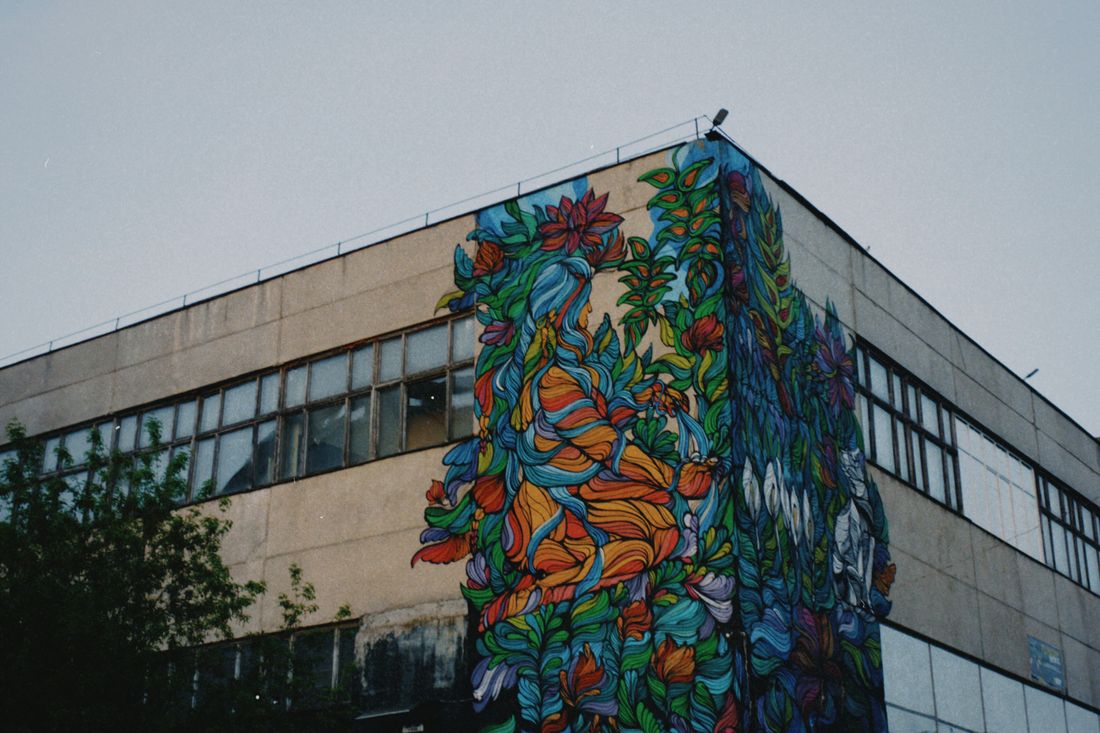
What does a complete documentation set of an outdoor piece include?
A complete outdoor documentation set usually includes three layers: a wide establishing view that shows the piece in its actual setting, a straight-on full view of the piece itself with distortion controlled, and a series of detail shots covering the sections and elements that don't read from a distance. Together, the three layers cover both what the piece looks like and what it's like to actually encounter it.
The establishing view does the work a studio shot never has to do: proving where the piece lives, how big it reads against its surroundings, and what a visitor actually sees on approach. This is the image that tells a viewer, gallery, or archive that the piece exists outdoors on a real wall or in a real plaza, not in a controlled studio setting.
The straight-on full view is the closest outdoor equivalent to a standard studio documentation shot: as flat and undistorted a capture of the entire piece as the site allows, with color and detail held as accurately as the conditions permit. This is usually the image that ends up representing the work in a portfolio, a grant application, or a press request.
Detail shots round out the set by capturing texture, brushwork, material, and any section that carries meaning up close. For a mural, that might mean a hand, a face, or a transition between two painted sections. For a sculpture, it might mean a join, a surface finish, or how the piece meets the ground. None of these substitute for the wide and full views, they extend them.
Why does outdoor public art need to be documented more than once?
Outdoor work ages in public, in a way indoor pieces generally don't. Sun exposure fades color, rain and pollution affect surfaces over months and years, and a mural or sculpture can pick up wear, patina, or simple street-level change that a single documentation shoot from its debut will never show. A record from one point in time only ever tells that one point's story.
This is different from tracking a work in progress. A time-lapse of a piece being made is about the process of creation. Revisiting a finished outdoor piece months or years later is about condition: whether the colors have shifted, whether a surface has weathered, whether anything around the piece has changed in a way that affects how it reads. Both are useful, but they answer different questions.
For a piece with any kind of ongoing life, whether that's an artist tracking their own public work, a commissioning body maintaining a record, or anyone with a reason to compare "then" against "now," a follow-up shoot on the same site, ideally at a similar time of day and season as the original, produces a genuinely useful comparison instead of two unrelated sets of photos.
Even a simple return visit, using the notes and timing from the first shoot, closes most of the gap between an accidental record and a deliberate one. The value isn't in shooting constantly, it's in having at least two honest, comparable records separated by real time.
When does an outdoor mural shoot need more than one person on site?
Most outdoor documentation shoots work fine with one photographer, but scale, safety, and public space can all push a shoot toward needing a second person. A large mural spanning a full building, a piece near active traffic, or a site with heavy foot traffic all benefit from a second set of hands managing what the camera can't.
On very large or very tall pieces, a second person is often the difference between a shot that gets planned properly and one that gets rushed. They can hold a reflector or diffusion panel to soften a harsh patch of sun on part of the wall, watch the wider street for approaching obstructions, or simply confirm from a distance that a straight-on angle is actually reading straight once framed.
In busy public spaces, a second person can also manage timing: watching for a break in foot traffic, flagging when a delivery truck is about to park in frame, or simply holding a spot on a sidewalk long enough to get a clean angle without blocking anyone's path. This matters more on a narrow sidewalk or a popular plaza than it does on a quiet side street.
None of this requires heavy production. Most outdoor public art documentation is still a lean, efficient visit rather than a full crew day. The decision to bring a second person usually comes down to the size of the piece and how much the surrounding space is likely to fight the shoot, not the piece's importance.
Frequently asked questions
What's the difference between documenting a mural and documenting an artwork indoors?
An indoor documentation shoot controls the light, background, and surroundings, while an outdoor mural or sculpture keeps whatever weather, daylight, and street conditions show up on the day. The plan shifts from building the right environment to working within one that's already fixed in place. Outdoor shoots also need a wide establishing view showing the piece in its actual setting, something indoor documentation almost never requires.
Do murals need to be documented more than once over time?
Outdoor work is exposed to sun, rain, and general wear in a way studio pieces aren't, so a single shoot only captures one moment in the piece's life. A follow-up visit, ideally at a similar time of day and season as the original, creates a genuine before-and-after comparison. This matters most for pieces with an active life outdoors, not for a one-time press or grant record.
What's the best time of day to photograph an outdoor mural?
Early morning or late afternoon usually give the most even light for a wall-facing piece, avoiding the flat glare of midday sun. The exact window depends on which direction the wall faces and what's across the street casting shadow, so a short scouting visit at the planned shoot time is more reliable than assuming a general rule will hold for that specific site and season.
Do you need special equipment to document a large-scale public artwork?
The main requirements are enough working distance to fit the whole piece in a straight, undistorted frame, and a plan for softening harsh light on part of a large surface. For very tall or very wide pieces, that often means shooting from across a street or plaza rather than close up. A second person on site can help manage light and timing on bigger pieces.
How do you handle pedestrians or traffic in the shot?
Working in short bursts between passersby, and choosing a naturally quieter time of day such as early morning, usually solves most of it without needing to clear the street. A person shown small against a large mural can actually help establish honest scale rather than being a problem to avoid. Fixed obstacles like parked cars are the harder issue, best flagged during a scouting visit.
Give your collection a record that holds up.
We document artwork the way an adjuster or appraiser would actually want to see it: full views, accurate color, condition detail, and a system that keeps every file tied to the right record.
Explore artwork documentation →