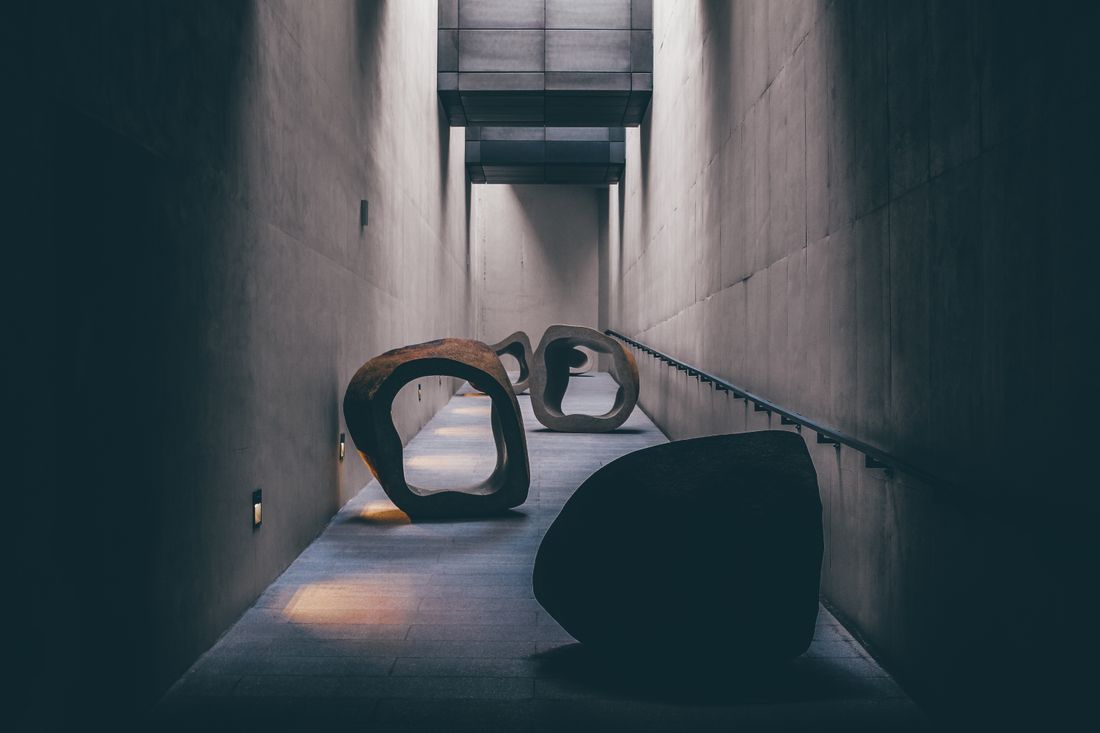
Some work only ever exists in one room, for one run. It isn't shipped to a studio afterward, it isn't rehung somewhere else, and once the crew starts pulling it down, there's no version of it left to go back and shoot again. The photograph becomes the only record that outlives the show, which makes the deinstall date less of a scheduling detail and more of a hard boundary the entire shoot has to work around.
A site-specific installation can't be re-shot, re-hung, or brought to a studio, so the deinstall date is the real deadline. Documenting it means covering the work and the room it was built for, capturing scale, approach, and construction that a flat artwork shoot never needs, and building a file set the artist can actually use once the piece is gone.
Why is the deinstall date the real deadline for documenting a site-specific installation?
The deinstall date is the real deadline because once the crew starts taking the piece down, the work stops existing in the form anyone can walk into. There's no calling the artist back next month for a reshoot, no returning for better light, and no second chance once the wall goes back to primer.
Most documentation has some slack built in. A painting can wait in storage for a rescheduled shoot. A sculpture can travel to a studio. A site-specific installation has neither option, because the site is part of the piece. The moment the run ends, the relationship between the work and the room it was built for is gone, and no amount of later access to the object recreates it.
That changes how the shoot gets scheduled. The deinstall date sets the outer boundary, but the real target sits earlier than that, ideally while the show is still open to the public and the piece is complete, lit, and settled into place, rather than in the compressed hours right before strike when the crew is already staging bins and pulling hardware.
We treat that date as fixed the moment it's confirmed, not as a placeholder to firm up later. Weather delays, a late loading dock, or a scheduling conflict on our end can't push the shoot past it the way they might with an object that can simply wait. Booking early, and building in a buffer day before deinstall rather than after, is what keeps a hard deadline from becoming a missed one.
What's the difference between documenting the work and documenting the room it was made for?
Documenting the work means capturing the piece itself clearly enough that it reads on its own, materials, construction, detail. Documenting the room means showing how that piece occupies and changes the space around it, since a site-specific installation was built to respond to a particular ceiling height, doorway, or wall, not to exist in isolation.
A framed painting can be photographed against a neutral background and still be itself. A site-specific piece can't, because the site is part of what makes it that piece rather than a version of it installed somewhere else. Photograph it the way a flat artwork gets photographed, cropped tight and isolated, and the documentation actually misrepresents the work by removing the one thing that made it site-specific in the first place.
In practice, that means the shot list has to hold both jobs at once. Some frames need to isolate a detail or a surface the way any documentation would. Others need to hold enough of the room, the architecture, the sightlines, that a viewer who never stood in that gallery can understand why the piece was built for that exact spot and not a generic white box.
Neither job replaces the other. A set that only shows the room reads as event coverage, not documentation of the work. A set that only isolates details loses the argument for why the piece needed that room at all. Both are the actual assignment here, not a choice between them.
How do you shoot a piece that only reads correctly from one position, versus one meant to be walked through?
A piece built to be seen from one fixed position needs a single, carefully found vantage point treated almost like a formal portrait, while a piece meant to be walked through needs a sequence of frames that follows the same path a visitor's body would actually take, since no single photograph can stand in for a walkthrough.
Some site-specific work resolves from exactly one spot, a sightline the artist calibrated on purpose, where elements only align correctly from that position and fall apart from anywhere else. Finding that spot before shooting matters more than any lighting or exposure decision, because a frame taken a few feet off that mark can misrepresent the piece entirely, even if it's technically a clean photograph.
Work built to be walked through asks for the opposite approach. One static frame, however well composed, can only ever show a fraction of what the piece does over time and distance. That calls for a series that moves the way a body moves through the space, arrival, midpoint, the view back the way you came, so the documentation set as a whole carries the experience rather than any single image trying to carry it alone.
The first step on any site-specific shoot is figuring out which category the piece falls into, because that decision shapes the entire shot list before a single frame gets made, not after. Getting it backward, treating a walkthrough piece like a single-vantage one or the reverse, tends to produce a set that technically documents the work while still missing what it actually is.
What does a site-specific installation shoot need to capture that a flat artwork shoot never does?
A site-specific shoot needs scale references, the approach into the space, thresholds and doorways, and the piece's physical relationship to the architecture around it, none of which a flat artwork shoot ever has to consider, because a painting on a wall doesn't depend on how a visitor arrives at it.
Scale is the first thing that gets lost without a deliberate frame for it. A photograph cropped tight on the work alone can flatten a piece that fills a fifteen-foot ceiling into something that reads as tabletop-sized. A wide frame that includes a doorway, a stair, or another architectural element a viewer can measure against restores that sense of scale honestly.
The approach matters for the same reason. How a visitor first encounters the piece, whether it's visible from the entrance or reveals itself only after turning a corner, shapes the actual experience of the work, and that sequence is worth capturing on its own, not folded into a single hero shot.
Thresholds, doorways, changes in floor or ceiling height, and the seams where the installation meets the existing building are all part of what made the site right for this piece. Skipping them because a normal artwork shoot never asks for them means losing the evidence of exactly what made the work site-specific in the first place, which defeats the reason the shoot exists. A short shot list built around these categories before arrival keeps the crew from discovering the gap only after the room is already gone.
How do you light a space that was designed around its own light?
Lighting a space designed around its own light starts with respecting that design rather than overriding it, the gallery's own fixtures, natural light, or the piece's built-in lighting are often part of the work itself, so the goal is usually to support what's already there instead of replacing it with a standard documentation setup.
Many site-specific pieces are built with a specific light in mind, whether that's a skylight the artist accounted for, track lighting angled a particular way, or the piece's own internal light source. Bringing in a heavy lighting rig and flattening all of that under even, neutral light can technically expose the piece correctly while erasing the exact quality that made it belong in that room.
That doesn't mean shooting only with whatever's already switched on. It means treating the existing light as the starting point and adding just enough to solve real problems, filling a shadow that hides a detail, balancing a bright window against a dim interior, without changing the character of the space. Small adjustments, a bounce here, a subtle fill there, usually go further than a full rebuild of the room's lighting.
We also shoot the space at the times of day or under the conditions it's actually meant to be seen, rather than defaulting to whatever hour is easiest to schedule, since a piece calibrated for late-afternoon light looks like a different piece entirely at ten in the morning.
How do you sequence a shoot between establishing views, details, and construction proof?
A well-sequenced shoot moves from wide establishing views that show the piece in its room, to closer frames that isolate specific details and materials, to a set of images that specifically prove how the piece was built, joints, supports, seams, mounting points, since each of those three jobs needs its own dedicated pass rather than getting caught incidentally along the way.
Establishing views come first for a practical reason: they orient every image that follows. Once a viewer understands the room and where the piece sits in it, detail shots make sense as pieces of a whole instead of floating, unplaced close-ups. Skipping straight to detail work first risks ending up with a strong set of fragments and no frame that shows how they fit together.
Construction proof is easy to treat as an afterthought, but for a piece that won't exist in this form again, it's often the most useful record later. How a panel attaches to the wall, how a suspended element is actually supported, where two materials meet, these are the frames an artist reaches for when rebuilding elsewhere or explaining the piece to someone who never saw it in person.
We plan the order before arriving rather than improvising it in the room, since a live installation with visitors moving through it doesn't leave much room to backtrack for a shot that got missed on the first pass. A written list, checked off as the shoot moves along, is a plainer safeguard than trying to remember every angle from memory under time pressure.
Why photograph the installation both empty and with people in the room?
An empty room shows the piece and its architecture without distraction, giving a clean record of scale, material, and placement, while a room with people in it shows how the work actually functions as an experience, how visitors move around it, stand near it, and give it a sense of scale a tape measure can't communicate on its own.
Empty frames do the heavy lifting for most future uses. Applications, catalogues, and press requests almost always want the piece itself, uncluttered by anyone standing in front of it, since the goal there is showing the work clearly rather than showing an event. These are usually the frames that end up doing the most repeat duty later.
Frames with people serve a different, just as real, purpose. They show scale in a way that reads instantly, a viewer's body next to the piece communicates size faster than any caption. They also capture the piece functioning the way it was meant to, being walked through, viewed from a particular angle, or simply occupying a room with an audience in it, which an empty shot can't show.
Both usually get scheduled deliberately rather than left to chance, an early or off-hours pass for the empty set, and coverage during open hours or an event for the version with people in the room, so neither depends on luck. Planning both passes before the shoot day, rather than hoping the right moment appears on its own, is what actually gets both versions into the final file set.
What will the artist actually need these files for once the piece is gone?
Once a site-specific piece comes down, the photographs become the primary evidence it ever existed, and artists typically need them for grant and residency applications, portfolio and website updates, a catalogue or publication, and press requests, each of which tends to want a slightly different kind of image from the same shoot.
Applications and portfolios usually want the clean, uncluttered version, the piece shown clearly against its room with nothing else competing for attention, since a reviewer looking at dozens of submissions needs to understand the work in seconds. A catalogue or publication often wants more range, including detail frames and construction views that help explain how the piece was made, not only what it looked like.
Press requests move differently. They tend to come in fast, sometimes after the show has already closed, and whatever file set exists by then is what's available, there's no second shoot to fill a gap once the room has been struck. That's a strong argument for capturing a broad enough set the first time, rather than assuming a narrower edit will cover whatever comes up later.
Asking the artist early what these files are ultimately for, an upcoming application, a book, an archive, shapes real decisions about coverage and framing during the shoot itself, rather than getting sorted out after the piece no longer exists to reshoot. That one conversation before the shoot is usually cheaper than trying to guess correctly and finding out later what was actually missing.
Frequently asked questions
When should a site-specific installation actually be photographed, relative to the show's run?
Ideally while the show is open to the public and the piece is complete, lit, and settled into place, not in the compressed hours right before deinstall when the crew is already staging bins and pulling hardware. Booking early and treating the deinstall date as a hard boundary, with a buffer day before it rather than after, keeps a fixed deadline from turning into a missed one if anything on-site runs behind schedule.
Does a site-specific piece need to be shot from a single position or from multiple angles?
It depends on how the piece was built. Some installations resolve from exactly one calibrated vantage point, and shooting from anywhere else can misrepresent them even in a technically clean frame. Others are meant to be walked through and need a sequence following that path instead. Figuring out which category a piece falls into is the first decision on any site-specific shoot, since it shapes the entire shot list before a frame gets made.
Why does scale matter more on a site-specific shoot than on a normal artwork shoot?
A tightly cropped frame can flatten a piece that fills a large room into something that reads as tabletop-sized, since there's nothing in the image to measure it against. Including a doorway, a stair, or another recognizable architectural element gives a viewer an honest reference for size. That reference matters more here than on a flat artwork shoot because the piece's actual scale is often part of what the site-specific design depended on.
Should the installation be photographed with the gallery's own lighting or with added lighting brought in for the shoot?
Usually both, starting from the gallery's own light rather than replacing it, since that lighting is often part of the piece itself. Bringing in a full rig and flattening the room under even, neutral light can expose the piece correctly while erasing what made it belong there. Small additions, filling a shadow or balancing a bright window, tend to solve real problems without changing the character the artist built the space around.
What's the single most useful thing to photograph if there's only time for a short shoot before deinstall?
A clean, well-lit establishing view that shows the piece in its room, in focus, unobstructed, and true to how it actually looked, since that's the frame most applications, portfolios, and press requests reach for first. Detail and construction shots add real value, but if time runs out, prioritize one accurate, honest wide view before anything else, because a missing establishing shot is far harder to make up for later.
Make sure your archive means something when someone asks for proof.
We photograph the work the way an insurer or gallery registrar wants it documented, straight views, correct color, and condition callouts you can actually point to later.
Explore artwork documentation →