A renovation or a long install period reads on the calendar as quiet time, so nobody books anything for it. That is the trap. The footage that keeps a gallery's feed alive during a closure has to get shot before the doors close, not during, and most galleries realize this about three weeks too late. Here is how to build a content bank that actually survives the dark stretch, and where its limits really are.
Start shooting two to three weeks before the last open day: capture the current hang, staff at work, and the room itself, then come back for the empty space and the transformation as a second wave. Sort everything into categories, caption it in advance, hold back the strongest images for reopening, and slow the posting rhythm instead of keeping it identical to the open calendar.
Why does a gallery's feed usually go quiet during a renovation?
A renovation or a long install reads on the calendar as a quiet stretch, so nobody books a shoot for it. The gallery keeps posting on the rhythm it used when a show was up, and by week six the only image left is a construction shot with an apology in the caption.
That gap is not really a content problem so much as a scheduling one. The photography that would carry the feed through the closure needed to happen while the space still had something worth pointing a camera at. Once the walls come down and the floor is under drop cloths, the easy images are gone, and what is left is a hallway phone shot and a sign taped to the door.
Treating the closure like an event on the calendar changes the outcome. A gallery planning a six-week renovation can plan a shoot two to three weeks before the last open day, the same way it would plan coverage for an opening. The difference is that a closure does not feel like something worth capturing, so it slips past without ever getting booked.
Once that shift happens, the rest gets easier. Nobody has to invent content out of an empty room in real time. The material comes from a bank built while there was still something in the space to shoot, and posting through the closure becomes a matter of pulling from that bank on a schedule instead of scrambling for something new every week.
How far ahead should a gallery shoot before it goes dark?
Start the shoot two to three weeks before the last open day, not on it. That window gives enough time to capture the current hang at its best, catch staff and visitors in the space normally, and still leave a few days open for anything the first pass missed.
Waiting until the final week compresses everything into one rushed session, and rushed sessions tend to skip the quiet, ordinary moments that read best months later: a staff member adjusting a frame, natural light crossing the floor at a particular hour, the room before anyone has started pulling nails.
A two to three week runway also allows for a second pass. The first session usually surfaces gaps once someone reviews the files, a corner that never got shot straight on, a piece that deserved its own frame. A single afternoon rarely covers everything a dark stretch will need, and there is no way to go back for a reshoot once the walls are down.
Booking that early also keeps the shoot from competing with the actual work of closing a gallery: deinstalling art, coordinating with contractors, handling storage. Treat the pre-closure shoot as its own task with its own date on the calendar, set before the logistics of the move take over every available hour. That gap also gives editors time to review footage and flag anything worth a quick reshoot before the room actually changes.

How much material does a dark stretch actually use up?
A six-week closure at a normal posting rhythm needs somewhere around fifteen to twenty distinct images to avoid repeating the same three shots on a loop. Think in terms of weeks covered, not photo count: each week needs at least two or three usable frames that have not already run.
That volume sounds like a lot until it is broken into categories instead of one long shot list. A handful of environmental images of the space itself, a set of closer material, a few behind-the-scenes frames of the closure work, and reserve pieces for the reopening. Spread across a dark stretch, that is not one impossible shoot, it is four smaller, specific captures.
The other variable is what the gallery was already posting before the closure. A feed that ran two posts a week burns through a bank faster than one that ran one, so the volume needed scales with the existing rhythm, not a fixed number. A gallery used to daily stories needs a noticeably deeper bank than one that posts a few times a month, and that is worth mapping out before the shoot rather than guessing on the day.
Building slightly more than the estimate is usually the safer call. A shoot that runs long by an hour costs less than a second scramble for material three weeks into the closure, when the room no longer looks anything like it did.
What is worth capturing on the last open days?
Four things exist only while the space is still intact: the room as it currently reads, the show or hang about to come down, staff doing ordinary work in the space, and whatever is sitting in the archive that has never actually been photographed.
The room as it currently reads is the most obvious and the most skipped. Once a show closes, the exact combination of light, layout, and hang that visitors saw for weeks is gone for good, and a wide shot of that room from a few angles is the only record it ever looked that way.
Staff working in the space is worth more than it usually gets credit for. A person adjusting a label, carrying a piece toward storage, standing at a desk with the current show behind them, these are the images that make a feed feel like it belongs to actual people rather than a brand account, and they are only available while the gallery is still open and staffed normally.
Then there is the archive nobody has photographed. Every gallery has a stack of past work, older installation shots, or pieces in storage that never made it into a clean frame. A closure is a natural pause to finally shoot that backlog, since the space and the staff are both available in a way they might not be once the renovation starts and everyone's attention shifts to contractors and schedules instead of what is sitting in the flat files.
What is the second capture window most galleries miss?
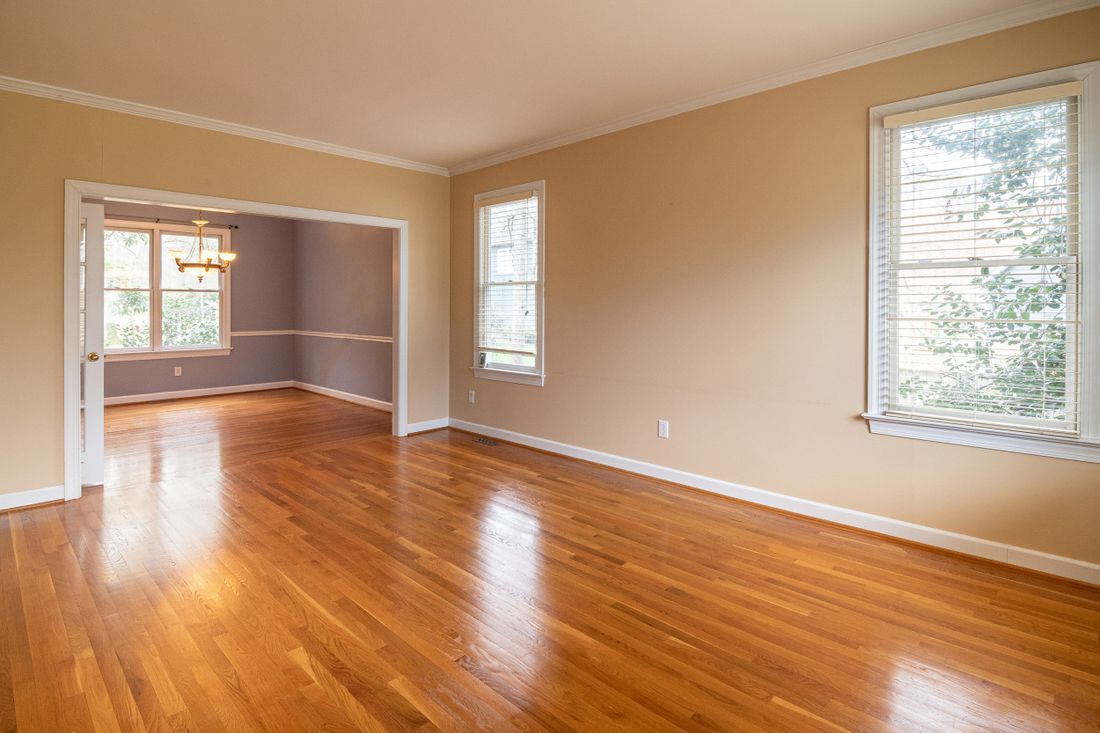
The empty room itself is worth shooting, not just the room with art in it. Bare walls, exposed hardware, a floor with tape outlines where pieces used to hang, and the transformation as it happens are a legitimate story a feed can run on its own.
Most galleries treat the empty room as something to hide until the new show is ready to reveal. That instinct skips a stretch of material that audiences generally respond well to: the process itself. People who follow a gallery are often curious what happens behind a closed door, and a bare room with patched walls and a ladder against one side tells that story without needing any art in frame.
This window also solves a real scheduling problem. The renovation or install period is exactly when there is the least new content to post, so building a small set of images from the empty space and the early transformation gives the feed something to run during the stretch when the pre-closure bank would otherwise be the only source.
A few frames go a long way here: the room stripped bare, a detail of work in progress, a wide shot as the new layout starts to take shape. None of it needs to look finished. The honesty of an in-progress space, shown a handful of times rather than constantly, reads as transparency rather than an apology, and it gives the reopening an actual before to contrast against.
How should a content bank be organized so someone else can post from it?
Sort the files into a handful of categories instead of one folder, write captions for the strongest images before the closure starts, and put the set in a rough posting order. Whoever handles social during the dark period should be able to open the bank and post without a new brief every week.
A folder full of unsorted images looks like a resource but functions like a scavenger hunt. Whoever is posting ends up scrolling through hundreds of files trying to remember which ones already ran and which still work for the week's theme, which is exactly the re-briefing problem a content bank is supposed to solve.
Categories do not need to be complicated. Something as simple as space, staff, archive, and transformation covers most of what a pre-closure shoot produces, and each category can be pulled from on a different week so the feed does not repeat the same visual idea twice in a row.
Captions written in advance matter more than they seem to. Writing a caption in the moment, three weeks into a closure, tends to produce something generic because there is nothing happening that day worth describing. Writing captions right after the shoot, while the context is fresh, produces something specific, and specific captions are what make a bank of stills feel current instead of recycled. Sequencing the set, even loosely, keeps the story moving in one direction.
What should stay in reserve for the reopening instead of getting spent early?
The strongest images, the ones that would make the best first post back, should be set aside before the dark period even starts. Spend the steady, ordinary material early and hold back anything that specifically signals the new show or the finished space for the actual reopening announcement.
It is tempting to post the best material first, since it is the most satisfying to look at right after the shoot. That instinct works against the gallery later, because the reopening needs its own strong moment, and there is nothing left to make that moment feel different from the routine posts that ran through the closure.
A simple way to protect that material is to flag it during the sort, right when the bank gets organized, rather than trying to remember which frames were the standouts weeks later. A short note next to each file, something like hold for reopen, keeps that decision from getting undone by whoever is posting under deadline pressure during the dark stretch.
Reserve material tends to fall into a few types: any shot that shows the finished space rather than the in-progress one, anything that includes the new show once it is actually installed, and a few of the strongest environmental shots from the pre-closure session that can anchor a we are back post. Everything else is fair game to spend during the closure itself, since none of it needs to be saved for a single big moment.
Should posting rhythm change during the dark period, and how long can a bank actually last?
Slow the posting rhythm during a closure rather than keeping it identical to the open calendar. A bank of stills can carry a feed for a limited stretch, not indefinitely, so planning for a real gap in new material is more useful than pretending the closure will not show up on the feed at all.
A gallery posting daily during an open calendar does not need to keep that same cadence once the doors close. Cutting back to two or three posts a week during the dark stretch stretches the bank further and reads as intentional rather than thin, since a slower rhythm during a known renovation makes sense to anyone following along.
That said, a bank built from one pre-closure shoot has a real ceiling. A short two-week install can usually run on a well-organized bank without anyone noticing a gap. A months-long renovation is a different situation, and expecting stills from a single session to cover that whole stretch usually means repeating material past the point where it still feels fresh.
The honest move for a longer closure is to plan a second small capture partway through, even a short visit to document how the transformation has progressed, rather than stretching the original bank to cover a timeline it was never built for. A content bank is a strong tool for bridging a defined, bounded gap, not a substitute for planning the actual shape of a long closure.
Frequently asked questions
How early should a gallery start shooting before a renovation or install closes the space?
Begin about two to three weeks before the last open day. That gives enough time to capture the current hang, staff working normally, and the room itself, then leaves a few days to fill any gaps a first review turns up. Waiting until the final week usually means a rushed single session that misses the ordinary, ambient shots that read best once the closure has actually started.
What should get photographed on the very last open days before a gallery closes?
Four things that only exist while the space is intact: the room as it currently looks, the show or hang about to come down, staff doing ordinary work in the space, and anything in the archive that has never actually been photographed. All four disappear the moment deinstall starts, so they need their own session on the calendar before that date, not folded into the move itself.
What is the point of photographing an empty gallery room with nothing on the walls?
An empty room shows the transformation itself, which is a legitimate story a feed can run during a closure when there is little new material to post. Bare walls, patched holes, and a floor mid-renovation read as an honest behind-the-scenes moment rather than an apology, and they give the eventual reopening an actual before to contrast against, showing real progress rather than a finished surprise.
How should a content bank be organized so someone can post from it without a new brief every week?
Sort the images into a few simple categories, something like space, staff, archive, and transformation, and write captions for the strongest ones right after the shoot while the context is still fresh. Put the set in a rough posting order. A folder of unsorted files still requires someone to figure out what to post each week, which defeats the point of building the bank at all.
Can a bank of stills carry a gallery's feed through an entire long renovation?
Only up to a point. A short two-week install can usually run on one well-organized bank, but a months-long renovation will outlast material from a single pre-closure shoot. The honest plan for a longer closure is a second, smaller capture partway through, rather than stretching the original bank past the point where the audience starts noticing the same images repeating. Planning that second capture in advance keeps the gap from becoming obvious.
Not every month has an opening, but the feed still needs to run.
We plan content for the ordinary weeks as carefully as the big nights, mixing archive work with what's actually going on in the gallery.
Explore monthly media →