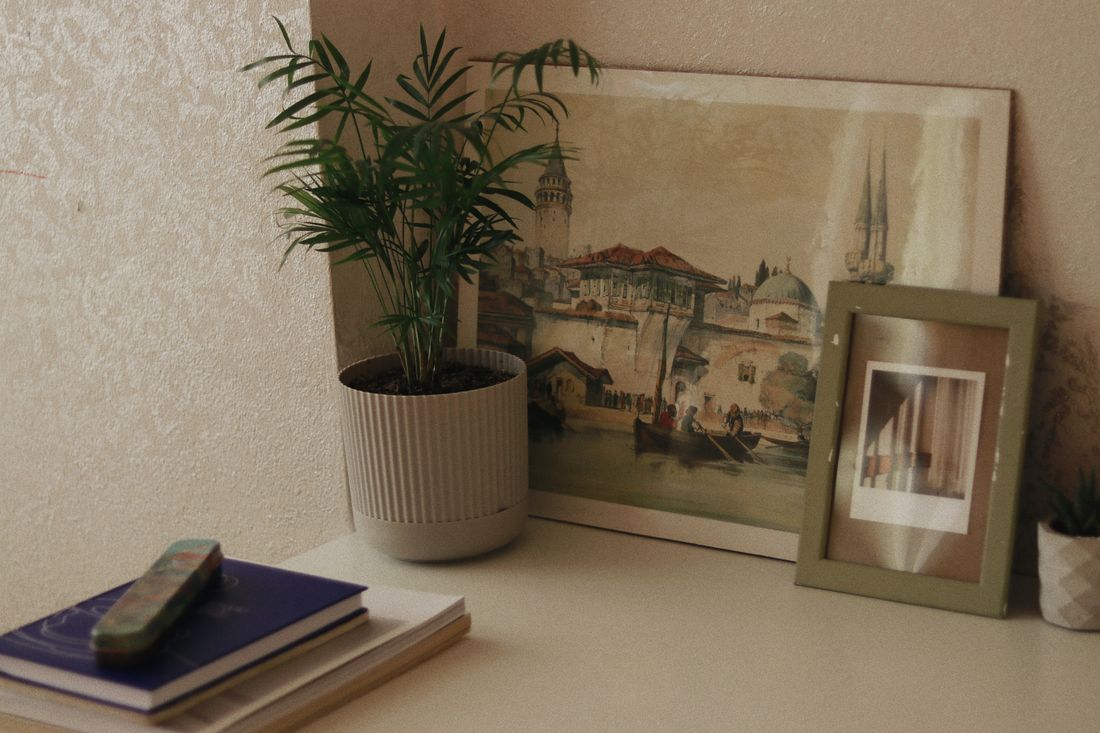
A Greenwich living room, an East End weekend place, an apartment with forty works already on the walls. Documenting a collection where someone actually lives is a different job from documenting new work in a studio. There is no dedicated wall to build against, no clear floor, and no light that hasn't already been shaped by curtains, lamps, and whichever way the house faces. The day still has to produce a consistent, usable file set. It just has to get there by working with the house instead of clearing it out first.
Documenting a private collection means working inside a home that already has a life in it, no dedicated studio, no controlled light, and every piece already hung. The day becomes a sequence of small temporary studios moving room to room, built around what the house offers instead of a blank space designed for the camera.
What's Different About Documenting a Collection Inside Someone's Home?
Documenting a collection in a private home means working around a house that already has a life in it, no dedicated wall, no clear floor, no rigged lighting, and every piece already hung, framed, and lived with. Instead of one studio, the day becomes a sequence of small temporary studios, room by room, built and broken down as the shoot moves through the house.
A studio session starts from nothing and gets to choose everything: the wall, the backdrop, the light, the distance from camera to canvas. A home collection starts from what's already there. A painting might be at the top of a stairwell, wedged between a doorframe and a bookcase, or hung against a wall with a window directly behind it. None of that gets rearranged to suit the camera. The room stays a room. So the setup has to happen fast, piece by piece, using whatever working space the house actually offers: a stretch of hallway wall for a portable backdrop, a cleared section of floor for pieces that come down, a corner where the light happens to be even. The team builds a small working station near each cluster of art, shoots what that station allows, then packs it up and moves to the next room. That's the real shape of the day, not one studio, but ten or fifteen of them stitched together by however the house is laid out, each with its own light, its own obstacles, and its own setup before the next frame is ready.
Which Pieces Come Off the Wall, and Which Stay in Place?
Most framed, flat work comes off the wall. The mount, the hook, and the wall itself introduce light and angle problems a clean copy stand or portable rig solves in seconds. Anything fragile, oversized, built into the architecture, or specifically off-limits to touch gets photographed exactly where it hangs, lit and angled to work around the room instead of against it.
The decision usually comes down to risk and access, not preference. A mid-sized framed print on a standard hook is quick to lift, shoot flat against a neutral backdrop, and rehang. That's the cleanest file and the fastest workflow, so it's the default whenever it's safe. A large canvas mounted with cleats into a stairwell, a sculpture on a built-in plinth, or a piece the collector doesn't want handled stays exactly where it is; the camera adjusts instead. That means working the angle to kill glare, bringing in a light that clears the frame without a hot spot, and sometimes shooting from a step stool or a low crouch because the wall dictated the position, not the shot list. Pieces near a fireplace, a mirror, or another reflective surface often get shot in place too, simply because moving them creates more risk than the reflection does. The rule that ties it together: nothing comes down unless it's clearly safe to lift and safe to rehang, and any piece where that's in doubt is treated as a stay-in-place shot from the start rather than decided in the moment.
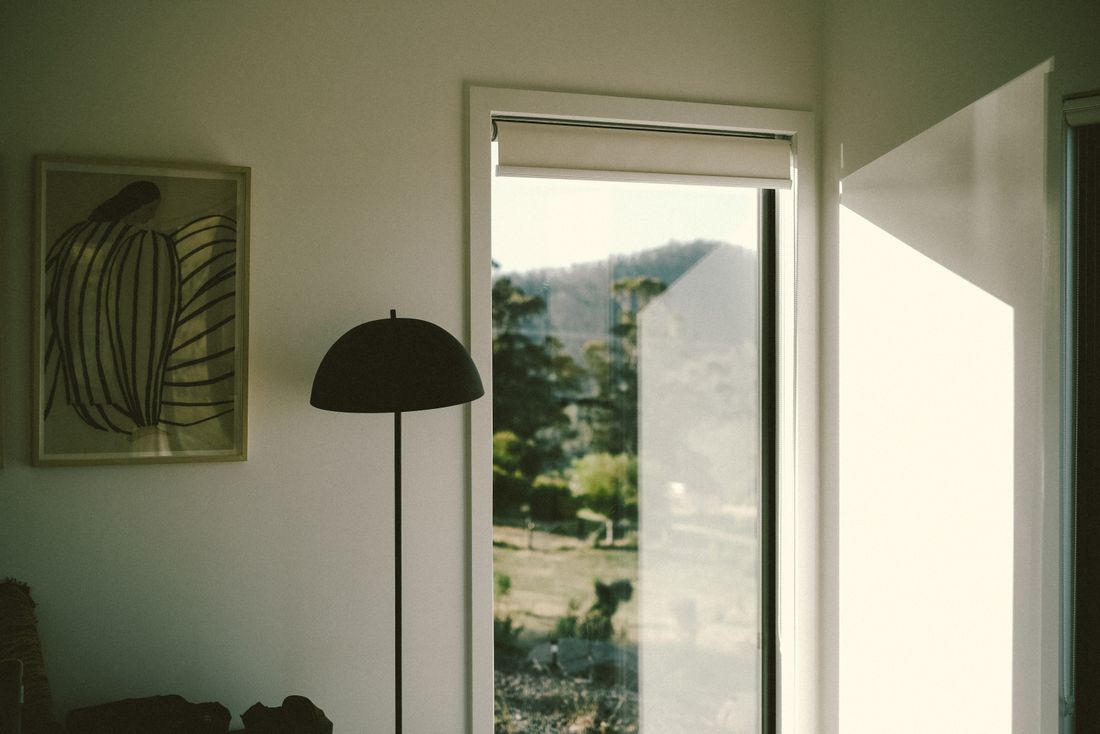
How Do You Handle Mixed Light Across a Whole House?
A house rarely has one light source. It usually has several, all working against each other. Windows on two sides throw daylight at different color temperatures, lamps add warm pools of light, and the sun itself moves across the day. The hard part isn't lighting any single frame well; it's making a hundred-plus files taken in ten different rooms over several hours look like they belong to the same set.
The fix starts with controlling what can be controlled. Domestic lamps get turned off wherever a shot allows it, because mixing daylight with warm bulb light is the fastest way to get an unusable color cast. Where a lamp can't be killed (it's built into the room and there's no clean way to shoot around it), the piece gets lit with its own consistent source instead, overpowering the ambient mix rather than blending with it. A color reference target gets shot at the start of every new lighting setup, not once for the whole house, because the light in an east-facing room at ten in the morning is not the light in that same room at four. That reference is what lets every file get corrected back to a shared standard afterward instead of guessing room by room. Daylight itself gets tracked across the day too, morning light and late-afternoon light need managing the same way a cloudy stretch and a bright one do, so nothing in the final set reads as slightly off next to its neighbors in a folder or on a wall.
How Do You Deal With Glass and Reflections in a Room Full of Surfaces?
Framed work under glass or acrylic reflects whatever's in front of it, a window, a lamp, the photographer, the room itself. In a house, that problem multiplies: mirrors, glossy furniture, chrome fixtures, and other framed glass all bounce light back at each other, so the reflection in one piece can come from a source several rooms away.
The core technique doesn't change from a studio: angle the camera and the light off-axis so the reflection falls outside the frame, use polarizing filters where the glare won't fully clear otherwise, and build a temporary flag or dark cloth to block whatever's throwing the hot spot. What changes at home is how much has to be managed around that setup. A mirror across the room, a glass coffee table, a chrome lamp base, or a bright window three walls away can all land a reflection in a piece of glazing, so part of the setup for every glazed work is a quick sweep of the room to find what's bouncing light toward it, then covering, angling, or temporarily repositioning a flag to block it rather than moving the furniture itself. Pieces glazed with high-reflectivity glass in a bright room sometimes get shot at a slight angle and corrected for keystoning afterward, which reads as flat to the eye but avoids a reflection that no amount of flagging solves in that exact spot. It's slower than a studio pass, because every glazed piece in a different room is effectively a new reflection problem, not a repeat of the last one.
Who Moves the Furniture, and Who Moves the Art?
Furniture, rugs, and lamps get moved when they're in the way of a shot, usually by the team, with the homeowner's go-ahead, because moving a chair carries little risk. Artwork is different: the team only handles a piece when that's been explicitly agreed in advance, and even then only within limits set ahead of time. Anything outside that agreement gets photographed exactly where it already sits.
This split matters because a home shoot happens in a space where people actually live, a rug holds a chair leg's dent, a side table has a specific spot, a lamp cord is routed a particular way. Small, low-risk adjustments (sliding a bench, angling a floor lamp, moving a throw pillow out of frame) happen as needed and get put back before the team leaves. Handling the art itself is a different category of risk: frames, mounts, and surfaces can be fragile in ways that aren't obvious from across the room, and responsibility for a chip, a scratch, or a shifted hanging wire sits with whoever touched the piece. That's why the working rule gets set before the day starts, not negotiated room by room, either the team has agreed in advance to take specific pieces off the wall, or they don't touch them at all. When a piece needs to come down and handling wasn't pre-agreed, the honest answer is to shoot it in place that day and revisit the handling question separately, rather than improvise consent in the middle of a session.
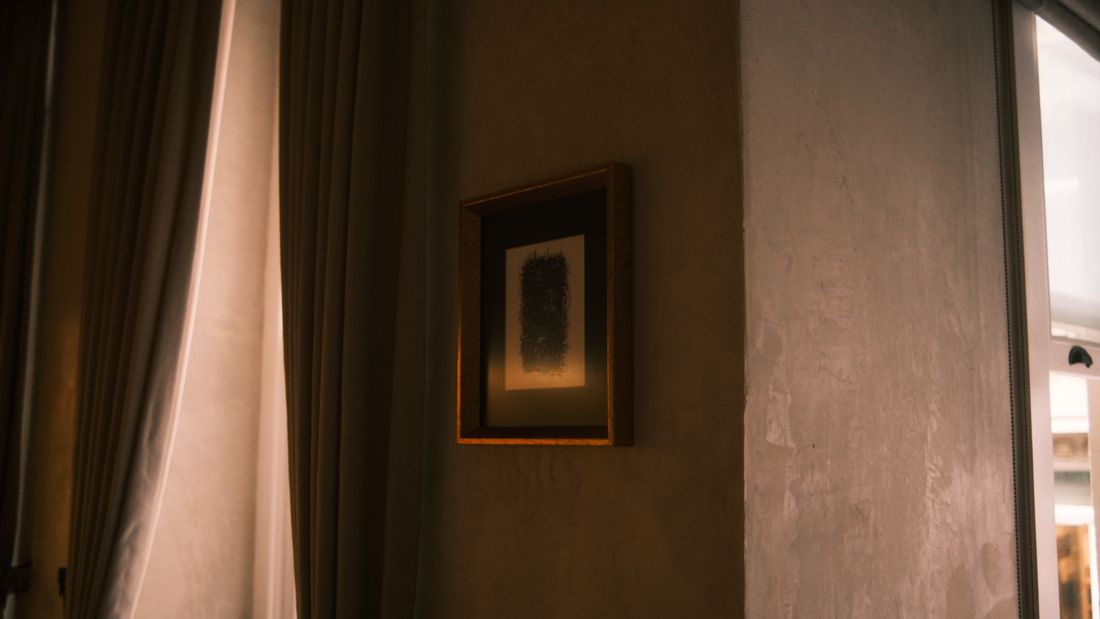
What Order Do You Shoot the Rooms In?
The shot order follows the house, not the inventory list. Working room by room (living room, hallway, stairwell, study) means the lighting setup, backdrop, and working station built for one cluster of pieces gets used for everything in that room before it's broken down, instead of moving back and forth across the house chasing a numbered list.
An inventory list is organized by piece: artist, title, medium, whatever order the collector or advisor compiled it in. A floor plan is organized by light and space. Shooting by inventory order in a house means rebuilding a lighting setup every time the list jumps from the living room to a bedroom and back, which multiplies setup time without adding anything to the actual files. Shooting by room means the crew clears a room, builds one working station suited to that room's light and space, photographs everything in it (on the wall and off), then tears down and moves once. Rooms with the most complicated light, usually ones with windows on two sides or heavy competing lamps, tend to go earlier in the day while there's still flexibility to wait out a bad patch of sun; rooms that are simpler to control can absorb a later start. The inventory list still gets checked off as the day goes, piece by piece, so nothing gets missed. It just isn't what decides where the camera goes next. That distinction is what makes a full house achievable in a single day instead of two.
How Do You Keep a Hundred-Plus Files Organized and Usable Later?
Every file gets named and logged against the same inventory the collection was shot from, not renamed later from memory. A consistent naming convention (artist, title or catalog number, and a file sequence) plus an on-site check against that inventory before the team leaves is what keeps a hundred-plus files usable months later, instead of becoming a folder nobody can match back to the wall.
The naming discipline matters most after the shoot is long over, when someone is pulling a specific file for an insurance conversation, a loan request, or a catalog update and needs to find it without opening two hundred images to identify one painting. Files get named consistently at capture, not batch-renamed afterward from a spreadsheet, because renaming after the fact is where mismatches creep in, a title gets typed wrong, a sequence number skips, a piece with two similar files gets swapped. The other habit that makes the difference is checking the shot list against the physical inventory before leaving the house, not after: walking the collection room by room a second time, confirming every piece on the list has a corresponding file, and catching anything missed, blurry, or lost behind a reflection while it's still possible to fix it on-site. That on-site check is what replaces "we'll reshoot it". A return visit to a private home is a much bigger ask than a few extra minutes before packing up, so the review happens at the end of the same day, with the collection still assembled and the light still workable.
How Do You Handle Privacy for the Collector and the Collection?
Discretion is a working practice, not a courtesy. Addresses, owner names, and the contents of the collection are never disclosed, and the images are delivered and stored accordingly. That applies to how the day is scheduled, who knows where the team is going, and how the finished files are captioned, shared, and used afterward.
In practice, that means a shoot in a private home is never referenced publicly by location, neighborhood, or owner, and the specific artworks documented on a given day aren't shown as examples elsewhere without separate, explicit permission. File delivery goes directly to the collector or the advisor who commissioned the work, not through a shared link that's easy to forward on, and any internal notes about the visit (access details, alarm codes, who else was in the house) stay off any shared or public system entirely. This matters more in a home than in a studio or gallery, because a private collection often sits alongside evidence of exactly where someone lives, what they own, and when the house is occupied or empty. Treating that information as private by default, rather than asking permission after the fact, is what makes an art advisor or collector comfortable bringing a documentation team into a home in the first place. It's also why generic language (a private collection, a home in the Northeast) is the right way to describe the work afterward, rather than anything that could identify the address, the owner, or the specific pieces on the walls.
Frequently asked questions
How long does documenting a private collection in a home take?
There's no fixed length. It depends on how many pieces are in the collection, how many rooms they're spread across, and how much of the work can come off the wall versus stay in place. A single room with a dozen framed pieces is a different job from a full house with work in every room. In practice, most home collections are planned as a single day, with the rooms and pieces shaping that day's schedule.
Do you need to take artwork off the wall to document it?
No. Most flat, framed work does come down because it's faster and gives a cleaner file, but nothing gets removed unless it's clearly safe to lift and safe to rehang. Fragile pieces, anything mounted into the architecture, and anything the collector doesn't want touched are photographed exactly where they hang instead, with the camera and lighting adjusting to the room rather than the room adjusting to the camera.
Can artwork be documented without moving furniture or rearranging a room?
Mostly, yes. Small adjustments (sliding a chair, angling a lamp, moving a pillow out of frame) happen as needed and get put back before the team leaves. The art itself is treated differently: it only gets handled when that's been agreed in advance. Anything outside that agreement is photographed in place, working around the furniture and layout of the room rather than resetting it for the shot.
What happens with artwork behind glass in a home full of reflective surfaces?
Glazed pieces get angled off-axis from the camera and the light so reflections fall outside the frame, sometimes with a polarizing filter or a temporary flag to block whatever's bouncing light toward it. In a house, that reflection can come from a mirror or window several rooms away, so each glazed piece gets checked individually for what's throwing light at it before the setup for that piece even begins.
How private is a documentation visit to a home collection?
Addresses, owner names, and the specific contents of a collection are never disclosed. Files are delivered directly to the collector or the advisor who commissioned the work, not through easily forwarded links, and the visit isn't referenced publicly by location or owner. Any specific pieces documented that day aren't used as examples elsewhere without separate permission. Discretion applies to the whole process, not only the finished images.
Make sure your archive means something when someone asks for proof.
We photograph the work the way an insurer or gallery registrar wants it documented, straight views, correct color, and condition callouts you can actually point to later.
Explore artwork documentation →