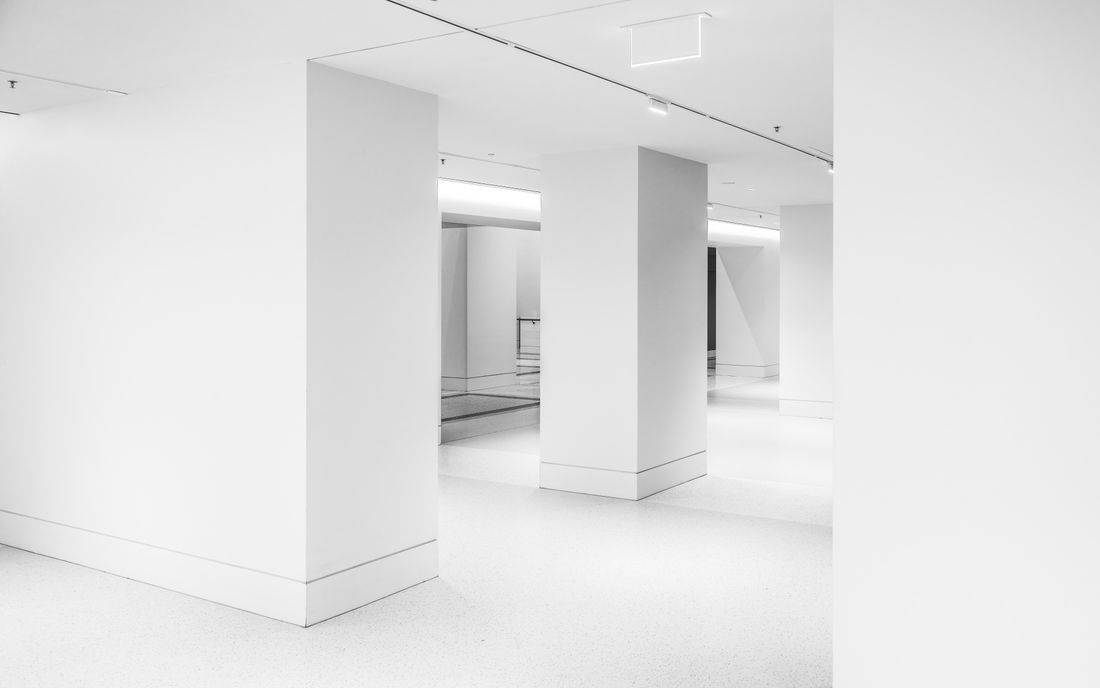
Everybody photographs a show going up and a room full of people on opening night. Almost nobody photographs the day it comes down: the crew carrying work back out the door, crates being packed and sealed, walls returning to bare stretches with faint marks where frames used to hang. That gap is not a coincidence. De-install reads as logistics rather than content, so most galleries never think to book it, even though it is the one day of a show's run that produces a record nothing else does.
De-install day is worth photographing because it produces a record no other day of a show's run does: the crew removing and packing work, walls emptying, and the marks left behind once everything is gone. That coverage suits an artist's own record of how work travelled, a gallery's archive, and honest end-of-run content. Skipping it is a reasonable call for a small show with a simple takedown.
Why does de-install day deserve its own photography coverage?
De-install day deserves its own coverage because it is the only point in a show's run that produces a record of the work actually leaving: crates going out the door, the crew handling each piece, and a room returning to a blank space instead of an exhibition.
Most galleries book a photographer for the opening out of habit. It is the calendar event everyone already expects to be documented, so coverage gets arranged without much discussion. De-install day rarely gets the same treatment. It reads as housekeeping, a logistics day for the preparator and the art handling crew, not something a program thinks to photograph.
That gap shows up later. A show that ran for two months, travelled from a loan, or involved a complicated hang ends up with images from one day only, opening night, before the crowd ever thinned out and before the work went anywhere. There is no record of the last hours the pieces spent in that specific room, no image of the crates that carried them out, and no documentation of the space the way it looked once the show was actually finished.
None of this argues against opening coverage. It argues for treating de-install as a separate, deliberate choice rather than a day nobody thought to book, since the record it produces does not exist anywhere else. A single afternoon of coverage often ends up filling a gap the rest of a season's documentation never touches.
What does a photographer actually shoot on de-install day?
A de-install shoot usually covers four things: the crew removing and carrying each piece, work being wrapped and packed into crates, the walls emptying section by section, and a final pass through the bare room once everything is out and staged for pickup.
The removal sequence is the most active part of the day. A photographer working de-install stays out of the immediate work path and shoots from the side or the doorway, catching hands lifting a frame off the wall, a crew member checking a corner for damage before it goes in a crate, or two people carrying something large through a hallway that was not built with wide artwork in mind.
Packing is a slower, more deliberate sequence and usually the easiest to photograph cleanly: foam corners going on, a piece settling into a crate lined with padding, a lid going on and latches closing. These frames read as process rather than action, which suits a steadier, more composed approach than the removal shots do.
The emptying walls are worth tracking as the day moves, not just at the very end. A room half-cleared, with a few pieces still hanging next to bare stretches of wall, is often a more useful image than the fully empty room, since it shows the show mid-transition rather than already gone. Working the room in this order, removal, packing, walls, gives a photographer a natural sequence to follow instead of guessing where to stand next.

Who actually uses de-install day photographs?
Four groups tend to use de-install photographs afterward: the gallery's own archive, an artist documenting how a body of work travelled and how it was handled, a program building an honest record of how a run actually ended, and anyone who wants a straightforward visual account of the space at the point the show closed.
A gallery's archive benefits from having more than an opening-night folder. A season that only has crowd shots from every launch night looks thin next to one that also shows how each show physically wrapped, which crates went where, and what the space looked like between exhibitions. It is a small addition that makes the archive read as a working record instead of a highlight reel.
Artists who lend or ship work care about how it was handled on the way out, separate from how it looked on the wall. A photograph of a piece being wrapped and boxed is a plain, documented record of process, useful alongside whatever condition notes the gallery or a handler keeps on file, without functioning as a substitute for that paperwork.
Programs that post regularly also get something out of it: end-of-run content that is not just another crowd photo, but a quieter, honest look at what a show actually costs in labor to bring down, which reads as more grounded than a repeated opening-night format. It also gives a program something concrete to show funders and partners once a run has closed, beyond attendance numbers from opening night.
How is de-install day different to shoot than opening night or install day?
De-install day shoots differently from an opening or an install day mainly because there is no audience to work around: the room holds a small working crew instead of a crowd, movement is slower and more deliberate, and the photographer follows a task list instead of following people.
An opening's job is energy, and the photography follows that: wide crowd shots, quick portraits caught mid-conversation, motion everywhere at once. Install day, while quieter than an opening, still has its own busy rhythm, with multiple people hanging, measuring, and adjusting work at the same time. De-install tends to move slower and in a more fixed order, piece by piece, crate by crate, which gives a photographer more room to wait for a clean moment instead of chasing one.
There is also less to manage logistically. No guest list, no bar, no competing conversations to shoot around. The crew is focused on one task at a time, which makes it easier to predict where the next useful frame will happen, a lid closing, a wall going bare, a final piece disappearing through the door.
The tradeoff is that de-install has no built-in visual energy the way a crowd does. The photographer has to find the interest in process and quiet transition rather than relying on a room full of people to carry the images on their own, which asks for more patience and a slower shooting pace than either an opening or an install day usually requires.
What does the empty-wall shot actually need to show?
The empty-wall shot needs to show the room honestly as it is once the work is out: faint marks, patched nail holes, and the slight texture or color differences left behind, photographed straight-on in even light rather than dramatized or cleaned up for the frame.
These details are easy to miss in person and easy to overcorrect in a photograph. A wall shot lit to look moody or dramatic misrepresents what is actually a plain, practical record: this is what the room looked like when the space was handed back. Flat, even lighting and a straightforward angle serve that purpose better than anything stylized.
A close detail of a patched or marked section is worth having alongside a wider shot of the full wall. The wide shot shows the room's overall footprint once a show has cleared out. The close detail shows the specific, small evidence of where something used to hang, which reads as more concrete than a wide shot alone.
None of this is a substitute for whatever condition paperwork a facility keeps on the space itself. It is a plain visual record sitting next to that paperwork, useful mainly because it exists at all, since almost no gallery routinely photographs a room in this exact in-between state. A handful of frames taken with care usually covers what the wall needs, more than that starts to feel like inspecting the room rather than simply recording it.

How should crates and packing be documented without slowing the crew down?
Crates and packing get documented in short windows between actual handling, never by asking the crew to pause or restage a step for the camera, since a de-install day runs on its own schedule and the photographer's job is to fit around it, not slow it down.
A quick conversation with the lead preparator before the day starts is usually enough to plan around. Knowing roughly when a specific piece gets crated, or which sequence the crew is working in, lets a photographer position ahead of the moment instead of asking anyone to redo something that already happened.
Packing itself offers natural pauses that do not require asking for anything: a crate sitting open while foam gets arranged, a lid resting nearby before it goes on, a completed crate sitting against a wall waiting for pickup. These moments hold still on their own, which makes them easier to shoot cleanly than the more continuous motion of the actual removal.
Labels and shipping paperwork sit right on most crates, which means keeping a wider angle or working from a slight distance so that text is not the focus of the frame. The crate itself, its shape, the materials, the act of packing, carries the image without needing any of the writing on it to be legible. Checking in with the crew lead again partway through the day is worth the ten seconds it takes, since a schedule can shift once the handlers actually get into the work.
How long does de-install day coverage usually take?
A photographer usually does not need to be on-site for a full de-install day. Covering the first hour of active removal, a stretch of packing once it is underway, and a final pass through the bare room near the end captures the day without requiring hours of standing around waiting.
A full de-install, depending on the size of the show and how much work is involved, can run anywhere from a few hours to most of a working day. Much of that time is repetitive: the same handling and packing steps happening piece after piece. There is little value in photographing every single one once the pattern has already been covered a few times.
Splitting coverage into two shorter visits, rather than one long one, often works better than it sounds. An early visit catches the room while work is still up and the crew is just getting started. A later visit, timed near the end, catches the walls mostly or fully bare and the last crates staged for pickup, which is the specific image most galleries do not already have.
Confirming the crew's actual schedule ahead of time matters more here than for almost any other kind of shoot, since a de-install day can run early, late, or out of the expected order depending on what the handlers find once they start. Building in some flexibility on the exact arrival time is usually a smarter plan than locking a photographer to a fixed hour that the crew may not actually hit.
Is de-install day worth booking for every show?
Booking de-install coverage makes the most sense for a show that travelled, involved loaned or insured pieces, ran a long or complicated hang, or matters enough to the program that an honest end-of-run record is worth having. A small show with a simple takedown can usually skip it without losing much.
Not every show needs this. A short-run exhibition with a few pieces from the gallery's own inventory, taken down by one or two people in under an hour, does not generate much worth documenting beyond what the opening already produced. Booking coverage there is a real cost for a fairly thin result.
The calculation changes for a show built around loaned work, a complicated multi-piece hang, or a run the program wants to remember as more than a single opening-night photo set. In those cases, de-install day is often the one remaining chance to get a clean record of the room and the process before everything scatters back to storage, a lender, or the next venue.
The honest version of this decision treats it as a real choice rather than a default either way. Skipping de-install coverage because the show genuinely does not need it is reasonable. Skipping it because nobody thought to ask is the same quiet gap in the archive that shows up later, usually right when a piece of that record would have been useful.
Frequently asked questions
Does de-install day need a full photo crew?
Usually not. One photographer is typically enough, since the room holds a small working crew rather than a crowd, and there is no competing activity happening in different corners at once the way there can be at a busy opening. A second person only makes sense if the gallery also wants a separate video record of the day, which is a bigger ask than most de-installs call for.
Should de-install photos include the crew's faces?
Focusing on hands, the work, and the process usually serves the record better than close portraits of the crew, since the point of the coverage is the show coming down, not the individual handlers. Wider shots that include people working are fine and often useful for showing scale and process, but a tight, posed shot of a crew member is rarely what the archive actually needs.
Can de-install photos double as social content?
Yes, and a quiet, honest de-install photo often reads as more grounded than another crowd shot from a launch night. A bare wall with faint marks, or a final crate going out the door, tells a real story about what a show actually involved. It works best as an occasional, specific post rather than a routine part of every show's content plan, since the effect fades if it starts to feel like a template.
What if the show is coming down over multiple days?
A multi-day de-install usually only needs coverage on the day the bulk of the work actually leaves, plus a short check near the very end once the room is fully cleared. Documenting every partial day in between adds cost without adding much new information, since the room typically changes most on the day the majority of pieces come off the wall, with the days on either side being much slower and less visual.
Does de-install coverage need to happen before the walls are patched?
Yes, if the goal includes the marks and patched spots left behind. Facilities crews often patch and repaint fairly quickly once a room is cleared for the next show, so the specific in-between state, work gone but the wall not yet reset, only exists for a short window. Scheduling the final pass for that window matters more than for almost any other part of the shoot.
Got overlapping openings already on the calendar?
We work out the coverage plan well before the night gets close, whether that's two shooters, a tight schedule, or simply booking early enough to avoid the conflict entirely.
Explore event coverage →