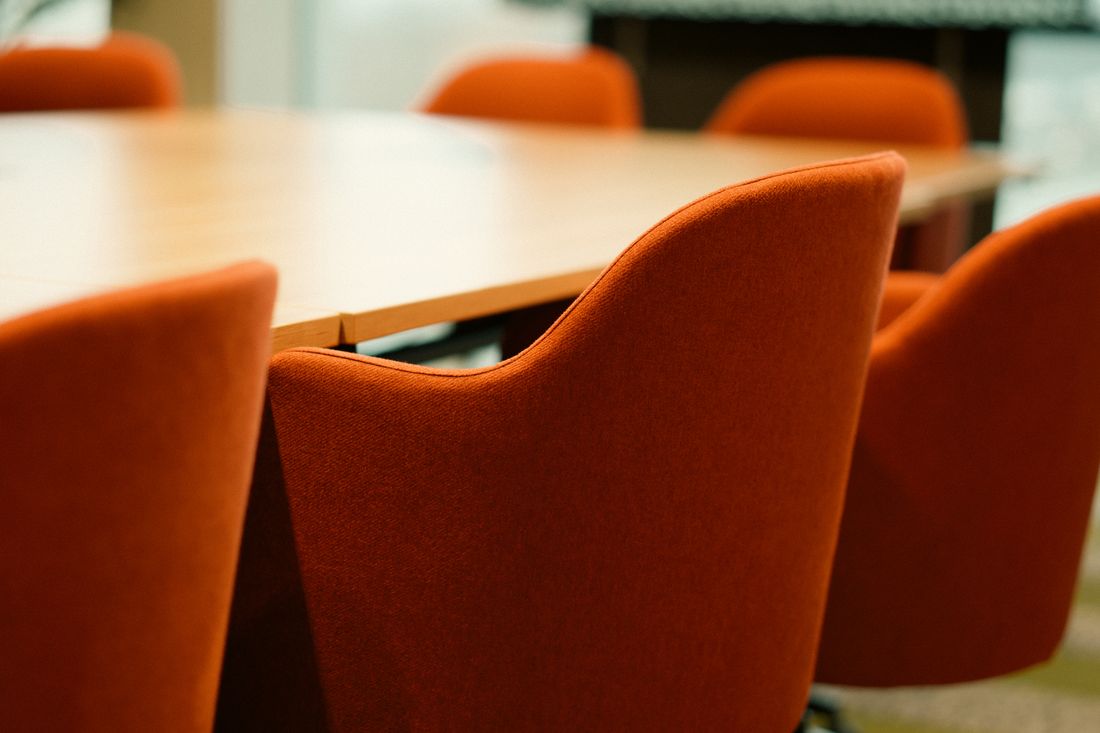
A jury site visit is not a public event. It is a small room, a handful of people who haven't decided anything yet, and work that is still waiting to hear whether it won. Coverage of that room has to hold two things at once: a record of the visit happening, and a decision that hasn't been performed for a camera.
A jury or committee site visit is the private walkthrough a panel makes to see work in person before a prize decision is made. Coverage of that visit records that it happened, without recording or influencing the judgment itself. The room is small, the people are concentrating, and a visible photographer can change how a jury behaves if the coverage isn't planned to stay out of the way.
What does it mean to cover a jury site visit before an art prize is awarded?
A jury site visit is the private walkthrough a panel makes to look at the work in person before a prize decision is made. Coverage here means documenting that the visit took place, not staging or narrating a moment that hasn't resolved yet.
This is different from documenting an awards ceremony. A ceremony already has an outcome. Someone has won, the room knows it, and the photography exists to record a celebration that has already happened. A site visit exists before any of that. The jury is still looking, still comparing, still forming an opinion, and nobody in the room knows what they'll decide.
That difference changes what the coverage is for. It isn't building toward a reveal. It's proving that a specific, careful process happened on a specific day, with the work seen the way it was meant to be seen, in the condition it was actually in.
Most requests for this kind of coverage come from an organizer or an institution that wants a record of the process itself, not just the eventual result. A funder, a board, or a future applicant pool might want to see that the site visit was thorough and fair, and a photograph of the room doing that work is often the clearest way to show it.
The work asked of the photographer is closer to quiet documentation than event photography. Fewer frames, less movement, and a much higher bar for what actually belongs in the final set.
Why does a jury's presence change what a photographer needs to do?
A jury changes coverage because its members are doing real cognitive work in that room, and a visible photographer can pull their attention or their behavior in a different direction. The goal shifts from capturing a moment to protecting the conditions the moment needs.
In a normal event, a little performance is expected. People look at the camera, a speaker pauses for a photo, a group poses before moving on. None of that is a problem, because the event's purpose doesn't depend on people ignoring the photographer.
A jury's purpose depends on exactly that. If a panelist adjusts how long they linger in front of a piece because someone is watching and shooting, the record of that visit no longer reflects an honest read of the work. The photography would have quietly changed the thing it was supposed to document, without anyone in the room meaning for that to happen.
This is why the brief for this kind of shoot usually asks for restraint before it asks for coverage. A wider lens from a fixed position, fewer setups, and a willingness to miss a frame rather than move into a panelist's sightline are all part of doing the job correctly, not limitations on it.
The presence of a camera is unavoidable. What's avoidable is a camera that behaves like it's part of the deliberation instead of a record standing quietly outside it.
What does discreet coverage actually look like in a small room?
Discreet coverage in a small room means working from a fixed position, using ambient light where possible, and keeping movement and shutter sound to a minimum so the jury's attention stays on the work. It looks like almost nothing is happening, which is the point.
A wide-angle setup from one corner of the room usually does more good than moving around to chase different angles. Fewer position changes mean fewer moments where a panelist notices the camera shifting and, without meaning to, shifts their own attention toward it. Staying in one spot also means the photographer learns the room's rhythm quickly.
Available light matters here too. A flash or a supplemental light draws eyes and changes the room's mood immediately, even when it's used carefully. Working with what the room already has keeps the visit's atmosphere the way the jury needs it, focused and unremarkable, and it usually means arriving early enough to check how the light actually falls before anyone else is in the room.
Sound matters as much as light. A loud shutter in a quiet room is its own kind of interruption, and a photographer working this kind of visit usually keeps the camera on a quieter setting and times frames around natural pauses rather than every few seconds.
None of this is about disappearing entirely. It's about being present in a way that doesn't ask anyone in the room to think about the camera at all, so the record ends up honest instead of self-conscious.
Why shouldn't coverage try to perform the moment of decision?
Coverage shouldn't perform the decision because the decision hasn't happened yet, and building a photo set around a dramatic moment that doesn't exist would misrepresent what actually took place. The honest version of this coverage is quieter and less conclusive than a highlight reel.
It's tempting to think of a jury visit like any other event with a beginning, middle, and payoff. But there's no reveal to build toward. A panelist studying a piece closely isn't a climax, it's one part of an ongoing process that continues after the visit ends, often across other sites and other applicants entirely, sometimes weeks before any panel reconvenes to compare notes.
Treating a look of concentration as if it were a verdict creates a false narrative. A photograph of someone leaning in to examine detail says nothing about whether they liked what they saw, and captioning or selecting images to suggest otherwise misrepresents the process to anyone who sees the final set later, including the applicant whose work is in the frame.
The more useful framing is documentary rather than editorial. The images exist to show that the visit was thorough, that the work was properly presented, and that the jury had what it needed to do its job, not to tell a story about who's going to win. That framing also protects the organizer, since a set that avoids implying an outcome can be shared later without needing to be re-explained.
That restraint is what makes the coverage trustworthy afterward, whatever the eventual result turns out to be.
What should get planned before the site visit happens?
Before the visit, it helps to confirm the room's layout, the expected length of the walkthrough, and whether the jury has been told a photographer will be present. Those three things determine almost everything about how the coverage can work without becoming a distraction.
Knowing the room in advance means the photographer can pick a position before anyone arrives, rather than working it out in real time while people are already in conversation. A brief look at the space, even from a floor plan or a quick walkthrough the day before, saves a lot of improvising later and gives the photographer a chance to notice where doors, windows, and seating will limit the angles available.
The expected length matters because it shapes how much movement is acceptable. A ten-minute visit calls for one setup and minimal repositioning. An hour-long walkthrough across multiple pieces allows for a little more, though still with long stretches of stillness between changes, and knowing the rough shape of the schedule ahead of time keeps that movement deliberate rather than reactive.
Whether the jury has been told about the photographer is worth confirming directly with the organizer. A panel that expects a quiet presence in the room adjusts faster than one that's caught off guard, and organizers sometimes forget to mention it when their attention is on the logistics of the visit itself.
None of this requires an elaborate plan. It just requires knowing enough beforehand that nothing about the coverage needs to be figured out once the jury is already in the room.
What actually gets photographed when the decision hasn't happened yet?
The useful frames from an undecided visit are the work itself under real viewing conditions, the general shape of the panel engaging with it, and enough context to show where and how the visit happened. None of it needs to identify an outcome that doesn't exist yet.
The artwork usually carries most of the weight. A clean, well-lit frame of a piece as the jury encounters it, without anyone blocking the view, documents the actual condition and presentation of the work at that moment, which is often what an organizer needs most, especially if the same piece travels to a second site visit later in the process.
Wider shots of the panel in the space, taken from a distance and without focusing on any one person's expression, show that the visit happened as a group activity, thorough and attentive, without turning any individual panelist into the subject of the photo.
Room and setup shots, an empty gallery before the jury arrives, a table with the submission materials laid out, add useful context without needing anyone in frame at all. These are often some of the most reusable images from the whole visit, since they carry no risk of misreading a face or a gesture, and they hold up fine even if the final set never needs a single photo of a person.
What's left out matters as much as what's included. Close, expressive portraits of panelists mid-thought rarely belong in this set, since they invite exactly the kind of interpretation the coverage is meant to avoid.
How does this differ from covering an opening or a public event?
A jury site visit differs from an opening because the audience, the pace, and the purpose are all smaller and slower. An opening is public, moving, and already resolved in tone; a site visit is private, still, and undecided, which calls for a different kind of coverage entirely.
An opening has dozens or hundreds of people moving through a space, and the photographer's job is to keep up with that motion, catching conversation, energy, and crowd moments as they happen. A jury visit might have four or five people total, moving slowly and speaking quietly, with long pauses that would look empty in an opening but are normal here, and a photographer used to filling a frame with activity has to consciously slow down to match it.
Public events also come with an implicit understanding that people expect to be photographed. Attendees at an opening know a camera is part of the evening. A jury usually does not think of itself as an audience, and treating the visit like a public event risks making everyone in the room self-conscious about being watched.
The end product looks different too. An opening produces a lively, varied set built for social use and recap. A jury visit produces a small, restrained set built for an internal record, rarely meant for wide circulation before a winner is announced, and often used quietly rather than posted anywhere at all.
What should the client tell the photographer before booking this kind of coverage?
Before booking, a client should share the room layout, the visit's rough schedule, whether the jury knows a photographer will be present, and how the images will eventually be used. Those four details let a photographer plan for discretion instead of guessing at it on the day.
The intended use matters more than it might seem. A set meant only for an internal archive calls for a different approach than one that might later appear in a press release or a grant report. Knowing that in advance shapes what gets shot and how carefully it gets composed, rather than sorting it out after the fact, when there's less room to go back and reshoot anything.
It also helps to say plainly if there are any panelists who've asked not to be photographed, or any pieces the organizer would rather not include in the record for now. Those constraints are easy to plan around ahead of time and much harder to manage in the middle of a quiet room.
A short conversation beforehand, even fifteen minutes, usually covers all of this. The point isn't to over-plan a simple visit. It's to make sure the photographer walks in already understanding that the room needs a lighter touch than a typical event, so nothing has to be renegotiated once the jury arrives, and everyone in the room can focus on the work instead of the coverage.
Frequently asked questions
Will the jury know a photographer is in the room during the site visit?
Usually, yes, and it helps if they do. Organizers typically inform panelists ahead of time so nobody is surprised mid-visit. A jury that expects a quiet presence adjusts to it quickly, while one caught off guard may pay more attention to the camera than to the work, which is the opposite of what the coverage is trying to protect. Confirming this with the organizer before the visit is worth doing directly rather than assuming it was already handled.
Can these photos reveal who's likely to win the prize?
No, and they shouldn't be selected to suggest that either. A panelist studying a piece closely says nothing about their opinion of it. Coverage of an undecided visit stays documentary: the work, the room, the general fact that a thorough visit happened, without editorializing a result nobody in the room has reached yet. Anyone reviewing the images later should come away knowing the visit was careful, not who it favored.
How is this different from photographing an awards ceremony?
A ceremony documents a result that already exists, with a room that knows the outcome and behaves accordingly. A site visit happens before any decision, in a much smaller and quieter setting. The pace, the framing, and even the acceptable amount of camera movement are all different, since nothing here is building toward a public reveal, and the final set is meant to sit quietly in an archive rather than get shared right away.
How many images typically come out of a jury site visit?
Far fewer than an event. A jury visit is usually short, quiet, and low on the kind of varied activity that produces a large image set. A tight, useful set focused on the work and the room, rather than a large gallery of candid moments, is normal and expected for this kind of documentation, and a smaller set is often easier for an organizer to review and use later anyway.
What should organizers avoid asking a photographer to do during a visit like this?
Avoid asking for posed reactions, close portraits of panelists mid-decision, or any framing meant to hint at an outcome. Those requests push the coverage toward performance rather than record. The organizer's job is easiest when the brief simply asks for a quiet, accurate account of the visit as it actually happened, leaving the interpretation of the work itself entirely to the jury and not to the photographs.
One night, two openings, no dropped coverage.
We plan clustered opening nights before they turn into a scramble, whether that means a split schedule, a second shooter, or an early enough booking that the calendar never becomes the problem.
Explore event coverage →