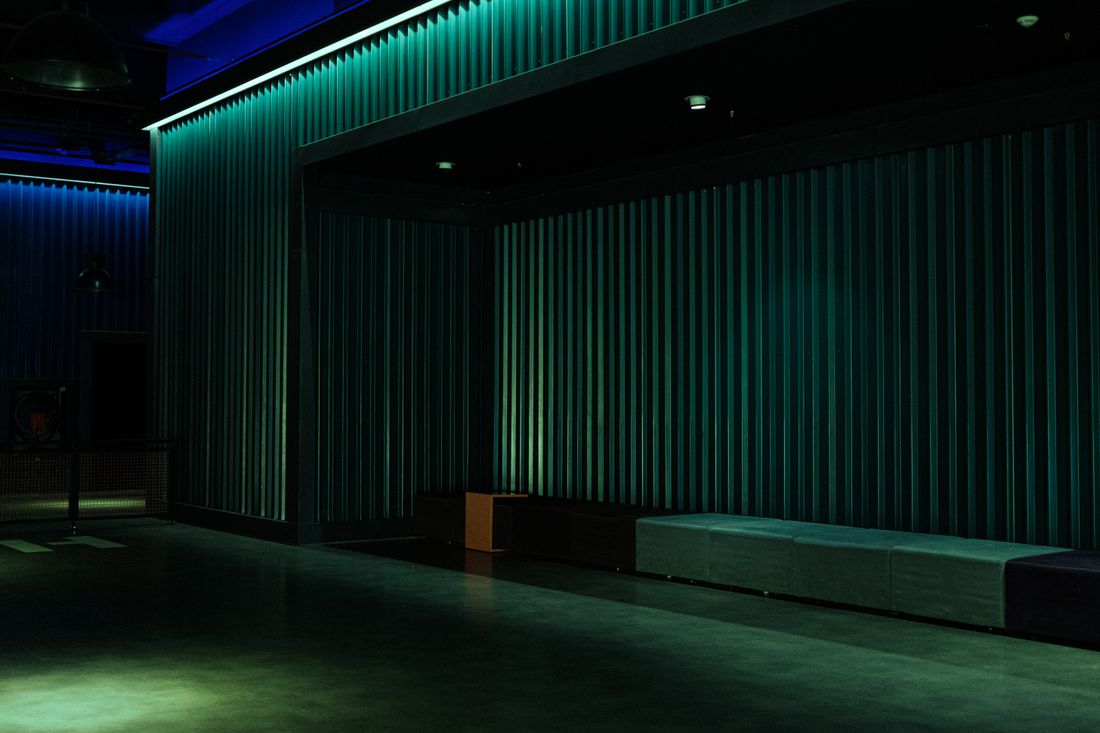
A gallery is usually the quietest room on the block. Add a stage, a crowd facing one direction, and a set built to fill the air with sound, and the same room asks for a different kind of coverage than the reception it hosted last month.
Photographing or filming a concert or DJ set inside a gallery means adjusting for three shifts at once: a stage the room wasn't built around, a crowd that all faces one direction instead of circulating, and sound the space was never designed to hold. The coverage plan has to account for all three before the first track plays.
What Changes When a Gallery Hosts a Concert or DJ Set
A gallery built for quiet looking becomes a different room once a DJ set or live concert moves in: a stage appears, the crowd faces one direction, and sound fills a space designed to swallow it, not carry it. Coverage has to adjust for all three shifts at once, not just for the extra noise in the room.
Most gallery interiors are quiet by accident rather than design. Hard walls, high ceilings, and minimal soft furniture keep a reception's ambient noise low, which works fine for conversation and doesn't get tested until music enters the room. A DJ booth or a small stage is usually improvised too, built from a folding riser, a table pushed against one wall, or a cleared corner near the entrance, and the crowd naturally reorganizes itself to face whichever spot that turns out to be for the rest of the night.
That single-direction crowd is the real departure from a standard opening. A reception lets people circulate the whole floor, which gives a photographer room to work from almost anywhere. A concert or DJ set concentrates everyone toward one point instead, which narrows where a useful shot exists and shortens how long any one position stays worth holding. Reading that shift before the first track plays, rather than discovering it live once the room is dark and full, keeps the coverage working with the room instead of chasing it all night.
What a Pre-Event Walkthrough Should Settle
A useful pre-event walkthrough for a gallery concert or DJ set settles four things before the doors open: where the stage or booth will sit, which walls stay visible to the crowd, how people are expected to move through the room, and where a photographer can stand without blocking the performer or the audience's view.
Stage placement matters more than it seems, because it decides which wall of artwork stays visible for the whole night and which one disappears behind the crowd's backs. A booth set against the strongest wall of work sacrifices that wall's visibility for the run of the show, so it's worth flagging before load-in rather than after the gear is set and the schedule is already tight.
The walkthrough is also the moment to settle sightlines and safe positions with whoever is running the night, gallery staff, an event producer, or the DJ or band themselves. A narrow room with one aisle needs a different plan than an open floor with several natural vantage points, and knowing which one this room is before the crowd arrives means less improvising once it's dark, loud, and full.
It's the easiest point to flag anything the room wasn't built for too: where cables will run, whether haze is planned, and how much space the crowd realistically leaves once it fills in. None of that needs solving on the walkthrough, only naming, so the coverage plan accounts for it instead of reacting to it in the moment.
Where to Stand When the Crowd Faces One Direction
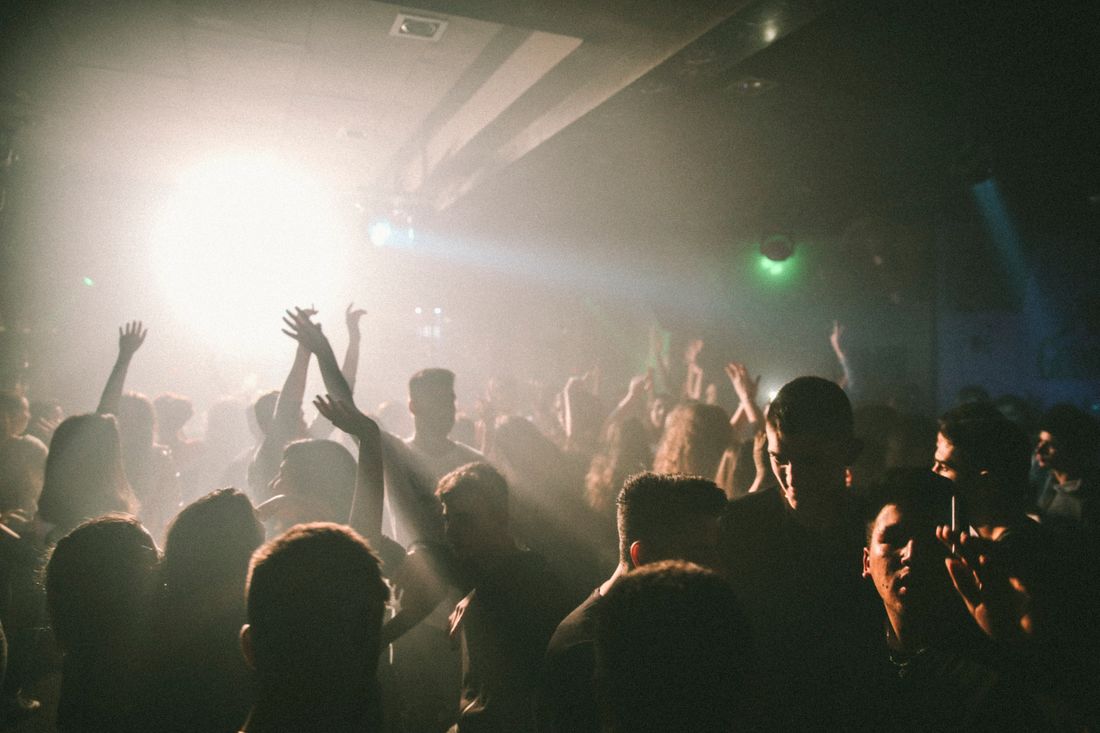
When a crowd faces one direction, the useful vantage points shrink to the sides, the back, and any open pocket of the room, because a position facing straight into the audience mostly captures the backs of heads. Working those margins, and returning to them across the set, covers more of the night than holding one spot.
The temptation is to plant near the stage and stay there, since that's where the visual energy is concentrated. But a stationary position facing a crowd that isn't moving produces a narrow range of shots, the performer, and rows of shoulders. The angles that read as a gallery concert rather than a generic one usually come from the side, where the artwork on the walls, the room's architecture, and the crowd's shape are all visible in the same frame.
It helps to treat the set the way a wide shot treats a stage: establish the whole room early, before it fills in completely, then work closer positions once the crowd has settled into where it's going to stay. Coming back to a wider vantage point later in the night, once the lighting and energy have built, usually produces a stronger frame than staying tight the entire time.
None of this requires special access. It requires deciding, before the room fills, which two or three spots will actually work, and rotating through them deliberately instead of staying wherever felt open when the music started.
Shooting Under a Lighting Rig That Keeps Changing
A DJ set or live show usually brings its own lighting into the room, and unlike a gallery's fixed track lighting, it moves: color washes shift, effects flare, and haze scatters whatever light is in the air. Coverage has to work with that constant change, adjusting settings continuously rather than locking in one exposure for the night.
The instinct is to correct hard for the color casts a moving rig throws onto skin and walls, pulling everything back toward neutral. That often reads as artificial once it's finished, stripping out the actual mood of the room. A better approach treats the color as part of the story: a blue wash across a crowd or a warm wash across the artwork is information about what the night felt like, not a problem to erase in every frame.
Haze, when it's part of the setup, creates real depth in a room that otherwise reads flat once the gallery's usual lighting is dimmed for the show. It also softens hard light sources into something the eye reads as atmosphere instead of glare. The tradeoff is contrast and detail, which is why a mix of wider atmospheric frames and a few closer, better-lit moments, a face caught between light changes, a clean beat of stillness, usually serves a set better than either extreme alone.
None of this is solved by fighting for more light. It's solved by knowing, walking in, that the lighting will be inconsistent by design.
Capturing the Sound, Not Just Where It Comes From
Capturing sound at a gallery concert or DJ set well starts before the first track, with a plan for where the audio feed comes from. A direct line from the house system usually beats an on-camera microphone picking up a room the space was never built to hold music in. Settling that ahead of time solves most of the problem.
Galleries are acoustically unpredictable for music. Hard floors, bare walls, and open volume that flatters a quiet conversation will also flatter every reflection and echo once a DJ set or a band fills that same air with sound. A microphone standing in the middle of the room picks up the performance and the room's own reflections of it at the same time, which reads muddy even when the actual set sounded sharp in person.
A direct feed from the mixing board or the house system, run alongside whatever camera audio is being captured, avoids most of that problem and gives video coverage something clean to work with later. It's a conversation to have with whoever is running sound before the night starts, not a fix to chase once the recording already sounds muddy.
This matters more for video than stills, since a photograph never carries its own sound problem. But any clip meant to carry the feeling of the room depends on getting this right at the source.
What to Shoot Beyond the Stage
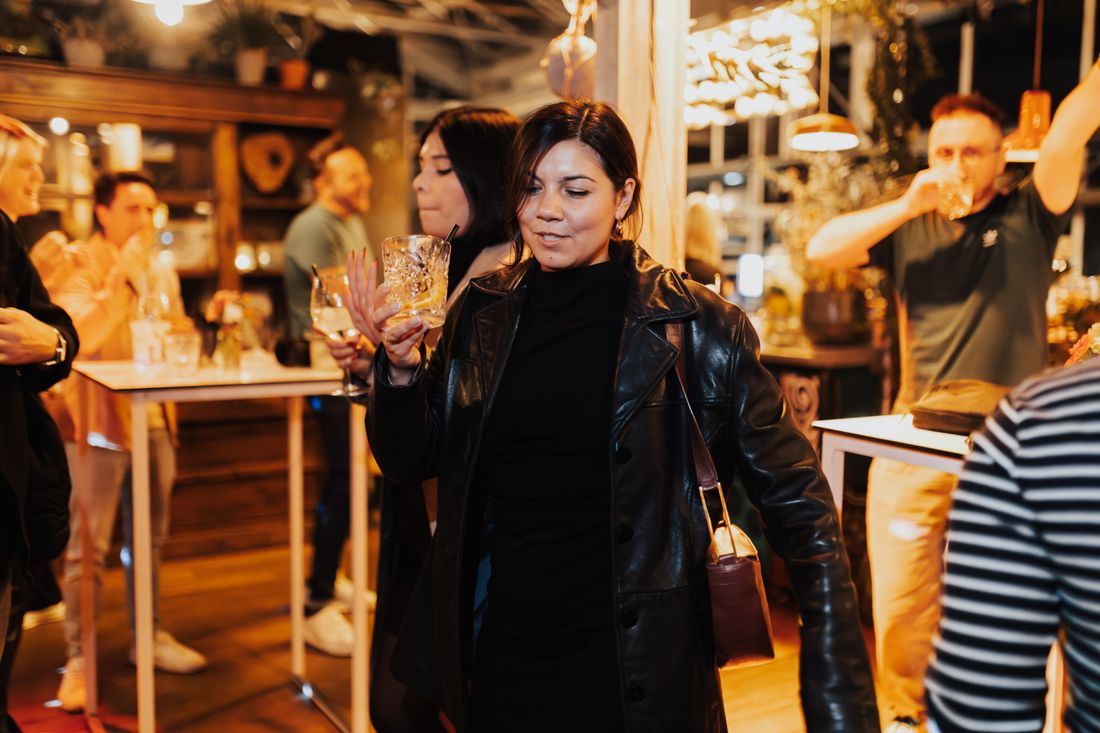
The stage or DJ booth is the obvious subject at a gallery concert, but the room reacting to it, a crowd's expressions, the door, the bar, the artwork still hanging quietly on the walls, usually produces the more useful set. A night told only in stage shots reads like any other concert; the room around the stage is what makes it a gallery.
Crowd reactions carry more of a night's actual energy than most stage shots do. A wide laugh, a group singing along, someone leaning in to talk over the music, these read as specific and real in a way a well-lit performer shot, however clean, tends not to. They're also easier to find in the margins of the room, away from the tightest, most crowded spot near the stage.
The entryway and any bar or drink table are worth a few frames too, since they're where a lot of a concert night actually happens between sets or before the crowd settles in for good. And the artwork on the walls deserves at least a glance during the room's ordinary lighting, not as documentation but as a reminder, in the final set, that this happened inside a gallery and not a generic venue rented for the night.
Building the set this way, stage, crowd, room, and art, gives whoever uses the coverage afterward more than one type of image to choose from.
Why Video Coverage Aims for a Recap, Not a Bootleg
Video coverage of a gallery concert or DJ set works best as a recap, a short, edited sense of the room and the energy, rather than a continuous recording of the full set. A recap can be watched in under a minute; a full recording rarely gets watched past the first few, no matter how good the night was in person.
The instinct to capture everything comes from a fear of missing the moment that mattered. But a full, unedited recording puts the editing burden entirely on whoever receives the files, and most of that footage, several minutes of a DJ mixing or a band playing the same section, doesn't carry the night once it's cut down. Shorter, deliberate clips built around specific moments, a drop, a crowd reaction, a quiet beat between songs, do more work in less time.
That also changes what gets shot on the night itself. Instead of running continuous coverage from one position, it's usually more useful to gather several short, purposeful clips from different vantage points, an opening wide shot of the room filling in, a mid-set crowd reaction, a closing shot as people start to filter out, and build the recap from that variety rather than one long, trimmed-down take.
The distinction matters most in what the final piece is for: a record of the room and the night the gallery hosted, not a full recording of the performance itself.
What the Coverage Becomes After the Night Ends
Coverage from a gallery concert or DJ set usually becomes two things afterward: a handful of social clips and stills for the days right after the event, and a small archive the gallery can reuse for the next one. That's different from documenting a performance-art piece, where the performance itself is the artwork being recorded.
The distinction is worth being clear about, because the two jobs ask for different things on the night. Documenting performance art usually means one continuous, uninterrupted take, since the performance can't be reshot and the record has to stand in for the piece itself. Covering a concert or DJ set inside a gallery is closer to standard event coverage: the goal is a set of usable images and clips from a night the gallery hosted, not a single authoritative record of an artwork.
That framing changes what finished looks like too. A performance-art record either captures the piece correctly or it doesn't. A concert night's coverage succeeds if it gives the gallery enough variety, stage energy, crowd reaction, the room itself, to post in the days after and to reference the next time it plans a similar night.
Treating the two as the same job is where coverage plans go wrong most often, either over-covering a performance piece with angles it was never meant to have, or under-covering a concert night as if one clean shot of the stage will do.
Frequently asked questions
How is photographing a concert or DJ set in a gallery different from a normal gallery opening?
A standard opening lets people circulate a whole room, giving a photographer freedom to work from almost anywhere. A concert or DJ set concentrates the crowd toward one stage or booth, narrowing useful vantage points to the sides, back, and open pockets of the room. The lighting usually changes too, moving from a gallery's fixed track lighting to a rig built for performance, which asks for continuous exposure adjustment rather than one setting held for the night.
Do you need special access or a photo pit for a gallery concert?
Most gallery concerts and DJ sets don't have a formal photo pit the way a large venue show might. Access usually comes down to a pre-event conversation with the gallery or event producer about where the stage sits, which spots stay clear for the crowd, and where a photographer can move without blocking sightlines. Settling that during a walkthrough, before the room fills, generally covers what a formal pit would otherwise provide.
How do you handle photographing the artwork on the walls during a loud, dark event?
Artwork usually gets a handful of frames during the room's ordinary lighting rather than under the concert's own changing rig, since accurate color and detail matter more for those images than atmosphere does. They aren't meant as full documentation, more a reminder in the final set that the night happened inside a working gallery. The stage and crowd images carry the mood; the artwork frames anchor the location.
What's the difference between covering a concert in a gallery and documenting a performance-art piece?
Documenting performance art means the performance itself is the artwork being recorded, usually in one continuous, uninterrupted take, since it can't be reshot and the footage has to stand in for the piece. Covering a concert or DJ set is closer to standard event coverage: the goal is a useful set of images and clips from a night the gallery hosted, not a single authoritative record of an artwork.
How much video coverage does a typical gallery concert or DJ set need?
Most nights are better served by a short, edited recap than a continuous recording of the full set, since a recap gets watched and a long recording usually doesn't. A useful approach gathers several short, purposeful clips from different vantage points, the room filling in, a crowd reaction, a closing moment, rather than one long take from a single position that needs heavy editing afterward.
Got overlapping openings already on the calendar?
We work out the coverage plan well before the night gets close, whether that's two shooters, a tight schedule, or simply booking early enough to avoid the conflict entirely.
Explore event coverage →