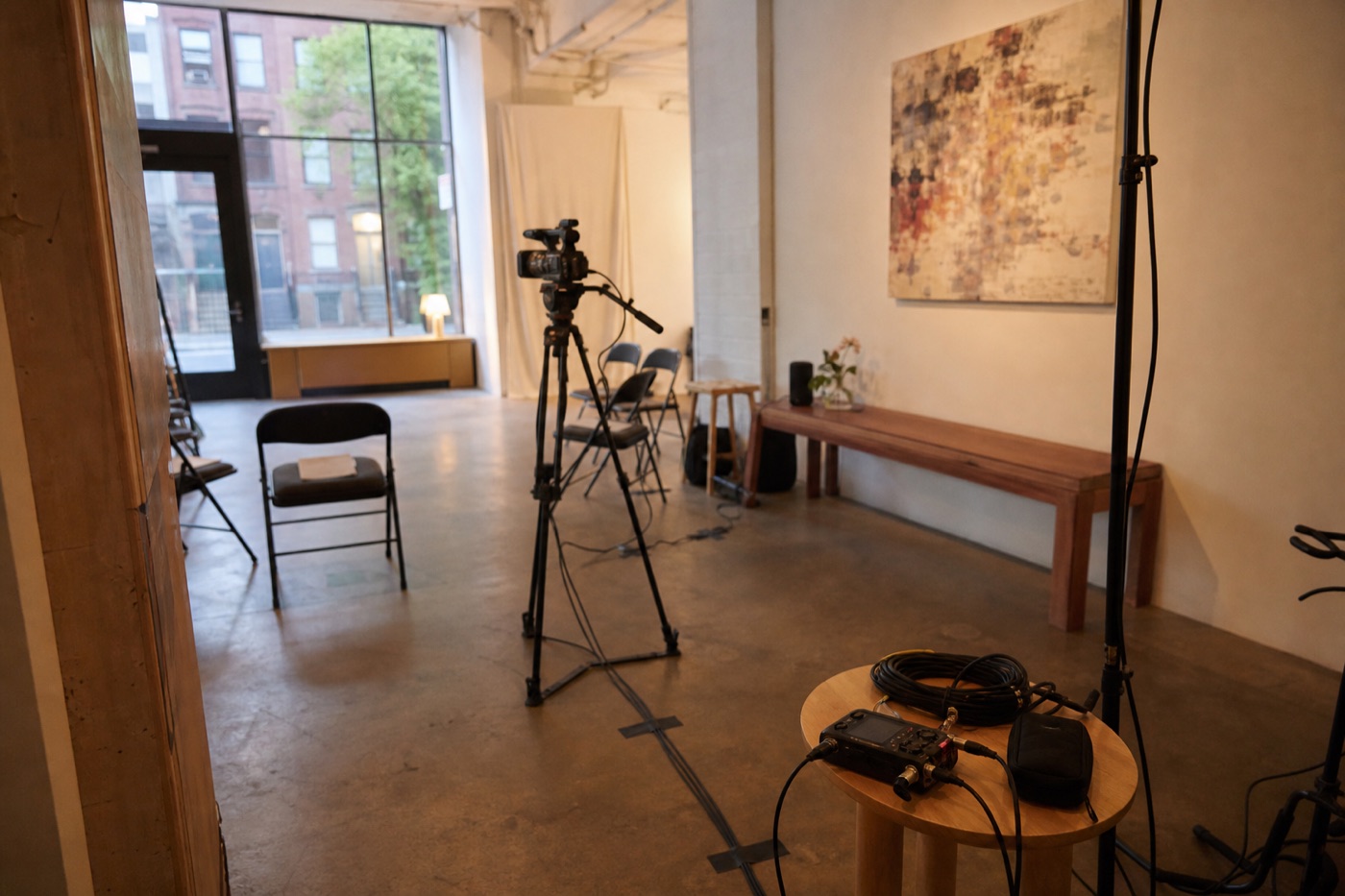
Event audio matters more than the camera when people need to understand what was said. A panel, artist talk, toast, presentation, gallery walkthrough, or small performance can look simple and still need serious sound planning. Viewers can tolerate a steady wide shot. They will leave much faster when the voice sounds far away, thin, buried under room noise, or trapped inside a glass jar of vibes.
This does not mean the camera stops mattering. It means the camera is only one half of the record. If the final video needs to preserve ideas, names, questions, context, or anything a person said into a microphone, audio becomes the foundation. The image shows where we are. The sound tells us why we are still there.
For creative events in NYC, this comes up constantly. A gallery opening suddenly includes a short artist speech. A brand launch has a founder talk. A cultural event has a panel in a room with loud HVAC, hard walls, and one heroic speaker system doing its best. At The Lightroom Studio's event photo and video coverage, we think about audio early because it changes what we can responsibly promise after the event.
Why audio can lead the whole plan
Audio leads the plan whenever the deliverable depends on speech. If the video is supposed to include a full talk, a short quote, a clean sound bite, a toast, a Q&A, or a panel exchange, the shoot is no longer just about framing. It is about capturing a usable voice.
That voice may need a lavalier microphone, a handheld mic feed, a small recorder near the speaker, a line from the house sound system, or a backup recorder placed where it can catch the room safely. The exact setup depends on the venue and the event. The principle stays simple. Put the microphone close enough to the source that the voice does not have to fight the room.
A camera can be across the room and still record a useful wide shot. A microphone across the room records the room. Sometimes that is fine. It gives atmosphere, applause, laughter, glasses moving, footsteps, the small sounds that make an event feel alive. But room sound is not the same as clear speech. Mixing those up is how a talk becomes a memory instead of a deliverable.
Why the camera microphone is rarely enough
A camera microphone hears everything from the camera's position. That is the problem. It hears the speaker, but it also hears the audience shifting, the person opening a tote bag, the espresso machine in the next room, the projector fan, traffic, a chair dragging, and the room itself reflecting sound back into the lens area like it has a personal agenda.
For atmosphere, that can be useful. For intelligible speech, it is fragile. The farther the speaker is from the camera, the more the room becomes the main character. This is especially true in galleries, lofts, small offices, and event spaces with hard surfaces. White walls are lovely for art and less lovely for sound. Concrete floors do not gently cradle syllables. They send them out to wander.
The camera mic is a backup, not the plan, when speech matters. A dedicated recorder, wireless microphone, house feed, or properly placed room mic gives the editor something clean to work with. The best version is usually redundancy. One source close to the speaker, one source from the room, and enough overlap that a small technical issue does not become the whole story.
What changes when people are speaking
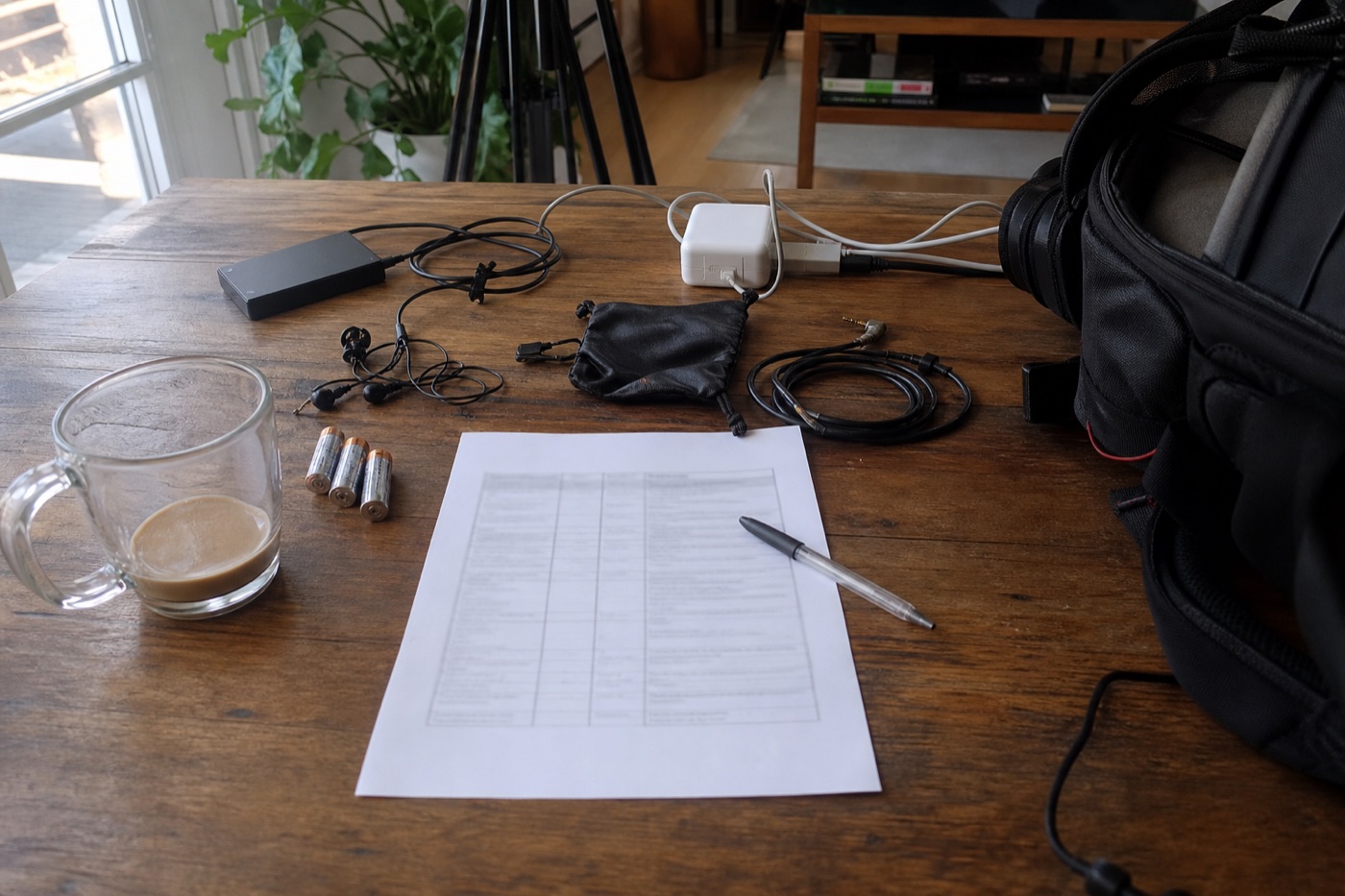
When people are speaking, the video has to respect the words. That changes the coverage. The camera still needs cutaways, room shots, reactions, artwork details, and crowd texture. But the audio plan has to follow the speaker first.
For a panel, the question is how many voices need to be clear. A moderator and one guest is different from four people passing a microphone around. For an artist talk, the question is whether the artist will stay in one place or walk through the room. For a brand launch, the question is whether the founder's remarks matter as a full recording, a few quotes, or only a quick emotional beat in a recap.
These decisions should happen before the event, not while someone is already tapping a wine glass. A short speech can be easy to capture if the team knows it is coming. It becomes much harder when it starts from the back of the room, in front of a speaker nobody can plug into, while guests are still talking. This is why a simple event brief is useful. It turns surprise into coverage.
What the venue can quietly decide for you
The venue matters because rooms have opinions. A quiet seated panel in a carpeted room gives audio a head start. A packed gallery with hard floors, high ceilings, street noise, and people clustered around the bar gives audio a more dramatic little personality test.
Ask whether the venue has a sound system, who controls it, what microphones are available, and whether the videographer can take a clean feed. Some venues have a mixing board. Some have a single speaker on a stand. Some have a system that technically exists in the same way an old printer technically exists. It may work, but you should not build the entire plan on optimism and a cable nobody has seen since 2018.
Access also matters. If the team can arrive early, test the room, place recorders, and coordinate with the person handling sound, the final video has a much better chance. If the team arrives when guests are already shoulder to shoulder, the audio plan has to be simpler and more defensive. That is not a failure. It is just physics with a guest list.
When audio matters less for recap videos
Audio matters less when the final video is a silent or music-led recap. A short social reel of a gallery opening may only need room tone, applause, a few natural sounds, and enough texture to avoid feeling sterile. If nobody's words need to be understood, the sound plan can be lighter.
Even then, sound still helps. Clean natural audio can make a recap feel less generic. A small laugh, footsteps in a quiet gallery, applause after a short introduction, or the scrape of a chair before a panel begins can give the edit real place. It is the difference between footage that says "event happened" and footage that feels like you briefly entered the room.
The key is deciding whether speech is content or atmosphere. If speech is content, record it properly. If speech is atmosphere, room sound may be enough. If you are unsure, plan for speech. Future you will rarely complain about having clean audio. Future you may have a few notes if the only recording sounds like it came from inside someone's coat pocket.
What to tell your videographer before the event
A short audio brief is more useful than a long creative brief when the event includes speaking. Tell the videographer who will speak, when they will speak, where they will stand or sit, whether a microphone will be used, and whether the final deliverable needs full remarks, selected quotes, or only a recap.
You do not need to know the technical solution. You only need to share the facts that affect it. Is there a panel? Is there a Q&A? Will the artist walk people through the show? Is there a toast? Will someone be interviewed? Is there music or performance? Will the room be loud? Does the venue have house sound? Is there a person in charge of the mixer, or is everyone silently hoping the speaker turns on?
Useful details include:
- The run of show, even if it is approximate.
- The number of speakers and whether they move.
- The venue contact for sound or AV.
- Whether the video needs full speeches or short clips.
- Any moments that cannot be repeated.
This is not about overdirecting the event. It is about protecting the parts that only happen once.
Why audio affects the edit afterward
Clean audio gives the editor choices. A strong quote can become the spine of a recap. A clear artist explanation can carry a social reel. A short audience question can give context to the answer. Even if the final piece is mostly visual, usable speech lets the edit breathe around something real.
Weak audio does the opposite. It narrows the edit. The editor may have to avoid speaking moments, cover them with music, cut around unclear words, or use subtitles to rescue material that still sounds rough. Subtitles are useful, but they are not a cure for everything. A viewer can read a quote and still feel the recording quality underneath it.
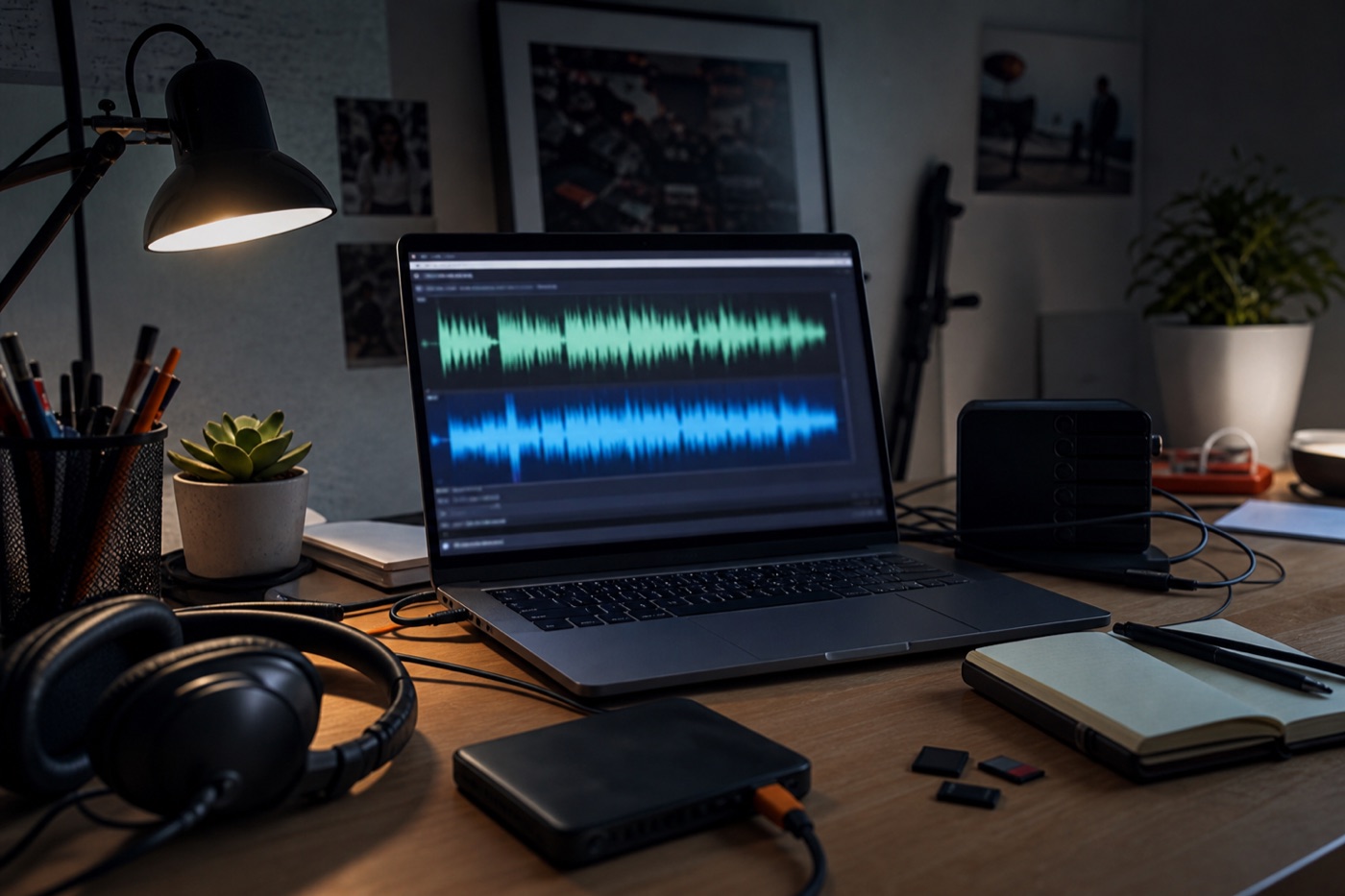
This is also why audio affects turnaround. Clean, organized sound is faster to edit. Messy sound takes repair, syncing, listening, guessing, and compromises. If the event needs quick delivery, audio planning is not a luxury. It is part of the schedule.
A simple way to choose the right setup
The simplest decision is this. If the audience needs to understand words, plan audio first. If the audience only needs to feel the room, plan visuals first and still capture useful sound. If the event has both, treat them as two deliverables living inside one shoot.
For a gallery opening with no speeches, a small camera setup and natural room sound may be enough. For an artist talk, panel, walkthrough, award moment, or brand presentation, build the plan around clean speech. For a larger event with multiple speakers, music, performance, or a public program, assume audio needs its own attention and access.
This does not have to make the event feel overproduced. Good audio planning is often invisible. A recorder on a table. A quick test before guests arrive. A feed from the sound system. A spare battery. A backup running quietly. Nobody needs to notice it, which is ideal, because the best technical decisions at an event are usually the ones that do not become part of the evening's narrative.
FAQ
Why does event audio matter more than the camera sometimes?
Event audio matters more than the camera when the video depends on speech. A steady wide shot with clear sound can still be useful. A beautiful moving shot with unusable speech often cannot carry a panel, artist talk, toast, or presentation. The camera shows the room, but the audio preserves the ideas.
Can a camera microphone record a small event?
A camera microphone can record atmosphere, but it usually should not be the only plan for speech. It hears from wherever the camera is standing, which means it captures room echo, audience noise, and distance. For clear remarks, use a dedicated recorder, a microphone close to the speaker, or a feed from the venue's sound system when available.
What should I tell an event videographer about audio?
Tell the videographer who will speak, where they will be, whether they will move, whether the venue has microphones, who controls the sound system, and whether you need full remarks or only short clips. These details let the team plan the right setup before the room gets busy.
Do gallery openings need professional audio?
Gallery openings need stronger audio planning when they include speeches, artist talks, walkthroughs, interviews, or performances. If the final piece is a short music-led recap, room sound may be enough. If someone's words matter, capture them directly.
Planning a talk, opening, panel, or creative event?
We cover event photo and video for artists, galleries, cultural programs, and creative businesses in NYC. If people will be speaking, we will want to know that early. It is not glamorous information. It is just the kind that keeps the final video useful.
Explore event coverage →