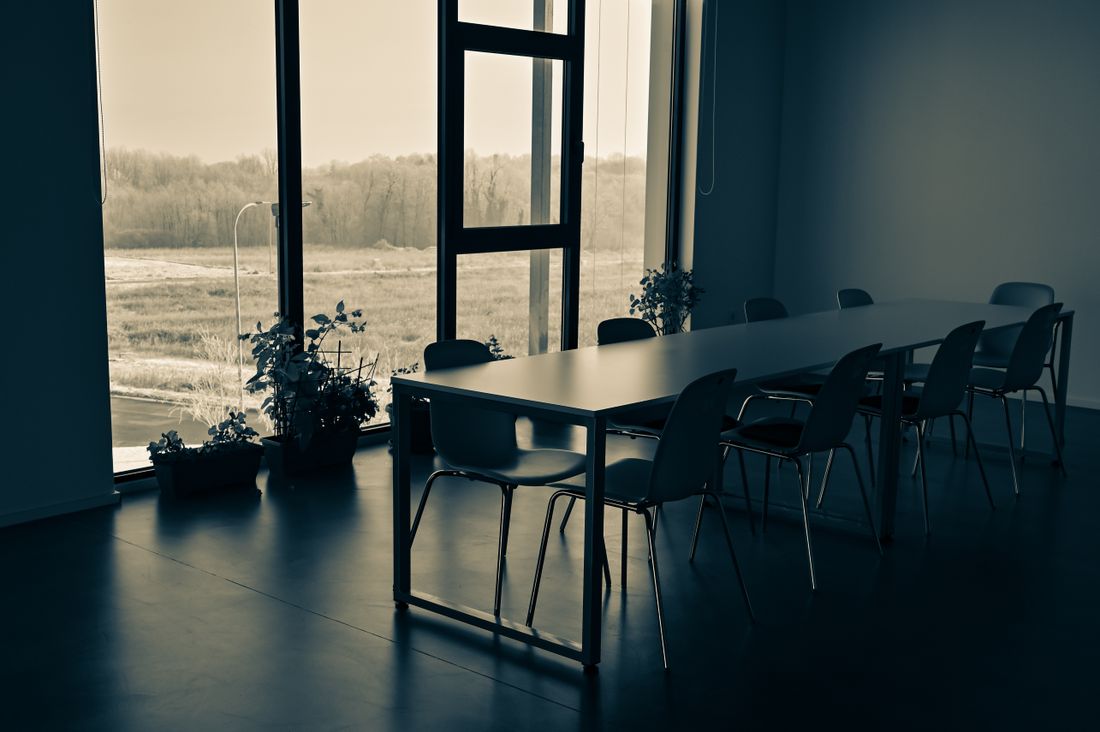
Type "content studio" into a search bar in New York and the results don't agree on what the phrase means. Some pages are photos of an empty room with a rate card underneath. Others are portfolios of finished photos and video, with no address to visit at all. Both call themselves a content studio, and the difference between them decides whether the booking you're about to make actually solves the problem you have.
This guide separates the two meanings of "content studio": a room you rent by the hour, with equipment included and your own crew required, and a team you hire to shoot and edit your work wherever it already exists. It covers what each one actually charges for, how to tell which a listing is before you enquire, and the specific situations where renting a room is genuinely the right call.
"Content studio" means two different things in New York
Search “content studio” in New York and two unrelated businesses turn up under the same phrase. One is a room: square footage, a cyclorama wall, and equipment, booked by the hour or half day, where you bring your own crew. The other is a team that comes to you, shoots your work on site, and hands you finished material.
Both businesses call themselves a content studio because both usages are technically accurate. A rental space is a studio in the architectural sense, a room built for production. A production team is a studio in the older, looser sense, the way a design studio or a photography studio means a group of people who make things, not a building. Neither meaning is wrong. The confusion is that a search for the phrase doesn't sort them, and a listing rarely spells out which one it means until you're a few paragraphs into the page.
For a gallery, small brand, or studio deciding where to spend a production budget, the difference matters more than the label does. A room and a team solve different problems, and knowing which one you're actually looking at before you enquire saves a round of emails that go nowhere. The sections below walk through what each side actually charges for, the tells that separate them at a glance, and the specific situations where a rented room is genuinely the better call.
What does a rented content studio actually charge you for?
A rented content studio charges you for time inside a room and the equipment that comes with it, not for a finished result. The fee covers square footage, a backdrop wall, house lighting and grip gear, and often a manager who unlocks the door. What happens with that time is up to you.
That arrangement assumes you're arriving with a plan already built: a photographer or videographer, a shot list, talent if the shoot needs people, and someone directing the day. The room doesn't shoot anything and doesn't edit anything afterward. It's infrastructure, closer to renting a conference room than hiring a service, and the value is having a controlled, blank environment available on demand rather than building one from scratch in an office or apartment.
This is a reasonable thing to book when the crew and the concept already exist and the only missing piece is somewhere consistent to shoot. It's a poor fit fast when the person booking is also hoping the room will supply the photographer, the ideas, or the editing, because none of that is included in a room rate. Reading a listing's rate card closely, hourly time against a named list of equipment, is usually the clearest sign the business is renting a container rather than delivering a result.

What does a content studio team charge you for instead?
A content studio team charges you for a finished deliverable, not for time in a space. The fee covers a crew showing up wherever your work already lives, planning and directing the shoot, and editing the footage into something ready to post. There's no room to book because the room isn't the product.
This model assumes the opposite starting point from a rental: you don't need a shot list, a photographer, or an edit plan already in hand, because that's the work being hired out. What you're paying for is judgment as much as equipment, someone who can read a space they've never seen before, work around its existing light, and turn an ordinary Tuesday at a gallery into usable content without staging anything that isn't already true about the place.
The tradeoff runs the other way from a rental too. A team that comes to you can't offer a plain white backdrop or a controlled cyc wall, because it isn't carrying a studio's worth of infrastructure into your space. What it offers instead is coverage of the real thing, in the real place, on an ongoing basis, so the material keeps reflecting whatever is actually happening at the gallery or the shop that month rather than a fixed set built once and reused.
How can you tell which one a listing is before you enquire?
The fastest tell is what a listing spends its words describing. A rental space describes square footage, ceiling height, available backdrops, and hourly or half day rates. A team-based studio describes what it delivers: a cadence of finished photos and video, the subjects it covers, and how the work gets used. A page full of empty-room photos is a room.
A second tell is who the listing assumes is arriving. Rental pages usually mention bringing your own crew or gear, or booking a photographer separately. Team pages talk about what happens at your location and rarely mention a specific address you'd travel to, because there isn't one to visit.
When a listing genuinely isn't clear, one short question settles it before a call gets booked: does the shoot happen at your address, or ours. A room answers with an address you'd drive to. A team answers with a date on your calendar. That question sorts the two faster than reading the whole page usually does, and it works just as well over email as it does on a phone call, so there's no reason to guess from the listing alone when the question is this quick to ask.

Room vs. team, side by side
Laid out side by side, the practical differences between the two models are easier to see than to describe in a sentence. Neither column is better in the abstract, they solve different problems, and the table below is the fastest way to check which problem you actually have.
| What changes | Rented content studio (a room) | Content studio team (a service) |
|---|---|---|
| What you're booking | Square footage and time inside it | A crew's time and a finished deliverable |
| Where the shoot happens | At the studio's address | Wherever your work already is |
| What you need to bring | Your own photographer, plan, and often talent | Nothing beyond the work itself |
| Who directs the shoot | You or the crew you've hired separately | The team you've booked |
| What's included in editing | Nothing, editing is a separate arrangement | Editing is part of the deliverable |
| What you leave with | Raw files from your own crew, if you hired one | Finished, ready-to-post material |
The table also explains why the two rarely compete for the same booking. Someone comparing a room rate against a team's rate is usually comparing the cost of an empty container against the cost of a finished result, which isn't really a comparison once the deliverable is named honestly. Reading down a single row at a time, rather than the whole table at once, usually makes it obvious which side actually matches the job at hand.
When does renting a room actually make sense?
Renting a room is the right call for a specific, recurring set of situations: a product run against plain white where every item needs identical, shadow-free lighting, a controlled cyclorama shoot where the backdrop itself is the point, or a casting day where a plain, repeatable room matters more than any particular location.
What these situations share is a shoot that doesn't want a place in it at all. The room is meant to disappear, replaced entirely by a plain backdrop or a product, and any character the space happens to have is something to eliminate rather than use. A gallery with distinctive architecture or a shop with real personality on the walls would be working against that goal, not helped by it.
Once a shoot needs the opposite, a real room's own light, its own layout, the specific work already hanging on its own walls, the reasons to rent a blank one mostly disappear. The honest next question becomes whether the crew should be coming to you instead, and for most ongoing gallery or brand content, it should, since the room you'd be renting exists mainly to erase the exact things that make the content worth making.
Why does ongoing content work usually skip the rented room?
Ongoing social content for a gallery, studio, or small brand usually skips the rented room because the content is about the work and the place, not a neutral backdrop standing in for them. A show changes every few weeks, a studio's own light changes through the day, and a shop's floor looks different depending on what's in it that week.
None of that exists inside a rented cyc wall, so a rented room can't capture it. A team that comes to your location instead builds a month of material from what's genuinely there: the current show, the actual studio, the real inventory on the floor. That's closer to what an ongoing social presence needs than a controlled, repeatable set, because the value of the content is that it's honestly tied to a specific place at a specific time.
None of this makes the rented room the wrong choice in general, only the wrong choice for this particular kind of work. A plain white product run and a month of gallery social content are different jobs asking for different environments, and matching the environment to the job is most of what decides whether a shoot is worth the time either way. For a business that's making content out of its own ongoing work, the environment it needs is usually the one it's already standing in.
The weeks between openings need content too.
We help galleries fill the quiet stretches with real material, pulled from the archive, planned ahead, and honest about what's actually happening that month.
Explore monthly media →