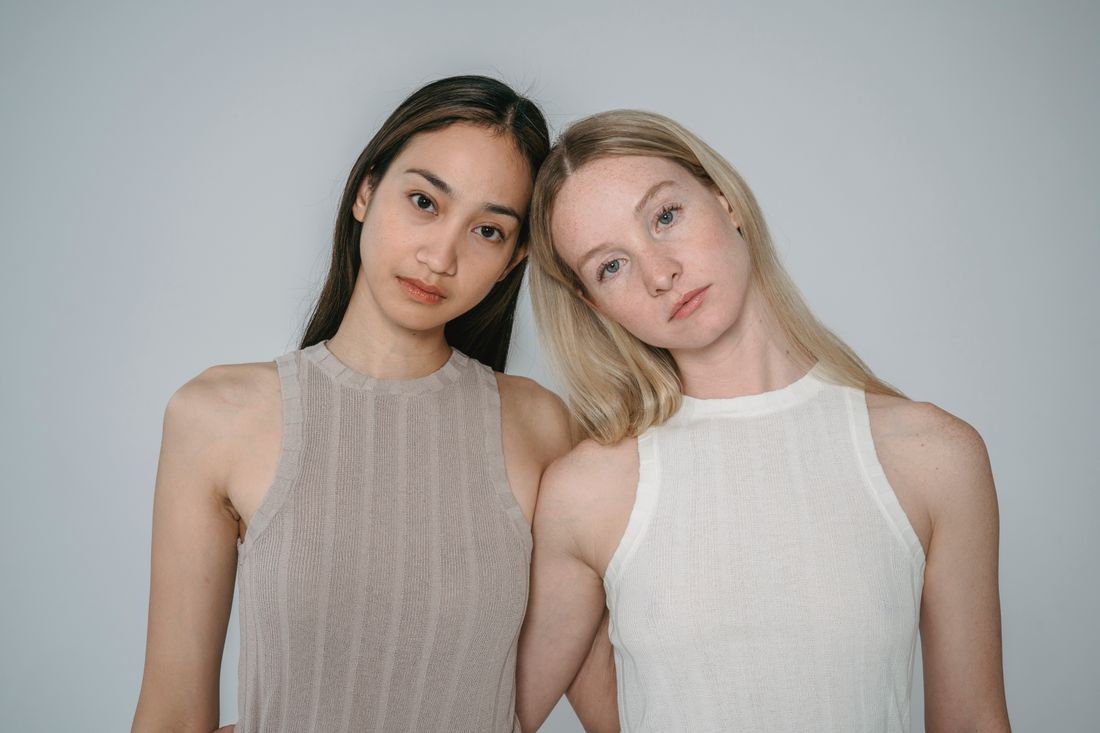
Two artists share a studio, a body of work, and a byline, and now they need a portrait. The question that actually decides the shoot is not which arrangement photographs better. It is what the photo has to do once it leaves the session: get attached to a joint show announcement, sit on a grant application with one name on it, or answer a press quote credited to one of them. Most partnerships need both a portrait of the two of them and a portrait of each of them alone, and the honest answer is that deciding this in advance is optional. A well-planned session can produce both in one sitting.
This reads like an aesthetic call, but it is a buyer decision: different downstream uses require different portraits. A joint byline or shared-work announcement needs both people in one frame. An individual grant application, teaching bio, or press quote needs a portrait that stands alone.
Is This Really An Aesthetic Choice, Or A Buyer Decision?
This reads like an aesthetic call, but it is a buyer decision. Different downstream uses require different portraits. A joint byline or shared-work announcement needs both partners in one frame. An individual grant application, a solo teaching bio, or a press quote attributed to one partner needs a portrait that stands alone.
The confusion comes from treating this like a single portrait sitting where the group decides on one look and lives with it. Two artists who work as a unit still get invited to apply for things, teach, speak, and get quoted as individuals. Their professional lives do not stay perfectly paired just because their studio practice is. A portrait plan that only accounts for the partnership, never the individual, leaves both people scrambling for a usable headshot the first time an application deadline lands on only one of their desks.
Once the question is framed around use rather than taste, the planning gets easier, not harder. Instead of debating whether the joint portrait or the solo crop is "more us," the conversation becomes concrete: where does this image need to appear in the next year, and how many of those places need one person versus two. That list, more than any styling or posing choice, is what should drive the shoot plan, and it holds up long after the current show or application has closed.
Which Uses Actually Require Both Partners In One Frame?
Anything that represents the partnership as a single entity needs both people in the same image: a joint exhibition announcement, a shared artist statement page, a collaborative grant application filed under both names, and a press feature about the work itself rather than either person's individual practice.
A joint byline is the clearest case. If a publication, gallery, or funder is naming the two of you as co-creators, a portrait of only one of you invites the reader to wonder who the other person is and why they are missing, since a solo photo would misrepresent who actually made the work. The same logic applies to a shared studio or partnership website's about page, which usually needs one image that says "this is who we are" before the individual bios do their own work further down the page.
It is worth separating this from social content, where a solo photo of one partner captioned honestly is completely normal and does not misrepresent anything. The two-person requirement is specifically about materials that assert joint authorship or joint identity as the subject. A show announcement, a co-authored catalog essay, or a partnership's press kit cover image all fall in that category. If the material is making a claim about the two of you as a unit, the portrait should back that claim up rather than quietly contradict it. Funders and juries also compare application materials against a group's existing public presence, so a lone headshot on a jointly filed application can read as a mismatch worth a second look.
Which Uses Need A Portrait That Stands Alone?
Anything filed, credited, or represented under one person's name needs a portrait of that person alone: an individual grant application, a solo teaching bio, a press quote attributed to one partner, a panel listing, and any professional profile that exists independent of the partnership. A joint photo cropped down after the fact is a visible workaround, not a substitute.
This is the use case that gets skipped most often, because the partnership's identity feels like the more important thing to document. But individual opportunities do not wait for both people to be available at the same time. A residency panel wants a headshot of the applicant, not the applicant and their studio partner. A journalist quoting one of you for a specific comment wants a photo of that person, not a joint portrait that makes readers guess which one said the quote.
The practical fix is treating solo coverage as a standard part of the shoot rather than an afterthought handled later with a phone camera. Some partners resist this instinctively, worried a solo portrait undercuts the partnership's shared identity. It does not. A gallery director keeping two individual headshots on file alongside the joint portrait is not choosing sides; they are stocking exactly what a grant panel, a press request, or a teaching bio will eventually need, without a last-minute scramble when a deadline lands. Online artist directories and search-driven profile pages also index by individual name, so a joint photo alone can leave one partner effectively unfindable in a listing built around solo search.
How Do You Give Two People Equal Weight Without It Reading Corporate?
Equal weight does not mean identical distance from the lens, identical pose, and identical expression, which is what produces the stiff, matched-headshot look of a corporate leadership page. It means neither person reads as the primary subject and the other as support. That gets built through natural variation in height, angle, and gesture rather than through symmetry.
The corporate instinct is to solve for fairness by making everything match: same crop, same lighting ratio on each face, same distance from center. The result photographs as two individuals who happen to be standing next to each other for an org chart, which is the opposite of what a shared creative practice should communicate. A portrait of two working artists can afford to look less engineered than that, because the goal is a working relationship on camera, not a balanced layout.
What actually reads as equal is a frame where both people are doing something, even something small: one gesturing while speaking, the other genuinely listening, both angled slightly toward each other rather than squared to the lens. Neither has to be posed identically to the other for the photo to feel fair. It just has to avoid the tell that gives hierarchy away by accident, one person closer to the light, more square to the camera, or occupying more of the frame, without anyone deciding that should be the case.
Why Does Proximity Say "Shared Practice" More Than Symmetry Does?
Physical closeness reads as relationship in a way that matching poses never do. Two people standing shoulder to shoulder, genuinely near each other rather than posed at a polite corporate distance, is what actually communicates "we work together" to someone glancing at the photo for two seconds, which is most of the audience most of the time.
This is also where the most common two-person portrait habit quietly backfires: standing one person slightly behind the other. It is an easy default because it solves a real framing problem, two faces at slightly different distances from the lens read more naturally than two faces jammed into exactly the same plane. But it also visually promotes whoever is in front, whether or not that was the intent. A viewer reads position as status even when no one meant to send that signal, and that read can outlast the group's own sense of how they work together.
The fix is not abandoning depth, since some depth variation is what keeps two faces from looking flattened into a single plane. It is making the depth choice on purpose and rotating it, rather than defaulting to one fixed person in front. Turning both people slightly inward, toward each other rather than the lens, closes the physical gap between them without creating the same front-and-back read, and does more to say "shared practice" than any amount of matched styling.
If You're Also A Couple, How Much Of That Belongs In The Portrait?
Some, but the professional use should decide how much, not the relationship. A portrait headed for a grant application, gallery page, or press kit needs to read as two working artists first; a portrait for the partnership's own social account can carry more of the personal warmth honestly, since the audience already knows the context.
The awkward part is that most romantic-partner collaborators do not want to erase the relationship from the photo entirely, and they should not have to. The work itself may come directly from that closeness. But an image built around visible physical affection, an arm around a waist, a shared laugh at each other rather than the lens, can shift a grant panel or press editor's read of the work away from the art and onto the relationship, which is rarely the intended effect.
A workable middle ground treats warmth and affection as tone rather than as the subject: genuine ease with each other's physical presence, comfortable proximity, real eye contact, without a pose that specifically foregrounds romance. Couples who collaborate professionally are usually already good at this distinction in conversation, keeping some things for the studio and some for dinner. The portrait can hold that same line. It is worth naming out loud before the shoot, because it is easier to agree on calmly in advance than to renegotiate in front of a camera.
What Happens When One Partner Is Noticeably More Comfortable On Camera?
The frame tends to drift toward whoever is more relaxed, not because anyone decides that on purpose but because a comfortable subject naturally holds better posture, more open expression, and more usable frames per roll. Left unmanaged, the less comfortable partner ends up under-represented in the final edit even when the shoot treated both people identically.
This shows up in small, cumulative ways rather than one obvious moment: the confident partner's best frame happens to be a touch sharper, a touch more relaxed, and gets picked more often when there is a tie to break. Over several selects, that adds up to an edit that quietly favors one person, which reads to an outside viewer as exactly the kind of imbalance a shared-practice portrait is supposed to avoid.
The practical countermeasure is simple and does not require making the less comfortable partner perform confidence they do not feel. Shoot more frames of that person specifically, since more attempts increases the odds of a genuinely good one. Give them something to do with their hands or attention, a piece of work, a tool, a conversation with their partner, rather than asking them to hold a pose while facing the lens directly. And when editing, deliberately check whether the shortlist gives both people comparably strong frames before finalizing, rather than assuming the natural best-of selection was fair. Left uncorrected across several sessions, that drift compounds into an archive where one partner is visibly more present than the other, even though nothing about the actual partnership changed.
What Happens To The Portraits If The Partnership Doesn't Last?
The joint portrait becomes historical rather than usable, tied to a specific chapter of the work rather than either person's ongoing practice, while solo portraits from the same session stay usable indefinitely. That is the practical argument for shooting individual coverage even when a collaboration feels permanent: it protects each person's archive independent of what happens to the partnership.
Nobody wants to plan a portrait session around the possibility of a breakup, professional or otherwise, and this is not a suggestion to dwell on it. But creative partnerships end more often than the people inside them expect while they are still working well together, and a photographer who has documented both the joint identity and the individual one has quietly done both partners a favor. The joint portrait remains accurate as an artifact of that period of the work. The solo portraits keep functioning as each person's current headshot regardless of what the partnership does next.
The good news is that none of this has to be decided before the shoot. Shooting both a group frame and individual crops in one session is a matter of a few extra minutes per person within the same lighting setup, not a second booking. A partnership does not need to resolve whether they are always going to work together to get coverage that holds up either way. They just need a photographer who plans for both from the start, and a session that treats the individual portraits as standard, not optional add-ons.
Frequently asked questions
Do artist partners need two separate portraits, or does one photo cover everything?
Most partnerships end up needing both. A joint portrait covers uses that represent the two of you together: a shared show announcement, a partnership website, a co-authored application. A solo portrait of each person covers uses tied to one name: an individual grant application, a teaching bio, a press quote. Planning for both from the start, in one session, is far more efficient than booking a second shoot later when a solo need comes up unexpectedly.
What's wrong with the classic pose of one person standing slightly behind the other?
It solves a real framing problem, keeping two faces at readable distances from the lens, but it also visually promotes whoever is in front, whether that was intended or not. Viewers read position as status even when no one meant to send that signal. The fix isn't avoiding depth entirely; it's using it deliberately, often by turning both people slightly toward each other rather than defaulting to a fixed front-and-back arrangement.
We're also a couple. Should the portrait show that, or stay strictly professional?
Let the intended use decide. A portrait headed for a grant application or press kit should read as two working artists first, with warmth as tone rather than the subject. A portrait for your own social account can carry more of the relationship honestly, since that audience already has the context. Genuine ease and comfortable proximity read fine in either version; a pose that specifically foregrounds romance can shift a professional audience's read away from the work.
One of us is much more comfortable in front of a camera. What happens to the photo?
Without deliberate correction, the edit tends to drift toward the more relaxed partner, since they naturally produce more usable frames. The fix is shooting more frames of the less comfortable partner specifically, giving them something to do with their hands or attention instead of holding a pose, and checking during selects that both people end up with comparably strong final images rather than assuming the natural best-of choice was fair.
Can one session produce both a joint portrait and individual portraits of each partner?
Yes, and it's the efficient way to plan it. A single session, under the same lighting setup, can deliver a strong joint frame plus a tighter individual portrait of each person, usually with just a few extra minutes per person. This also means the decision about which configuration you'll actually need doesn't have to be made before the shoot; both get captured, and you choose later based on where the image needs to go.
A portrait that's aged doesn't always need a full reshoot.
We'll look at what you have and tell you honestly whether a refresh session covers it or the work calls for a new concept.
Explore portrait sessions →