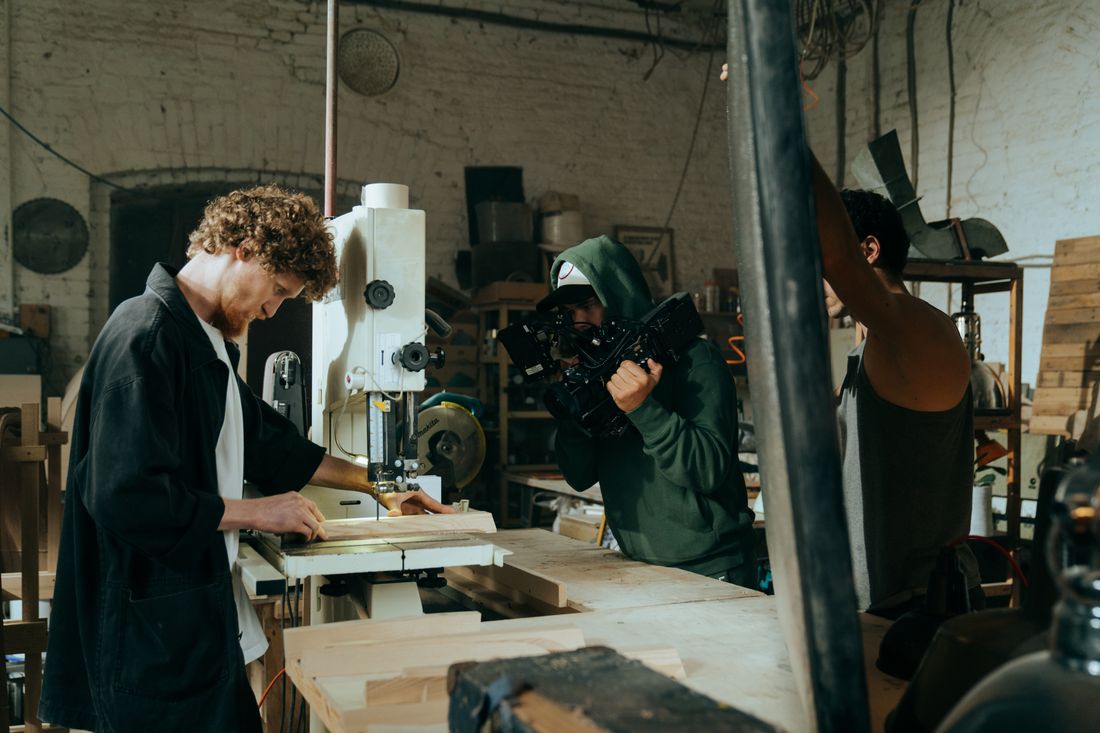
Not every brand film needs someone looking into the lens and explaining themselves. Some of the strongest ones never show a face at all, carried instead by a voice recorded somewhere the camera doesn't point, or by pictures and sound doing the explaining, or by a few careful words that appear and disappear on screen. None of that happens by accident. It works when the shoot day was built for the version being made, and it falls apart fast when it wasn't.
No. A brand film can run on interview audio recorded off camera, on sound design and sequence with no voice at all, or on text on screen. Each version works only when the shoot was built for it, with more coverage, not less, and no face to fall back on.
Does a Brand Film Need Someone Talking to the Camera?
A brand film does not need someone talking to the camera to work. It needs a way to earn the audience's trust without that face, which usually means interview audio recorded off camera, a film carried by sound and sequence alone, or text on screen doing the work a voice would otherwise do.
Most brand films lean on a face because it's the fastest way to build trust in a few seconds. An expression, a pause before an answer, someone looking slightly past the lens, the audience reads all of that instantly, without being told to. Take the face away and something else has to do that work instead.
None of the replacements happen by accident in the edit. A believable voice, a sequence that reads clearly on its own, or on-screen text that lands the way spoken words would, all of it gets built on the shoot day, or it simply isn't there to build with later. That's the real dividing line, and it's easy to miss when someone books a shoot without saying which version they actually want.
A film with no talking head is not a smaller version of a normal interview film. It's a different film, with its own list of requirements. The people who get burned are the ones who treat 'no face' as a subtraction from a standard shoot rather than a shoot planned around a different structure. Below are the three honest ways to build one, and what each asks of the shoot day.
What Are the Three Honest Versions of a No-Talking-Head Film?
There are three honest ways to build a brand film with no talking head: interview audio recorded off camera and laid over visuals, a film carried entirely by sound design and sequence with no voice at all, and a film built around text on screen. Each asks something different from the shoot.
The first is an interview shot with the subject looking off camera at a producer, not into the lens, with the audio recorded cleanly and used as narration over footage of the work itself. The subject is never seen speaking. The second has no voice anywhere in it, no interview, no narration, and depends entirely on sound design, music, and a sequence of images that carries meaning on its own, the way a well-cut trailer can tell a story without a single line of dialogue. The third replaces the voice with text on screen: short phrases that appear over the footage and do the explaining a subject would otherwise do out loud.
These aren't the same film wearing different clothes. An off-camera interview still needs a real conversation and a subject willing to talk, just not on camera. A film with no voice needs a sequence strong enough to be its own explanation, with nothing to lean on if it isn't. A text-driven film needs someone willing to write and approve short lines that carry the weight a voice would. Picking one before the shoot, not during the edit, decides what gets recorded, how much time the day needs, and what the crew is actually there to capture.
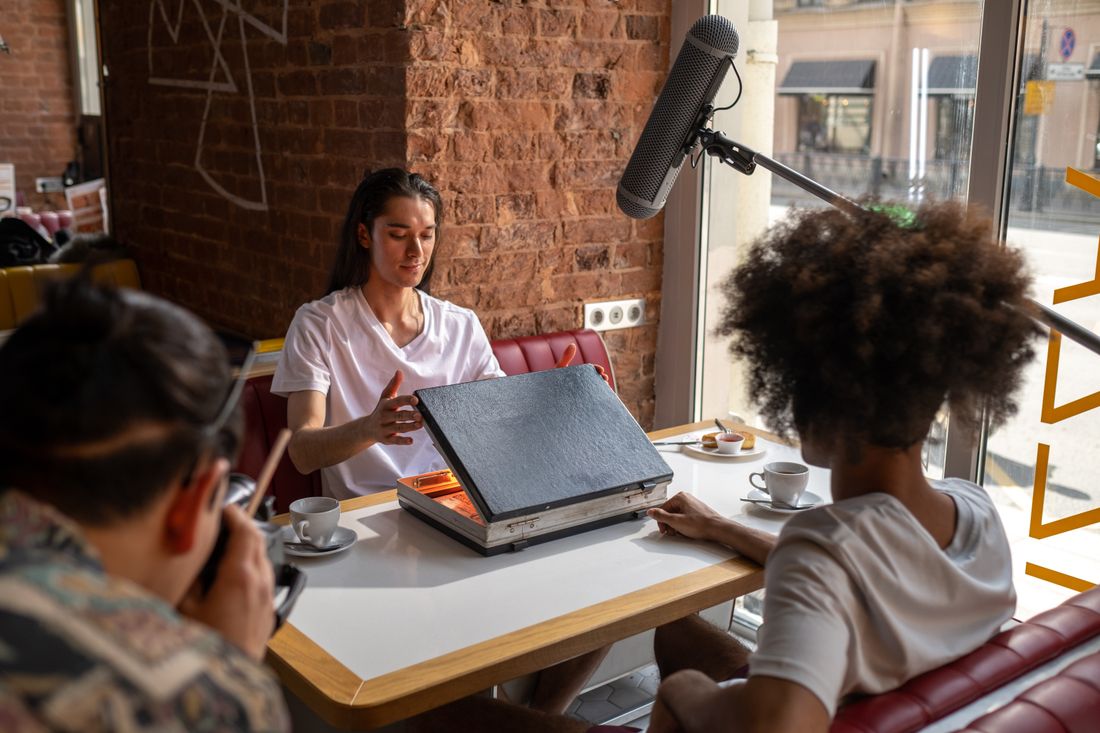
Why Does Recording the Interview Off Camera Change What Someone Says?
Recording the interview off camera, away from the lens, usually gets a calmer subject and cleaner audio than a standard on-camera interview. People speak more naturally to a person than to a camera, and once the film never shows them speaking, small stumbles, pauses, and imperfect phrasing stop being a problem to fix.
Most people who aren't used to being filmed change the moment a camera points at their face. They watch their posture, their hands, the shape of their mouth. A microphone and a friendly conversation partner sitting just off to the side of the lens removes most of that self-consciousness, because there's no image to perform for. The subject can look at the person they're actually talking to, forget the gear is running, and answer the way they would answer a friend over coffee.
That shift changes the actual content of the interview, not just the mood in the room. Someone talking to a person instead of a lens tends to go longer on an answer, or circle back with an example they wouldn't have offered on camera. The audio ends up more usable precisely because nobody was managing how they looked while saying it.
None of this means the interview gets treated casually. The subject still deserves good questions, a quiet room, and real attention to what they're saying. It just means the camera pointed at their face is the wrong tool for an honest answer, and a good producer puts the camera somewhere else entirely.
Why Does a Film With No Face Need More Coverage, Not Less?
A film with no talking head usually needs more footage on the shoot day, not less. A normal interview film can cut back to the subject's face whenever a sequence runs short or an edit needs a beat to breathe. Without that face, there is nothing to cut back to, so every sequence has to fully carry its own weight.
On a standard interview film, the face is a safety net. If a shot of hands working doesn't quite hold for the length the editor needs, they cut back to the subject mid-sentence and the moment resolves itself. That option doesn't exist when nobody is on camera talking. Every sequence needs a real beginning, middle, and end, filmed with enough variation in distance, angle, and movement that the editor has somewhere to go if the first idea doesn't cut together.
This is why an editor discovering mid-cut that a sequence is missing coverage is a much bigger problem here than on a normal interview piece. There's no talking head to lean on while the missing shot gets planned for later. In practice, this means shooting more setups per scene than feels necessary: a wide to establish the space, a medium for the action, and closer details that hold on their own.
It also means slowing down on set. A crew that treats this like a fast interview shoot with some pretty cutaways will come back with fragments, not sequences, and fragments can't fill the space a face used to fill.
What Does 'B-Roll' Stop Meaning When It's the Entire Picture?
When there's no talking head, 'b-roll' stops meaning pretty filler cut in around an interview and starts meaning the entire picture. Every shot has to function as part of a sequence with its own beginning and end, not a decorative fragment cut in wherever the pacing needs a break.
On a normal interview film, b-roll supports a voice that's already doing the explaining. A shot of hands mixing paint, a finished piece against a wall, a workspace at the end of the day, none of it needs to explain itself, because the interview carries the meaning and the footage just illustrates it. Take the interview away, or take the face away, and every one of those shots has to start pulling its own weight.
That means thinking in sequences on the shoot day, not shot lists of pretty images. A sequence has a reason someone opens a door, walks into a room, and sits down at a table, filmed in enough pieces that the action reads clearly when it's cut together. A single gorgeous shot of hands working is not a sequence. It's a fragment, and a film built entirely from fragments feels like a collection of stock footage instead of a story, no matter how well each frame is lit.
This is the biggest shift a crew has to make. The instinct to grab a few beautiful cutaways has to become the discipline of covering an actual sequence of actions from enough angles that it can carry a scene on its own, with nothing narrating over it to smooth the gaps.
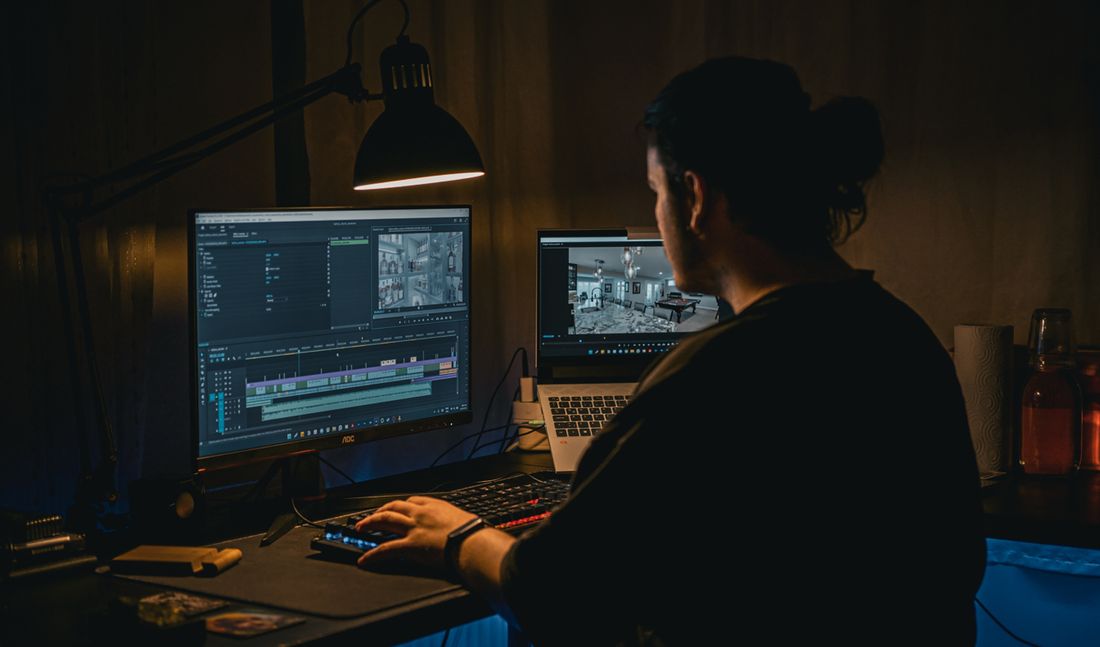
How Does the Edit Find Structure Without a Narrator?
Without a subject narrating the story, the edit finds structure in the sequence of actions itself, in sound design, and in pacing decisions that stand in for a script. The order things happen in, and how long the film lingers on each one, becomes the film's actual storytelling tool.
An interview-led film has an obvious spine: whatever the subject says, in whatever order they say it, and the editor cuts footage to match. Remove that spine and the editor has to build one out of what's left, usually a version of the natural order things actually happened in, tightened and reshaped for pacing rather than played back in real time. A morning routine, a process from raw material to finished piece, an arrival and a departure: real sequences already have a shape, and the edit's job is finding it rather than inventing one from nothing.
Sound does a lot of the work a voice would normally do. Music that shifts in energy signals a turn in the story. Ambient sound, kept clean and specific rather than replaced with generic library noise, tells the audience where they are and grounds a sequence that has no one explaining it. Silence, used deliberately, can carry as much weight as a line of narration would.
This only works if the footage supports it. An editor cannot invent a structure a shoot day didn't capture; they can only find and sharpen the one that's actually there in the material. That's the real argument for planning the sequence before the camera rolls, not hoping one appears in the edit bay afterward.
What Has to Be Decided Before the Shoot, Not in the Edit?
The sequence order, the sound approach, and which version of a no-talking-head film is being made all have to be decided before the shoot, not discovered in the edit. The most common failure is shooting a normal interview film, cutting the talking head afterward, and finding the footage was never built to carry the story alone.
This failure has a familiar shape. A film gets shot as a standard interview piece, with modest coverage, because the plan was to lean on the subject talking through the story. Somewhere in the edit, someone decides the talking head isn't working, maybe the delivery feels stiff, and the interview gets pulled. What's left is coverage that was never meant to stand alone, since it was built to sit beside a voice that no longer exists in the cut. There usually isn't enough of it, and what exists doesn't connect into real sequences.
Avoiding that means deciding, before the shoot day, which of the three honest versions is being built: off-camera interview audio, no voice at all, or text on screen. That choice decides the shot list. An off-camera interview still needs a real conversation captured cleanly, plus enough coverage to cut around it. A voice-free film needs full sequences shot from multiple angles. A text-driven film needs pacing built around where the words land, which changes how long each shot holds.
We cover how to brief a shoot around one of these choices elsewhere. Name the version before day one, or the footage may only support the plan made going in, not the one wished for later.
How Do We Tell a Client They Actually Need a Face on Screen?
Some brand films genuinely need a face on screen, usually when trust in a specific person is the actual point: a founder people are meant to recognize, an expert whose credibility rests on being seen, or a business built entirely around one person's presence. We tell clients this honestly before the shoot, not after.
A no-talking-head film is not automatically the more sophisticated choice. If a founder's face is the entire reason a client trusts the business, hiding it for a stylistic approach removes the exact thing the film needed to do. The same is true for a teacher, a therapist, or anyone whose work depends on a client trusting them personally first. In those cases, a talking head isn't a fallback option, it's the point.
The honest version of this conversation happens early, before any shot list exists. We ask what the film needs to accomplish and who the audience needs to trust. If the answer points toward a specific person's face and voice, we say so plainly, even when they arrive already set on something quieter. Steering a client away from a face they need just to look trendier produces a beautiful film that doesn't do its job.
The reverse is just as true. Plenty of founders don't want to sit in front of a camera, and plenty of businesses don't need a face to earn trust at all. When that's the case, we say that plainly too, and build toward one of the three versions above instead, provided the shoot day is planned to support it.
Frequently asked questions
Is a brand film without a talking head cheaper to make?
Not necessarily, and often the opposite. A film built around interview audio, sound design, or text on screen usually needs more coverage per scene than a standard interview film, since there's no face to cut back to when a sequence runs short. The version without a talking head can be a stronger creative choice, but it isn't a shortcut on shoot time, crew attention, or how much footage the day actually requires.
Can we still use interview audio if the subject doesn't want to appear on camera?
Yes, and it's one of the strongest reasons to record the interview this way. The subject sits off camera, often talking to a producer instead of the lens, so their answers get used as narration over footage of the work while they're never shown speaking. Many people who dislike being filmed still give a better, more relaxed interview once they know their face isn't the point.
Does a film with no voice at all need a script?
It needs planning, even without a written script in the traditional sense. Before the shoot, the sequence of actions, the order scenes happen in, and how sound and music will carry the story all need to be worked out, because there's no narration to lean on if a sequence doesn't quite hold together. The planning replaces the script; it just isn't spoken out loud on the day, and it still needs to exist before anyone presses record.
What's the biggest mistake people make with a no-talking-head brand film?
The most common mistake is shooting a normal interview film, then deciding in the edit to cut the talking head. The remaining footage was only ever meant to sit beside a voice, not carry the story alone, so it usually isn't sequenced or covered thoroughly enough to work without it. Deciding on the approach before the shoot avoids this almost entirely, because the shot list and shoot day both end up built for the version of the film being made.
Do we need to hire someone different to write text-on-screen copy?
Not usually. Whoever writes normal brand copy for a client can typically write the short lines a text-on-screen film needs, since the skill is the same: saying something true in very few words. What changes is the pacing, since every line has to work as a sentence someone reads in a few seconds while watching footage, not as a paragraph on a page, and the words need to earn their place rather than restate what the picture already shows.
Not sure if you need a refresh or a whole new concept?
We shoot both, and we'll say plainly which one fits your portrait before anything gets booked, not after the invoice.
Explore portrait sessions →