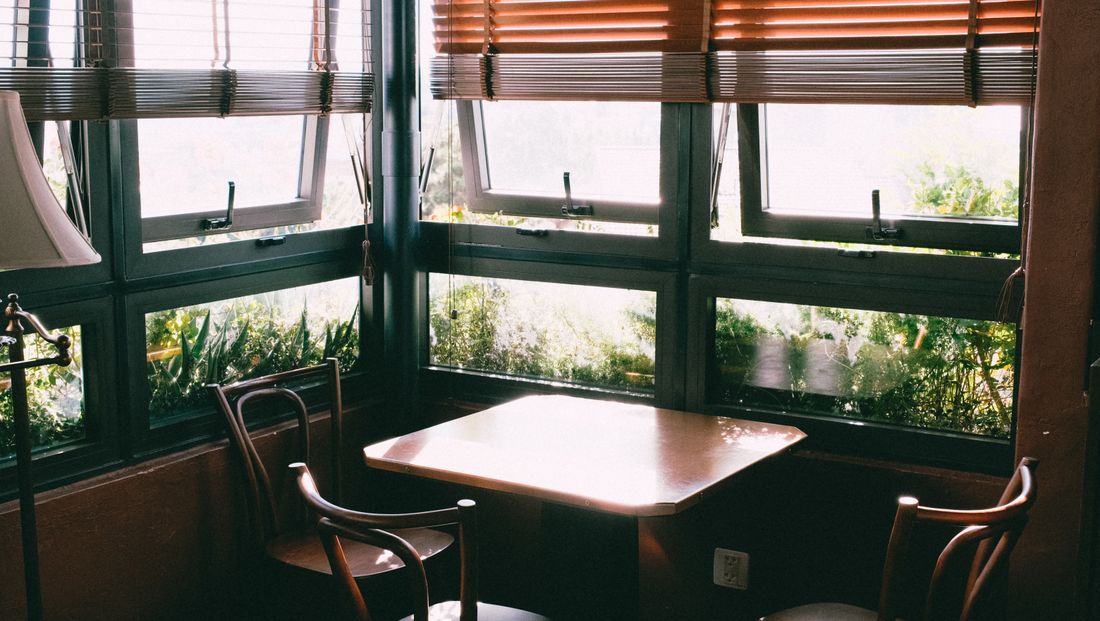
A therapist books a branding session and pictures it happening in the office, the room where the actual work happens. That's the natural assumption, and it's often wrong for reasons that have nothing to do with how the room looks. Client material can't be in a published photo, a lot of NYC therapists don't fully control the room they rent, and some practices don't have an office at all. The location question is worth settling before the shoot, not on the day of it.
A therapist's own office often isn't where the branding shoot happens, and the reasons are practical rather than aesthetic. A room used for sessions has to stay free of anything that identifies a client, and stripped of that material it frequently stops looking like a distinct space at all. A large share of NYC therapists rent a room by the hour or share a suite, which means the room belongs to whoever holds the lease, not to the therapist booking the photos. Telehealth-only practices have no office to consider in the first place. When a room in the practice can genuinely work, daylight, depth, and a corner apart from the therapy chair make the difference. When none of that is available, a plain portrait against a simple background is the honest fallback, not a downgrade.
Can a therapist shoot branding photos in their own office?
Sometimes, but often not. Client material can't appear in a published photo, and once you strip a therapy room of the intake forms, calendar screens, a name on the door, or a client's coat, it usually stops looking like your actual office. If you sublet or share the space, it may not be yours to photograph at all.
We get asked about this before almost every therapist session we book. The instinct makes sense. Your office is where you actually work, so it feels like the natural backdrop for a photo that's supposed to represent you. The problem shows up before the camera does.
A room used for therapy sessions is full of things that can't be in a published frame. That includes an open appointment book, a name on a door or window, a coat or bag that isn't yours, a monitor showing a calendar or a client's file. Once all of that is out of frame, or physically removed from the room, what's left often isn't recognizable as your office anymore. It's a chair and a wall.
The honest move is to walk the room first, before booking anything, and ask what's actually left once the client-facing material is gone. Sometimes there's still a real photo there. Often the better option is elsewhere, which is worth knowing before the shoot, not on the day of it.
Why does a therapy room stop looking like itself once the client material is gone?
A therapy room is furnished for the person sitting in it, not for a camera. Once you remove the intake forms, the calendar on a screen, a name on the door, and anything that belongs to a client rather than to you, what's left is frequently just a chair, a lamp, and a blank wall.
Most therapy offices are built to feel neutral and unobtrusive on purpose, so a client's attention stays on the conversation rather than the room. That's the right choice for a session. It's also exactly what makes the room forgettable in a photo once the personal touches, the ones tied to client confidentiality, are gone.
A branding photo needs the opposite of neutral. It needs a room that reads as specific to you: a texture, a plant, a shelf, something a viewer's eye can land on. When the only distinctive objects in a room happen to be the ones that can't be published, removing them for the shoot removes the room's personality along with them.
This is why we usually walk a space with the photographer's eye before deciding where to shoot, rather than assuming the room that works for sessions will work for a photo. A waiting area or a corner outside the actual therapy room often has more usable character than the room itself.

What if the office is a shared suite or an hourly sublet?
A large share of therapists in private practice rent a room by the hour or share a suite with other clinicians. That room belongs to whoever holds the lease, not to you, which means you can't bring in lighting, block a hallway, or publish photos of the space without asking the person who actually controls it.
This is the situation we run into most often, and it has nothing to do with how established a practice is. Plenty of therapists with a full caseload still rent by the session or split a suite with three or four other clinicians, because that's how office space works for a lot of private practice.
None of that is a problem for the practice itself. It becomes a problem for a photo shoot the moment nobody asks who's allowed to say yes. A shared suite has other clinicians' names on doors, other clients potentially walking through a hallway mid-session, and a lease holder who may not want their space published online at all, by anyone.
The fix is asking early, not showing up with a camera and finding out on the day. If the person who holds the lease agrees, plan around their hours. If they'd rather not, that's a normal outcome, and it points toward a room that's actually yours to use.
What about a practice that's telehealth only?
A telehealth-only practice has no office to shoot in, and that's fine. The portrait still needs to look like someone a person would feel at ease talking to through a screen. Location matters less here than finding any calm, lived-in room, since the photo stands in for the video call itself, not for an office nobody visits.
Telehealth practices are common enough now that this isn't an edge case, it's a regular booking. The upside is real: without an office to work around, nobody has to strip client material out of a specific room. It's just a matter of finding a good room, full stop.
What that room needs to do is set expectations honestly. Someone looking at your website photo is picturing what the video call will actually feel like. A portrait shot somewhere stiff and obviously staged can undersell how warm the actual sessions are. A portrait shot somewhere relaxed, with soft daylight and a bit of visual texture behind you, does a better job of representing what a client is signing up for.
For telehealth practices, we usually end up shooting in a home office, a quiet living room, or occasionally a borrowed space with better light than either. The room just has to feel like somewhere a real conversation happens.

What does a room actually need to work for the photos?
A usable room needs daylight still coming through a window at the hour you can book it, enough depth between you and the back wall so the frame doesn't feel flat, and a corner that isn't the therapy chair itself. Most rooms fail at least one of these before they fail on looks.
Daylight is the big one. A window that's gorgeous at ten in the morning and useless by four in the afternoon only helps if the shoot happens at ten in the morning, so the actual booking window matters as much as the room does.
Depth is the one people don't think about until they're standing in the space. A small room where the subject is three feet from a blank wall photographs cramped no matter how the light falls, because there's nowhere for the background to fall out of focus. A few extra feet of distance changes the whole feel of the photo.
And then there's the obvious one: the therapy chair itself, or anything staged to look exactly like a session in progress, usually isn't the right corner to shoot in, even when it's the nicest chair in the room. A different corner of the same office, or a different room entirely, often works better precisely because it isn't trying to recreate a session for the camera.
So where does the shoot actually happen when no room works?
When no room in the practice can host the shoot, the fallback is a plain, clean portrait made against a simple background, wherever daylight and space allow. That's not a downgrade from an office photo. It's the version built for a practice where the office was never going to be usable in the first place.
We travel to wherever the shoot makes sense, since there's no studio to book you into. For a lot of therapists, that ends up being a plain backdrop set up in a home, a borrowed room with good light, or a quiet corner of a space that has nothing to do with the practice at all.
A simple portrait against a clean background removes the whole question of what's allowed in frame. Nothing behind you needs stripping out, nothing needs a lease holder's permission, and nothing about the picture depends on how the light happens to fall in your particular office that week.
The honest answer is that the location is often not your own office, and that's a fine answer. The photo's job is to make a stranger feel comfortable reaching out to you. It was never actually the office's job to prove that, and once the pressure to shoot there is gone, the room question stops being the hard part.
Not sure if you need a refresh or a whole new concept?
We shoot both, and we'll say plainly which one fits your portrait before anything gets booked, not after the invoice.
Explore portrait sessions →