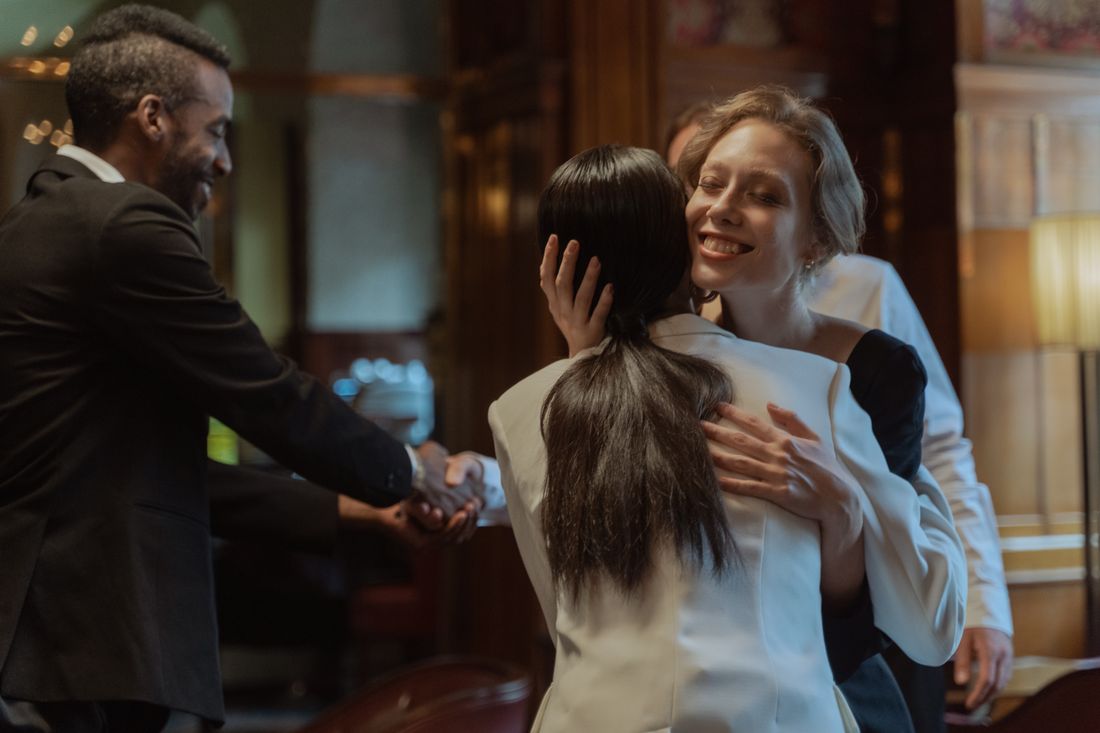
A first-time client re-explains the space, the schedule, and the house style on nearly every call. A returning client skips most of that conversation, not because the work got easier, but because a real shorthand built up somewhere between the first booking and the second. That shorthand is worth more than most people account for when they think about why repeat clients matter.
By the second or third booking, a client stops explaining the space, the general schedule constraints, who signs off on selects, and the house style they want the work to match, because the studio already knows those answers from the last shoot. That saved explanation is a real form of value, not a scheduling nicety, and it shows up as a faster, calmer booking process on both sides rather than as anything visible in the final files.
What Does a First-Time Client Usually Have to Explain?
A first-time client typically walks through the same handful of things every new booking requires: what the space looks like and how to access it, who needs to approve the final selects, any scheduling constraints tied to staff or hours, and a general sense of the visual style they want the work to match.
None of this is unreasonable to ask. A studio showing up for the first time genuinely does not know whether a gallery's freight elevator needs advance notice, whether the director prefers to see selects before or after retouching, or whether last time's photographer leaned warmer or cooler than the client actually wanted. Every one of those answers has to come from somewhere, and on a first booking, that somewhere is a conversation.
The conversation itself usually is not long. A short call or a few emails typically cover it. But it is real time, spent by both sides, before any actual work happens. And it is not just time. It is also a small amount of risk: a detail mentioned once in an email, easy to miss or misremember, can turn into a surprise on shoot day that a second booking with the same team would have avoided entirely.
This is normal, not a complaint about first-time clients. Every relationship starts here. What matters is what happens to that same conversation the second time the same client books.
What Does a Returning Client Skip on Their Second or Third Booking?
A returning client usually skips re-explaining the physical space, the general access routine, who approves the final selects, and the broad visual style, because the studio already has working answers to all of it from the previous shoot and can confirm details instead of gathering them from scratch.
The second booking conversation looks noticeably different from the first. Instead of "what does your space look like," it becomes "same building as last time, or a different location." Instead of explaining who signs off, it is a quick confirmation that the same person is still the approver. The questions do not disappear entirely, since details change between bookings, staff turns over, a gallery moves to a second location, a schedule shifts. But the baseline understanding carries forward, and each new booking only has to cover what is actually different this time.
This shows up most clearly in how fast a booking can move from first contact to a confirmed date. A new client relationship often needs a longer runway simply because there is more to establish before a shoot can be scheduled with any confidence. A returning client can frequently confirm a date within a much shorter window, because most of what used to require a conversation is already known.
The work itself is not easier on a technical level. What changes is the setup around the work, and that setup is where most of the friction in a first booking actually lives.
How Does a Studio Learn a Client's House Style Over Repeat Bookings?
A studio learns a client's house style the same way anyone learns a preference: by seeing what gets approved, what gets asked to be reshot or adjusted, and what a client reacts to positively across more than one session, building a working sense of taste that a first booking simply has not had time to establish yet.
On a first shoot, a studio is often working from a client's stated preferences, a reference image, a general description of the desired mood. Those are useful, but they are a translation of taste, not a direct observation of it. By the second or third booking, the studio has actual selects to reference: which images from the last shoot the client used, which ones they skipped, which crop or framing they asked to see more of.
This is where a lot of the quiet value in repeat work actually lives. A returning client does not have to re-describe their house style in words, because the studio already has a working example of it from real, approved work. That is a more reliable reference than any verbal description, because it reflects what the client actually chose, not just what they said they wanted in a planning call before seeing any options.
Over enough bookings, this becomes something closer to knowing a client's eye rather than following their instructions, which changes the working relationship more than any single technical improvement could.
What Scheduling Shorthand Builds Up With a Repeat Client?
A repeat client and a studio that has worked together before usually build up a shared understanding of realistic scheduling constraints: which days or hours actually work for that space, how much notice a booking genuinely needs, and how long a shoot of a given size actually takes once the specific space and staff are accounted for.
Every space has its own rhythm that a first booking has to discover from scratch. A gallery might have a quiet weekday morning that works far better than a weekend the client initially proposed. A restaurant might need a shoot scheduled around a specific closed period rather than an ordinary slow hour. None of this is obvious from outside, and figuring it out on a first booking is a normal, expected part of establishing a new working relationship.
By the second booking, that discovery work is mostly done. A client can often propose a date and have it be workable on the first try, because both sides already know what a realistic window looks like for that particular space and situation. This saves real back-and-forth, especially for clients working against a fixed external deadline, a show date, a launch, a press cycle, where scheduling friction has a real cost beyond mere inconvenience.
This shorthand rarely gets named directly, but it is one of the more practical reasons repeat clients report an easier booking experience than the work itself would suggest.
Why Is This Shorthand a Real Value and Not Just a Convenience?
This shorthand is a real value, not just a convenience, because it removes actual friction points that otherwise slow a booking down or introduce risk: fewer details to confirm, fewer chances for a preference to get lost between a planning call and shoot day, and a faster path from first contact to a locked date.
It is easy to think of "convenience" and "value" as different categories, where convenience is a nice-to-have and value is something measurable. In booking terms, that distinction mostly collapses. A client who can confirm a shoot date in one short exchange instead of a longer back-and-forth is getting real value from that speed, especially when the booking is tied to a deadline that does not move.
There is also a quieter value in reduced risk. A first booking has more places where a detail can get lost: an access note buried in an email thread, a style preference that got slightly misread from a reference image, a scheduling assumption that turns out to be wrong on the day. A repeat booking has fewer of these gaps simply because more of the relevant information already lives with the studio from direct experience, not from a single planning conversation.
None of this replaces the importance of quality work on every single booking, first or fifth. It is a separate, additional benefit that compounds specifically because the relationship continues.

What Does a Studio Still Ask a Repeat Client, Even After Several Bookings?
A studio still confirms whatever has actually changed since the last booking: a new location, a different approver, an updated schedule, or a shift in what the shoot needs to accomplish this time, because shorthand replaces repetition of the unchanged basics, not attention to what is genuinely new.
This distinction matters, because the value of repeat-client shorthand is not the same thing as coasting on autopilot. A studio that stopped asking anything on a fifth booking, assuming everything from the first booking still applies, would eventually miss something real: staff change at galleries, a program shifts focus, a restaurant renovates its dining room. Shorthand should speed up the parts that genuinely have not changed, not replace the judgment to notice what has.
In practice, this means the pre-shoot conversation with a repeat client gets shorter, not silent. It becomes a quick confirmation pass rather than a full discovery conversation: anything different this time, same approver as before, any new constraints on the day. That is a meaningfully different conversation from a first booking's full walkthrough, but it is still a real conversation, not an assumption.
The best version of this relationship treats the accumulated shorthand as a starting point for a faster check-in, not as a reason to stop checking in at all. A studio that keeps asking these small, quick questions on every booking tends to catch the occasional real change early, before it turns into a surprise on shoot day that a five-minute confirmation call would have caught first.
What Happens to This Shorthand When the Point of Contact Changes?
When a repeat client's point of contact changes, a new staff member, a new director, a new manager, some of the accumulated shorthand carries over through the studio's own records, but the relationship still needs a real reintroduction, since the new person has not personally built the trust or the shared reference points the previous contact had.
This is one of the more overlooked moments in an otherwise smooth repeat relationship. The studio may still know the space, the general schedule, and the house style from prior work, but a new point of contact does not know the studio the same way their predecessor did. Treating that handoff as a non-event, assuming the new person already trusts the arrangement the way the last one did, can create friction that looks like it came from nowhere.
The better approach treats a new point of contact as a partial reset: the studio can still move faster than a genuinely new client relationship, because real institutional knowledge about the space and the style already exists, but the new person deserves a proper introduction to that history rather than an assumption that they already know it. A short walkthrough of what has worked before, offered rather than skipped, tends to build trust with the new contact faster than silence would.
Handled this way, a staffing change slows the relationship down slightly without resetting it back to a true first booking.
How Can a Repeat Client Help This Shorthand Build Up Faster?
A repeat client speeds up this shorthand by giving direct feedback after each shoot, saying plainly what worked and what they would want different next time, rather than assuming the studio will infer preferences purely from which images eventually got used across a project.
Selects alone are a useful signal, but they are a slower and less precise one than a client just saying it directly. "We loved the wider crops from the last shoot" or "the lighting felt a touch too warm for our brand" tells a studio exactly what to adjust on the very next booking, rather than leaving the studio to guess at the reasoning behind a set of choices after the fact.
This does not need to be a formal review process. A short note after a shoot, a quick reaction on a call, even a passing comment during the next booking's planning conversation, all of it feeds into the same accumulating shorthand that makes each future booking faster and more accurate. Clients who give this kind of feedback consistently tend to notice the shorthand building up faster than clients who never comment either way.
The relationship works in both directions. A studio pays attention to what worked and what did not, and a client who says so directly gives that attention something concrete to work from, rather than leaving it to inference alone.
Frequently asked questions
How many bookings does it usually take before a client stops re-explaining the basics?
There is no fixed number, since it depends on how much changes between bookings and how directly a client shares feedback along the way. Most of the noticeable shorthand tends to show up by the second or third booking, once the studio has real reference points, a known space, an approved set of selects, a sense of schedule constraints, rather than just a description gathered from the first planning call.
Does a repeat client still need a pre-shoot conversation at all?
Yes, though it becomes a shorter confirmation pass rather than a full discovery conversation. A studio still checks what has changed since the last booking, a new location, a different approver, a shifted schedule, rather than skipping the conversation entirely. Shorthand replaces repeating the unchanged basics. It does not replace paying attention to what is genuinely new, and a short check-in each time is what keeps the accumulated shorthand accurate instead of outdated.
What happens to the shorthand if a client's staff or point of contact changes?
Some of it carries over through the studio's own records of the space and the house style, but the relationship still needs a real reintroduction, since a new contact has not personally built that trust yet. Treating the handoff as a quick walkthrough of what has worked before, rather than an assumption of instant familiarity, tends to rebuild that trust faster than staying silent and hoping the new contact already knows the history.
Is starting with a smaller first project a good way to build this kind of relationship?
It can be, for clients who want to test a working relationship before committing to something larger. That is a slightly different decision than the shorthand covered here, since it is about sizing a trial project rather than what accumulates once a relationship is already ongoing. Either path, a small first project or a larger first booking, can lead to the same kind of repeat-client shorthand once a second or third booking follows it.
Does this shorthand mean a returning client's shoots cost less than a first-time client's?
The shorthand mainly affects the booking process itself, faster scheduling, fewer clarifying rounds, a shorter pre-shoot conversation, rather than the scope or pricing of the shoot. Any specific pricing question is worth raising directly with the studio, since it depends on what a given shoot actually requires rather than on how many prior bookings a client has had, or how smoothly the booking conversation itself went.
Got a photo or video project taking shape in NYC?
Tell us what the files need to do, where the day is happening, and what has to go right, and we'll help shape a production plan around it.
Start a project →