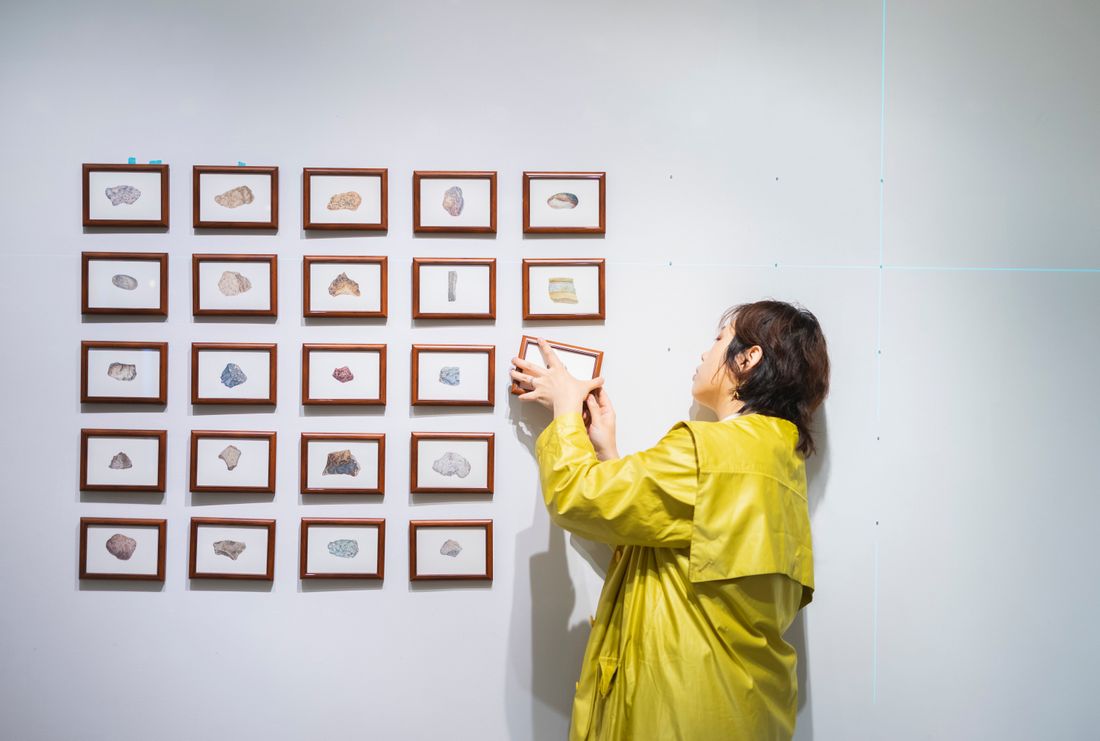
Three people can commission the same documentation shoot and walk away meaning three different things by good enough. The artist wants a faithful record of the work. The gallery wants a file that photographs the program. The buyer, often unnamed on the invoice, wants a file that closes a sale nobody has made yet. All three needs sit inside one shoot, and only one of them usually gets asked about out loud.
A single documentation shoot has to satisfy an artist's archive, a gallery's program, and a buyer's decision at once, and those three uses pull toward different files. The fix is not shooting three times. It is briefing the shoot so all three needs are named before the camera goes up, instead of discovering afterward that one party's version quietly got the leftover file.
Who Actually Uses the Files From One Documentation Shoot?
A single documentation shoot usually has to serve three separate audiences at once: the artist who made the work, the gallery representing it, and the buyer deciding whether to acquire it. Each one has a real, legitimate use for the files, and none of the three uses are identical.
It helps to name the three plainly, because the invoice usually only names one. The artist commissions or approves the shoot and needs a record that holds up over years, applications, and future shows. The gallery books the shoot around a program, a listing, or a sale, and needs a file that fits its own visual system. The buyer rarely appears on the booking at all, and yet the buyer's decision is often the one the whole exercise is quietly built around. A collector deciding between two pieces is looking at a photograph, not the object, for most of that decision, sometimes the only version of the object they will ever see before deciding.
Treating documentation as a single deliverable for a single client misses this. The same set of files gets asked to do three jobs: preserve, present, and persuade. A shoot briefed for only one of those jobs tends to produce files that do that one job well and the other two adequately at best, which is fine until the moment someone needed the file that never got made, usually well after the shoot day itself is over and forgotten.
What Does the Artist Actually Need From the Files?
An artist mainly needs an accurate, dated, reusable record of the work as it existed at that moment, one that will still hold up for a grant application, a future gallery, or their own archive years later. That need is quiet and long-term, which is exactly why it is easy to shortchange in the moment.
Accuracy matters more to the artist than it does to almost anyone else in the chain, because the artist is the one who will notice if a color shifted or a texture flattened. The file has to represent the actual piece, not a flattering version of it. An artist also tends to want range: a straight, full-piece capture plus detail shots of texture, edge, and surface, because a future use case, an application, a catalog entry, a conservator's question, is often not knowable at the time of the shoot, and re-shooting a piece that has since sold or moved is rarely possible.
The part that gets missed is longevity. A gallery's need for a file usually has an expiration date tied to a show or a listing. An artist's need does not. A file that serves the artist well is one that still reads correctly five years later, outside whatever program it was originally shot for, and independent of whichever gallery represented the work at the time, or whether that gallery still exists at all by then.
What Does the Gallery Actually Need From the Same Shoot?
A gallery mainly needs a file that fits its own program: consistent with other pieces on the roster, ready for a listing page, a press image, or a catalog, and usable quickly without extra editing. That need is about fit and speed more than it is about archival completeness.
Consistency is the quiet driver here. A gallery showing ten artists across a season wants documentation that reads as one coherent visual system, not ten different photographers' interpretations of what a piece should look like. Crop, color handling, and background treatment matter to a gallery in a way they may not matter to the artist, because the gallery is thinking about how one piece sits next to the next one in a grid, a PDF, or a wall of thumbnails, and how the whole set reads together as a program rather than one image at a time.
Speed matters too. A gallery often needs the file the same week, sometimes for a listing that is already live or a press deadline that already exists. That urgency can quietly push a shoot toward producing exactly what the current program needs and nothing more, which is efficient for the gallery and can leave the artist's longer archive need unaddressed unless someone asks for it on purpose, before the shoot, not after the files are already delivered and everyone has moved on.
What Does the Buyer Need That Nobody Thinks to Ask For?
A buyer mainly needs a file that lets them make a confident decision about a piece they may never see in person before purchasing, which means scale, surface, and true color matter more to a buyer than to almost anyone else in the chain. This is the least-named need because the buyer is rarely the one commissioning the shoot.
A collector looking at a listing is trying to answer questions the artist and gallery already know the answers to: how big is this, really, next to a hand or a doorway. What does the surface actually do, matte, glossy, textured, reflective. Is this color true, or is it warmer or cooler in person. None of these questions occur to someone who already knows the piece intimately, which is exactly why they get skipped in a typical brief written by people who no longer need to ask them.
A buyer also tends to want context a straight studio shot does not give: a sense of scale against a familiar object, or a detail close enough to judge texture from a screen. None of this requires a second shoot. It requires the brief naming, in advance, that a stranger with money and no prior relationship to the piece is one of the people this file has to convince, even though that stranger will never be in the room to say so.
Where Do These Three Needs Quietly Conflict?
The three needs conflict most often around crop, color, and quantity: a gallery wants a clean, consistent crop for its grid, an artist wants the full, uncropped piece for the archive, and a buyer wants a detail shot neither of the other two thought to request. Each preference is reasonable on its own and incompatible as a single default.
Color handling is a frequent quiet flashpoint. A gallery may prefer a slightly warmer, more inviting rendering that matches its other listings. An artist may prefer the most literal, neutral rendering possible, because accuracy matters more to them than mood. A buyer, unaware either preference exists, just wants the color to be true to what they will receive, which is closer to the artist's preference but arrived at for a different reason, one rooted in avoiding disappointment rather than archival principle.
Quantity is the other flashpoint. A gallery often wants one hero file per piece, clean and fast to use. An artist typically wants a fuller set: overall, detail, edge, install context if relevant. A buyer wants exactly the shots that answer their specific hesitation, which is not knowable in advance and usually means more angles, not fewer. Nobody is wrong here, exactly. The file set that satisfies one audience by default is rarely the file set that satisfies all three at once, without someone deliberately widening it first, on purpose, before the shoot begins.

How Should a Shoot Be Briefed to Serve All Three Audiences?
A shoot briefed for all three audiences names each one out loud before the camera goes up: what the artist keeps for the archive, what the gallery needs for its program, and what a buyer would need to decide with confidence. Naming all three turns three separate assumptions into one shared shot list.
In practice, this means asking a short set of questions before booking rather than assuming the answers. Does the artist need a full archival set beyond what the gallery will use immediately. Does the gallery have a specific crop, orientation, or color standard the file needs to match. Is this piece likely to be shown to a buyer who will never see it in person, and if so, does the buyer need a scale reference or an extra detail angle. These are ordinary production questions, not complicated ones, and they take a few minutes to answer when raised early, usually in the same message that confirms the shoot date.
The efficient version of this is not three separate shoots. It is one shoot that captures a slightly wider set: the full piece straight-on for the artist's archive, a clean crop for the gallery's program, and one or two detail or scale shots with the buyer's decision in mind. Naming the buyer as a stakeholder, even an unnamed one, before the shoot is what keeps that third file from being an afterthought added later, badly, under a deadline.
What Happens When One Party's Version Gets Shortchanged?
When a shoot is briefed for only one audience, the other two usually do not find out until they need the file that never got made: an artist discovering the archive has no uncropped version, a gallery discovering the color does not match its other listings, or a buyer walking away from a piece they could not evaluate confidently online.
The artist's version tends to get shortchanged first, because the archive need is the quietest and the least urgent in the moment. A shoot booked and paid for by a gallery, on a gallery timeline, naturally optimizes for what the gallery needs that week. The artist may not notice the gap until years later, applying for a residency or a grant and discovering the only file on hand is a pre-cropped, gallery-branded version that does not represent the piece cleanly, with no easy way back to a cleaner original.
The buyer's version tends to get shortchanged second, because the buyer is rarely in the room when the brief is written. A gallery focused on getting a listing live quickly may not think to ask for a scale reference or a texture detail, not out of carelessness, but because that specific hesitation belongs to a stranger neither the artist nor the gallery is currently picturing. The shoot was never wrong. It was just briefed for the people who were actually present in the room that day, and nobody else.
Who Should Hold the Master Files When Three Parties Have a Stake?
When three parties have a real stake in one shoot, deciding who holds the master files, and who can pull an alternate crop or detail from them later, is worth settling at booking rather than assuming. Whoever holds the masters effectively controls whether a buyer's later question can be answered without a new shoot.
The practical difference matters here. Delivered files are usually the finished, ready-to-use selects: a gallery's crop, a listing image, a press-ready file. Master files are the broader set the shoot actually produced, which may include the full uncropped piece, extra detail angles, and anything shot with the buyer's eventual questions in mind. Whoever holds the masters can answer a later request, another crop, a different detail, a scale shot, without rebooking, which is exactly the situation a buyer's late-stage hesitation tends to create, often at the exact moment nobody wants to slow the sale down to fix it.
This does not need to be complicated. A short, plain agreement at booking, naming who keeps the full master set and how the artist can request an alternate file later, prevents the more common outcome: a gallery holding only what its own program needed, an artist without a full copy of their own work's record, and a buyer's question going unanswered because the file that would have answered it was never delivered to anyone in the first place, by anyone, at any point in the process.
Frequently asked questions
Does one documentation shoot really need to serve three different audiences?
In most cases, yes, even when only one party is paying for it. An artist, a gallery, and a buyer each use the resulting files for a different purpose: an archive, a program, and a purchase decision. The shoot itself does not need to happen three times, but the brief benefits from naming all three uses before the camera goes up, rather than defaulting to whichever party booked it.
Who usually books a documentation shoot, and does that change what gets prioritized?
A gallery or an artist typically books and pays for the shoot, and the file set naturally tends to prioritize whichever party is present and paying. A buyer is rarely in the room when the brief is written, which is exactly why buyer-facing needs, like a scale reference or a texture detail, are the ones most likely to get skipped without someone raising them on purpose.
What is the difference between what a gallery needs and what an artist needs from the same shoot?
A gallery generally wants a consistent, fast-to-use file that fits its own visual program: a set crop, a matching color treatment, ready for a listing or press use right away. An artist generally wants a fuller, more literal archival record that holds up on its own for years, independent of any one gallery's current program, visual standard, or whether that gallery is still representing the work by the time it matters again.
Can one set of documentation files satisfy an artist, a gallery, and a buyer at once?
Usually yes, with a slightly wider shot list rather than three separate shoots. A full, uncropped capture serves the artist's archive, a clean crop serves the gallery's program, and one or two detail or scale shots serve a buyer's decision. The key is naming all three needs at the brief stage, before booking, so the wider list gets planned on purpose rather than improvised later, under a deadline, after the fact.
Who should hold the master files when an artist, gallery, and buyer all have a stake?
That is worth deciding at booking rather than assuming. Whoever holds the full master set can answer a later request, an alternate crop, a different detail, a scale reference, without rebooking the shoot. A short, plain agreement about file custody at the time of booking, naming who keeps the masters and how the artist can request an alternate file later, prevents any one party from being left without a copy of their own work's record.
Build a paper trail your insurer can't argue with.
We shoot artwork documentation the way an appraiser or adjuster actually reads it, full views, true color, condition notes, and files that stay tied to the right piece.
Explore artwork documentation →