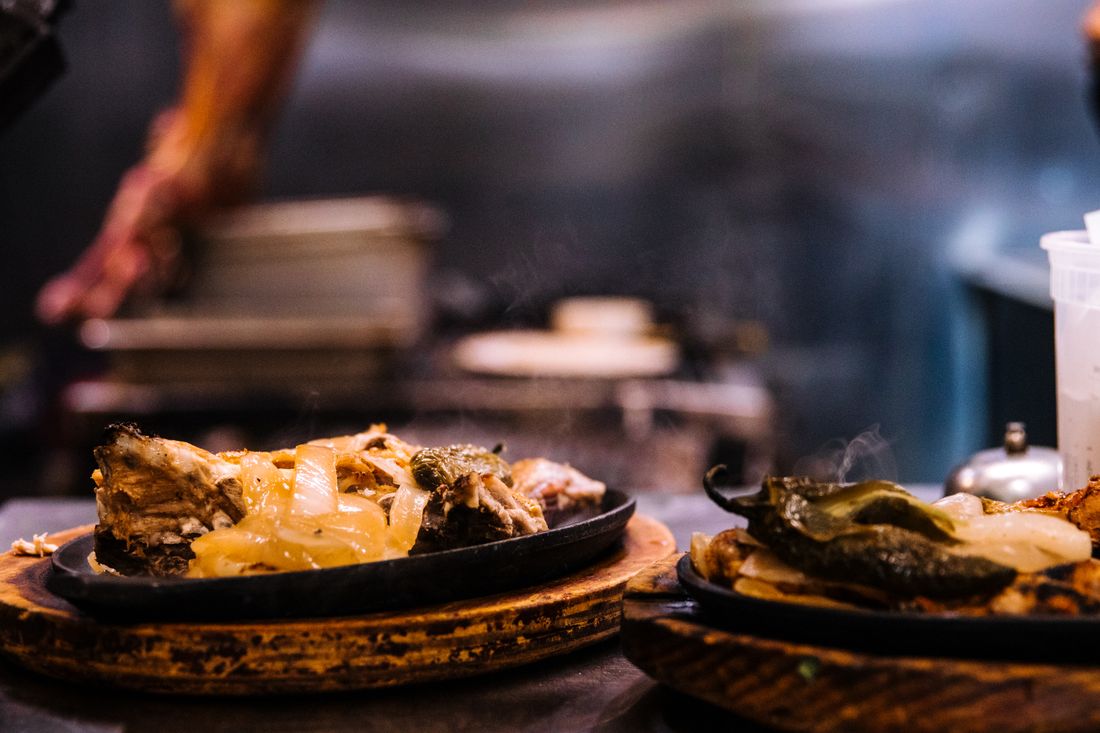
A near-daily posting schedule and a kitchen's actual calendar rarely agree. The gap gets solved less by shooting more often than by shooting differently, once, for volume instead of for a single hero image.
One well-planned restaurant shoot can supply a month of social content when it's built for volume instead of a single hero shot: variety across dishes and angles, motion alongside stills, and framing decided on set rather than fixed later in the edit.
The volume problem every restaurant social feed runs into
Restaurant social feeds want near-daily posts, but a kitchen cannot host a full photo and video session every week. The fix isn't shooting more often, it's shooting for volume in a single, well-planned session, so one day in the kitchen supplies weeks of usable posts instead of one hero image.
Most restaurants without a dedicated content person default to shooting on the fly: a phone photo of a new dish, a quick clip caught mid-service. That covers a moment but not a rhythm. A kitchen already runs on tight timing, prep, service, and cleanup, and asking staff to make room for a crew every few days competes directly with the work everyone is actually there to do. The volume problem isn't really about content. It's about how often something disruptive can reasonably happen inside a working kitchen.
The alternative is treating one shoot as inventory rather than a one-time event. A single, structured session, planned around variety instead of a single perfect image, produces enough distinct stills and clips to post from for weeks at a time. The kitchen opens its doors once, and the content calendar draws down that library gradually, instead of demanding a fresh session every time the feed starts running low. This isn't a workaround for restaurants that can't afford to shoot more often. It's a more realistic way to match a kitchen's actual working rhythm to a feed that keeps asking for something new every single day, without treating every post as its own small production.
Why shooting for variety beats chasing one hero image
A single hero image only fills one post. Shooting for variety instead, different dishes, different angles, different distances, different moments of the same plate, produces a set of images that each stand on their own and can be posted separately over time, rather than one polished shot that gets used once and then sits unused in a folder.
In practice, variety means building the shot list around post types, not just dishes. A wide shot of a full table reads differently than a tight crop on one ingredient, and a hand plating a garnish reads differently than the finished plate sitting still. Covering a single dish from three or four of these angles during the same setup turns one plate into several distinct posts instead of one.
Variety also protects the feed from feeling repetitive once posting picks up. A month of near-daily content built from one narrow angle starts to look like the same photo re-cropped five times, and followers notice that faster than an owner scrolling their own grid might expect. Planning for range before the shoot, rather than hoping the edit finds it, is what actually produces a month's worth of posts that don't feel interchangeable. That range doesn't need a bigger crew or a longer day, only a shot list built to cover the same handful of dishes from genuinely different angles instead of drifting back to the same comfortable framing out of habit.
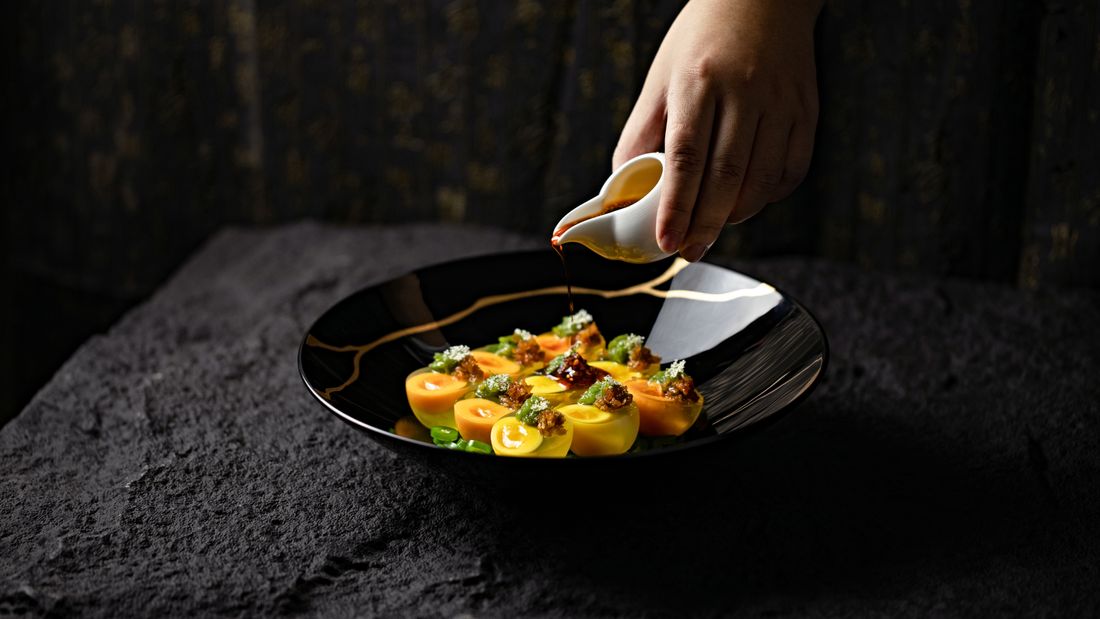
Capturing motion, a pour, a plate landing, a pass, alongside stills
A month of social content needs motion as well as stills, since reels and short clips typically reach further than static photos on most platforms. Building motion into the same session, a pour catching the light, a plate landing on the pass, a hand finishing a garnish, gives the library short clips to cut into reels without adding a second production day.
None of this requires a separately choreographed motion shoot. The moments already happen during normal service and prep: sauce going over a finished dish, steam rising off a plate as it's set down, a knife moving through something with real texture, an expo calling a ticket while a hand reaches for the pass. Filming three to six seconds of each moment, alongside the still frames, keeps the crew's footprint to one visit.
What changes is intent going in. A shot list that only lists dishes produces stills by default, because nobody is watching for the moment before or after the plate is finished. A shot list that also names the motion, the pour, the landing, the pass, gives the crew something specific to catch, and gives the finished library the clips a reel actually needs instead of a folder of photos with nothing to cut together. That shift also means the crew doesn't need a second visit dedicated purely to motion, since the same setup and the same lighting already in place for the stills work for these few extra seconds of footage too.
Why the dishes that stay on the menu are the ones worth shooting
Dishes that stay on the menu for months are the stronger subject for a content library, because a photo built around a special that runs for two weeks becomes unusable, or worse, misleading, once the dish is gone. Building the shot list from the menu's anchor dishes keeps the library accurate for as long as the posts keep circulating.
The honesty problem is easy to miss in the moment. A striking photo of a since-retired special can keep getting reused in the feed long after the kitchen stopped making it, and a customer who orders based on that photo won't get what they saw. That's a service problem wearing a content mistake's clothes, and it's avoidable simply by choosing subjects on purpose rather than shooting whatever happens to be on the pass that day.
This doesn't mean specials never get covered. It means the bulk of a session's shot list, the part meant to carry weeks of posting, belongs to what the kitchen actually intends to keep making. A rotating special can still get its own quick coverage on the day, treated as a shorter-life addition to the library rather than its foundation. Framing the shot list this way also makes the session easier to plan, since the crew and kitchen agree in advance on what's worth the time, rather than deciding dish by dish on the day itself which plates are worth setting up for and which aren't.
Building a small library that gets re-cut instead of reshot
A useful content library isn't a folder of finished posts, it's raw material that can be recut into new posts later: a wide shot becomes a carousel opener, a tight crop becomes a Stories frame, a clip gets trimmed three different ways for three different captions. Planning for re-cutting during the shoot stretches one day of work across a much longer posting runway.
That planning shows up in small, practical decisions on set. Shooting slightly wider than the final crop lets the same frame get cropped square, vertical, or landscape later, instead of locking every image into one aspect ratio the day it's captured. Rolling a few extra seconds before and after each clip gives an editor room to trim, rather than working with footage that starts exactly where the interesting part begins and ends exactly where it stops.
Organization matters just as much as coverage. B-roll kept separate from hero shots, and everything labeled by dish and moment, means whoever manages the account later can find what they need without re-watching a month of footage first. A library that's hard to search gets used once and forgotten, no matter how well it was shot. None of this adds meaningful time to the shoot itself. It's a habit built into how footage gets captured and filed, not a separate task bolted on afterward, and it's the difference between a library that keeps paying off for months and one that quietly stops getting used after the first few posts.
Why vertical framing has to be decided at the shoot, not the edit
Vertical framing can't be recovered in editing the way a crop usually can. A wide, landscape shot loses its subject's context when it's cropped into a 9:16 frame after the fact, cutting off hands, plates, or the far edge of a pour that made the moment worth filming in the first place. Deciding which moments need a true vertical composition before the camera rolls is what keeps those clips usable for reels and Stories later.
The practical fix is filming key moments twice, once in a wide angle that works for stills or a landscape post, and once in a true vertical angle framed for a phone screen from the start. That decision belongs on the shot list, planned in advance, not left to whoever happens to be editing weeks later and discovers the only footage of a pour is framed too wide to crop.
Headroom is the detail that gets missed most. A plate landing on the pass needs space above and below the frame that a landscape angle doesn't naturally leave, and a garnish finished at the last second needs room for a hand to move into frame without the shot feeling cramped. Vertical framing is a composition decision, not a resizing step, and it has to happen on set. Planning for it ahead of time costs almost nothing beyond a second angle on a handful of moments, and it's far cheaper than discovering weeks later that the best footage from the day can't be used where it's needed most.
Sequencing a shoot day so the perishable food goes first
Perishable food has to be shot before anything else on the list, because a plated dish starts losing its sheen, its steam, and its structure within minutes, while the room, the staff, and the static parts of the space can wait. Sequencing the day around what degrades fastest protects the shots that are hardest, or impossible, to redo.
A practical order starts with hero plates and detail shots of food while the kitchen can plate fresh, moves to motion clips of pours, garnishing, and the pass while ingredients are still at their best, and finishes with environmental shots of the room and staff portraits, since neither of those changes minute to minute the way a finished plate does.
Coordinating timing with the kitchen matters more than any camera decision on the day. Dishes should come out plate-ready right as the crew is set up and waiting, not sitting under a heat lamp while equipment gets adjusted. A short conversation before the shoot about when each dish can realistically be fired, and in what order, does more to protect the food shots than any amount of skill behind the camera once the plate has already started to wilt. That conversation takes a few minutes and costs nothing, but it's the single biggest factor in whether the food shots from the day actually look like the dish at its best, rather than a version of it that's already been sitting out too long before anyone pointed a camera at it.
Turning one day's footage into an actual month of posts
A day of shooting turns into a month of posts through a posting plan built before the shoot, not after it. Mapping roughly how many stills and clips a month of near-daily posting actually needs, then building the shot list backward from that number, is what makes the session capture enough variety to fill the calendar without wasting a day shooting more than anyone will ever post.
A useful target usually mixes a handful of standout stills, a larger set of supporting stills, and several short clips built for motion. Planning against that mix in advance avoids the two failure modes on either side of it: a rushed session that leaves the feed short two weeks in, and an over-shot day that fills a hard drive with footage nobody has time to sort through before it's stale.
We treat this the same way we'd plan any studio day meant to carry a client past the day itself: the shot list is built around what the calendar needs, not around what feels good to shoot in the moment. A restaurant that books its content the same deliberate way ends up with a feed that stays fed between visits instead of one that quietly runs dry the week after the crew leaves. The result isn't a bigger production. It's a more deliberate one, and the difference shows up weeks later, in a feed that still has something to post instead of one that quietly runs out of material halfway through the month.
Frequently asked questions
How many social posts can one restaurant shoot actually produce?
A single, well-planned session built around variety, not one hero image, typically produces enough stills and short clips to post from for several weeks. The exact count depends on how many dishes and moments make the shot list and how the day gets sequenced, but the goal of the session is a library, not a handful of polished photos, so the count should be planned before the shoot, not tallied afterward.
Should a restaurant shoot every dish on the menu or just a few?
Dishes that stay on the menu long-term are the better subject, because a photo of something since discontinued becomes unusable, or misleading, once it's gone. Focusing the shot list on those anchor dishes rather than every special keeps the resulting library accurate for as long as the posts keep circulating, and it also means fewer total setups to plan around on the day itself. A rotating special can still get quick coverage on the same day.
Why do restaurant reels need to be filmed vertically instead of just cropped later?
Cropping a landscape shot into a vertical frame after the fact often cuts off the parts that made the moment worth filming: hands, the far edge of a pour, the headroom above a plate landing on the pass. Deciding which moments need a true vertical angle before filming, rather than relying on a crop later, is what keeps those clips usable for reels and Stories.
What order should a restaurant content shoot follow during the day?
Perishable food goes first, since a plated dish loses its sheen and structure within minutes while the room and staff can wait. A practical order shoots hero plates and detail shots first while the kitchen can plate fresh, motion clips of pours and garnishing next, and environmental or staff shots last, once nothing left on the list is at risk of changing before the camera gets to it.
How often does a restaurant actually need a new content shoot?
With a library built for variety and built to be re-cut, one well-planned session can supply weeks of posts before a kitchen needs to host another crew. How often a new session makes sense depends on posting frequency and how much the menu itself changes, but the near-daily cadence social platforms reward doesn't require a near-daily shoot schedule to support it. A common rhythm is a new session every month or two, adjusted to how often the menu changes.
Want reels without stopping to stage a single shot?
We shoot around your real working day and pull the moments that are already interesting, then edit them into reels that stand on their own.
Explore social reels →