Most creative businesses don't have a footage problem. They have a footage-planning problem. A single studio day already contains more usable moments than most people notice while they're inside it: setup, process, a detail worth a close-up, a finished result, a reaction. Almost none of it gets filmed, not because it isn't there, but because nobody decided in advance that it was worth pointing a camera at.
Batching a quarter of reels from one day sounds like it should mean a longer, harder shoot day. In practice it usually means the opposite: a normal working day with a short list of moments worth capturing, filmed quickly and without much disruption to the actual work happening.
This guide covers what "batching a quarter" actually means in practical numbers, how to plan the day around real work instead of staged content, what to shoot on purpose versus what to just catch as it happens, and how to turn one day of footage into weeks of steady posting.
The footage already exists, the plan is what's missing
Ask most artists or small creative businesses what happened in their studio last week and they'll describe a full, specific day: materials arriving, a piece taking shape, a mistake that got fixed, a finished result photographed for a client. Ask if any of it got filmed, and the answer is almost always no.
That gap is the whole opportunity. A working studio day is full of small, real moments that would make a genuinely watchable reel, not because they're staged to look interesting, but because they're actually what happened. The problem isn't a lack of material. It's that nobody decided, before the day started, which parts of it were worth thirty seconds of footage.
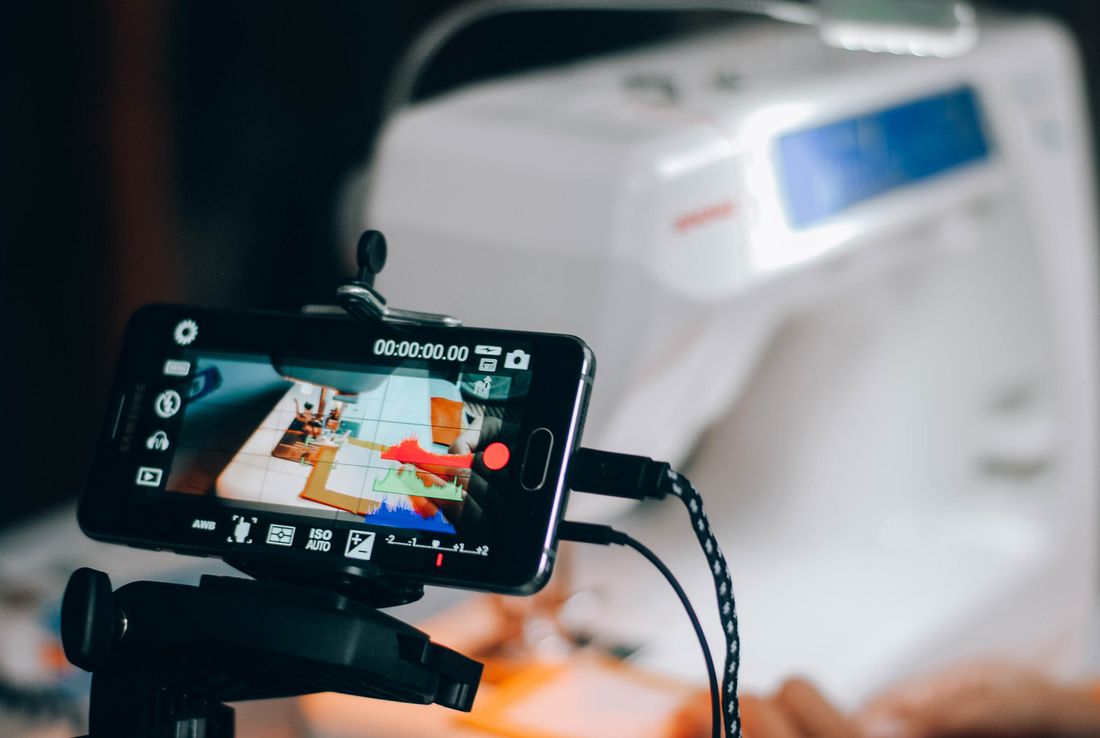
A camera or a phone on a small tripod, running during two or three moments that were already going to happen anyway, captures most of what a batching day needs. The shift isn't doing more work. It's noticing the work that's already being done.
This isn't unique to any one kind of creative business either. A gallery installing a show, a stylist prepping a rack, a photographer editing a delivery, all have the same structure: a day full of small, specific actions that read as genuinely interesting to someone who doesn't do that work every day. The habit of noticing it is the only thing standing between a normal Tuesday and a folder full of usable clips.
What "batching a quarter" actually means
In practical terms, a quarter of reels usually means somewhere between ten and fifteen posts, depending on how often a business is posting. That's a manageable number to plan for in a single day, especially once it's clear that not every reel needs its own dedicated moment.
A single studio day can often produce three or four distinct "scenes," a process sequence, a detail close-up, a before-and-after, a finished-piece reveal, and each of those scenes can be cut into two or three different reels with different pacing, captions, or framing. That's how a day of filming turns into more than a day's worth of posts without repeating the same clip.
The goal isn't to squeeze every possible angle out of the day. It's to walk away with more raw material than immediately gets used, so the editing process has real options instead of forcing one thin clip to become one reel.
Plan the day around real work, not staged content
The reels that perform best, and the ones that are least exhausting to make, are usually the ones built around something that was going to happen regardless of the camera. A studio day that already has a real task on the schedule, mixing a new batch of material, starting a new piece, packing an order, is a better foundation than a day invented specifically to "make content."
Staged content has a specific tell: it often looks slightly too clean, too composed, too aware of being watched. Real work has its own natural texture, imperfect framing, actual concentration, tools that are genuinely in use, and that texture is difficult to fake convincingly even with good production value.
Planning around real work also solves the sustainability problem. A studio day that's already happening for a real reason doesn't cost extra time to justify. It only costs the small addition of a camera running nearby.
What to shoot on purpose vs. what to catch as it happens
A short list of two or three deliberate moments, worth setting up a shot for, changes the day meaningfully: the start of a piece, a specific technique that's visually interesting, the reveal of a finished result. These are worth pausing for ten seconds to frame properly.
Everything else can be opportunistic. A phone on a small tripod running in the background during normal work catches details nobody planned for: a hand reaching for a tool, a moment of genuine focus, a small mistake being corrected. Some of the most useful clips in a batching day come from footage nobody was actively directing.
The balance that works best is a handful of deliberate setups anchoring the day, with a camera left rolling during the in-between moments to catch what wasn't planned. Neither approach alone produces as much usable material as the two combined.
A coverage checklist for one studio day
A wide establishing shot of the space, filmed once at the start of the day, gives every other clip a sense of place and works as a natural opener for several different reels down the line. It takes fifteen seconds and covers a real gap most footage sets are missing.
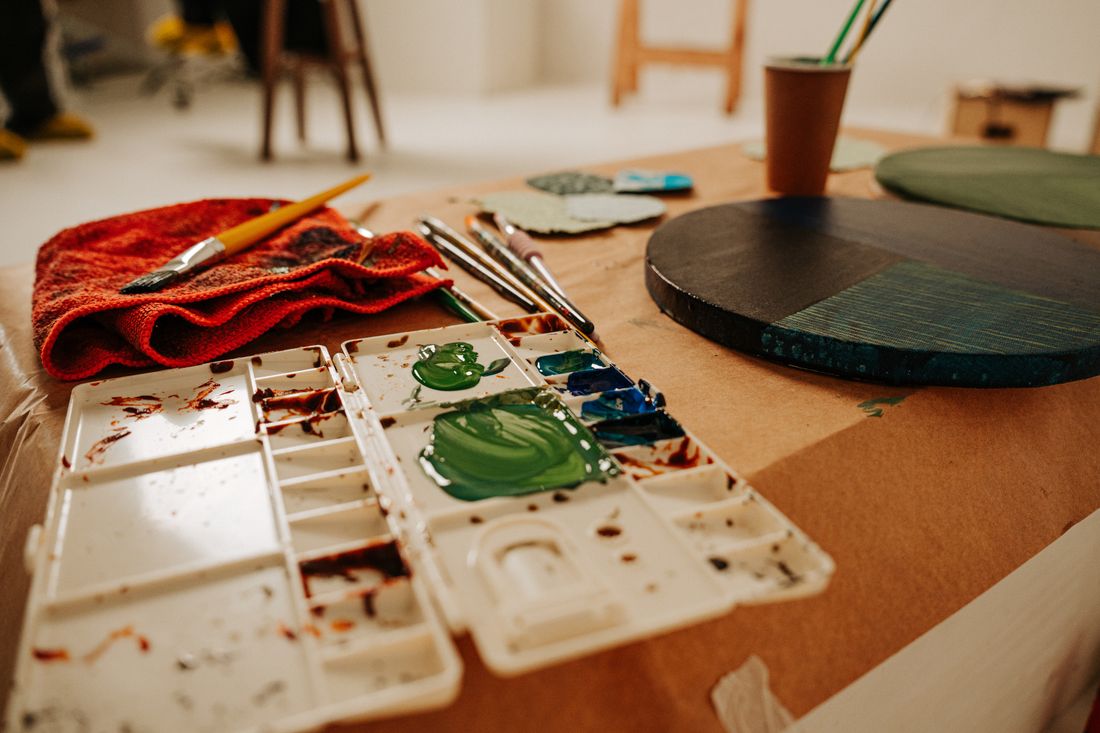
Close, detail-level shots, hands on material, a tool doing its job, texture up close, tend to be the most reusable clips in the whole set, because they can be recut into almost any reel's opening few seconds regardless of the final topic.
At least one vertical clip, filmed specifically for phone framing rather than cropped later from horizontal footage, is worth planning for directly. A crop from a wide shot loses detail that a vertical original keeps, and reels built around close, vertical footage tend to hold attention better.
Natural sound, room tone, tools, materials, is worth capturing even when a voiceover or music will cover most of the final edit. Clean, real audio gives an editor options a silent clip doesn't.
It also helps to catch a few seconds of genuine downtime: a pause to think, a step back to look at progress, a hand resting on a finished piece. These moments rarely feel like "content" while they're happening, which is exactly why they tend to make a reel feel unforced rather than performed once it's cut together.
The mistakes that quietly shrink the usable footage
The most common mistake isn't filming too little, it's filming too much of the same angle. Ten clips of the same static wide shot from the same tripod position produce less usable variety than four clips from three different distances and angles.
Forgetting to check horizontal framing before the day starts is a close second. Footage shot in the wrong orientation for its intended use means a crop, a loss of resolution, or a reel that simply doesn't get made from otherwise good material.
Filming only the finished result, and skipping the process entirely, is the mistake that costs the most later. A single clip of a completed piece can only become one reel. The process leading up to it can become several.
The last common mistake is treating the camera as a burden the moment something goes wrong. A dropped tool, a piece that doesn't come out right the first time, a genuinely frustrating ten minutes, these moments get switched off out of instinct, but they're often the most relatable footage in the whole batch. Nobody expects a studio day to be flawless, and footage that admits that tends to build more trust than a highlight reel that pretends it was.
Turning one day into weeks of posting
Once a day's footage is sorted into scenes, rather than one giant folder of clips, building a posting schedule becomes a much smaller task. A process sequence might become two reels, one at normal pace and one sped up. A detail shot might anchor a slower, more atmospheric post. A finished-piece reveal can close out the batch.
Spreading a single day's footage across several weeks, rather than posting it all at once, is what actually makes batching worth the effort. The point isn't to compress a quarter of content into one burst, it's to remove the pressure of finding something new to film every single week.
A simple running list, what's been posted, what's still unused, what needs a caption, keeps the batch from getting lost in a camera roll. It doesn't need to be complicated. It just needs to exist somewhere other than memory.
The equipment that actually matters
A phone on a small, stable tripod covers most of what a batching day needs. The camera matters less than the stability, since handheld footage from a full day of moving around a studio tends to feel shakier and harder to cut cleanly than a fixed or lightly-moved shot from a tripod.
A basic lav or shotgun mic is worth having if natural sound will play a real role in the final cut, tool sounds, material sounds, ambient studio noise. Built-in phone audio is usually fine for a voiceover recorded separately, but it struggles to capture clean detail sound from more than a couple feet away.
Beyond that, extra gear tends to add setup time without adding much to the final footage. A batching day is better served by simple, reliable equipment that can move around the space quickly than by a full production kit that turns a working day into a shoot day.
When one day isn't enough
Some quarters genuinely need more than one day's footage, especially for a business whose real work doesn't happen in a single visible location, or whose most interesting moments are spread across a longer project. That's a legitimate outcome, not a failure of the plan.
Two shorter sessions spaced a few weeks apart often produce a stronger, more varied batch than one long day anyway, since they naturally capture the work at different stages rather than one single moment in time.
The real test isn't whether one day was enough. It's whether the footage that came out of it reflects real work rather than a performance of it. A thinner batch of honest footage beats a fuller batch that had to be manufactured to hit a number.
Frequently asked questions
How many reels can realistically come out of one studio day?
Somewhere around ten to fifteen is realistic for a full working day that already has real tasks happening, without turning the day into a shoot. The exact number depends more on how many distinct moments the day naturally offers than on how long the camera runs.
Do I need a shot list, or can I just film as I go?
A short list of the moments worth catching helps more than a full script. The goal is a mental checklist of five or six real moments in the day, not a shot-by-shot plan that turns the day into a production.
What if the studio day doesn't produce enough usable footage?
That's normal, and it's better to post fewer strong reels than pad the calendar with clips that don't say anything. A day that produces eight genuinely useful reels is a better outcome than one that produces fifteen thin ones.
Should reels from the same day all post in the same week?
No, spreading them out is usually the better call. Posting a quarter's worth of reels within days of each other wastes the batch; the point of batching is filming once and posting steadily, not filming once and posting all at once.
Does batching make content feel less authentic?
Not if the footage comes from real work rather than staged moments. A reel filmed during an actual working session looks the same whether it's posted the next day or six weeks later, because nothing about it was performed for the camera in the first place.
Let's plan a studio day that shoots itself.
We find the moments in a real working day that are actually worth filming, and cut them into reels that hold up on their own.
Explore social reels →