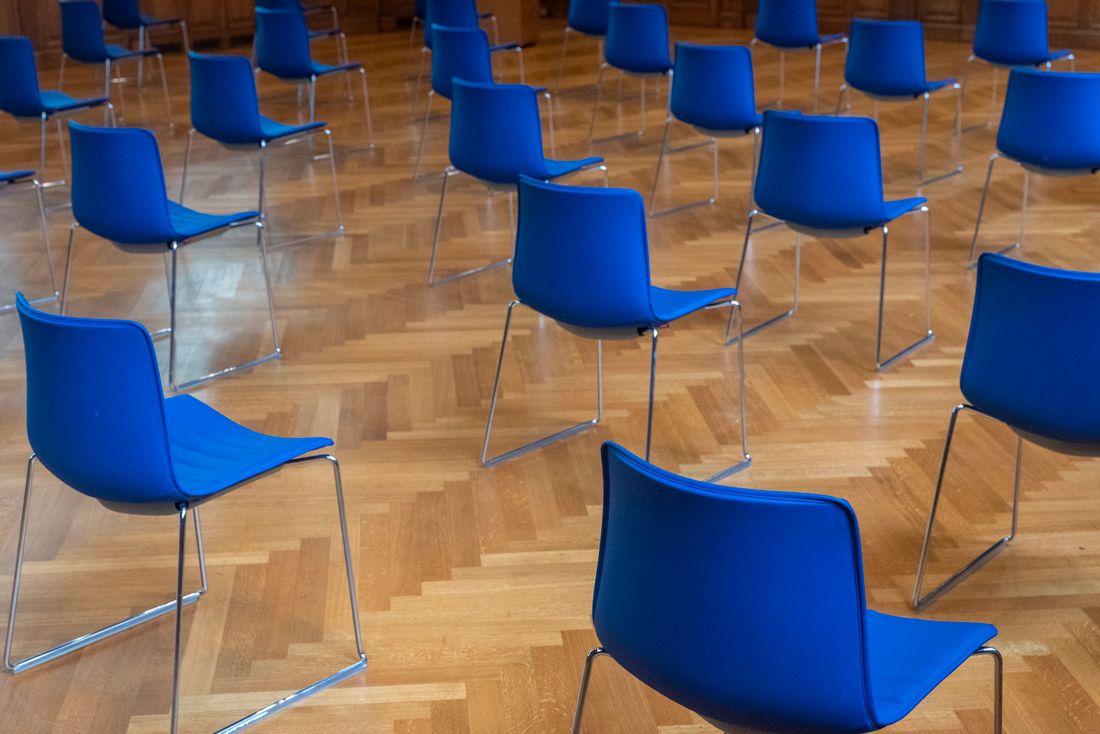
A gallery built for people to walk through the space at their own pace suddenly needs a fixed sightline, a lineup order, and a front row, none of which a still exhibition ever asks for. Covering the moment a runway show moves into a gallery means rethinking the whole coverage plan around a walkway that did not exist the day before, a seated audience that needs its view protected, and a moving presentation happening in a room built for static work.
A runway inside a gallery changes the coverage plan around one fact: a room built for wandering now needs one fixed direction of movement, a seated audience with a protected sightline, and a photographer positioned to capture that movement without becoming part of the walkway. The gear and instincts of a still opening do not transfer directly; the blocking has to be planned before the models do a single lap.
What Actually Changes When a Runway Moves Into a Gallery?
A runway inside a gallery changes the coverage plan mainly because the space stops working the way it usually does: instead of visitors wandering freely between works, everyone in the room is suddenly oriented toward one fixed line of movement. That single shift reorganizes almost everything about how the shoot gets planned.
A standard gallery opening asks a photographer to move through a crowd that itself is moving in many directions at once, catching conversations, close looks at work, and candid interaction wherever it happens. A runway show flips that. The audience sits still, facing one direction, and the subject moves along a predetermined path at a set pace. That is a fundamentally different shooting problem, closer to event stage work than to a typical gallery opening, even though it is happening inside the exact same walls that hosted a quiet opening the week before, with the same lighting rig and the same front door.
The artwork on the walls does not disappear, and it still matters to the coverage, but it moves from being the main subject to being the backdrop a moving presentation happens in front of. Planning the shot list has to account for both: the walkway and lineup as the primary story, the gallery context as the setting that makes this particular runway show worth covering in the first place, distinct from any runway happening anywhere else that same week.
What Does Blocking the Walkway Actually Involve?
Blocking the walkway means deciding, before the show starts, exactly where models will walk, where the audience will sit or stand, and where the photographer can be positioned without stepping into either. In a gallery not built for this, that path usually has to be improvised out of the room's existing layout rather than assumed.
A dedicated runway venue already has this solved: a raised platform, a marked path, seating built around a known sightline. A gallery has none of that by default. The walkway is usually just the clearest open lane between existing walls, sometimes narrower than a purpose-built runway, sometimes running past artwork that cannot be moved or blocked from view. Walking that lane in advance, before any chairs go down, is the only reliable way to know where the pinch points are, and where a doorway or column will force a turn nobody planned for.
Photographer positioning follows directly from the walkway decision. A fixed position at the end of the walkway captures the classic straight-on approach shot. A second position along the side captures profile and audience reaction. Neither position works if it was chosen after the chairs were already set, because by then the walkway is fixed and the photographer is negotiating around furniture instead of planning around it, which is exactly backward from how this should go for a room this unforgiving of last-minute changes.
Why Do Sightlines Matter More for a Seated Audience?
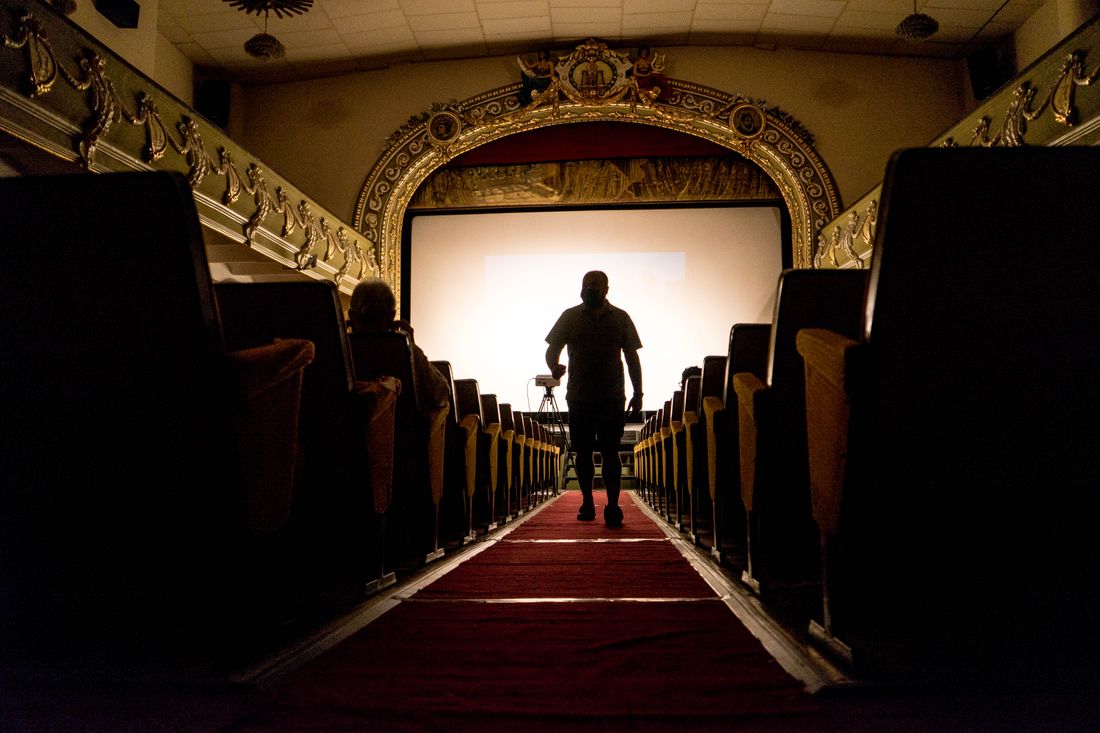
A seated audience only gets one view of the show, from wherever they happen to be sitting, for the entire run of the presentation. Protecting that sightline matters more here than at a standard opening, where a blocked view just means a visitor moves a few steps to see something else.
At a still exhibition, a photographer stepping in front of a piece for a few seconds is a minor, forgivable interruption; the work is not going anywhere and the visitor can look again in a minute. At a runway show, a photographer stepping into a guest's sightline during the one pass a specific look gets means that guest never sees it at all. There is no second lap unless the show is deliberately structured with one, and most are not, which raises the stakes on every single position decision made in advance.
This changes where a photographer can stand and for how long. Positions along the side of the walkway, at the end, or on a small riser when the room allows it, tend to protect more of the seated sightlines than moving through the center of the room during the show itself. Any position that crosses in front of seated guests, even briefly, needs to be planned around the pacing of the lineup, not improvised in the moment once the show has already started moving down the walkway toward the seated crowd.
What Does the Front Row and Lineup Order Add to the Shot List?
A front row and a set lineup order are both things a still exhibition never has, and both become part of the shot list once a runway moves into a gallery. The front row usually holds people worth photographing on their own; the lineup order tells the photographer what is coming next and when to be ready for it.
The front row at a runway show is rarely random. It often seats people the organizers specifically want documented reacting to the presentation, separate from the walkway shots themselves. Knowing who is expected in that row, and getting a position that can capture both the walkway and a slice of the front row's reaction, adds a layer to the shot list that a standard gallery opening does not require, because a standard opening has no equivalent seat of honor to track ahead of the actual evening.
The lineup order matters for pure logistics. Knowing which look comes third, or which segment includes a planned pause, means the photographer is not guessing when to be ready for the moment that actually matters. A still opening rewards patience and roaming. A runway rewards knowing the order in advance and having already decided which two or three moments in that order are worth a fixed, prepared position rather than a reactive one caught only if luck allows it, in a room that offers no second chance to catch what was missed.
What Changes About Shooting a Moving Presentation in a Static-Work Room?
A room built to hold still work rewards a photographer for slowing down and studying detail. A moving presentation asks for the opposite: consistent framing, a faster rhythm, and a plan for motion that a gallery's usual lighting and layout were never designed around.
Gallery lighting is typically built to flatter static work on the walls, which is not the same lighting a moving subject needs to read clearly and consistently frame to frame. The walkway may pass through several different lighting conditions across one room, brighter near a window, dimmer near the back, and each transition is a spot where exposure and framing can drift if it was not walked and checked in advance, on the actual day, at the actual hour the show will run.
The pacing shift matters just as much as the lighting. A still opening lets a photographer wait for a natural, unhurried moment: a genuine laugh, a considered look at a piece. A runway does not wait. Each look has a matter of seconds in the ideal position before it moves past, and there usually is not a second attempt. Coverage built around a static room's slower rhythm will miss most of what a moving lineup actually offers, which is why the shot list for this kind of event has to assume speed and repetition from the start, not the patience a quiet opening rewards.
What Stays the Same as a Standard Gallery Opening?
Not everything about the coverage plan changes just because a runway is involved. The gallery is still the setting, the art on the walls still matters to how the event is documented, and the arrival, mingling, and wind-down portions of the evening still function much like a standard opening.
Before and after the runway segment itself, the event usually behaves like any other gallery evening: guests arriving, conversation, a drink in hand, people looking at the work on the walls while they wait for the show to start or after it ends. That portion of the coverage does not need the fixed blocking a runway segment requires, and treating the whole evening as one continuous runway shoot would miss the parts that still look and feel like a normal opening, wandering crowd and all.
The gallery's own identity should still come through in the coverage, not just the runway. A shot that includes a recognizable piece of art in the background, or the room's own architecture framing the walkway, ties the event back to the fact that this happened inside a gallery specifically, not a generic event space that happened to have white walls. That context is often what makes the coverage useful afterward, distinguishing it clearly from any other runway show shot anywhere else that same season, in a room nobody else could have booked for the exact same evening.
Why Does a Pre-Event Walkthrough Matter More for This Kind of Coverage?
A pre-event walkthrough matters more for a gallery runway than for most other event types because so much of the plan, the walkway path, the sightline protection, the photographer positions, depends on decisions that cannot be made once chairs are down and guests are arriving at the door.
Walking the empty room with the actual chair layout, or a close approximation of it, in place is the only way to confirm the walkway is wide enough, the sightlines from the back row are genuinely clear, and the planned photographer positions will not end up blocking a guest's view once every seat is filled. A walkthrough done without chairs in place can miss a pinch point that only becomes obvious once the room is at capacity and every seat is taken.
This walkthrough is also the moment to confirm lighting conditions along the actual walkway path, not just the room's general lighting. A spot that looks fine in an empty, evenly lit room can turn into a dim patch once the show's specific lighting cues are in place. Catching that during a walkthrough, before the show starts, is far cheaper than discovering it mid-show, when the only option left is adjusting on the fly during a lineup that will not wait for anyone to catch up, in front of a room full of seated guests who came expecting a finished show.
How Should This Coverage Plan Be Briefed Before the Event?
Briefing this kind of coverage in advance means naming the walkway, the lineup order, the sightline priorities, and the front row's significance before the event, not discovering them in the room. A gallery runway has more moving logistical parts than a standard opening, and most of them are knowable ahead of time if someone asks.
A useful brief for this kind of event covers a short, specific list: where the walkway will run and how wide it is, roughly how many looks are in the lineup and whether any pause or highlight moment is planned, who is expected to sit in the front row, and whether the room's lighting will change at any point during the show. None of this requires guesswork once the organizers are asked directly, and most organizers welcome the specificity because it means fewer surprises for everyone on the actual day.
The plan built from that brief should include at least two fixed photographer positions, one covering the walkway's straight approach and one covering the side profile and audience reaction, plus a clear understanding of when movement between positions is safe and when it would cross a protected sightline. Treating this as its own distinct plan, rather than a variation on a standard opening's shot list, is what keeps the coverage from missing the parts that make a gallery runway genuinely different from anything else on the calendar.
Frequently asked questions
Is covering a runway show inside a gallery different from a standard fashion show venue?
Yes, mainly because the gallery was not built for it. A dedicated runway venue already has a raised platform, a marked walkway, and seating built around a known sightline. A gallery usually has none of that by default, so the walkway, seating, and photographer positions all have to be planned into the existing room, before the event, rather than assumed from a standard layout already worked out somewhere else.
Does the artwork on the gallery walls still matter during a runway show?
Yes, it shifts from being the main subject to being the setting the presentation happens in front of. Coverage that includes a recognizable piece of art or the room's own architecture in frame ties the event back to the fact that it happened inside a gallery specifically, which is usually part of what makes the coverage worth having afterward, rather than a generic event space.
Why does the front row matter for a gallery runway shoot?
The front row at a runway show is rarely random; it often seats people organizers specifically want documented reacting to the presentation. Knowing who is expected there, and getting a position that can capture both the walkway and a slice of front-row reaction, adds a layer to the shot list a standard gallery opening does not require, since there is no equivalent seat of honor to track.
Why is a pre-event walkthrough more important for a runway inside a gallery?
So much of the plan, the walkway path, sightline protection, and photographer positions, depends on decisions that cannot be made once chairs are down and guests are arriving. Walking the room with the actual chair layout in place, before doors open, is the only reliable way to confirm sightlines are genuinely clear and lighting along the walkway holds up once the show's cues are running.
Does the coverage plan change for the parts of the evening before and after the runway segment?
Not as much. Arrival, mingling, and wind-down usually still function like a standard gallery opening: guests looking at work on the walls, conversation, a drink in hand, people moving through the room at their own pace. The fixed blocking a runway segment requires mainly applies to the walkway itself; treating the whole evening as one continuous runway shoot would miss the parts that still look and feel like a normal opening night.
Got overlapping openings already on the calendar?
We work out the coverage plan well before the night gets close, whether that's two shooters, a tight schedule, or simply booking early enough to avoid the conflict entirely.
Explore event coverage →