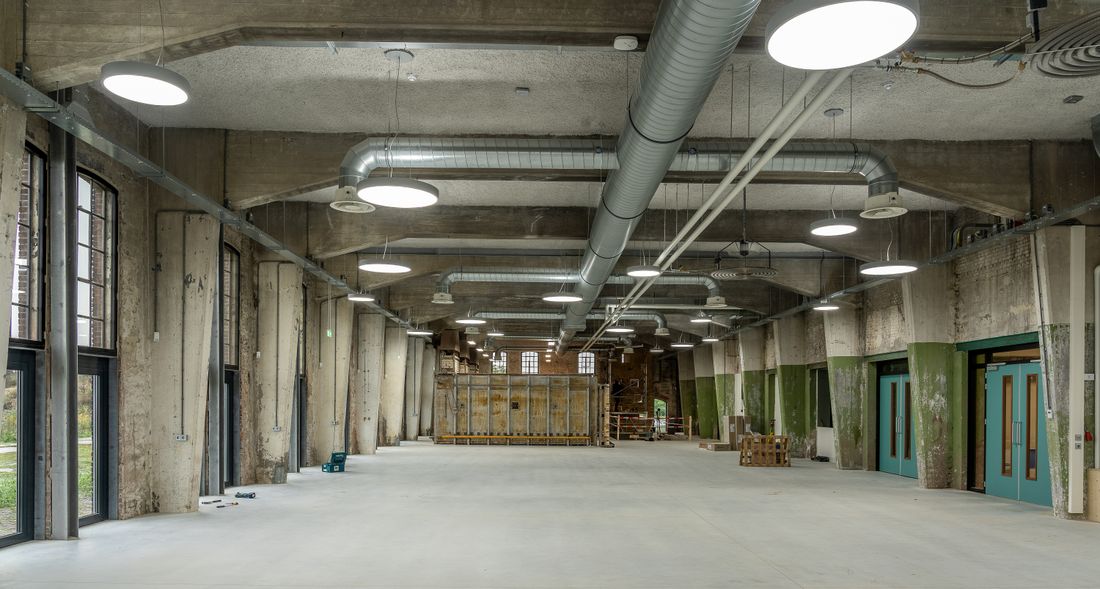
A real gallery is a machine built for looking at art: neutral walls, even light, sightlines that lead somewhere, room to step back. A pop-up space agreed to host a show, which is a different thing entirely. The storefront still has a cash-wrap outline on the floor. The warehouse has one outlet per wall. The apartment has a hallway you'll have to shoot down. None of that is a flaw in the show. It's just the room you actually have.
Covering a pop-up exhibition starts with scouting the room before install, not after: ceiling height and what's bolted to it, which light sources will fight each other, how window light shifts across the evening, and where a person can stand for a wide frame. Everything downstream follows from what that walkthrough finds.
Why is a pop-up space such a different photography problem than a gallery?
A real gallery is built to be looked at: neutral walls, even light, sightlines, and room to step back. A pop-up space, a storefront, a warehouse, an apartment, wasn't built for any of that. It's a room that agreed to host a show, and everything the gallery takes for granted has to be found or worked around.
None of that makes the room wrong. A storefront window throws hard daylight a white cube never has to think about. A warehouse ceiling might be twenty feet up with nothing to bounce light off. An apartment has doorways instead of sightlines and a kitchen the show has to work around instead of pretend away. Each of these is a real constraint, not a problem to apologize for.
What changes is the amount of pre-work. In a gallery, the room is already solved, so the photography starts at the art. In a pop-up, the room itself is the first subject: what it does to light, how people move through it, where a wide shot is even possible. Skipping that step doesn't make it disappear, it just means discovering it during install, or worse, during the shoot itself.
That's the honest frame for this whole job: not “how do I make this room look like a gallery,” but “what does this specific room need in order for the show to read.” The difference sounds small. In practice, it decides where the evening's hours actually go.
What should get checked when scouting a pop-up space before install?
A pre-install walkthrough should check four things: ceiling height and whatever is bolted to it, the mix of light sources already in the room, how window light changes across the hours the show will run, and where a person can physically stand to get a wide frame. Each one shapes a different part of the coverage plan.
Ceiling height decides how the work gets hung and how much room there is to bounce or clear a light. What's already bolted up there, track lighting, a sprinkler head, ductwork, a drop ceiling grid, either helps or has to be worked around, and it's much easier to plan for before the artist's crew starts hanging pieces around it.
Light sources rarely match in these rooms. Fluorescent tubes, a string of bare bulbs, whatever daylight comes through the storefront glass, and any lighting the organizer brings in all sit at different color temperatures, and they'll all be on at once by the time doors open.
Window light is its own variable if the room has any: a storefront that's flattering at 6pm can go orange, then dark, by 8. And the frame check matters just as much as the light check. If there's no point in the room to physically stand back fifteen feet, that's worth knowing before the night the widest shot on the list turns out to be impossible.
Why does the ceiling matter this much in a room that wasn't built for art?
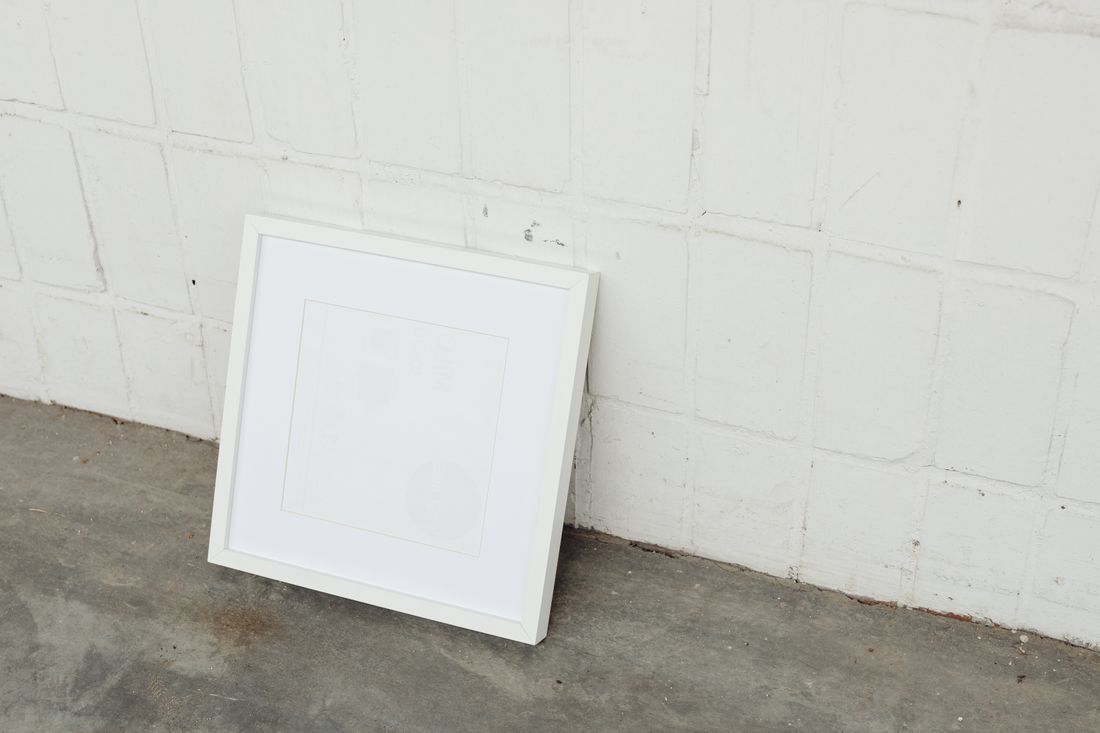
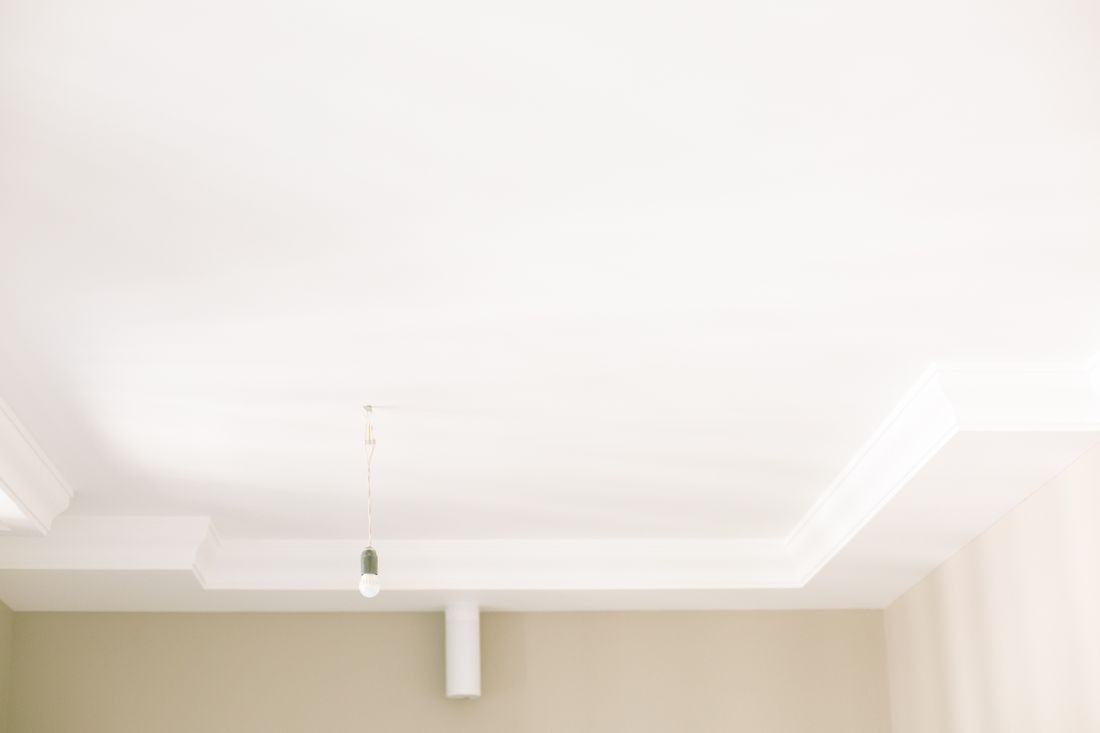
The ceiling in a non-gallery space usually decides more than any other single feature: how high work can hang, how much clearance a light stand has, and whether anything already up there, sprinklers, ductwork, a drop grid, is going to end up in frame. A gallery hides this problem before a photographer ever shows up. A pop-up doesn't.
Low ceilings compress everything. A ten-foot ceiling in a converted retail space leaves very little room to angle a light without catching a hot spot, and even less room to get a clean wide shot without the ceiling itself becoming part of the composition. That's worth knowing before deciding how far back a wide frame can actually pull.
What's mounted up there matters just as much as the height. A grid of track lighting left over from the space's retail life might be reusable, or it might be the wrong color temperature entirely and need to be turned off in favor of portable light. Exposed pipes, ductwork, or a sprinkler head sitting directly above a hanging spot isn't a dealbreaker, but it is something to frame around deliberately rather than discover in a photo after the fact. A drop ceiling adds a wrinkle too, since a few tiles often come out to hang from the grid above and need to go back before the space reverts.
None of this is unusual for these spaces. It's just information that's far more useful gathered on a scouting visit than guessed at with the artist's crew already on ladders.
How do mixed light sources actually complicate a pop-up shoot?
Mixed light sources complicate a pop-up shoot because they rarely agree on color, and a compromised space usually has several running at once: fluorescent overheads left from the building's last life, a string of warm bare bulbs someone added for atmosphere, daylight through a storefront window, and whatever the organizer brings in. Each pulls the room's white balance somewhere else.
A gallery avoids this by standardizing on one light source before anyone walks in. A pop-up inherits whatever was already installed, plus whatever gets added for the event, and those two layers were never designed to sit together. Warm bulbs next to cool fluorescents next to blue evening light through a window can all land in the same frame.
There isn't a single fix that solves this cleanly, since turning off one source often leaves the room too dark, and correcting for one in editing can throw off the others. The more useful approach is deciding in advance which light is doing the real work for a given shot, the work itself, the crowd, the room, and letting the others read as ambient rather than fighting to neutralize all of them at once. A custom white balance reading taken near each light zone, the window, the fluorescents, the bulbs, gives a usable starting point instead of one setting that's wrong everywhere at once.
This is exactly the kind of detail a scouting visit surfaces early, when there's still time to plan around it instead of noticing it mid-shoot, under pressure, with a room full of people.
Why photograph the space empty, before doors open?
The empty room is worth shooting before doors open because it will never be this clean again. Once the show is installed and guests arrive, the walls, the floor, the sightlines are all doing double duty as a backdrop for people, bags, and drinks. That clean look at the room happens once, in the narrow window before the crowd arrives.
This isn't a nostalgic instinct, it's a practical one. Accurate documentation of how a piece hangs in a specific corner, how the window light falls across a wall at a given hour, or how the room reads as a whole depends on a frame without forty people standing in it. That frame exists for maybe twenty minutes on the day of the show, and never again after that.
It also gives the organizer something they'll likely need later and won't think to ask for in advance: a clean record of how the space was actually used. A storefront, warehouse, or apartment that hosted a show for one weekend has no permanent record of that use unless someone made one. The empty-room photos are that record.
Treating this as a scheduled part of the day, not an afterthought squeezed in before guests arrive, is what keeps it from getting skipped when install runs long, which it usually does. Ten minutes blocked on the schedule, labeled and protected the way any other shot is, is usually enough to get frames a busier evening won't allow.
Why should the install itself be part of the coverage?
The install is worth documenting because a pop-up show is temporary in a way a gallery show usually isn't: the room reverts. The storefront goes back to retail, the warehouse goes back to storage, the apartment goes back to being an apartment. Once that happens, the only proof the show existed is whatever got photographed while it was up.
A gallery show leaves behind a space that still looks like a gallery afterward, so there's less urgency around capturing the process. A pop-up doesn't have that luxury. The install, hanging the work, running the lighting, arranging the room, is part of the story precisely because none of it will still be visible a week later.
This doesn't need to be an elaborate behind-the-scenes shoot. A handful of frames of the crew hanging work, the room mid-transformation, or a piece being leveled against a raw wall does the job. A few frames of the raw room and the finished one, shot from roughly the same spot, make that transformation legible to anyone who wasn't there to see it happen. What matters is capturing the fact that a working space became a show, briefly, on purpose, which is a genuinely different image than the finished result on its own.
For an organizer putting together a recap or a portfolio later, install photos are often what makes the pop-up read as an event rather than just a few pictures of art on a wall. They're also the only visual evidence that the room did anything unusual at all.
Why shoot handheld at higher ISO instead of bringing in a lighting kit?
Handheld and higher ISO is usually the right call in a pop-up space because these rooms rarely have power to spare. A storefront or apartment circuit already running string lights, a speaker, and whatever else the organizer brought in doesn't have much headroom left for a strobe kit, and a tripped breaker mid-opening is worse than a noisier photo.
A gallery show can often justify dragging in stands, modifiers, and a dedicated circuit because the room is fixed and the shoot is planned around it. A pop-up's power situation is usually unknown until someone's standing in it with an extension cord, which is exactly why the scouting visit matters: it's the moment to find out what the room can actually support.
Working handheld also matches the pace these events actually move at. A pop-up crowd fills a small room fast, and a photographer repositioning a light stand between shots loses the moment while doing it. Staying mobile, adjusting ISO instead of adding hardware, keeps the coverage moving at the same speed as the room.
The tradeoff is real: a higher ISO file needs more care in post, and low, mixed light punishes sloppy exposure. But in a space that wasn't built to support a lighting rig, that tradeoff is usually the smaller one, and it's one the room decides for you well before anyone picks up a camera.
Can one evening cover both accurate documentation and atmospheric event coverage?
Not fully, and it's worth naming that honestly before the night starts. In a compromised room, accurate artwork documentation and atmospheric event coverage are two different shoots with different requirements, clean frames without people versus a room full of them, and trying to get both from one photographer in one evening usually costs the documentation shot first.
Documentation needs the room close to empty, consistent light, and time to check each frame against the actual work, the kind of methodical pass our guide to exhibition documentation from start to finish walks through in more detail. Atmosphere needs the opposite: people in the room, motion, the crowd doing what a crowd does at an opening. A pop-up's mixed light and tight layout make both of these harder on their own, and doing them back to back in the same few hours means one gets the leftover attention.
In practice, documentation usually loses, since it depends on the empty-room window before doors open, and that window is short and easy to compress when install runs late. The atmospheric shots happen no matter what, because the crowd shows up on schedule regardless of whether the room, or the photographer, was ready for it.
Naming this tradeoff with the organizer ahead of time, and deciding which one matters more for this specific show, is usually more useful than trying to quietly split the difference and getting a partial version of each. A short conversation before the night starts, documentation first or atmosphere first, saves the guesswork later of deciding on the spot which shot to sacrifice.
Frequently asked questions
What makes photographing a pop-up exhibition different from a regular gallery opening?
A gallery is built for the job: neutral walls, even light, sightlines, room to step back. A pop-up space, a storefront, warehouse, or apartment, wasn't built for any of that, so those conditions have to be found or worked around instead of assumed. The room itself becomes part of the planning, not just a container the show happens to sit inside, which changes how much time scouting needs before the artist ever arrives to install.
What should get checked when scouting a pop-up space before the show goes in?
Four things: ceiling height and whatever is bolted to it, the mix of light sources already in the room, how window light changes across the hours the show will run, and where a person can physically stand to get a wide frame. Checking these before install means planning around them instead of discovering them mid-shoot, with the artist's crew already on ladders and no time left to adjust the plan.
Why photograph the room empty before the show opens?
Because it will never be that clean again. Once guests arrive, the walls, floor, and sightlines are all doing double duty as a backdrop for people, bags, and drinks. The narrow window before doors open is the only chance to get an accurate, uncrowded record of how the space and the work actually look together, and it usually lasts no more than twenty minutes on the day of the show.
Why shoot handheld instead of bringing a full lighting kit?
Because a pop-up space rarely has power to spare. A circuit already running string lights, a speaker, and event equipment often can't support a strobe kit without tripping, and staying mobile matches the pace a small, crowded room actually moves at. The tradeoff is more care needed in post to handle a higher ISO file, which is usually the smaller cost compared to a dead circuit mid-opening.
Can documentation photos and event atmosphere photos both happen in one evening?
Not fully. Documentation needs a near-empty room, consistent light, and time to check frames carefully; atmosphere needs a full room in motion. In a compromised space, trying to get both from one shoot in one evening usually costs the documentation shot, since it depends on a short empty-room window that's easy to compress when install runs long. Naming which one matters more, ahead of time, avoids losing both.
Two openings on the same night doesn't have to mean a scramble.
We plan around clustered opening nights ahead of time, a split schedule, a second shooter, or booking early enough that the calendar stops being the risk.
Explore event coverage →