When work is going onto a creator's own feed, the job is not to make them look impressive. It is to protect the relationship they already have with the people watching, because that relationship is the asset the follower count actually measures.
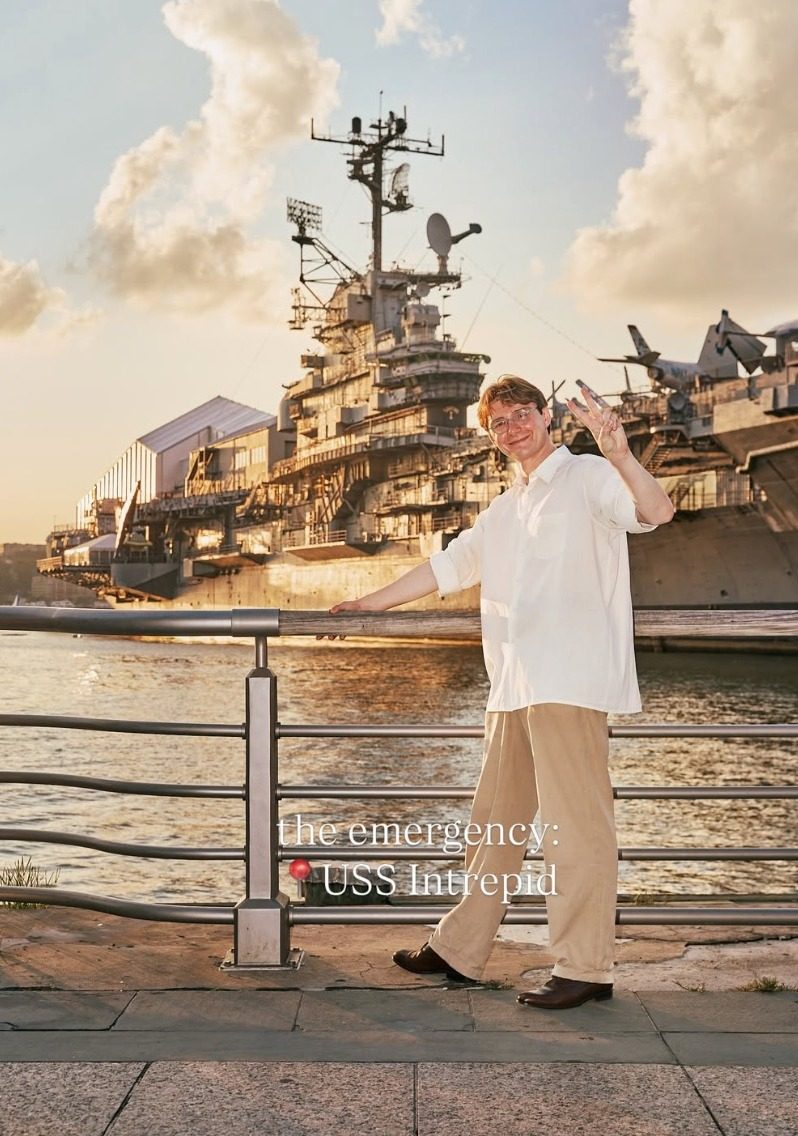
Ian's account is built on showing people a New York they can actually step into, so the locations chose themselves. Times Square. The Intrepid at sunset. The brief seemed obvious from there: put him in front of the places his audience associates with him, shoot it properly, and hand over a set worthy of a six figure milestone.
The Frames Were Clean and Nobody in Them Was Ian
Two setups in, the problem was already visible. Technically the work was correct. Sharp, well exposed, background handled, subject flattered. What could not be found anywhere in the take was the thing that got him to 100,000 people in the first place. Ian's appeal is speed and warmth and a willingness to look a little silly. Composed in front of a monument, he read as a man in an advertisement for himself.
That distinction matters more for a creator than for almost any other kind of client. An audience of 100,000 is not evaluating a photograph. It is checking, without thinking about it, whether the person in the picture is the same person it has been listening to. When the answer comes back no, the post gets skipped, and the skip has nothing to do with image quality.
It also has nothing to do with the following being large. If anything, the bigger the audience, the more precisely people can tell.
The Fix Was Not a Different Location
This is the part worth recording, because the instinct is to blame the setting and go somewhere else.
The setting was right. Times Square is where his audience expects to find him. What was wrong was treating a landmark as a backdrop for a portrait instead of as the setup for a joke, which is what that account has always done with the same places. So nothing moved. Everything else changed.
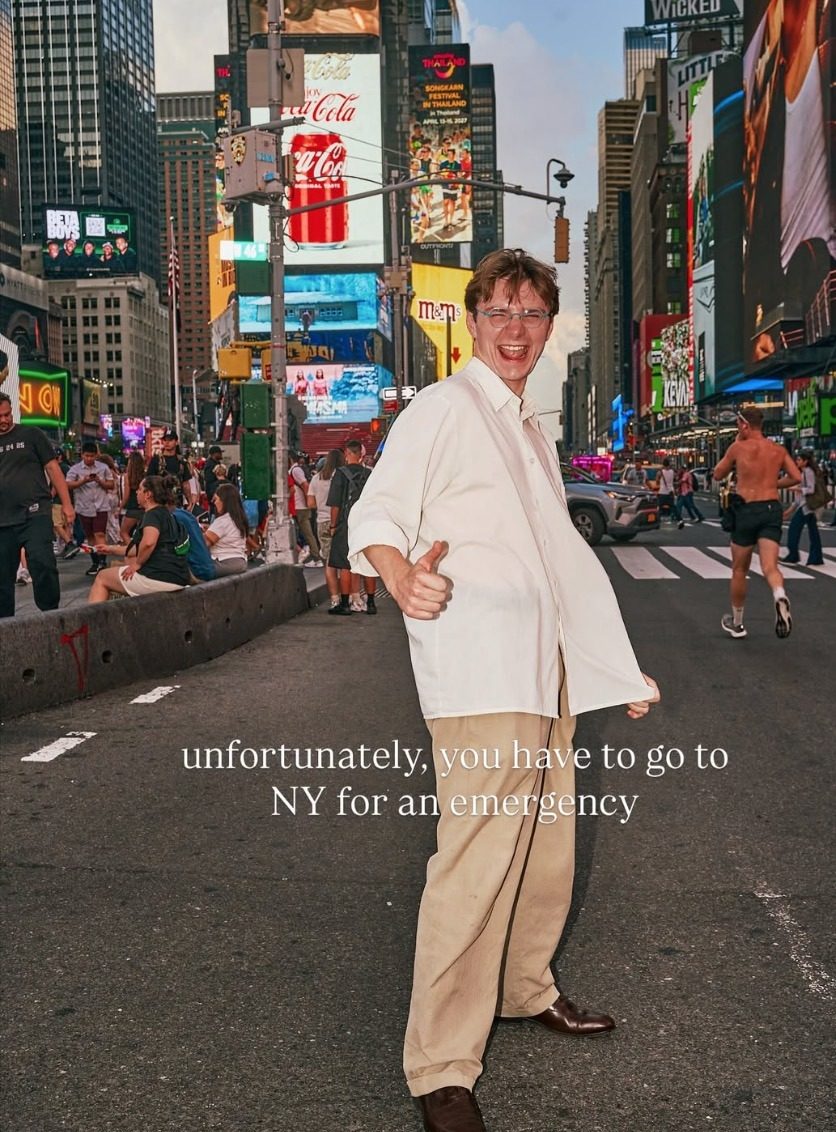
Working distance came down. A long lens across a plaza produces the language of surveillance and press; standing close enough to hold a conversation produces the language of a friend with a phone. Poses came out, and what replaced them was the beat after the direction, the moment when the face stops arranging itself. Ian went from standing still to doing a bit, thumbs up in a crosswalk mid-stride, a peace sign against the ship at sunset. He talked and moved continuously, and the camera followed him rather than the other way around.
Both of us could feel it land. There is a specific sound a shoot makes when it starts working, and it is two people saying "that one" at the same time without checking.
Leaving Room for the Caption
The set went out as a carousel with Ian's own lines typed over the images, one frame setting up a joke and the next one paying it off.
That detail is easy to skip past and it is really the whole point. Images going onto a creator's feed are not the finished thing. They are one half of a post, and the other half is the creator's voice. A heavily produced portrait fills the frame so completely that there is nowhere for a caption to sit, and the picture ends up competing with the person who is supposed to be talking.
What This Says About Creator Work Generally
The photos went out and sat on his feed like they had always been part of it, which is the only real test.
The lesson is not that produced photography is finished. Ian will still need controlled, polished images for the places that ask him to look established, and so does everyone else. The lesson is narrower and more useful. When work is going onto a creator's own feed, the job is not to make them look impressive. The job is to protect the relationship they already have with the people watching. That relationship is the asset. It is what the 100,000 number actually measures. A shoot that raises the production ceiling and quietly breaks the connection has traded the valuable thing for the impressive one.
There is a wider shift underneath this that keeps surfacing in creator sessions. Flawless images used to be scarce, expensive, and therefore meaningful. They are now available to anyone with a phone and a few seconds of patience, and audiences have absorbed that. As perfection gets cheap, the persuasive signal moves toward evidence that a real person was genuinely present. Slightly in motion. Slightly unresolved. Unmistakably themselves.
Worth stating plainly, because the idea gets abused: none of this argues for sloppy work. Ian had to look good, and he does. Exposure, focus, and flattery are not negotiable, and an unflattering picture does not become honest by being unpolished. The craft simply relocates. Instead of making an image look expensive, the work goes into making a very considered image look like nobody considered it at all. That is a harder brief, not an easier one.
Congratulations to Ian on 100k. The best frames from that day are the ones that look least like a shoot happened.
Photos your audience will believe.
We shoot creator and founder sessions that produce both versions in one day: the controlled set for the places that ask you to look established, and the loose set for the feed. Tell us where the pictures are going.
Start a conversation