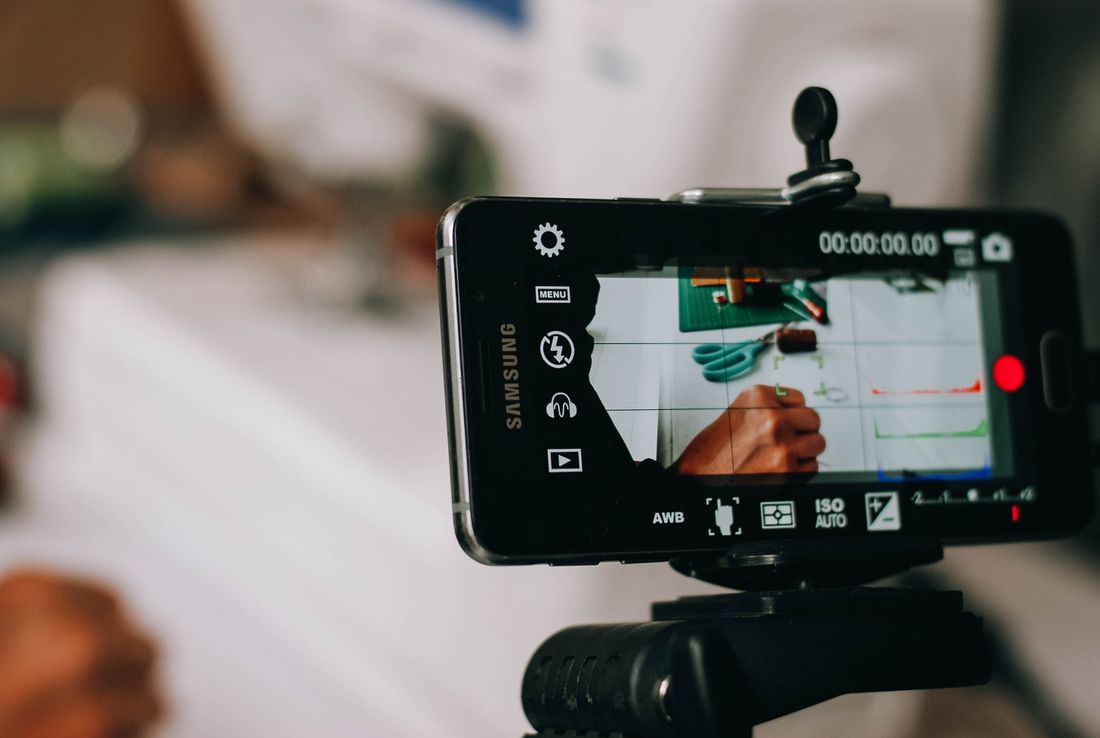
A process reel and a finished-work reel can come from the same shoot day and still do completely different jobs once they're posted. One earns attention by showing how something happens. The other earns judgment by showing what it became. Treating them as interchangeable, two cuts of the same footage, is where most reel strategies quietly go flat. Once the difference is visible, the harder question shows up fast. What does each format actually need to work, and how much of a feed should be one versus the other?
A process reel asks a viewer to watch, not to judge, and it needs coverage, sound, and time to hold that attention. A finished-work reel asks a viewer to evaluate the result, and it needs light, colour accuracy, and stillness a feed usually fights. Confusing what each format is asking for is what makes a reel feel flat.
What Does a Process Reel Actually Ask a Viewer to Do?
A process reel asks a viewer to watch, not to judge. It trades on curiosity about how something gets made, not on whether the result looks good yet. That's why loose, unfinished footage can hold attention even when the work itself is still rough, unresolved, or nowhere near camera ready.
The pull of a process reel comes from movement and change over a few seconds, a hand mixing paint, a chisel cutting into wood, a lens getting adjusted mid shot. A viewer isn't weighing the outcome against a standard. They're following a small unfolding event, the same instinct that makes someone stop to watch a stranger parallel park. Nothing needs to be beautiful yet. Something just needs to be happening.
That's a real advantage for a working artist, because it means process content can go up before a piece is finished, before lighting is right, before anything is resolved enough to stand on its own. The reel isn't representing the work. It's representing the act of working, and that act is often more watchable, more textured, and more specific than most artists give it credit for.
The tradeoff sits right next to that advantage. A process reel that only ever shows motion, with nothing to land on, starts to feel like content for its own sake rather than a window into real work. Watching is not the same as caring about the result, and a process reel earns real value only when it eventually connects the motion to something made.
What Does a Finished-Work Reel Actually Ask a Viewer to Do?
A finished-work reel asks a viewer to evaluate, not just watch. It presents a result and invites a judgment call, good or not, worth a second look or not, in the two or three seconds before a thumb decides whether to keep scrolling. That's a much higher bar to clear than curiosity alone.
Evaluation requires trust the viewer doesn't automatically have. Someone scrolling past has no idea whether the piece took an hour or a year, whether it's part of a body of work or a one-off experiment, or why it should matter to them at all. A finished-work reel has to earn a verdict using almost nothing but what's visible on screen, which means the image itself is carrying nearly the entire argument.
This is why finished-work content rewards technical control far more than process content does. Colour that reads true, light that shows the actual surface and texture, a steady frame that lets the piece hold still long enough to be seen properly, all of it exists to remove reasons for a viewer to doubt what they're looking at. Anything shaky, dim, or colour-shifted reads as a flaw in the work itself, even when the flaw is only in how it was filmed.
A finished-work reel that clears that bar does something a process reel can't. It builds a case for the work directly, without needing the viewer to already care about the artist behind it.
What Does a Process Reel Need on Shoot Day?
A process reel needs coverage over time and usable sound more than it needs perfect light. The format lives on continuity, seeing a task begin, continue, and shift, so the shoot has to run long enough and wide enough to capture that arc instead of a single isolated moment.
In practice, this means filming in blocks rather than grabbing one clip and hoping it holds a whole reel together. A phone or camera left rolling, or picked back up at several points across a working session, gives an editor real material to build rhythm from later. A single thirty-second clip of hands moving rarely has enough variation in it to carry attention on its own.
Sound matters more here than most artists expect. Tools clicking, fabric moving, a brush against canvas, room tone, all of it does real work even when there's no dialogue. A process reel filmed in total silence and reconstructed later with music alone loses the texture that made the process worth watching in the first place. Room noise from a working studio isn't a flaw to edit out. It's often the thing that makes the footage feel real instead of staged.
None of this requires ideal conditions. A process reel forgives a plain room, ordinary daylight, or an unglamorous corner of a studio, because the viewer's attention is on the action, not on the surface it's happening against.
What Does a Finished-Work Reel Need on Shoot Day?
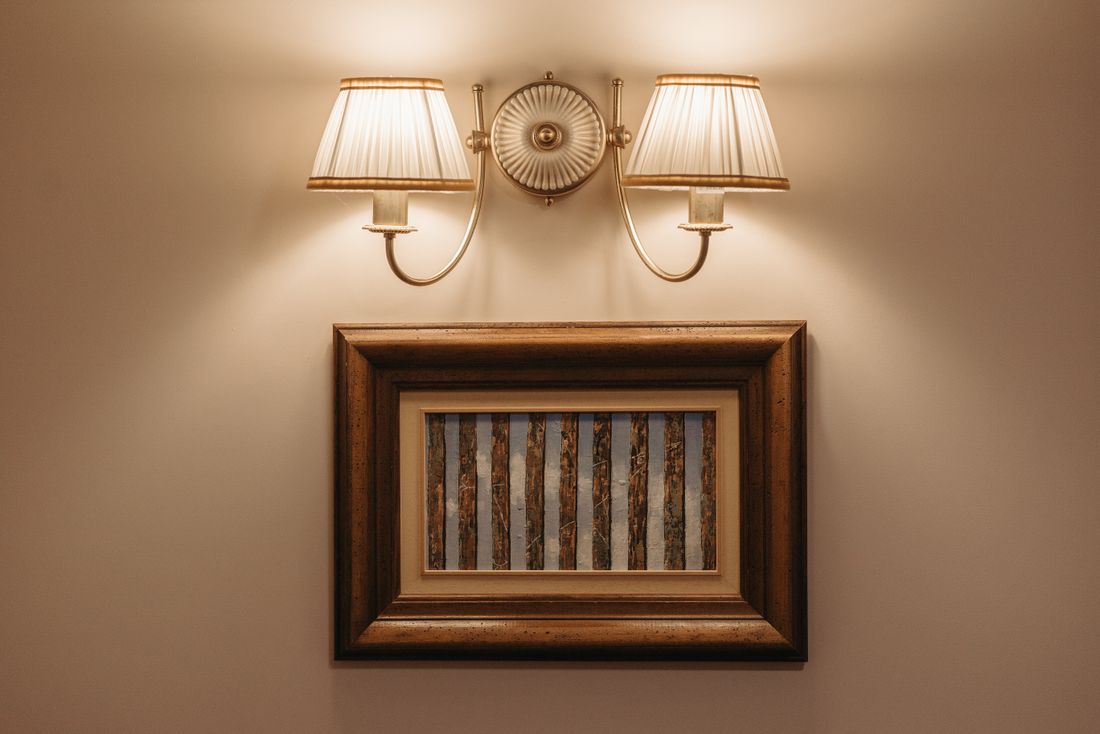
A finished-work reel needs accurate light, true colour, and a frame that holds still, because those are the exact things a feed fights by default. The image has to carry the whole argument, so the shoot should treat it like a print or a portfolio photo, not a quick clip.
Light is the first thing that has to be right, because uneven or mixed light shifts colour in ways a phone camera won't correct on its own. A piece photographed under warm interior bulbs next to a cooler window light can shift tone in a single frame, which reads to a viewer as an inaccurate or untrustworthy image of the work, even when the piece itself is unchanged.
Stillness is the second requirement, and it's the one social formats actively work against. Reels reward motion, a hand entering frame, a slow pan, a quick cut, but a finished piece usually needs a beat of complete stillness for a viewer to actually register texture, scale, and detail. Too much movement during the one shot meant to show the result undercuts the very thing the reel exists to prove.
Getting both right usually takes more setup than a process shot, a cleaner background, more deliberate framing, sometimes a tripod instead of a handheld phone, because the image is doing all the work a finished-work reel needs done. It also helps to capture the finished piece from two or three distances, since only one framing usually survives the edit.
What Happens When a Process Reel Never Shows What Got Made?
A process reel that never shows what got made leaves a viewer with motion and no payoff. The footage can be genuinely interesting to watch, hands working, materials shifting, a task in progress, and still end without answering the one question the whole reel quietly raised, what did this actually become?
This is an easy trap because process footage is naturally satisfying to watch in isolation. An editor can cut together thirty strong seconds of activity and feel like the reel is complete, without noticing that nothing on screen ever resolves. A viewer who followed along in good faith is left with an open loop that never closes, and that's a different feeling than curiosity. It reads closer to being interrupted.
Over time, a feed built entirely from unresolved process clips starts to flatten the work itself. Every reel becomes another glimpse of effort with nothing to show for it, and the artist's actual output, the finished pieces, the results people might want to buy or commission, stays invisible. The process becomes the whole story instead of a way into a bigger one.
The fix is small compared to the shoot itself. A single closing shot of the result, even three or four seconds, gives the reel somewhere to land and gives the viewer a reason the process mattered. Without it, a process reel is content about work rather than content about what the work made.

What Happens When a Finished-Work Reel Gives No Reason to Stop Scrolling?
A finished-work reel with no reason to stop scrolling shows a result to someone who has no context for why it should matter yet. The image might be technically accurate, well lit, true to colour, and still get scrolled past in under a second, because nothing in the first moment gave a stranger a reason to slow down.
This is the format's real weak point. A process reel earns a few seconds through motion alone, but a finished-work reel front-loads all its value into a still or near-still image, and a still image has to compete against everything else in a feed built around movement. Without some hook, an unusual angle, a scale reveal, a transition into the piece, the reel is asking for judgment before it's asked for attention.
This problem shows up most with an audience that doesn't already know the artist's work. A collector or repeat follower might recognize a signature style at a glance and stop on that alone. A stranger scrolling past has no such shortcut, and a static, correct, but uneventful image of a finished piece rarely earns a second look from someone starting from zero.
The fix usually isn't more editing polish. It's giving the viewer a small reason to pause before asking them to evaluate anything, a reveal, a comparison, a beat of motion that leads into the still moment rather than opening on it.
Should the Ratio Change Based on How Well an Audience Knows the Work?
The ratio between process and finished-work reels should shift based on how well an audience already knows the practice, not on a fixed rule. A new audience generally needs more finished-work content to build a fast, visual sense of the work. An audience that already follows the practice can carry more process content without losing interest.
A new or small audience hasn't built trust yet, and trust is what lets a process reel work on its own. Without it, unresolved footage of effort reads as unclear rather than intriguing, because there's no established body of finished work behind it to make the process feel worth following. Leaning finished-work heavy early gives a stranger something concrete to judge and remember.
Once an audience recognizes a style, a material, or a recurring subject, that same footage plays differently. Process content starts to feel like access rather than ambiguity, because the viewer already has a mental model of what the piece will likely become. That's when process reels can carry more weight in the mix without leaving people stranded.
There's no universal split that fits every account or every stage. The practical version of this is simpler, watch whether new followers are converting into repeat viewers, and treat that, not a fixed weekly quota, as the signal for whether the ratio needs to lean more finished, more process, or stay where it is.
What Should an Artist Keep From Each Format for Non-Social Use?
An artist should keep the raw coverage from process shoots and the clean, accurate stills from finished-work shoots, even when neither ever becomes a reel. Both have real value outside social media, and treating everything as disposable the moment a post goes up throws away material that a portfolio, a grant application, or a gallery conversation will eventually need.
Process footage, even unedited and unposted, becomes useful later as documentation, proof of technique for an artist statement, reference footage for teaching, or simply a record of how a specific piece came together that's easy to forget months afterward. None of that requires the footage to ever have been reel-ready. It just needs to exist somewhere organized enough to find again.
Finished-work stills carry a different kind of value. A properly lit, colour-accurate photograph of a completed piece is what actually gets used in a portfolio, a press request, an insurance record, or a submission to a gallery or open call, none of which forgive the motion, cropping, or low resolution that a reel can get away with. That image usually needs to be shot with more care than the social cut ever required.
Keeping both, separate from whatever gets posted that week, means a shoot day pays off twice, once for the feed and once for everything the feed was never built to hold in the first place.
Frequently asked questions
Can one reel do both jobs, show the process and the finished result?
A single reel can include both, but it usually works best when the finished shot gets a clear, deliberate moment near the end rather than a quick afterthought. The process footage earns the attention, and the final shot earns the judgment, so treating both parts with the same care, rather than rushing the ending, is what keeps the reel from feeling like it forgot to finish itself.
Do finished-work reels need to be filmed with the same camera as everyday content?
No, but it helps to use whatever camera is available with more intention than usual, steady framing, accurate white balance, and enough light to show the piece's real colour and texture. A phone can produce a genuinely accurate finished-work shot. What actually determines quality is care during setup, not the specific device recording it, since a shaky or poorly lit clip looks the same regardless of the equipment behind it.
Is a process reel ever the wrong choice for new work?
Yes, when the work is meant to introduce an artist to people who don't know the practice yet. A process reel assumes some baseline curiosity or trust that a first-time viewer usually hasn't built. For a true introduction, a finished-work reel, or a reel that opens on the result before showing any process, usually does a better job establishing what the work actually looks like before asking anyone to care how it got made.
How long should the finished part of a process reel actually be?
Long enough for a viewer to actually register it, usually a few full seconds rather than a single quick frame in a fast cut. A finished shot that flashes by too quickly reads as an afterthought and doesn't give the piece the beat of stillness it needs to be evaluated. Slowing down right at the end, even briefly, does more for a reel's payoff than almost any other single edit choice available.
Does a finished-work reel still need sound if the piece itself is silent?
Yes, silence in a video reel usually reads as broken rather than intentional, even when the subject itself makes no sound. A quiet ambient track, room tone, or a soft score gives the viewer something to hold onto while they look at a still or slow moving image. The sound isn't there to explain the piece. It's there to keep the reel feeling alive while the image does the actual work of showing the result.
A normal studio day has more footage in it than you'd think.
We spend the day finding what's actually worth filming and cut it into reels that hold up without needing a caption to explain them.
Explore social reels →