A beverage launch usually gets planned around the liquid and the label, and the photography gets treated as a checklist item near the end. That order causes most of the scramble. What a bottle, can, or new drink actually needs is four different kinds of images, shot with enough lead time that packaging, press, and a full year of social content are all covered by the same session instead of four separate ones.
A beverage brand launching a new drink, label, or bottle needs four distinct kinds of images before launch day: a clean product shot for retail and press, the drink as served and in context, the people and place behind the brand, and motion clips built for social. Each does a different job, and shooting only one leaves real gaps.
What Does a Beverage Brand Actually Need Shot Before It Launches?
A beverage brand launching a new drink, label, or bottle needs four distinct kinds of images before launch day: a clean product shot for retail and press, the drink as served and in context, the people and place behind the brand, and motion clips built for social. Each does a different job, and shooting only one leaves real gaps somewhere else.
Most launches start with a photo brief built around one hero image, usually the bottle or can looking as good as possible. That single frame is necessary, but it answers only one question: what does the product look like. It doesn't show a stockist how the drink actually gets served, doesn't give a press contact a usable environmental shot, and doesn't give social anything with motion or a person in it.
The four categories exist because they get used by different people for different reasons. A retail buyer wants a clean, accurate product image. A journalist wants context. A follower on social wants to see the drink move, get poured, get picked up. A brand's own about page wants the people and place behind the label. None of these audiences share a single image well.
Treating the launch shoot as one session covering all four, rather than four separate asks answered piecemeal over months, is what actually saves time and money. It also means the brand walks into launch week with a finished library instead of a single photo and a long list of things still missing.
What Does the Clean Product Shot Actually Need to Show?
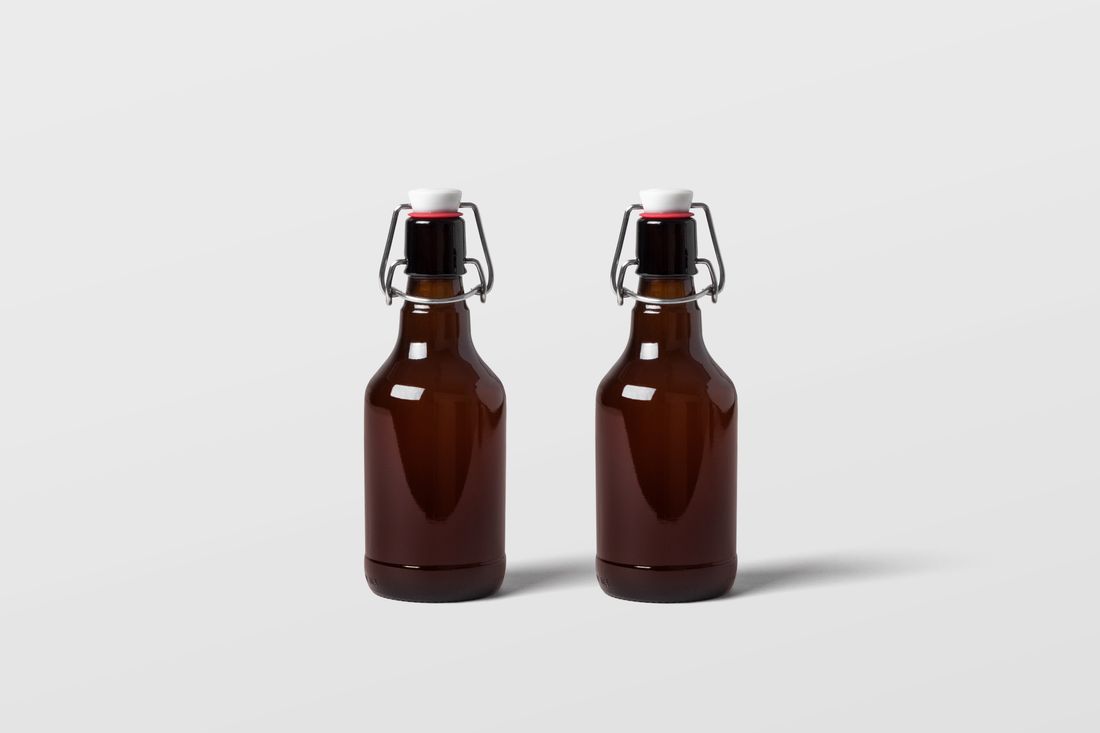
The clean product shot needs to show the bottle or can exactly as it will sit on a shelf or in a press kit: true color, sharp label detail, no distracting background, and consistent lighting that a retailer or journalist can drop straight into a listing or article without further editing. It is the most literal of the four image types, and the least forgiving of shortcuts.
This is the image a stockist's website will actually use, often unedited. It needs even, direction-controlled light that doesn't blow out a glass surface or a metallic can finish, a background plain enough to work in multiple contexts, and framing loose enough to crop for a grid tile, a listing thumbnail, or a full-bleed hero. Getting this shot wrong is expensive in a way the other three aren't, because it's the one most likely to be reused verbatim by someone outside the brand.
It also needs to be shot at a resolution and angle set that covers more than one use. A single hero angle isn't enough once a retailer, a distributor, and a press outlet each want something slightly different: straight-on for a catalog, three-quarter for editorial, a top-down flat lay for a roundup graphic. Planning for that variety inside one session avoids a second shoot request landing three weeks after launch, when the label is already printed and the schedule has moved on to the next thing.
What Should the Served-Drink Shot Show That the Product Shot Doesn't?
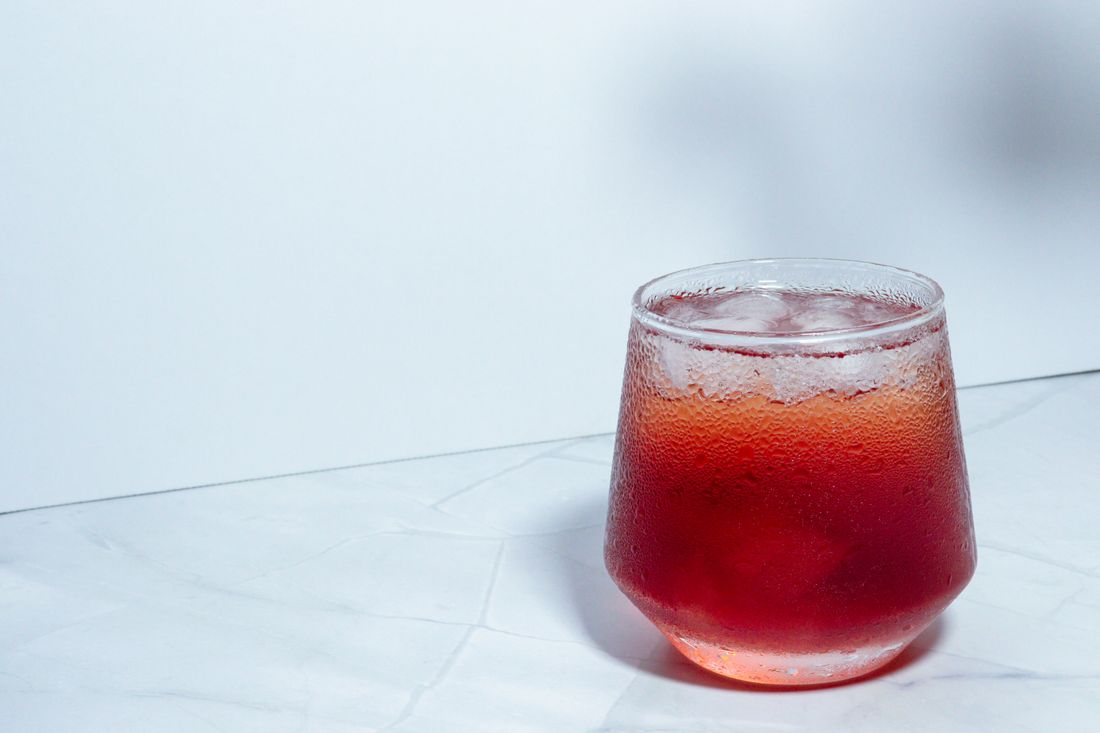
The served-drink shot should show the beverage the way a customer actually encounters it: poured, in a glass or cup, with ice, garnish, or condensation as it would genuinely appear, in a setting that suggests where and how it's meant to be enjoyed. It answers a completely different question than the product shot: not what does the bottle look like, but what does having this drink actually feel like.
This is the image that does the emotional work of a launch. A clean bottle shot proves the product exists and looks good. A served shot gives a potential customer a reason to want it in hand. A bottle sealed on a shelf and a drink in a glass on a table read as two entirely different products, even though they're the same liquid.
Getting this right means paying attention to the small, honest details: the right glassware, ice that hasn't started melting under the lights, a garnish placed the way it would actually be served rather than styled to look impossible. It's about production discipline, not embellishment, since the point of this image is that it looks like something a person could genuinely be handed across a bar or counter.
Setting matters too. A drink photographed against bare backdrop paper reads as a product test, not an experience, so this shot benefits from a table or counter surface, kept simple enough not to compete with the drink itself. A couple of angle variations give the brand options for a product page, a press pitch, and a feed post without a separate booking.
Why Does a Beverage Launch Need the People and Place Behind It Shot Too?
A beverage launch needs the people and place behind it shot because a bottle or can alone doesn't answer where this came from or who's actually making it, and that context is what press coverage, an about page, and a founder's own social presence all draw on. Product and served shots sell the drink; people-and-place shots sell the brand behind it.
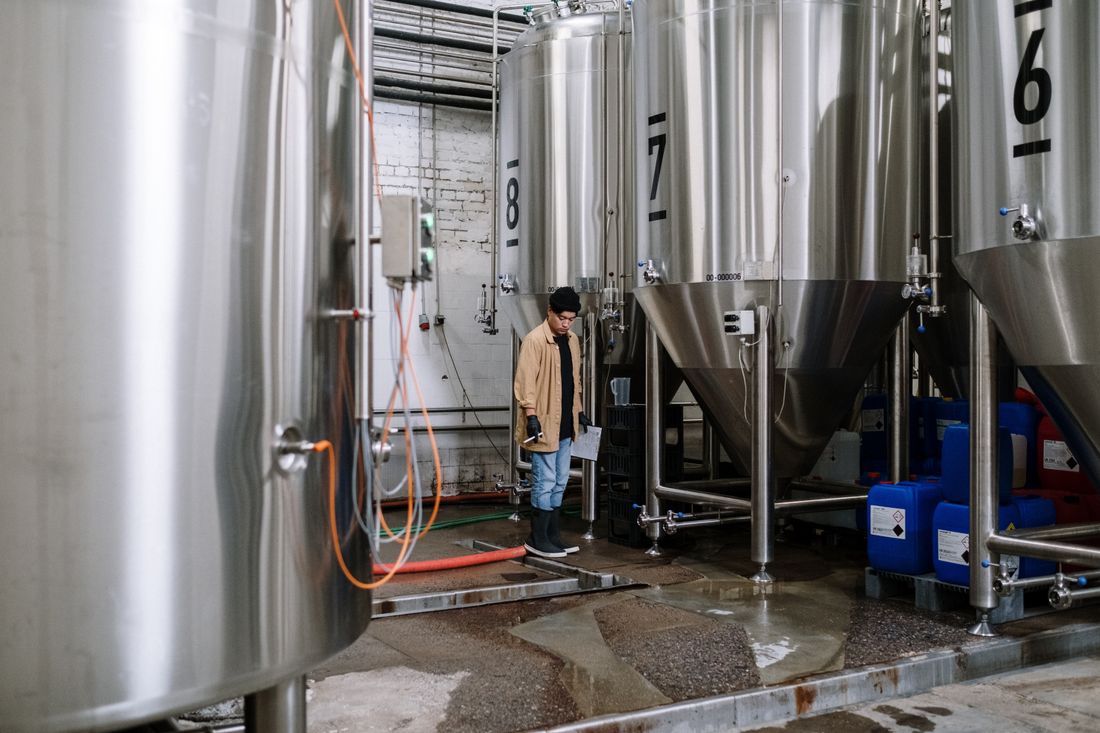
This category covers the space where the drink is made, blended, bottled, or tested, and the people doing that work, captured as an honest working environment rather than a staged tableau. It doesn't need to be glamorous. A production space with cases stacked nearby, someone checking a batch, a founder at a workbench, all read as more credible than a posed portrait in front of a blank wall, because they show real process instead of implying it.
These images are also the ones a launch tends to forget to plan for, because they don't feel urgent the way the product shot does. But they're what a journalist asks for when a story needs more than a bottle photo, and what an about page needs when it's trying to explain, in one glance, that a real team and process sit behind the label rather than a stock illustration standing in for both.
Booking this alongside the product and served shots, rather than as a separate request months later, also saves a busy team from stopping mid-day just to pose. Folding it into the same session means the coverage happens once, on a day the space and people are already set up for it.
What Kind of Motion Clips Actually Carry a Beverage Launch on Social?
The motion clips that carry a beverage launch on social are short, specific actions rather than broad lifestyle footage: a pour, a can cracking open, ice dropping into a glass, a bottle being opened or set down on a bar. These small, repeatable moments cut into far more usable content than a single long clip of someone generically enjoying the drink.
Stills prove the product exists. Motion proves it works the way it's supposed to, and that difference matters more on social than almost anywhere else, because a feed rewards something that moves in the first second of a scroll. A pour, in particular, does a lot of work: it shows color, carbonation or texture, and pacing, all in a few seconds, without needing a script or a spoken line.
These clips also need to be shot with reuse in mind from the start. A five-second pour, filmed clean and vertically, becomes a standalone post, an intro clip for a longer video, or a background layer under other footage for months after launch. Treating motion as a small library of individual, well-shot actions rather than one finished video gets far more mileage out of a single afternoon on set.
Framing decisions made on set also determine what a clip can become later. Shooting an action twice, once loose and once tight, gives an editor a wide option and a close option from the same take. That small bit of extra coverage is far cheaper than reshooting a single pour months after the crew and space are no longer available.
Why Are the Bottle Shot and the Served-Drink Shot Different Jobs?
The bottle shot and the served-drink shot are different jobs because they solve different problems for different audiences: one is a controlled, accurate record of the product itself, and the other is a styled scene built to make someone want it. Treating them as one shot, or trying to get both from the same setup, usually leaves both weaker than they'd be shot separately.
A product shot lives or dies on accuracy. Color has to match the real label, surfaces can't distort under the wrong light, and the background has to stay neutral enough to work anywhere it gets placed. A served shot lives or dies on feel: the right glass, light temperature, ice and condensation that look real instead of styled within an inch of their life. Those are close to opposite problems, and rushing between them in one continuous setup tends to compromise both.
Budgeting separate time, separate setups, and in some cases separate locations for each shot type inside the same overall session is what keeps both honest. It also means the retailer gets a clean, trustworthy product image while social and press get something that actually makes people want to try the drink, instead of one compromised image trying to do both jobs at once.
The lighting alone illustrates the split. A product shot wants flat, even, shadow-controlled light that reveals true color and surface detail. A served shot can use warmer, directional light that builds mood, since accuracy matters less there than atmosphere. Satisfying both under one lighting setup usually leaves neither shot as strong as it could be.
Why Do Launch Assets Need to Be Shot to Last a Full Year?
Launch assets need to be shot to last a full year because most beverage brands don't reshoot again until the next release, and the launch library ends up carrying every product page, press kit, and social post in between. A shoot planned only for launch week's announcement post runs out of usable variety within a few weeks of actual posting.
That means the brief for a launch shoot has to think past the first announcement. A season's worth of social content, a year of stockist requests, and however many press pickups come in over that stretch all draw from the same folder unless a second shoot gets booked, which most brands don't plan for or budget in the first year. Variety in angle, setting, and format at the outset is what prevents that folder from feeling thin by month three.
This is also where shooting more than one context earns its cost. A product shot against a plain backdrop, a few served variations, some people-and-place images, and a handful of motion clips together cover far more of a year's actual content calendar than a single polished hero image ever could, even though the hero image is usually what gets approved first and fastest in a launch timeline.
Thinking a year ahead also changes what gets prioritized on shoot day. A brand planning only for the announcement post might rush the people-and-place images or skip a second served-drink variation. A brand planning for twelve months treats those as equally worth the time, since they're what keeps the feed from repeating the same three images.
What Do Press and Stockists Ask For That Social Never Does, and What About Packaging Timing?
Press and stockists ask for high-resolution, uncropped product files with clean backgrounds and accurate color, usually delivered as separate assets rather than social-ready crops, and that request often arrives with little notice once a launch date is public. Social, by contrast, wants vertical, fast-moving, personality-led content that a print catalog or a distributor listing has no use for at all.
That gap is easy to miss when a launch is planned around one content type. A brand that shoots only for its own feed can find itself scrambling for a plain, high-resolution product file the week a stockist or reporter actually asks for one, and a brand that shoots only catalog-style images ends up with nothing that performs on social at launch.
Packaging timing complicates all of it. Labels, cans, and bottle designs frequently aren't finalized until close to launch, which forces a real choice: shoot early with a placeholder or prototype and accept some images may need a reshoot once the final packaging arrives, or wait for final packaging and compress the whole shoot into a much tighter window before launch day. Planning that tradeoff on purpose, instead of discovering it mid-schedule, is what keeps a launch on track.
One practical workaround splits the difference: shoot the served, people-and-place, and motion content early, since none of it depends on final packaging, and hold only the clean product shot until the label is locked. Most of the library is already finished by the time packaging catches up, and the final reshoot stays short instead of the whole launch shoot landing at the last minute.
Frequently asked questions
Do we need separate shoots for the product photo and the served-drink photo?
Not separate shoots, but separate setups within the same session works best. The product shot needs controlled, accurate lighting and a neutral background, while the served shot needs styling, glassware, and a warmer scene. Budgeting distinct time for each inside one overall shoot day, rather than trying to capture both from a single setup, keeps both images doing their job well instead of compromising on either one.
How far before launch should a beverage brand book its photo and video?
As early as the timeline allows, ideally before packaging is fully finalized so the shoot can be planned around it rather than reacting to it. Booking late usually forces a choice between shooting with prototype packaging or compressing the entire shoot into the narrow window right before launch. Early booking also leaves room to plan for a full year of content, not just the announcement post.
What if the final label or packaging isn't ready when we need to shoot?
It's common, and there are two honest paths: shoot with the prototype and plan for a short reshoot of just the product frames once final packaging arrives, or hold the product shot and shoot the served, people, and motion content first, since none of that depends on the final label. Either way, deciding on purpose which path fits the timeline works better than discovering the conflict mid-shoot, when options are much narrower.
Do we need a separate shoot just for social content, or does the launch shoot cover it?
A well-planned launch shoot should cover social from the start, not as an afterthought. Building in short motion clips, vertical framing, and a few served-drink variations alongside the product and press-ready images means social gets real material without a second booking. Treating social as its own category during planning, rather than assuming it falls out of leftover footage, is what actually makes that work, and it costs far less than a separate follow-up shoot.
How many images and clips does a beverage launch actually need to come away with?
Enough variety across all four categories, product, served, people and place, and motion, to cover a year of content, not just a launch-day post. That usually means several angles of the product shot, a handful of served variations, a few honest people-and-place images, and a short library of individual motion clips rather than one long video, so the brand has options long after launch week ends.
A normal studio day has more footage in it than you'd think.
We spend the day finding what's actually worth filming and cut it into reels that hold up without needing a caption to explain them.
Explore social reels →