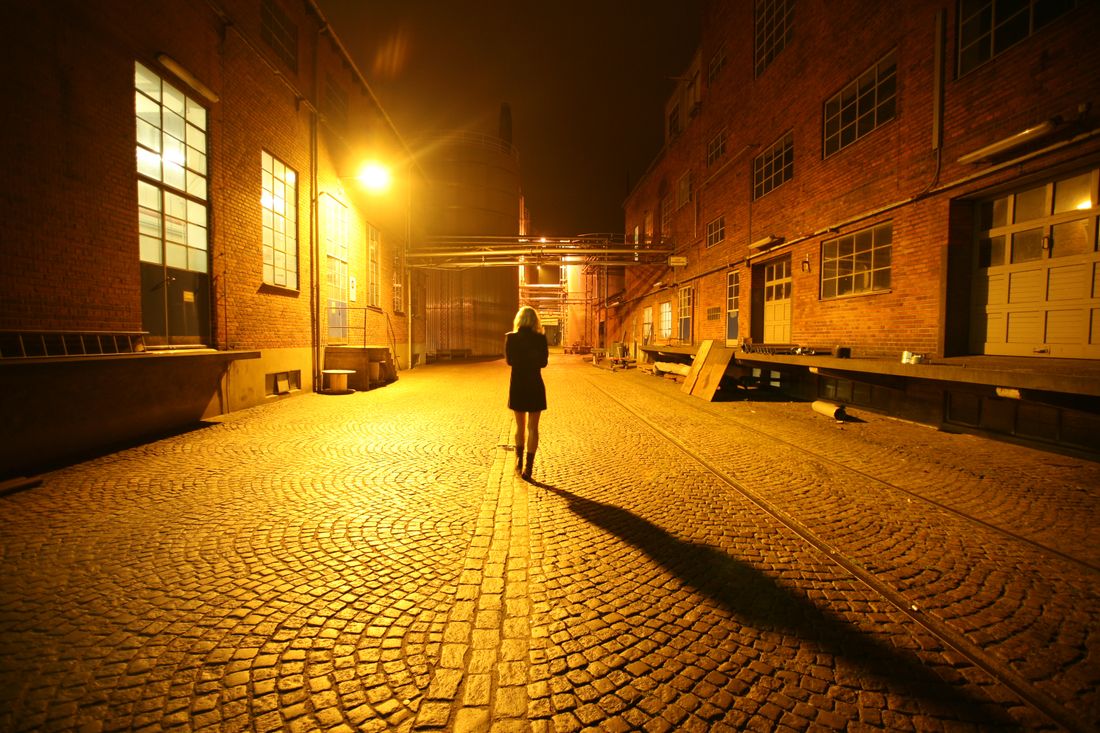
A gallery booking its own opening night only ever has to answer for its own room. A BID or arts council commissioning a whole gallery night is answering for a dozen rooms it doesn't run, each with its own director, its own taste, and its own idea of what the evening was actually about. The organizer still has to hand over one set of images that reads as a single event, not a folder of unrelated parties that happened to share a date on a shared map.
When a BID or arts council commissions coverage of a multi-venue gallery night, the brief is different from any single gallery's booking: one consistent visual style has to carry across venues the organizer doesn't control, approvals run through a central point of contact rather than each gallery, and the finished set has to work for the organizer's own report, next year's promotion, member recruitment, and funder evidence, not just one gallery's archive.
What does a BID or arts council need from gallery night photography that a single gallery never asks for?
A BID or arts council needs one photography set that proves the whole district worked as a coordinated event, not that any single gallery had a good night: one consistent style across every venue, visible movement between them, and frames the organizer can use on its own terms.
A gallery booking its own opening only ever answers for its own room, separate from whatever any individual venue keeps for its own archive. The art on the wall is the subject, the artist is the story, and the collectors in attendance are the proof the show found an audience. None of that requires the gallery to prove anything about the block it sits on, the other venues participating that night, or whether the evening felt like a program rather than six unrelated parties. An organizer is answering a completely different question: did the district function as one event, and can that be shown.
That's the whole reason this commission exists in the first place. The organizer usually paid for the shared opening hour, the printed or digital map, the banners, sometimes the wine, and they need a record that reflects an event they built, even though they don't own a single wall inside any of the buildings where it happened. The photography has to carry that weight on its own, because nothing else about the night automatically proves it was organized rather than coincidental.
How is this commission different from any one gallery booking its own opening night?
This commission is different because the buyer isn't inside any of the rooms being photographed. A gallery hiring its own photographer pays for coverage of a space it fully controls. A BID or arts council pays for coverage of several spaces it doesn't run, each led by a director who agreed to participate but doesn't answer to the organizer.
That changes what the photographer is actually doing on the night. Instead of one continuous relationship with one point of contact who can wave someone toward the piece that matters or the collector worth catching, the photographer is a guest in each room, moving through spaces that were never briefed on why a stranger with a camera is there. Some venues will welcome it. Some will treat it as an interruption they tolerated because the organizer asked nicely. The photographer has to read that room by room, without a consistent level of cooperation to lean on, since none of these venues chose to hire anyone in the first place.
The deliverable also has to survive contact with people who had no say in commissioning it. A single gallery's photos only ever have to satisfy the gallery. This set has to satisfy an organizer who paid for it, plus a dozen venue directors who will each look at their own frames and judge whether their space was represented fairly, even though none of them chose the photographer, the schedule, or the visual approach. That's a harder audience than any one client, because it's an audience the organizer assembled without asking.
Who approves the images when the organizer doesn't run any of the venues being photographed?
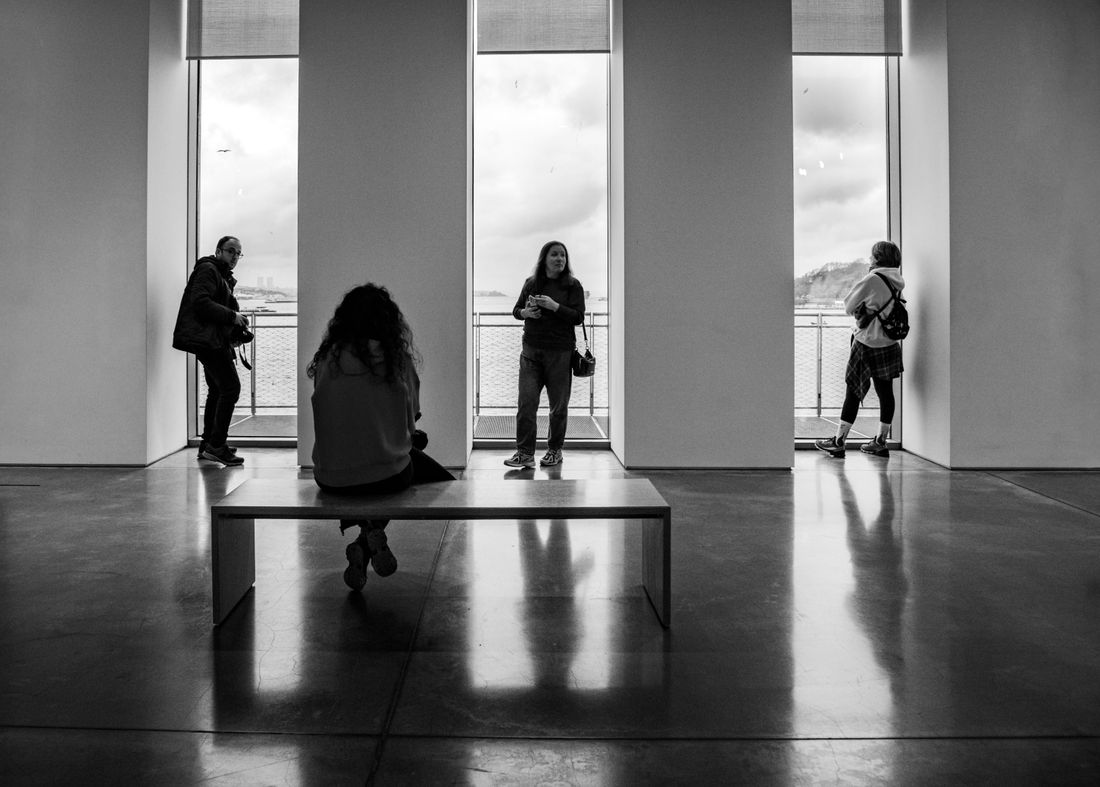
Approval runs through the organizer as a single point of contact, because routing sign-off through a dozen independent venue directors turns delivery into a slow, uneven negotiation nobody agreed to in advance. The organizer commissioned the work, pays for it, and has a stake in every venue's coverage, not just its own.
That doesn't mean venues have no say. Most organizers who run this well tell participating galleries up front that photography is happening as part of the district-wide program, and give them a short, simple way to flag a real problem, a piece that shouldn't be shown, a person who didn't want to be photographed, a room a director would rather keep out of a public report. What it does mean is that the organizer, not each gallery individually, is the one deciding what the final set looks like and where it gets used.
This is worth naming in writing before the event, not sorted out afterward. An organizer who assumes blanket approval and a gallery that assumes it controls its own frames can both be reasonable and still end up in a disagreement a short conversation beforehand would have prevented. The photographer shouldn't be the one settling this on the fly, mid-event, between a venue director who wants something pulled and an organizer who already told every venue that photography was covered for the whole program.
What does "one unified set" actually require across venues that don't look or feel like each other?
A unified set requires the same treatment applied on purpose at every stop: consistent color and exposure choices, a similar distance and framing approach in each room, and a level of polish that doesn't shift depending on how nice a particular venue happens to be. The goal is a set that reads as one program, not a scrapbook.
The venues themselves make this harder than it sounds, which is exactly why it needs deciding on purpose rather than hoped for. One gallery might have even, flattering light and white walls built for exactly this kind of photography. The next might be a converted storefront with mixed lighting, low ceilings, and a completely different palette. Left alone, a photographer moving through six or eight spaces in one night will naturally produce six or eight different looks, because each room is genuinely different. The unifying work happens in the choices made on purpose, not by hoping the rooms cooperate.
This is a visual discipline problem more than a technical one. It means deciding in advance what every stop gets regardless of how good or difficult the room is: a wide establishing frame, a few frames of people engaging with the work, a detail shot, roughly the same treatment in post. A venue with beautiful light doesn't get five times the coverage of one with difficult light just because it's easier to shoot well. Consistency is a decision applied evenly, not a result that happens on its own.
How is this different from solving the walking route between venues?
Solving the route is a logistics problem, getting a photographer from one venue to the next without missing the peak moment at either one. This is a different problem: who is commissioning the coverage, what they need it to prove, and how the finished set has to serve an organizer that doesn't control any room on that route.
A photographer can solve the walking order perfectly, arriving at every venue at exactly the right moment, and still deliver a set that fails the organizer's actual brief if nobody thought about consistency of style, approval rights, or what the images need to do after the night ends. The route gets the photographer to the right rooms at the right times. It says nothing about whether those rooms end up looking like one program instead of eight separate errands.
The two problems sit next to each other on the same night but belong to different people entirely. The route is mostly the photographer's own planning question, worked out from a map and a schedule. The commissioning question, who is paying, who approves, and what the finished set needs to accomplish afterward, belongs to the organizer, and it has to be settled well before the schedule even gets built. Get the route right and the commission wrong, and the photographer still shows up everywhere on time carrying the wrong deliverable.
What does the organizer actually do with the finished images afterward?
The organizer typically uses the finished set for its own event report to the board or funding partners, next year's promotional materials, and recruitment pitches aimed at galleries or businesses considering joining the district. None of those uses belong to any single participating venue.
That's exactly why the organizer needed the coverage in the first place, rather than relying on whatever each gallery happened to shoot on its own. A report to a board or a city partner usually needs images that show turnout and variety across the whole district, not just one strong room. Next year's promotion needs a wide, appealing set that can sell an evening that hasn't happened yet to people who weren't there for this one. Recruitment is its own use case entirely: a gallery deciding whether to join the district next season wants to see what participating actually looks like, and a photo of one crowded, well-lit room does more for that pitch than a paragraph describing the concept.
None of these uses are hostile to any single venue, but none of them are built around any single venue either. That's the practical reason the images need to work as a set rather than as individually strong frames. A funder skimming a report, a prospective member gallery weighing whether to sign on, and a marketing person building next year's postcard are all judging the same photographs for completely different reasons, months after the actual night is over.
What's the awkward part of photographing venues that didn't hire the photographer?
The awkward part is that every venue on the route has to be served well by a photographer it didn't choose, isn't paying, and may not have met before. A gallery that hired its own photographer trusts the relationship because it built it. A gallery inside an organizer's program is trusting a stranger it was told would show up.
That's a much thinner form of trust to walk in on, and it shows up in small ways on the night itself. A venue that feels genuinely photographed, given a fair, flattering pass with real attention, tends to stay warm toward the program next year. A venue that feels like a five-minute stop on someone else's list, photographed thinly compared to a flashier neighbor down the block, notices, and it's the kind of thing a director mentions the next time the organizer asks for participation. The unevenness is rarely intentional. It usually comes from time pressure and a route that ran long, but the venue on the receiving end doesn't experience it as an accident.
The fix isn't complicated, just deliberate: a baseline of coverage every venue gets regardless of how visually generous or difficult the space is, decided before the night rather than improvised room to room. A smaller storefront gallery with awkward lighting still gets its wide shot, its engagement frame, and its detail. It doesn't need to match a flagship space frame for frame, but it needs to never read as an afterthought in the finished set.
What should a pre-event brief from an organizer include that a single-venue brief wouldn't?
An organizer's brief needs a venue list with a named contact at each stop, a stated visual standard every venue gets regardless of the space, an approval chain running through the organizer rather than each gallery, and a plain statement of what the finished set is for. None of that is necessary for one gallery booking its own room.
The venue list matters because the photographer needs to know before the night who to introduce themselves to at each stop, rather than walking into a gallery cold and hoping someone in the room knows why a photographer showed up. The visual standard matters because it's the tool that keeps the set unified once the photographer is moving fast and improvising room by room. The approval chain matters because it's the difference between one clear yes before publication and a dozen separate conversations happening after the fact, each with its own opinion.
The clearest brief also states the downstream use up front: report, promotion, recruitment, or some combination, because that shapes what the photographer prioritizes when time inevitably runs short at one or two stops. A photographer who knows the set needs to work for next year's recruitment pitch makes different choices under time pressure than one who only knows to move fast and cover everyone. Naming the use case turns a long list of stops into an actual shot list with priorities attached.
Frequently asked questions
Who is actually the client when a BID or arts council commissions a gallery night?
The organizer is the client, not any of the individual galleries the photographer walks through that night. The organizer commissioned the work, pays for it, and needs the finished set to serve its own report, its own promotion, and its own recruitment pitch to future member venues. Participating galleries are hosts inside the program, not co-buyers, even though the photographer spends real time in each of their rooms that evening.
Does the organizer need each gallery's permission before publishing the finished photos?
Usually not, if participating venues were told up front that photography was part of the district-wide program and given a clear way to flag a real concern beforehand. The organizer typically holds approval as the commissioning party. Naming that arrangement in writing before the event prevents a disagreement after delivery between a venue that assumed it controlled its own frames and an organizer who assumed blanket approval.
How is commissioning coverage for a whole district different from solving the walking route between venues?
The route is a logistics question, how a photographer moves between venues on time without missing the peak moment at each stop. This is a different question entirely, about who is buying the coverage, what they need it to prove, and how the finished set has to serve an organizer that controls none of the rooms involved. A photographer can nail the route perfectly and still miss the organizer's actual brief.
What happens if one participating venue doesn't want to be photographed as part of the program?
That should be settled before the event, not discovered mid-route. Most organizers give participating venues a simple way to opt a specific piece, person, or room out of coverage in advance, in writing. A venue that declines entirely usually just gets skipped on the route rather than argued with on the night, since the organizer's ongoing relationship with that venue matters more than one set of frames.
How far ahead should an organizer book photography for a multi-venue gallery night?
Early enough that the venue list, named contacts, and visual standard can be shared with every participating gallery before the night, not assembled while the photographer is already walking the route. A late booking usually means skipped introductions at each stop and an uneven, rushed set, since there's no time left to brief venues in advance on why a stranger with a camera is arriving that evening.
Got overlapping openings already on the calendar?
We work out the coverage plan well before the night gets close, whether that's two shooters, a tight schedule, or simply booking early enough to avoid the conflict entirely.
Explore event coverage →