Two artists hand over the same piece count, forty pieces each, and walk away with quotes that don't look anything alike. The number people compare first, how many pieces, turns out to be the least predictive one, because a documentation quote isn't really pricing objects. It's pricing the physical time each piece takes to safely record: its medium and surface, how many angles it honestly needs, whether glare or texture calls for an extra pass, its size relative to the room, and how it's stored, handled, and reached. This piece walks through what actually drives the number, and how to ask for a quote that can honestly be compared to another one.
Piece count alone doesn't predict a documentation quote because the number is really pricing time in the room, not objects on a list. What actually drives it is each piece's medium and surface, how many angles it needs, whether glare or texture calls for an extra pass, its size relative to the room, and how it's stored, handled, and reached. Two sets of the same count can take very different amounts of time to safely and accurately record.
Why Doesn't Piece Count Alone Predict a Documentation Quote?
Piece count sets a rough scale, but it doesn't predict a documentation quote because the number that actually drives the job is how long each piece takes to safely record: its medium and surface, how many angles it needs, whether glare or texture calls for extra passes, its size relative to the room, and how it's stored and handled.
Two artists can hand over the same number, forty pieces each, and walk away with quotes that don't resemble each other at all. One set is small, framed, and already staged along a gallery wall. The other is unframed, wrapped in glassine, stacked three deep in a storage unit, and includes a few pieces on stretched canvas next to a couple on raw paper. Same count. Completely different amount of work.
A documentation quote is really pricing time in the room, not objects on a list. Every piece adds setup, not just a shutter click. A flat, matte, small painting on a wall might take a few minutes once the lighting is dialed in. A large glazed piece leaning in a corner, still wrapped, might take twenty minutes before the camera even fires, between unwrapping, positioning, and clearing the glare.
That's the gap piece count can't see. It counts objects, not the physical work each object requires. The rest of this piece walks through what actually adds that time: medium, angles, light, size, handling, storage, and access, so a quote request can be built around the right questions instead of a single number that looks comparable but isn't.
How Does an Artwork's Medium and Surface Change the Time It Takes?
A piece's medium and surface decide how it reflects light, which decides how long it takes to photograph cleanly. Matte acrylic on canvas behaves very differently under lights than high-gloss resin, a glazed and framed piece, a textile hung loose, or a three-dimensional object that needs light from more than one side.
Matte, non-reflective surfaces are usually the fastest to shoot. Light hits them and stays put, so the setup that works for one painting in a series often works for the next one too, with only small adjustments. High-gloss resin, varnished oil, and anything under glass behave the opposite way. Light bounces, and the camera, the lights, even the photographer's own reflection can show up in the surface unless the angle and any polarizing is worked out carefully, piece by piece.
Textile work adds a different problem entirely. Fabric drapes, catches shadows in its folds, and often needs to be pinned or mounted flat before it reads accurately, which is handling time a flat panel never needs. Three-dimensional pieces go further still, since a single frontal shot rarely tells the truth about the object, and getting an honest record can mean multiple angles and a different lighting setup than anything used on the flat work in the same batch.
None of this shows up in a piece count. Forty flat, matte panels and forty pieces split across resin, glass, and textile are not the same job, even though the number handed over is identical.
How Many Angles Does a Piece Need, and When Does Glare Control Add Time?
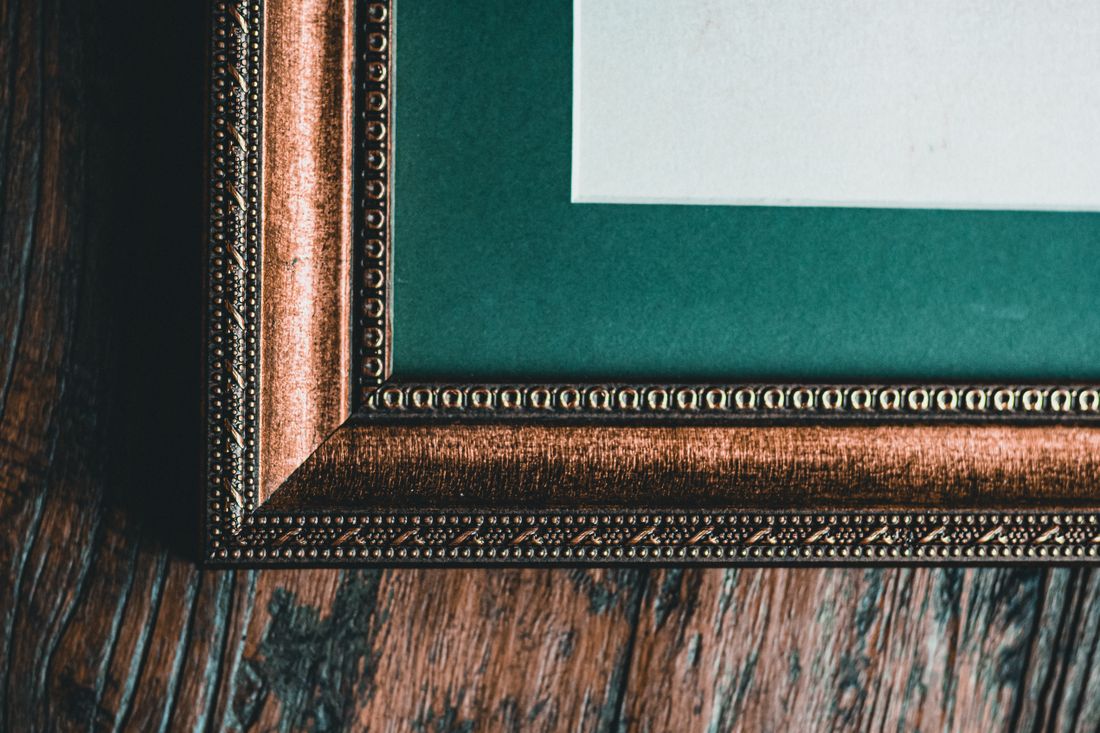
A single frontal shot covers most flat, matte work, but pieces under glass or glazing, on high-gloss resin, or with real depth often need more: extra angles to catch texture or edges honestly, and extra time to control glare, since glass adds reflections a flat panel behind it never had.
Glazing turns a straightforward shot into a small lighting puzzle. The glass sits between the camera and the work, and it reflects everything in the room back at the lens, the lights themselves, the photographer, the ceiling, sometimes the opposite wall. Clearing that means adjusting the angle of the lights, sometimes rigging a black flag or a polarizing filter, and checking the frame carefully before moving on, all of which adds minutes a bare canvas never asks for.
Three-dimensional and heavily textured pieces raise a different question: how many views actually tell the truth about the object? A ceramic piece photographed only from the front can hide its whole other side. A heavily built-up painting can look flat in a straight-on shot and only reveal its surface once a second angle or a raking pass is added. Deciding how many angles a piece honestly needs, rather than defaulting to one shot per piece, is a judgment call made in the room, not from a list beforehand.
A set with several glazed or three-dimensional pieces in it needs more total frames, and more careful ones, than a same-sized set of flat, matte, unframed work, even though both hand over the identical count.
Why Do Some Pieces Need a Raking-Light Pass for Texture?
A raking-light pass, light angled low and close across the surface, is what shows real texture: impasto, canvas weave, plaster build-up, or the ridges left by a palette knife. A flat, head-on light setup that works for a smooth surface flattens that texture out completely, so a piece with visible relief usually needs its own separate pass.
Standard, even lighting is built to eliminate shadow, which is exactly right for color accuracy on a flat surface and exactly wrong for showing texture. Raking light does the opposite: it deliberately introduces small shadows across the raised parts of a surface, since those shadows are what make brushwork, ridges, and layering visible in a photograph at all. Getting that pass right usually means repositioning a light, sometimes swapping the whole setup, then checking the result before moving to the next piece.
Not every piece in a set needs this. Smooth, thin, or minimally worked surfaces read fine under the standard even lighting used for the rest of the shoot. The pieces that need raking light are the ones where the texture is part of the work, and skipping that pass on those pieces means the record doesn't actually show what the piece looks like in person.
A set that's mostly flat and smooth moves quickly. A set where several pieces carry real surface texture takes longer, piece by piece, because each one that needs it gets its own separate lighting pass rather than sharing the setup used for everything else.
Why Does Size and Room Depth Change the Quote?
A piece's physical size changes how far back the camera has to sit to record it without distortion, and that depends on the room, not the piece alone. A large canvas in a small studio can take longer to shoot honestly than a much bigger piece in a room with space to work with.
Photographing a flat piece straight-on and free of distortion means the camera needs enough distance from the wall relative to the piece's size. A five-foot canvas in a room with fifteen feet of working depth is a simple setup. The same canvas in a cramped studio, where the opposite wall sits only eight feet away, might mean shooting at an angle and correcting the perspective afterward, moving furniture out of the frame, or working from a stepladder to get enough height and distance at once.
This is where the room itself becomes part of the job, not just the piece. A studio built for making the work isn't always built for photographing it. Some rooms have a clear wall and open floor. Others are full of easels, shelving, and finished pieces stacked in front of the ones being shot, and clearing that space, or working around it, is time the quote has to account for.
None of this correlates with piece count either. A studio full of large canvases with no room to back up can take longer to document properly than a larger body of smaller work in an open space.

How Much Time Do Framing, Handling, and Storage Actually Add?
Framing, handling, and storage add time that has nothing to do with the camera at all: unwrapping a piece, positioning it safely, and rewrapping it afterward. A set stored flat in labeled racks moves fast. A set stacked loosely, wrapped in glassine, or leaning several deep can spend more of the day being moved than being shot.
Framed work adds its own handling questions. A frame with glazing carries the glare considerations covered earlier, but a frame also changes how a piece gets carried, positioned, and rested without leaning weight on the surface or the corners. Unframed, unstretched paper work needs a different kind of care again, since it can't lean against anything at all without a mount or a support behind it.
Storage sets the pace for all of this. A piece pulled straight from a labeled rack, already upright and accessible, gets positioned in a minute or two. A piece dug out from the back of a stack, wrapped for protection, gets unwrapped, checked over, shot, then carefully rewrapped and returned to exactly where it came from, since that rewrapping matters as much as the unwrapping for keeping the work safe.
A day spent shooting a well-organized set is mostly camera time. A day spent shooting a set stored less accessibly is a mix of camera time and handling time, and the second kind adds up fast across forty pieces, regardless of what the count on paper says.
Why Does Color-Reference Discipline Matter Across a Whole Set?
Color-reference discipline means checking that every piece in a set is captured under consistent light and processed against the same reference, so the colors people see in the photograph match the colors in the actual work. Skipping that check on even a few pieces can mean redoing them later.
A single piece is fairly forgiving. If the color drifts slightly, there's nothing else in the frame to compare it against. A set is a different problem, because a buyer, a gallery, or an insurer often sees the whole body of work side by side, and any piece that reads warmer, cooler, or duller than the others stands out immediately, even if each individual photograph looks fine on its own.
Holding that consistency across a full set means checking a color reference at intervals through the shoot, not just once at the start, since natural light shifts through the day and even studio lighting can drift as fixtures warm up. It also means processing every piece against the same calibrated baseline afterward, rather than adjusting each image individually by eye, which is where small inconsistencies tend to creep back in.
A larger set with more variety in medium and surface needs more of these checks, not fewer, since a matte panel and a glazed piece can respond differently to the exact same light. That discipline is quiet, unglamorous work, and it's part of what separates documentation built to be trusted from a set of photos that merely looks fine.
How Does Access Change the Quote, and How Do You Ask for a Comparable One?
Access, one address versus several, ground floor versus a walk-up, a freight elevator versus stairs, changes how much of the day goes to moving people and gear rather than shooting. A quote that's actually comparable to another one needs to start from the same information: medium, surface, size, framing, storage, and every address involved.
A single studio with ground-floor access and a freight elevator is the simplest version of a shoot day: gear goes in once, and the whole session happens in one place. A body of work split across a studio, a storage unit, and a framer's shop turns one shoot into several separate setups, each with its own travel time, unloading, and reloading, even if the total piece count barely changes.
To get a number that's actually comparable to someone else's, describe the job the same way every time: how many pieces, split by medium and surface, roughly what size range, whether any are framed or glazed, how they're currently stored, and how many locations are involved. Two vague requests that both just say forty pieces will come back with two very different numbers, because the photographer answering each one is filling in different assumptions.
An artist can move a quote by changing what's actually true about the job: consolidating work in one accessible location before the shoot, unframing pieces that don't need to stay framed, or organizing storage so pieces are easy to reach. None of that is about doing less work, it's about making the physical job match the number on the page.
Frequently asked questions
Does a bigger piece count always mean a bigger quote?
Not reliably. A larger count of small, flat, matte, well-stored pieces can be quoted faster than a smaller count of large, glazed, or awkwardly stored work. What drives the number is how long each piece takes to safely record, not how many pieces are on the list. Two sets of the same size can carry very different quotes once medium, size, framing, and access are accounted for.
What's the fastest way to get a quote that's actually accurate?
Describe the set in physical terms rather than just a number: medium and surface for each group of pieces, an approximate size range, whether anything is framed or glazed, how the work is currently stored, and how many locations are involved. A photographer working from that description can price the actual job, rather than filling in assumptions that may not match the work at all.
Do textiles and three-dimensional pieces really take longer to document?
Usually, yes. Flat, matte panels are the fastest category to shoot, since one lighting setup and one angle often work for several pieces in a row. Textiles need mounting or pinning before they read accurately, and three-dimensional pieces often need more than one angle to honestly represent the object. Both add handling and camera time a flat panel simply doesn't require, which is part of why a set heavy in either category tends to take longer overall.
Can an artist do anything before the shoot to bring the quote down?
Yes, mostly around access and handling. Consolidating pieces at one location instead of several, storing work upright and labeled rather than stacked loosely, and unframing anything that doesn't need to travel framed all reduce the physical time a shoot takes. None of that changes how carefully the work gets photographed, it just removes time that would otherwise go to moving and searching for pieces. Doing that groundwork early is usually the biggest lever an artist controls.
Why do two photographers quote the same set so differently?
Often because they're working from different assumptions about the same vague description. A phrase like forty mixed-media pieces leaves out medium, size, framing, and storage, so each photographer fills in the gaps based on their own experience. The fix isn't picking the lower number, it's giving both photographers the same detailed description so the two quotes are pricing the same job. Once both are built from identical information, a lower number reflects real differences in approach, not a filled-in guess.
Make sure your archive means something when someone asks for proof.
We photograph the work the way an insurer or gallery registrar wants it documented, straight views, correct color, and condition callouts you can actually point to later.
Explore artwork documentation →