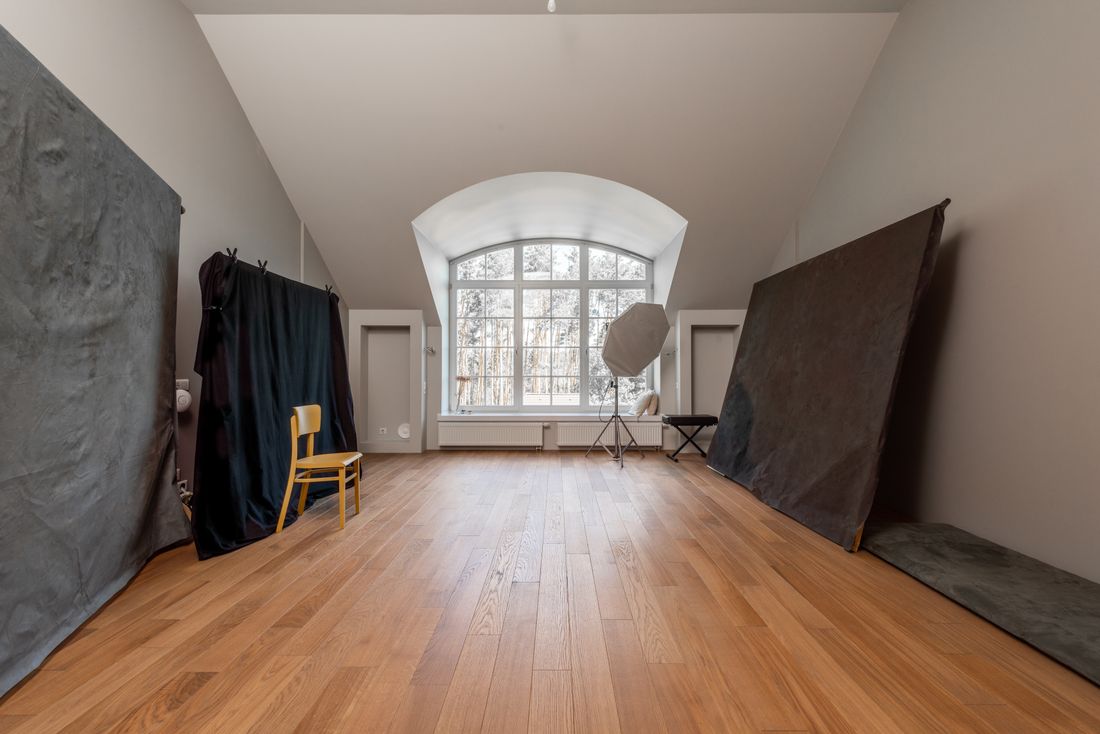
A studio tour reel doesn't need narration, a script, or a single explained detail to do its job. It needs thirty seconds and a room that's genuinely in use. That length is short enough that nobody scrolling past has time to lose interest, and just long enough to walk someone through a real, working space before a caption or a sold piece does any of the convincing. Most studio tours fail by trying to cover too much: every shelf, every tool, every corner, narrated like a walkthrough for a listing. The useful version picks a handful of believable details and lets the room do the talking. What follows covers what actually belongs in that thirty seconds, what gets cut, how the shots should be ordered, and when this specific length is the right call instead of too short or too long.
A 30-second studio tour reel exists to prove a working space is real before anything gets explained: an entrance or establishing shot, evidence of active work, and one clear view of the work itself, ordered wide to specific and cut every one to three seconds. It isn't a shortened documentary. It's a fast, honest first impression built to earn a second look, not to cover everything in the room.
What Does a 30-Second Studio Tour Reel Actually Need to Do?
A 30-second studio tour reel has one job: prove the space is real and someone is actually working in it, before a single word gets said. It doesn't need to explain the business, list services, or introduce a person by name. It just needs to be a quick, credible look at a room that speaks for itself.
Most people decide whether a studio feels legitimate within the first few seconds of any tour clip, long before a voiceover or caption catches up to what they're already seeing. A reel this short works with that instinct instead of fighting it. Finished pieces on a shelf, tools with visible wear, and natural light landing on a worktable do more convincing than a paragraph of copy ever could.
The format works because it stays small on purpose. A 30-second tour is not a tutorial, an interview, or a highlight reel of finished work. It plays more like a handshake: brief, specific, and enough to make someone comfortable clicking through to see the rest of what the account has posted.
Because the reel is so short, every choice inside it carries more weight than it would in a longer video. A pacing decision that would barely register across two minutes becomes the entire experience across thirty seconds. That's the reason this particular format is worth planning on its own terms instead of treating it as a shrunk-down version of something longer.
What Should Actually Be in a 30-Second Studio Tour Reel?
A useful studio tour reel includes a handful of specific, real details: the entrance or main work surface, evidence of active projects, tools or materials mid-use, and one clear view of finished or in-progress work. Each shot should look like something a visitor would actually see walking in, not a staged inventory of the room.
Specificity is what makes a shot believable. A worktable with a half-finished piece, labeled supplies, or a calendar taped to a wall reads as real in a way a clean, empty surface never will. These aren't glamorous details, but they're the ones a viewer's eye catches and trusts without being told to. A studio that looks too tidy for a working day can end up reading as unused rather than active.
One clear shot of the work itself, whatever the studio actually produces, earns its place too. It doesn't need to be the best piece ever made there. It needs to be recognizable as the kind of work the studio does, so a new viewer understands what they're looking at without reading a caption first.
A short human touch helps when it's natural: a hand adjusting equipment, someone walking past mid-task, a genuine moment that wasn't staged for the camera. It doesn't need to be a face or an introduction. It just needs to remind a viewer that a real person, not an empty set, is behind everything shown.
What Gets Cut to Keep a Studio Tour Reel Under 30 Seconds?
Anything that needs explaining gets cut first: equipment only a specialist would recognize, a room with no obvious purpose, or a shot that only makes sense with context the viewer doesn't have yet. Thirty seconds has no room for a detail that needs a caption to make sense on its own.
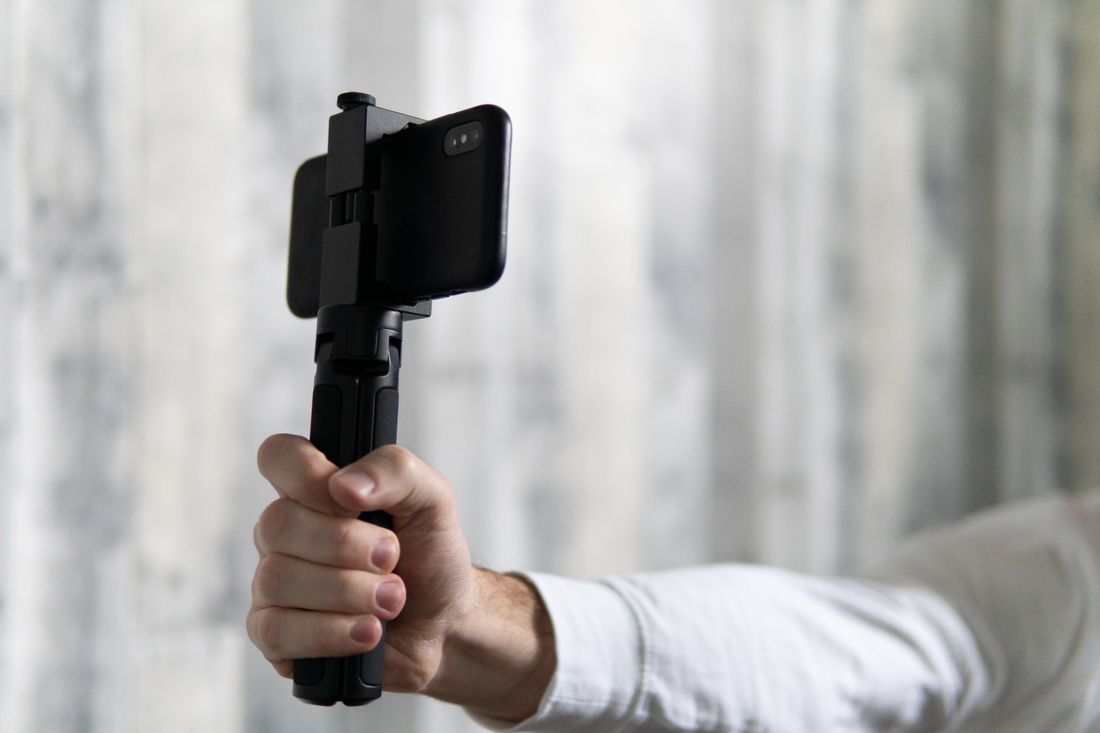
Long static shots are usually the next thing to go. A single angle held for three or four seconds might read as calm in a longer video, but inside a thirty-second reel it reads as dead time. Viewers expect the frame to keep moving, even gently, or their attention moves on without them. A tripod-locked shot that would feel intentional in a longer edit can feel like a mistake in a reel this short.
Anything that duplicates a stronger shot later in the reel should also come out. Two similar angles of the same surface or the same piece of gear don't add proof, they just repeat it. One strong, specific shot of a detail says more than two average ones of a similar thing.
The instinct to add one more shot for thoroughness usually works against the format here. A studio tour reel doesn't document the whole space. Its only job is convincing someone, fast, that the space is real enough to keep watching. Cutting the shot that only exists to feel complete usually makes the reel stronger, not thinner.
What Shot Order and Pacing Make a 30-Second Tour Reel Work?
The strongest order moves from wide to specific: an entrance or establishing view first, then narrower shots of work surfaces, materials, and finished pieces, ending on the single strongest detail. That sequence mirrors how someone would actually experience walking into the space, which is what makes the pacing feel natural instead of edited.
Cuts should land roughly every one to three seconds for most of the reel, quick enough to keep momentum without feeling frantic. A slightly longer beat on the strongest shot, the finished piece or the clearest view of the work, gives the eye somewhere to land before the reel ends.
Movement inside each shot matters as much as the cut itself. A slow pan, a hand reaching into frame, or a shift in focus keeps a static-feeling room from reading like a photograph with a timer on it. The goal isn't constant motion, just enough movement that nothing feels frozen. Even a small amount of motion signals that the footage was captured live, not arranged for a photo.
The ending matters more than most of the shots that came before it. A reel that fades out on an empty hallway or a random cutaway wastes the strongest position in the whole sequence. Ending on the clearest, most specific shot of the actual work gives a viewer a reason to remember the space after the video stops.
How Is a 30-Second Tour Reel Different From a Longer Studio Documentary?
A 30-second tour reel and a longer studio documentary do different jobs entirely. The short reel proves a space is real and worth a second look. A longer piece, several minutes or more, explains process, technique, and the reasoning behind the work, for viewers who already care enough to invest the time.
The short reel doesn't try to earn interest, it assumes a stranger is scrolling past and has a couple of seconds to give before moving on. A longer documentary can assume the opposite: someone chose to press play, so it can afford to slow down, add narration, and follow a single idea from start to finish.
That difference changes what belongs in each one. A tour reel skips explanation almost entirely and leans on visual proof alone. A documentary can explain why a technique matters, walk through a process step by step, or let a person talk directly to camera, none of which fits inside thirty seconds without gutting the pacing that makes the format work.
Neither format replaces the other, and most working studios eventually want both. The tour reel is what gets someone to stop scrolling and look twice. The documentary is what a viewer watches once they've already decided the studio is worth spending real time learning about. The two rarely come from the same footage, since each one is planned and shot with a different pace in mind from the start.
When Is 30 Seconds the Right Length for a Studio Tour Reel?
Thirty seconds is right when the goal is a first impression, not a full explanation: introducing a new studio, refreshing an old profile, or giving someone their first honest look at the space before they ever inquire. Shorter than that risks feeling rushed, and longer risks losing the exact viewer this format is built for.
A shorter version, ten or fifteen seconds, tends to feel too short once there's more than one or two things worth showing. It can work for a single, striking detail, but a whole room rarely reads as credible in that little time. The cuts start to feel less like pacing and more like a viewer being denied a proper look.
Pushing past thirty seconds usually signals the reel is trying to do a documentary's job with a tour reel's pacing. Once a clip starts explaining instead of showing, or adds a fourth and fifth area inside the same space, it stops being a quick first look and becomes a longer piece that hasn't been given the slower pacing it actually needs.
The right length also depends on how much the studio has to show. A small, single-room space might only need twenty seconds to feel complete, while a studio with several distinct work areas might need the full thirty to avoid rushing past something worth seeing. The length should match what's actually there, not a fixed rule.
Why Does a Studio Tour Reel Work as a First Impression Instead of a Full Behind-the-Scenes Piece?
A studio tour reel works as a first impression because it asks almost nothing of a new viewer: no context, no prior interest, no more than thirty seconds. A full behind-the-scenes piece asks for attention someone hasn't earned the right to yet. The short reel earns that trust first, then everything longer becomes easier to watch.
Trust, in this context, is mostly a question of whether the viewer believes what they're seeing is real. A quick, unpolished walk through an actual working space answers that question faster than any amount of description could. It's proof before persuasion, a narrower and more specific job than most content on a profile is doing.
This is also why a tour reel doesn't need to be dressed up. A slightly imperfect frame, an ordinary moment, a room that looks lived-in rather than staged, all of that works in the format's favor. Polish can work against a first impression built on the idea that the space is genuinely real.
Once that first impression lands, a viewer becomes a much more willing audience for everything else: a longer process video, a finished-work reel, a portrait, or a full behind-the-scenes piece. The tour reel isn't trying to carry the whole relationship with a new viewer on its own. It's trying to open the door so the rest of the account gets an honest, fair look.
What Makes a Studio Tour Reel Feel Staged Instead of Real?
A tour reel starts to feel staged when everything in frame looks arranged for the camera instead of genuinely in use: surfaces wiped completely clean, materials placed for symmetry, or a person posing mid-task instead of actually doing it. The moment a shot looks composed rather than caught, the format's whole purpose stops working.
Over-lit, heavily color-graded footage is a quieter version of the same problem. A tour reel is supposed to read as an honest look at a real room, and heavy editing can undercut that even when nothing in the shot itself is fake. A slightly rougher, more natural look often serves this format better than a polished one would.
Narration and text overlays can create the same issue from a different direction. A voice explaining what's happening, or captions labeling each area, turns a proof-of-real-space format into something closer to a pitch. The format works precisely because it lets the room speak on its own, without anyone arguing for it.
The fix isn't sloppiness for its own sake. It's choosing shots that show the room as it actually looked that day, including the small imperfections that make it obviously real: a chair pushed in at an angle, an unfinished piece still on the table, light that hasn't been corrected to look perfect. Those small, unglamorous details are what actually convince a viewer nothing here was staged for the camera.
Frequently asked questions
Does a studio tour reel need voiceover or on-screen text?
No. The strongest version of this format relies on the room itself, not narration or captions explaining what's happening. A short caption on the post can add context, but text baked into the video usually works against the format's honesty by making it feel like a pitch instead of a quick, real look. If sound is used, ambient studio noise or quiet music usually fits better than a voice explaining every shot.
How often should a working studio post a new tour reel?
There's no fixed schedule, but a tour reel is worth revisiting whenever the space changes enough that an old one stops looking accurate: a new work area, a different layout, or enough time passing that the old footage feels dated. Most studios don't need more than one or two current tour reels live at a time, since the format's job is a first impression, not a running series.
Can a 30-second tour reel work for a home studio or a shared space?
Yes. The format doesn't require a large or exclusive space, it requires a real one. A home studio or a shared workspace can use the same approach: show the actual work area, real materials, and one clear view of the work itself. What matters is that the space shown is genuinely where the work happens, not how much square footage it has, even if that space is shared with other people.
Does a studio tour reel need music, or can it use ambient sound?
Either can work, and the choice mostly comes down to what feels honest for the space. Quiet ambient sound, tools, footsteps, background noise, can reinforce the sense that the room is real and currently in use. Music works too, as long as it stays understated enough that it doesn't turn the reel into a produced piece instead of a quick, credible look. A short reel rarely needs much of either to feel complete.
What's the difference between a studio tour reel and a regular behind-the-scenes reel?
A studio tour reel is about the space itself, built to prove a working studio is real in under thirty seconds. A behind-the-scenes reel is usually about a specific project or process, showing how a particular piece of work came together. They can overlap, but a tour reel's job ends once someone believes the space is genuine, while a behind-the-scenes reel is trying to hold attention on a process.
Let's plan a studio day that shoots itself.
We find the moments in a real working day that are actually worth filming, and cut them into reels that hold up on their own.
Explore social reels →