A museum accepting a promised gift is not working from the photos already sitting in your files. Its registrar is working from a form, and that form asks for views, measurements, and condition notes most existing images were never built to provide. Knowing what that form actually wants, and when to get it, changes how the last stretch of the gift goes.
Before a promised gift is recorded, a museum's accession paperwork typically wants an accurate full view, a back view, detail shots of any mark or damage, recorded dimensions, and a dated capture date, usually gathered while the piece is still in the giver's hands and paid for by whoever is arranging the gift.
What does a museum's accession process want documented before it records a gift?
A museum's registrar usually wants an accurate full view of the piece, a separate view of the back, close detail of any signature or mark, recorded dimensions, and a dated note on visible condition. That packet, not one attractive photograph, is what a collections committee reviews before a promised gift moves toward formal accession.
Every institution runs the paperwork a little differently, but the underlying ask stays consistent. The registrar's office is building a record meant to outlive the gift conversation itself, one a curator, a conservator, and a future collections manager can all rely on without seeing the object again in person. A donor who assumes existing photos already cover this is often thinking of images made for a different purpose entirely, a portfolio shot, an old exhibition page, a picture pulled from a gallery website years ago.
The gap tends to show up in three places, color that has drifted after repeated scanning and re-saving, crops that leave out an edge the file needs to show, and no dimensions recorded anywhere near the image. None of that makes the earlier photography bad. It answered a different question at the time. The accession file is asking a narrower one, what this object actually looks like, measures, and shows on the day it changes hands, recorded in a way someone who has never stood in front of it can trust.
Getting a straight answer on this early, directly from the registrar or curator handling the gift, saves a later scramble once a formal accession date is on the calendar.
Why do the photos already on hand usually fall short of what a registrar wants?
Existing photos usually fall short because they were made for a different job, a portfolio, a catalog page, a social post, a quick record from years ago. None of those needed the color accuracy, complete framing, and recorded measurements an accession file asks for, so the images already on hand rarely satisfy the request.
Color is the most common gap. A photo edited to look good on a screen or in print has often been warmed up, contrasted, or color-shifted in ways that make it a poor reference for the object's true state. A registrar comparing that image against the piece in person can end up unsure which version to trust, the photo or their own eyes, and that uncertainty is exactly what the paperwork exists to remove.
Cropping causes a similar problem. A striking image often leaves out the frame, the edge, or the full support because the crop was chosen to flatter the piece, not to document it completely. A registrar's file wants the whole object in frame, corners included, which a portfolio image frequently was never composed to show.
The last gap is simply information that never got attached to the picture at all, a capture date, a measurement, a note about a small scuff or repair. A beautiful image with none of that context still leaves the registrar's questions unanswered, because the file needs the image and the facts around it working together, not the image standing alone.
Which views does the registrar's form typically ask for?
A registrar's form typically asks for a full, straight-on view of the piece, a separate view of the back or verso, and close details of anything the front can't fully show, a signature, an inscription, a label, a repair, or a mark on that object. Together these views let someone judge the piece without handling it again.
The full view is the anchor image. It's the one most people already have, and it's usually the least useful on its own, since it can't show scale accurately or resolve small detail. Still, it belongs in the file because it's the reference everything else gets checked against later.
The back view gets requested far more often than most givers expect, because the back frequently carries information the front never will, an old exhibition label, a gallery stamp, a stretcher bar note, a prior owner's inscription, sometimes damage that the front doesn't hint at. Skipping it because "there's nothing back there worth seeing" is precisely the assumption a registrar's checklist exists to catch.
Detail views close the gap the other two leave. A signature photographed close enough to read, a repair photographed close enough to judge its extent, a maker's mark photographed clearly rather than assumed from memory, these are the images that let a curator confirm attribution or condition without asking to see the object again.
Not every institution phrases the request the same way, so it's worth asking directly which views their specific form requires rather than guessing from a general list.
What condition detail does the museum's paperwork usually ask for?
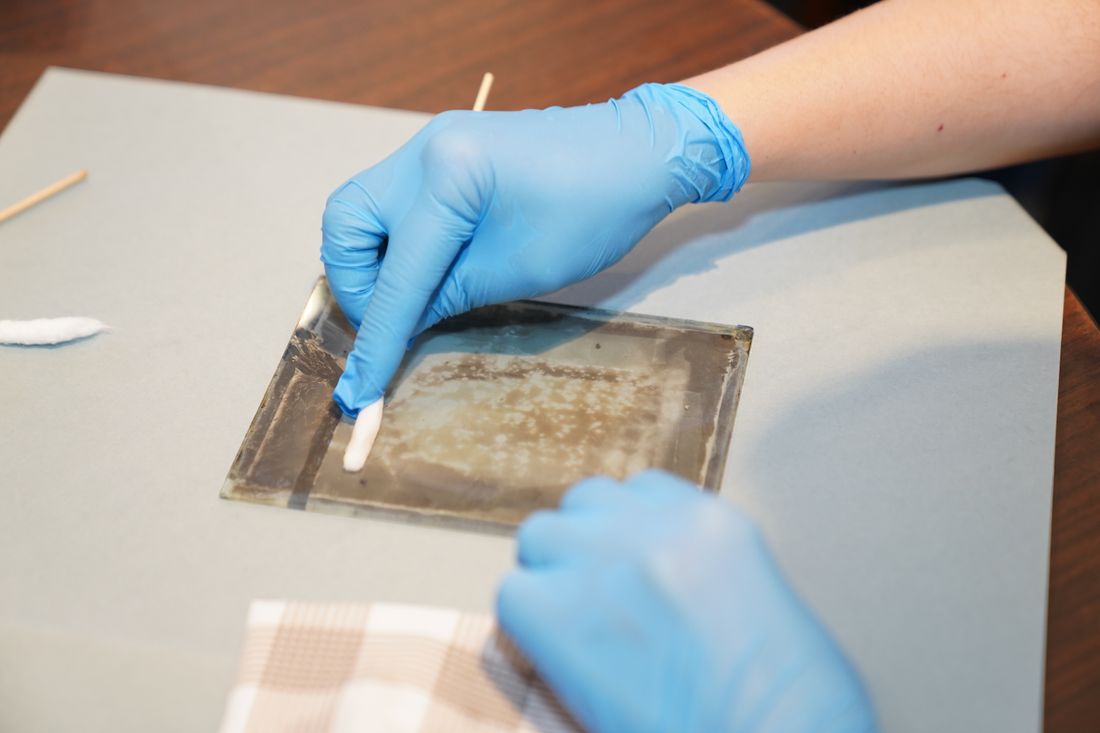
Accession paperwork usually wants a plain, dated record of the piece's visible condition, whatever it is, rather than a flattering image that quietly minimizes small flaws. That means photographs of any existing scuffs, craquelure, repairs, stains, or losses, each clear enough that someone reviewing the file later can judge their extent without guessing.
This is not a judgment about the piece's quality or the giver's care of it. A museum accepting a promised gift needs an honest baseline, because that baseline becomes the reference point for every future condition check, at intake, before any conservation work, and at each later review of the collection. Without it, a conservator years from now has no way to tell a change that happened after accession from something that was already there.
A condition record works differently than a presentation photo in a few specific ways. Lighting that would make a surface look dramatic in a portfolio image can obscure a hairline crack in a condition photo, so flatter, more even light usually serves the file better than the lighting choice that would look best in isolation. Close, legible detail matters more than mood.
Givers sometimes worry that documenting a flaw draws attention to it or somehow affects how the gift is received. In practice, an honest condition record protects the giver as much as the institution. It's the proof that whatever exists on the day of the gift was already there, not something that happened afterward, and having that proof matters more than any single image looking its best.
What technical information does the accession file want alongside the images?
Alongside the images, an accession file typically wants recorded dimensions, a specific capture date, and enough identifying information, medium, support, any inscribed title or date, to tie each photograph unmistakably to one specific object. Images without this context are hard for a registrar to use even when the pictures themselves are perfectly clear.
Dimensions matter more than most givers expect, because a photograph alone can't reliably establish true scale. A registrar's file usually wants height, width, and depth where relevant, measured directly rather than estimated from an old exhibition checklist or a memory of roughly how big the piece is. A measurement taken at the same time as the photography, with a scale reference included in at least one image, keeps the numbers and the picture consistent with each other.
The capture date matters just as much, because it anchors the whole record to a specific moment. A file with no date attached leaves a real question open, was this what the object looked like last year, or ten years ago? An accession record needs to be able to say, with confidence, this is what the piece looked like on this day, immediately before it entered the collection.
Basic identifying information rounds out the file, medium and support, approximate date if known, any inscription or label already present. None of this replaces a proper condition report or catalog entry the institution will eventually build. It just keeps the images connected to the right object, rather than a folder of unlabeled files someone on staff has to sort out later.
Why does documenting before the piece leaves your control matter for timing?
Documenting while the piece is still in the giver's control matters because access changes the moment it isn't. Once a promised gift is packed, shipped, and received into a museum's storage, arranging a documentation visit usually means requesting access through the institution's own staff, a slower, less flexible process than photographing the piece where it already sits.
Before the gift moves, the giver still controls the schedule, the light, the space, and how much time the piece gets. That's the easiest point to get an unhurried, complete set of images, without racing a moving truck or working around an institution's own calendar. Once the piece is en route or already received, that flexibility is largely gone, and any gap in the documentation becomes the museum's problem to solve on its own timeline.
There's a second reason timing matters. A registrar reviewing incoming paperwork wants images that reflect the object's condition at the moment of transfer, immediately before it changes hands, not photography from years earlier that may no longer be current. Documenting shortly before the piece leaves keeps the record honestly tied to that specific moment, rather than to whenever a photographer last happened to be in the room.
This doesn't mean documentation has to happen at the very last minute. It means treating it as a step in the sequence, not an afterthought squeezed in once the piece is already gone, and confirming with the registrar's office how far in advance of transfer they'd like it done.
Who usually arranges and pays for this documentation?
Arranging and paying for this documentation is typically the giver's responsibility, whether that's the collector, the artist, the family, or an advisor handling the gift, rather than something the receiving museum automatically provides. Some institutions will still photograph a piece once it arrives, but usually on their own schedule.
That shoot happens on the museum's own timeline, not the giver's, and often only after the gift has already changed hands.
This division makes practical sense once the timing question is clear. The giver is the one with easy access to the piece before transfer, so the giver is naturally positioned to arrange documentation while it's simple to do. Waiting for the museum to handle it later trades that convenience for a slower, staff-dependent process, and can leave a gap in the accession file exactly when the registrar wants it filled.
Who actually books the photographer varies by situation. Sometimes it's the giver directly, sometimes an advisor or estate handler coordinating several steps of the gift at once, sometimes a family member managing a relative's collection. What stays consistent is that the request usually needs to happen before the piece leaves, since that's the point where scheduling is easiest and the record is most current.
It's worth confirming directly with the receiving institution what they expect on this point specifically, since practices differ, some registrars will accept documentation the giver commissioned as long as it meets their requirements, while others prefer to arrange their own regardless of what already exists.
Who owns the documentation files once the gift is accepted?
Ownership of the documentation files is a separate question from ownership of the accession record itself, and it's worth settling directly with whoever commissions the shoot rather than assuming. When a giver arranges and pays for the documentation, the giver typically retains the files and can keep copies for personal records, insurance, or an estate file.
The giver also usually provides a set to the museum for its own accession use, once the files exist.
The museum, once the gift is accepted, will generally want its own copies on file regardless of who paid for the original shoot, since the registrar's record needs to live inside the institution's own system rather than depend on the giver's personal archive staying accessible indefinitely. That's a separate matter from who holds the underlying rights to the images themselves.
This is worth a direct, simple conversation before the shoot happens, not after, covering who gets copies, in what format, and whether the giver wants to retain a personal set for their own records alongside whatever goes to the museum. Most of the time this is a short, uneventful conversation, but it's easier to have before files are being handed over than to sort out afterward.
None of this needs to be complicated. A giver arranging their own documentation before a piece leaves usually ends up with a cleaner outcome on this point too, a set of files they control and can share on their own terms, rather than waiting to see what the museum eventually produces once the piece is already gone.
Frequently asked questions
Does a museum ever accept a promised gift without any new documentation?
Sometimes, if existing images happen to meet the registrar's specific requirements, though that's uncommon in practice. More often the museum will accept the gift conceptually while still asking for documentation to follow before the piece is formally transferred and recorded onto the accession file, so it's worth confirming this early with the registrar rather than assuming whatever photos already exist will turn out to be enough.
How is this different from documentation done for a loan?
A loan is temporary, and the piece is expected to return, so its documentation centers on a condition record for that round trip, checked again on the way back. A promised gift is a permanent transfer into the collection, so its documentation supports an accession record meant to last for as long as the museum holds the piece, built for a longer and more open-ended purpose.
Should the piece be professionally photographed, or are the giver's own photos acceptable?
It depends entirely on what the specific registrar's form asks for, which varies by institution and by the object itself. Some are precise about color accuracy, complete framing, and measurement references that are genuinely hard to achieve without proper equipment, controlled lighting, and a bit of practice. Confirming the actual requirement first, rather than guessing, avoids commissioning more photography than necessary or quietly falling short of what the accession file needs.
What if the piece has already left before documentation happens?
It's still possible, but arranging access usually means working through the museum's own scheduling and staff rather than photographing the piece on the giver's own timeline, in the giver's own space, on a day that suits everyone. It's a workable path, just a slower and less flexible one than documenting before the piece leaves, and it can genuinely delay when the gift actually moves onto the accession record.
Does this documentation replace the museum's own condition report?
No, it supports the museum's own process rather than substituting for it entirely. The registrar and any conservation staff will still complete their own review once the piece physically arrives on site, but a complete, accurate set of images and measurements from the giver's side gives that review an honest starting point instead of a gap the museum has to fill from scratch on its own time.
Build a paper trail your insurer can't argue with.
We shoot artwork documentation the way an appraiser or adjuster actually reads it, full views, true color, condition notes, and files that stay tied to the right piece.
Explore artwork documentation →