
A gallery show has one fact a normal content calendar doesn't: a fixed date everyone is working toward. That changes how reels should get planned. Instead of asking how many reels a show needs, the more useful question is when each one should land relative to opening night, working backward from that date instead of forward from whatever footage happens to be ready. A handful of reels, sequenced deliberately across the weeks before a show, does more for anticipation than the same handful posted at random, or all posted in the final 48 hours because someone remembered late.
Sequencing reels before an opening means working backward from the fixed show date instead of forward from today. A small set of reels, teaser or process, studio prep, install, and opening night, each land at a different point in the countdown so anticipation builds in stages instead of arriving all at once or not at all until the night of.
Why Work Backward From the Opening Date Instead of Forward From Today?
A show has one fixed point: the opening. Sequencing reels backward from that date, instead of posting whenever a reel happens to be ready, means each post lands at the moment it does the most work, building anticipation in stages rather than filling a random gap between other content.
Most content calendars run forward. A shoot happens, footage gets edited, and the reel goes up whenever it's done. That works fine for content with no deadline attached to it. A show doesn't work that way. It has an end point everyone already knows, so the useful planning question flips: instead of asking what to post next, the question becomes what needs to be true by opening night, and what has to happen before that to get there.
Working backward starts with marking the opening date, then placing each planned reel at a specific distance from it, three weeks out, ten days out, install week, the night itself, rather than leaving posting cadence to whenever footage gets finished. This isn't about rigid scheduling for its own sake. It's about matching each reel to the moment in the show's own timeline when that specific content actually means something to someone watching.
A teaser posted the week after the show already opened has lost its purpose. An opening-night reel posted three weeks early makes no sense either. The fixed date is the one piece of information a normal reel calendar doesn't have, and using it changes the plan from a stream of content into an actual sequence.
What's the Actual Sequence: Teaser, Studio Prep, Install, Opening Night?
A useful pre-opening sequence usually has four beats: a teaser or process reel early, a studio-prep reel as work wraps up, an install reel once the space starts taking shape, and an opening-night reel on the day itself. Each one answers a different question a follower has at a different point in the countdown.
The teaser or process reel comes first and answers the earliest question: what is this show even about? It can show work in progress, a detail of a piece, or a glimpse of the concept, without needing the final result to exist yet. The studio-prep reel comes next and shifts the question from what to how close: pieces getting finished, crated, or staged for transport, signaling that the show is moving from concept to logistics.
The install reel answers a third question, what will the space actually look like, by showing the room mid-transformation, walls going up, work being hung, lighting getting adjusted. It's the closest a follower gets to seeing the show before it exists. The opening-night reel closes the sequence and answers the last question: what did it become, showing the finished room with people in it.
Not every show needs all four. A smaller show might collapse teaser and studio prep into one reel, or skip install entirely if there's nothing visually interesting about the space that week. The order matters more than the count: whatever gets included should still move from concept toward the room, not jump around.
How Far Out Should the Teaser or Process Reel Post?
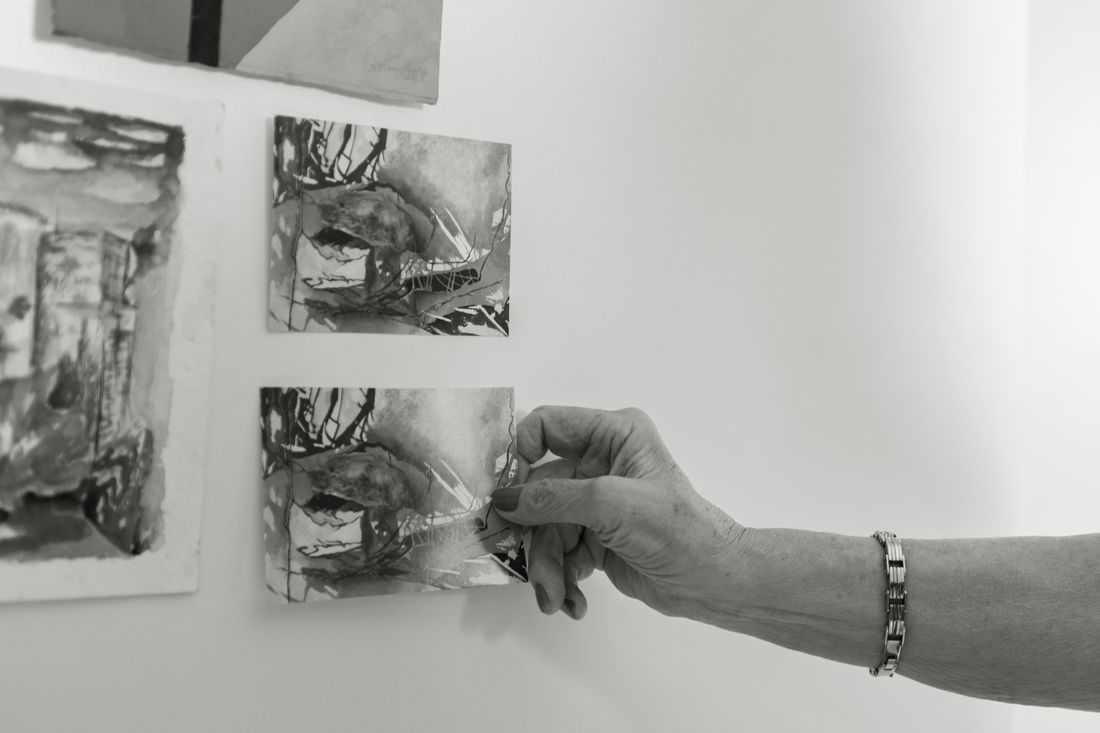
A teaser or process reel usually works best somewhere between two and four weeks before opening, early enough to give the show room to build interest, late enough that the connection to an upcoming date still feels current. Posting it much earlier risks the reel getting forgotten before there's anything else to follow it.
The timing question isn't really about a fixed number of days. It's about whether the reel arrives while there's still enough runway left to post a second and third reel before the date, or whether it goes up so early that the show fades from the feed again before anyone circles back to it. A teaser with nothing behind it for a month doesn't build anticipation, it just spends attention early and leaves it unspent.
What makes a teaser reel work at this stage is that it doesn't need to explain everything. It can show a hand working, a piece mid-process, a detail without full context, because the job of this reel isn't to summarize the show, it's to signal that something is coming. A caption naming the show and giving a rough date does more work here than a fully resolved concept explanation.
This is also the stage where a reel can afford to feel a little rough. A process shot doesn't need the polish an opening-night reel needs, and treating it that way, holding it back until it's perfect, is usually what pushes a teaser too close to the studio-prep reel that should come after it.
When Does the Studio-Prep Reel Belong in the Countdown?
A studio-prep reel usually sits in the middle of the countdown, roughly one to two weeks after the teaser and one to two weeks before install, once work is finished or nearly finished but before the gallery space itself becomes the visual focus. It marks the shift from concept to logistics.
This reel earns its place by showing something the teaser couldn't: pieces that are actually done, being packed, labeled, or staged for transport. Where the teaser was about a hint of the idea, the studio-prep reel is about proof that the work exists and is moving toward the show. That distinction is what keeps the sequence from repeating the same beat twice under two different names.
In practice, this is often the easiest reel to skip by accident, because studio-prep footage doesn't always feel dramatic enough to bother filming. A stack of crated work or a piece getting wrapped in glassine doesn't look like much on its own. But it's exactly the kind of unglamorous, specific detail that makes a countdown feel real rather than promotional, because it shows work that's actually happening instead of a generic announcement that a show is coming.
If a show has a short runway and only room for three reels instead of four, studio prep is usually the one to fold into the teaser rather than cut outright. Combining the two still lets a single reel carry both the idea and the proof that it's real, even if it means giving up a clean four-part sequence.
How Close to Opening Night Should the Install Reel Run?
An install reel usually works best in the final week before opening, often three to five days out, once the space is visibly transforming but before it's fully finished. Posting it too early misses the drama of the room changing; posting it too close to opening night crowds it against the reel that should be the main event.
Install week is the point where a show stops being an abstract idea and becomes a physical room, and that transformation is genuinely interesting to watch even for people who never step inside the gallery. Walls going up, lighting getting adjusted, pieces being hung and re-hung, all of it shows a level of care most people never see once the show is polished and open. That's the entire value of this reel: showing the work behind the finished result.
Where exactly in that final week it lands depends on how the install itself is paced. A one-day hang favors a same-day reel close to opening. A multi-day install gives more flexibility, and posting mid-install, with the room half-transformed, often reads as more compelling than waiting for the space to look nearly done, since a half-finished room still has visible jeopardy: will it come together in time?
The one timing mistake worth avoiding is letting the install reel slide all the way to opening night itself. At that point, it's competing with the opening-night reel for the same attention, and neither one gets to be the main event.
What Happens With the Opening-Night Reel, and Right After?
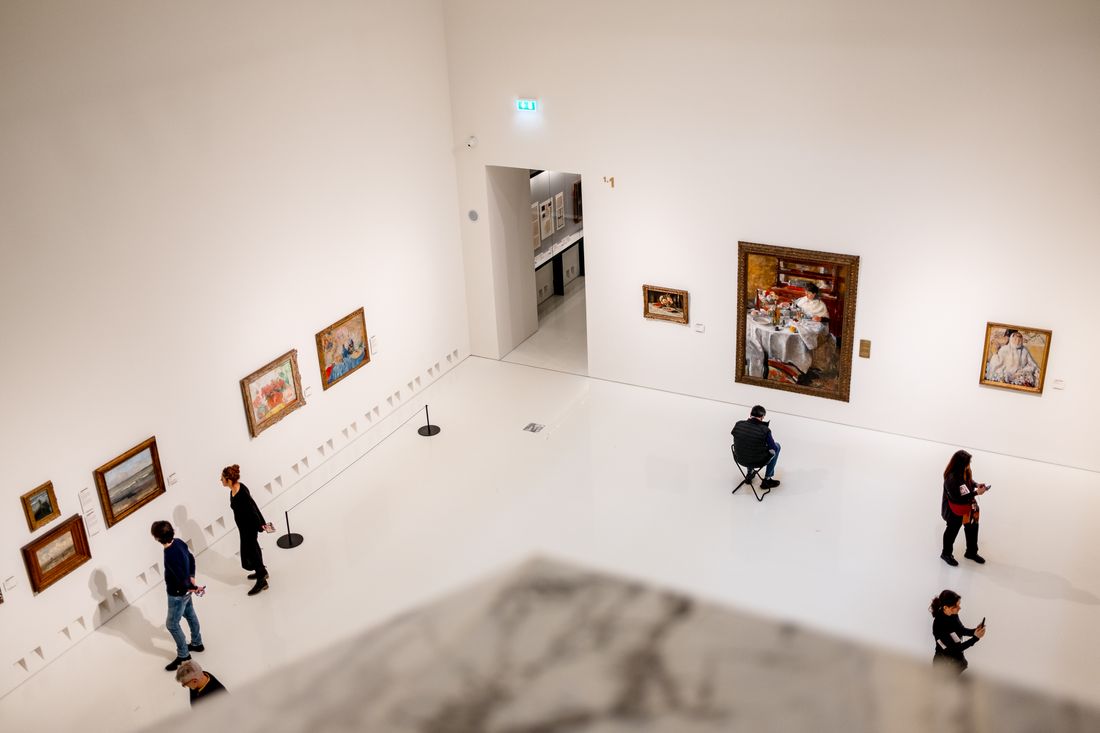
The opening-night reel is the payoff the whole sequence has been building toward, and it works best when it posts the same day, during the event or within a few hours after, while the energy in the room is still the actual story. Waiting more than a day or two turns a live moment into a recap nobody asked for.
Everything before this reel, the teaser, the studio prep, the install, exists to make this one land harder. A follower who's seen the room half-built and the work getting packed has a reason to care what the finished space looks like with people in it. Without that buildup, an opening-night reel is just a nice clip of an event. With it, it's the resolution of a question the sequence has been asking for weeks: what will this actually look like?
The reel itself doesn't need to try to capture everything. A crowd in the room, a piece getting looked at, the general mood of the night, is usually enough. This is also the reel most likely to have a real crowd in it, since it's the one moment in the sequence where showing people, not just work or space, genuinely fits the story being told.
What happens after opening night matters almost as much as the reel itself. A second, quieter post in the days after, thanking people who came or showing a detail from the night, gives the sequence a soft landing instead of ending on a single high point that goes quiet the next morning.
What Changes When the Opening Date Has a Short Lead Time?
A short lead time, a show announced three weeks out instead of three months, means collapsing the four-part sequence rather than abandoning it. The order still matters even when the runway is tight: a compressed teaser-and-prep reel, one install reel, and the opening-night reel can still build real anticipation in a fraction of the usual window.
The instinct with a short runway is often to skip straight to promotion, a single announcement reel and then the opening-night post. That's a missed opportunity more than a necessity. Even a two-week countdown has room for two reels before the night itself, and two reels sequenced deliberately still beat one flat announcement, because the second reel gets to build on the first instead of repeating it.
What usually gets combined first is the teaser and studio-prep beats, since both are about signaling that something is coming rather than showing the finished room. A single reel that shows a piece of the work and mentions the date can carry both jobs at once. Install, when there's time for it, still deserves its own moment close to the night, since that's the beat that gives people something visually different from the earlier post.
The version to avoid on a short runway is skipping straight from an announcement to opening night with nothing in between. Even one reel in the middle keeps the show present in a feed instead of disappearing for two weeks and reappearing as a surprise.
How Do You Avoid Dumping Everything at Once or Posting Nothing Until the Night Of?
Both mistakes come from the same root cause: treating reels as something to post whenever they're ready instead of planning where each one lands relative to the opening date. The fix for both is the same backward-planning habit, marking the date first and placing each reel at a deliberate distance from it before any filming happens.
Dumping several reels in the same week usually happens when nothing gets planned until the show is close, and then everything that should have been spread across a month gets condensed into days out of necessity. The reels themselves might be fine individually, but stacked together they read as a sudden burst of promotion rather than a build. A follower sees three posts about the same show in four days and reasonably assumes the account is behind schedule, not deliberately busy.
Posting nothing until opening night happens for the opposite reason, usually because filming felt like an extra task on top of everything else install week already demands. The opening-night reel alone can still work, but it arrives with no context for anyone who wasn't already following along closely, and it skips the entire function a countdown sequence serves: giving people a reason to care before the room is finished.
The habit that prevents both is simple to state even if it takes discipline to run: before the first reel gets filmed, mark the opening date and decide how many reels the runway actually supports, then place them on the calendar backward from that date instead of scheduling them as footage happens to be ready.
Frequently asked questions
How many reels does a full pre-opening sequence actually need?
A full sequence usually runs three to four reels: a teaser or process reel, a studio-prep reel, an install reel, and an opening-night reel. Shorter runways can collapse teaser and studio prep into one post and still keep the sequence intact. What matters is the order and spacing relative to the opening date, not hitting an exact count. Two well-placed reels beat four crowded into the final week.
What if the show date changes after the sequence is already planned?
Shift every reel's position relative to the new date rather than trying to keep the original posting dates. A teaser that was three weeks out is still a teaser three weeks out from the new date, even if that changes the calendar days involved. The relationship between each reel and opening night matters more than any specific date on a schedule, so a moved show just means resetting the countdown, not rebuilding the plan.
Should the install reel show the space looking messy or nearly finished?
A space that's visibly mid-transformation usually reads better than one that looks almost done. Ladders, unhung work, and tools left in frame show the process is real and still in motion, which gives the reel some jeopardy: will everything actually come together in time for the doors to open? A nearly finished room tends to compete with the opening-night reel for the same visual payoff instead of building toward it, so leaning into the mess is usually the stronger choice.
Is it a problem to skip the teaser reel and start with studio prep?
It's not a problem if the runway is short or there's genuinely nothing to show yet at the concept stage. Skipping straight to studio prep still gives followers proof that a show is coming, just without the earlier hint of the idea behind it. The sequence loses a beat but keeps its shape, since studio prep, install, and opening night can still carry the countdown on their own.
Does the opening-night reel need to go up during the event itself?
Same-day is close enough; it doesn't have to post mid-event. Going up during the event or within a few hours after keeps the energy in the reel matched to the energy in the room. Waiting until the next day usually still works, but waiting longer turns a live moment into a delayed recap, which loses most of the reason the reel existed in the sequence in the first place.
Want reels without stopping to stage a single shot?
We shoot around your real working day and pull the moments that are already interesting, then edit them into reels that stand on their own.
Explore social reels →